10 Most Beautiful-Looking Bad Movies Ever Made
Not great movies, but oh so wonderful to look at!
Is a film worth watching if its only plus is looking good?
It's a complex question, and one that many cinephiles would answer with a definitive: "No." But consider for a moment that - aside from offering up a good story - cinema is (for the most part) a visual medium. Surely, a truly beautiful film, despite how bad it might be on a narrative level, can make a convincing case for watchability on account of its aesthetics?
The following ten films, then, are some of the most visually striking you'll ever see, but have few redeeming features aside from their looks: they fail to engage on pretty much every other level, with narratives that lack weight and are crammed with ridiculous plot twists and poorly-written characters. Then there are those that are plainly boring from start to end.
Despite their flaws and failings, however, each and every one of them is also downright beautiful to stare at for the sum of their runtimes...
10. Sucker Punch (2011)
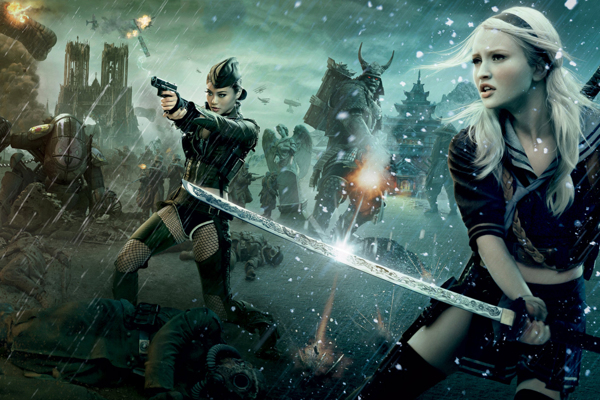
Zack Snyder's insane teenage boy-cum-fantasy mash-up is an innately bad film: it clings to a wholly ridiculous plot, embraces one-dimensional characters and is generally awful in every department. Snyder appears to have designed Sucker Punch as a means of getting everything he ever fantasied about rendering on the big screen out of his system (skimpy girls, robots, Nazi zombies); it's not really all that surprising that it barely hangs together.
But for all its faults (of which there are many), Sucker Punch does achieve something rarely glimpsed in a Hollywood blockbuster: it uses CGI beautifully.
Despite the fact that Sucker Punch is way, way too long and actually begins to feel a little bit boring after only thirty minutes, it is a visionary delight; as Snyder's film switches back and forth between the "real" and "imaginary" worlds that make up the plot, it is near-on impossible to deny that what he has conjured up is strangely beautiful. CG rarely looks "gorgeous," but Snyder embraces its limitations (that is, he ensures it's purposely hyper-realistic) and makes it an advantage. It could play on loop forever in a really cool club.
All said and done, the film might well be a load of rubbish.. but what attractive rubbish!
9. The Cell (2000)
On account of the fact that 2000 horror flick The Cell stars Jennifer Lopez and Vince Vaughn and clings to a plot that most people labelled as "f*cking ridiculous," it has fallen into obscurity. Why would anyone want to revisit a 15-year-old film starring Jennifer Lopez, after all? Despite what you might assume from that description, though, The Cell also happens to be one of the best-looking bad films ever made. Truly. Seriously. No kidding.
Directed by Tarsem Singh (whose films are always pretty and always terrible), The Cell features an inherently intriguing plot that fails to make use of it: a child psychologist possesses a groundbreaking machine that allows her to travel inside the memories of a serial killer in order to see what made him into a monster. It's a neat idea, but one that feels mostly plotless in the context of the film - not to mention there's tons of bad acting.
What makes The Cell worthwhile, however, are its visuals, which are some of the most unexpectedly gorgeous-looking in the history of cinema. It sort of makes sense, given that Singh based many of the scenes on the works of famous painters - Damien Hirst, Odd Nerdrum, H. R. Giger and the Brothers Quay, to name but a few (talk about ambitious).
This gives the film with a timeless, dark intensity which ensures that - although it ultimately lacks credibility - it's an aesthetic triumph. What a shame the story couldn't match up.
8. Speed Racer (2008)

The Wachowski siblings aren't the most consistent filmmakers in Hollywood, but you have to hand it to them: all of their films are visually stunning.
The worst of their movies, Speed Racer, went by relatively unnoticed and was a critically and commercial flop. Essentially, it was a super ambitious attempt to render a film as a anime cartoon. "What would that actually look like?" was presumably their guiding question going into the project, and the answer was, well, it would look awesome.
But Speed Racer wasn't what audiences wanted to see; the premise, the characters and the visuals just put everyone off, plain and simple. But to look at Speed Racer as anything other than an experiment - and a visual experiment at that - is to miss the point of the movie. The Wachowskis clearly set out to render a film with all the intelligence of a Saturday morning cartoon. The plot - a teenager called Speed Racer races a lot to avenge his brother's death - is the very definition of "thin," but totally on purpose.
The point of the film is to batter you into submission with crazy visual stylings, and on that front it entirely succeeds - and then some. The images literally pop out of the screen with all the audacity of a Roy Lichtenstein painting; they're bright and fluorescent in the best possible way - a visually perfect tribute to the source material, to the age of CG, and to the Wachowskis (as auteurs) themselves. The story sucks, but the picture is intoxicating.
7. Vinyan (2008)
There is a single long take in Vinyan that will take your breath away. The camera glides across a field towards a great ruin, goes over the top, inside, slowly lowers itself down through the dirt and the vines, and then changes direction to follow the film's two protagonists as they enter - all in one seamless move. And it appears to come out of nowhere, because it is beautiful and thought out in a way that much of Vinyan isn't.
That's not to discredit the cinematography inherent to Fabrice du Welz's mostly disappointing horror movie, which is plainly gorgeous to look at from the very start of the film to the very end: shot by Benoit Debie (famous as the cinematographer of Irreversible), every frame of Vinyan - which follows two distraught parents as they take a Heart Of Darkness-style trip into Burma in order to find their lost son after a tsunami - feels rich and deep and claustrophobic and sweaty; the jungles of Burma accurately rendered.
It's a shame that the film itself is a let down - a slow, uninteresting plod that feels like a wasted opportunity; far too ambiguous to be engaging. The only thing that Vinyan gets right is the look. For its visuals aspects alone, though, and the sense of primal feeling that Debie's cinematography provokes, it's worth spending 96 minutes with this picture.
6. Tron: Legacy (2010)

Without any degree of hyperbole, Tron: Legacy is - quite frankly - a tour-de-force in cool visual aesthetics that manages to use CGI in a context that actually makes sense.
What a shame, then, that the sequel is stilted as hell in the story department; what could have been thriving and endlessly entertaining feels lost and searching. Picking up 30 years after the events of the original cult film, Legacy sees the son of Jeff Bridges' previous protagonist (that'd be Kevin Flynn) teaming up to take down a malevolent software program before it takes over the world. If it sounds a bit naff, that's because it is.
Behold, though, Legacy's astounding production design and visual flair; it truly is one of the best-looking films ever made - a tribute to special effects, to retroness, to the power of CGI. There is something genuinely awe-inspiring with regards to the bold and dazzling hold that Legacy has over you whilst you watch it; it's an insane pillar of visual mastery.
And then there's Olivia Wilde, too, who adds another layer of beauty to the movie on account of her innate gorgeousness.
5. Only God Forgives (2013)
What is Only God Forgives, exactly?
Whilst many expected a movie that would blow them away in the same way that Nicolas Winding Refn's previous film, the critically-acclaimed Drive (also starring Ryan Gosling), did, Only God Forgives felt like an attack on everybody who loved it: an awkward, tone deaf and outright confusing flick that arrived as a sort-of failed art film. Even now, after the dust has settled, it's impossible to know what to make of Refn's experimental picture.
Mostly, it seems wise to assume it's plainly bad however you look at it; the plot - paper-thin - sees Gosling's stoic protagonist (almost parody-like in his design) out to seek revenge for his brother's death in Bangkok. Whilst the narrative fails to engage, however, the visuals are downright intoxicating - Refn's film is all red neon and shadows, and despite the fact that Only God Forgives is surprisingly dull, the cinematography is really something.
Shot by Larry Smith (who worked with Stanley Kubrick on Eyes Wide Shut, and it shows), the film's colour palette is Only God Forgives' most notable character; Bangkok has never looked quite like this on film - hyper-realistic, featuring lots of scenes lit using only a single light. All this gives the film a strange, otherworldly, stage-like atmosphere that makes it intrinsically stunning to look at - even though you know everything else is pretty awful.
4. Alien 3 (1992)

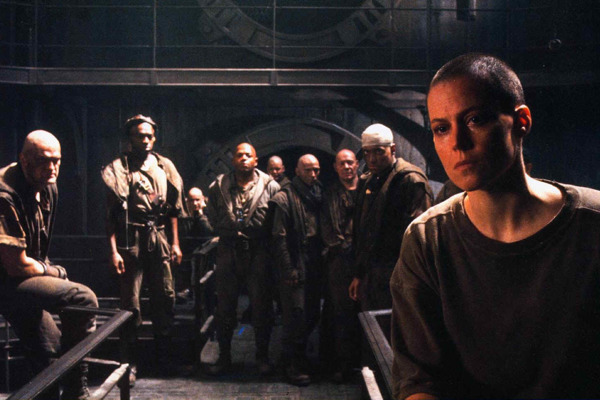
Acclaimed and beloved film critic Roger Ebert declared Alien 3 one of the most beautiful-looking bad films ever made, a statement with such power that it provided the very inspiration for this article.
Looking back at David Fincher's film debut, it's a wonder he ever got to make another film in Hollywood. Not that it was all his fault, mind; Alien 3 had a notoriously troubled and laboured production, and boy does it show. A strange setting and some weird plot twists aside, Alien 3 doesn't have a whole lot in common with its superior predecessors; there's none of the innovation and excitement and terror - it feels like a full-on step backwards.
But all is not lost: Alien 3 triumphs in one way, and that is in its visual design. David Fincher renders Ripley's third adventure with a dark and gritty aesthetic that is unmistakably his own (he would go on to develop and master it in later films such as Se7en and Fight Club). There are shots - and camera angles - in Alien 3 that are genuinely clever. It's a movie of corner and shadows; of crevices and cracks between walls.
Fincher (and his cinematographer Alex Thomson) might have failed to bring the story to life, but the "feel" of the movie - its inherent gloominess - stands as its one saving grace.
3. The Tree Of Life (2011)
Terrence Malick has made some of the greatest films in all of cinema; Badlands, Days Of Heaven and The Thin Red Line are indisputable masterpieces of the highest order, whilst The New World is probably the most underrated picture of the last two decades (more on that another time). The Tree Of Life, his divisive comeback vehicle, is - sadly - not one of those films. Instead, it stands as an awkward myriad of all of Malick's worst traits as a filmmaker: it's laborious, pretentious and nonsensical - sometimes all at once.
It still manages to be a wholly beautiful cinematic experience to sit through, thanks to the downright masterful cinematography, which comes courtesy of acclaimed, Oscar-winning cinematographer Emmanuel Lubezki (Children Of Men, Gravity, Birdman) - the long, epic takes, many of which are swooping and soaring and dreamlike, are breathtaking. And the use of natural light has arguably never been bettered than in the Tree Of Life.
That's not all: there are also the majestic, awe-inspiring special effects sequences that bookend the film; Stanley Kubrick-esque visions of the universe coming together helmed by the great Douglas Trumbull, who opted against CGI to create the swirling magic, instead enlisting the use of chemicals, paint, fluorescent dyes, smoke and liquids.
The critics appear to have been tricked by the scope and ambition of The Tree Of Life, given that it is thought by many to be one of the greatest films of recent times. It's far too self-aware and in love with its own style to be labelled anything other than conspicuous. But what a beautiful film, regardless of all that - stripped of the boring plot it could be as powerful as a truly great painting.
2. Prometheus (2012)

Through its masterful trailer alone, Prometheus revealed itself to be a visual masterpiece; no surprise there, really, given that its director - Ridley Scott - is a renowned stickler for aesthetics. Scott's emphasis for great visuals has carried through his body of work - even when he makes a bad film, they usually end up looking outright amazing.
Prometheus, unfortunately, fails into this category. It is a glorious, visually-stunning motion picture that lacks any narrative coherence. Penned by Lost's divisive writer Damon Lindelof, Scott's sort-of Alien prequel emerged as a bonafide disappoint: a space thriller featuring a cast of the dumbest characters ever put to film, all of whom consistently manage to (excuse the pun) alienate the audience with an array of godawful decisions.
But to look at, Prometheus is a marvel. The creepy, dark, '80s-tinged lighting, the beautifully-framed shots - every single one of which could easily hang on you wall at home - and the breathtaking level of detail scattered throughout means that Prometheus essentially batters you into adoration with its look alone. You might feel ambivalent about the story and the characters, but it's impossible to feel the same way about the visuals.
1. Heaven's Gate (1980)
Could it really have been anything else?
Heaven's Gate was a colossal disappointment, a critical failure and a financial flop back back when it was first released in 1980. So much so, in fact, that it was the movie that brought an end to an entire studio: after director Michael Cimino - coming off of the back of The Deer Hunter - took control away from United Artists, it was all over.
In recent years, Heaven's Gate has received something of a reappraisal, with many critics coming out of the woodwork to declare it an "unsung masterpiece." Whatever: there was a reason why it was panned back in the day, because it is a long, dull and often wearisome epic - calculated to such pinpoint precision that it feels (as Roger Ebert one said) like a "waste." As a film, it is endlessly interesting, but as entertainment... not so much.
That said, Heaven's Gate is probably one of the most beautiful films ever made (and certainly the most beautiful film on this list). On a visual level, it has few equals, and - per to Cimino's vision - every single shot feels like it has been poured over with an endless amount of love and affection. This ensures that the movie feels like was actually shot at the time when it is set - that is, 1870 Wyoming; it's a fantastically-rendered ode to celluloid.
It's a shame that the narrative - which depicts a war between between barons and European immigrants - doesn't match up to the visual aspects. Vilmos Zsigmond - the cinematographer - clearly outdid himself, but a lot of that was Cimino, too, who - in one famous story about the making of the film - waited for hours to shoot the right cloud. It might have seemed ridiculous at the time, but all these years later, the effort clearly paid off.
Like this article? Got any films to add that we might have missed? Let us know your thoughts in the comments section below.