10 Most Confusing Movie Endings People Don't Understand
Prepare to get your noodle baked.

Movies are often made by their endings, and if a filmmakers gets it wrong, it can catastrophically tank a film's reception.
After all, those final moments before the credits roll are going to linger in the viewer's brain as they leave the cinema, and if they stink, then the film as a whole is affected.
But get it right, and a great movie can become a sure-fire classic, leaving audiences on an elated, mesmerised high.
Some movies, however, dare to take a wholly different tack, simply aiming to bewilder and baffle as much as possible, and giving viewers a heap to digest as they head home.
10. Memento

It's fair to say that the entirety of Christopher Nolan's ingenious thriller is a bit of a head-scratcher, revolving around an amnesiac man, Leonard Shelby (Guy Pearce), attempting to track down his wife's rapist-murderer while battling against his inability to create new memories.
In an attempt to replicate Leonard's fractured mental state, the majority of the film's scenes unfold in reverse order, leading to the climactic mind-melter of a reveal that Shelby himself accidentally killed his wife by administering an insulin overdose to her due to his amnesia.
Throughout the film Leonard tells the story of Sammy Jankis (Stephen Toblowsky), a man who did very much the same thing to his wife, but of course, Sammy doesn't really exist, and the story is merely an attempt to assuage his own guilt over killing his wife.
The story concludes (and begins, chronologically speaking) with Leonard murdering Teddy (Joe Pantoliano), the man he believes to be the attacker. However, as we travel backwards, it's revealed that Teddy is in fact an uncover cop and helped Leonard kill the attacker a year prior.
Teddy has since been exploiting Leonard's amnesia to set up other unsavoury figures to be killed, prompting Leonard to leave himself a Polaroid falsely incriminating Teddy as the killer and eventually leading to his death.
Long story short: Leonard intentionally deceives himself into believing that Teddy was one of the attackers, creating his own revenge narrative to paper over the fact that he himself was unintentionally responsible for his wife's death. Grim.
9. Annihilation

Alex Garland's sci-fi masterwork was one of 2018's most WTF movies, following a group of scientists who head into a mysterious quarantined zone known as The Shimmer, within which lies an ambiguous extraterrestrial force brought to Earth by a meteor.
Leading the pack is Lena (Natalie Portman), who undertakes the mission to figure out what happened to her husband, Kane (Oscar Isaac), after he previously spent a year missing in the Shimmer.
Lena and her team eventually learn that the Shimmer is capable of refracting the DNA of anything within it, creating horrifying hybrids, where humans have giant worms for intestines and bears can growl the dying screams of their victims, for instance.
In the third act, Lena reaches the origin of the Shimmer within a lighthouse. Here she learns that Kane in fact committed suicide and the man who returned was a doppelgänger created by the Shimmer.
She then comes across her only surviving teammate, Ventress (Jennifer Jason Leigh), who quickly succumbs to the Shimmer and transforms into a nebulous object, before absorbing a drop of Lena's blood and creating a metallic doppelgänger.
The clone mimics Lena's movements exactly, but by handing a white phosphorus grenade to the doppelgänger, she's able to kill it and burn down the lighthouse.
The fire appears to destroy the Shimmer, and the film ends with Lena meeting Kane's doppelgänger. They embrace and their irises both glisten, prompting the viewer to question whether or not the real Lena escaped or her impostor.
Annihilation is a complex, thematically rich film which visualises depression and self-destruction in an extremely unique way.
But the very end of the film is ultimately a sci-fi spin on the famous Ship of Theseus thought experiment: are Kane and Lena really who they appear to be, and are they still human, despite their DNA being altered so significantly?
8. Planet Of The Apes (2001)

One of the most vocal complaints about Tim Burton's Planet of the Apes remake was that the general plot and especially its ending confused the hell out of people.
The film concludes with astronaut Leo Davidson (Mark Wahlberg) travelling back in time to the Earth of the present, only to be greeted by apes in the place of humans.
The abrupt ending left many fans scratching their heads, especially as it was such a sharp 180 from the iconic conclusion of the original film, where George Taylor (Charlton Heston) learns that the supposedly alien planet was Earth all along.
It's never precisely explained how this new reality came to be, though fans are left to assume that the villainous Thade (Tim Roth) somehow beat Leo back to Earth and instigated all the changes, fashioning himself as an Abraham Lincoln-like figure in the process.
For his part, Burton claimed that the ending wasn't really supposed to make sense beyond providing an intriguing cliffhanger to set up a sequel, but ultimately most were left more baffled than excited by it.
7. Donnie Darko

Despite being one of the biggest cult classics of the last 20 years, Donnie Darko is also an extremely obtuse and impenetrable film at times.
The movie begins with Donnie (Jake Gyllenhaal) being woken up by a man in a rabbit costume, who informs him that the world will end in 28 days. He later discovers that a jet engine has crashed into his bedroom, and had he not been summoned out of his room, he would've been killed by it.
What makes Richard Kelly's film especially confusing is that much of the key information lies in supplementary materials released alongside it - namely a fictional book featured in the movie, The Philosophy of Time Travel, the cliff notes of which Kelly made available online.
To cut to the chase, Donnie's initial survival created a parallel universe which the rest of the movie takes place in, and in order to prevent a cataclysmic event which destroys the original "primary" universe, he voluntarily allows himself to be killed by the falling jet engine at the end of the 28 days.
This protects the original universe, including his girlfriend Gretchen (Jena Malone), though the tragic irony is that by dying as originally intended, Gretchen and him never end up meeting.
6. Grease

On the face of it Grease is a pretty straight-forward musical that shouldn't be keeping anyone awake at night.
But seriously, are we all gonna just ignore that insane final scene where Danny (John Travolta) and Sandy (Olivia Newton John) drive into the air and fly away?
It's a moment that's left fans of the iconic musical baffled for literally decades, because the rest of the movie is relatively grounded - for the standards of a musical, anyway.
One prominent fan theory suggests that the car taking flight is symbolic of Sandy's ascent to Heaven, and that the entirety of the movie was actually her dying dream. You see, though she talks about being saved by Danny from drowning at the beach, that's just a little wishful thinking, and she wasn't quite so lucky.
Jim Jacobs, who co-created the original musical, has rubbished the theory, though curiously didn't provide any sort of explanation in place. Are we supposed to believe it's just a piece of random magical realism in an otherwise fairly down-to-Earth film?
And with that, the confusion sadly endures.
5. No Country For Old Men

The Coen brothers' Best Picture-winning masterpiece ended in an elliptical fashion that just about nobody expected.
After Anton Chigurh (Javier Bardem) eludes capture, the final scene of the film sees Sheriff Ed Tom Bell (Tommy Lee Jones) share two dreams he had with his wife.
In the first, he loses some money given to him by his father, and in the second, he's riding past a snowy mountain with his father, who rides ahead to start a fire and wait for his son. And with that, we cut to black.
This actually isn't too tough to parse if you've been paying attention to the movie and have seen it before, though it is a lot to take in on a first viewing.
The first dream quite clearly relates to the movie's money plot and Bell's own failure to recover the illicit cash, but the second is far more haunting and significant.
The second dream clearly relates to Bell's own advancing age and a death that probably isn't that far off. His father, who is presumably dead already, is "lighting the fire" in what's surely a reference to the afterlife.
There's not much shame in being a little bewildered by the wordy ending, but it's basically just a summation of the movie's title - Bell is an old man incapable of being effective against the violent younger men of the world like Chigurh.
4. Primer

The entirety of Shane Carruth's cult sci-fi gem Primer is an exercise in having your brain slowly melted, let alone its headache-inducing ending.
Carruth, a former engineer, refused to dumb down any of the film's technical dialogue, the result of which is a film heavy on jargon and therefore extremely tough to unravel, especially on a first viewing.
The film revolves around two engineers, Aaron (Carruth) and Abe (David Sullivan), who accidentally create a crude time machine of sorts, and before long all hell starts to break loose.
Aaron and Abe initially use time travel to make profits on the stock market, but their conflicting philosophies - Aaron keen to exploit time travel, Abe deeming it too dangerous - inevitably leads them down a dark path involving numerous competing timelines and realities.
Though it ultimately appears that the two manage to resolve the anomalies, the ending reveals the full extent of Aaron's ambition, with numerous temporal versions of himself in play as he goes ahead with building a warehouse-sized time machine.
This is a massively simplified explanation of the film's plot - which is literally too dense for words - and in many ways its labyrinthine nature is very much the point. But there's no shame in being confused by it, or as the case may be, considering it too heady for its own good.

3. The Tree Of Life

If you've seen any of Terrence Malick's more recent films, you'll likely appreciate that the man isn't much interested in conventional narrative cinema.
In that respect his opus is unquestionably The Tree of Life, a visually stunning existential drama following the formative years of a man (Sean Penn), interspersed with sequences depicting the formation of the known universe.
The final passage of the film sees Penn's Jack O'Brien end up on a beach, where he's reunited with his younger parents (Jessica Chastain and Brad Pitt) and his dead brother R.L.
Malick never makes it entirely clear whether this is the afterlife following Jack's death or something more metaphorical and less-literal, and true to his recent artistic focus, it's a sequence more interested in feeling than consistent narrative logic.
The film ends with Jack smiling and seemingly relieved, which seems to be the point here: whether you filter death through the lens of the afterlife or simply choose to remember the departed, they're both valid means of keeping the dead "alive" and finding peace.
Or something like that, anyway.
2. Mulholland Drive

David Lynch's challenging surrealist masterpiece is one of the most intensely debated films of the last 20 years, and true to character, Lynch hasn't expressed much interest in clarifying things for his fans.
The bulk of the movie follows aspiring actress Betty (Naomi Watts) as she attempts to help amnesiac Rita (Laura Harring) figure out her identity following a brutal car accident.
Amid a fleet of fascinating and deeply unsettling subplots, Betty and Rita embark on a sexual relationship, before the opening of a mysterious blue box completely flips the script.
At this point the narrative shifts to Diane Selwyn (also played by Watts), the woman whose apartment Betty and Rita were investigating. Diane is a failed actress and deeply depressed after her affair with actress Camilla Rhodes (also played by Harring) came to an end.
The film concludes with Diane hiring a hitman to kill Camilla, and after she's notified the job is done - by way of receiving a blue key - she shoots herself.
The most common fan theory is that the Betty plot is merely the psychosis-induced dream of Diane, hence the likeness of Betty and Rita to herself and Camilla, not to mention the idealised version of her life as an on-the-rise actress.
But despite this being the most easily digestible explanation for Mulhollland Drive's twisty narrative, there are some who feel that it's also too straight-forward and literal a reading of the movie's overall narrative.
1. Arrival
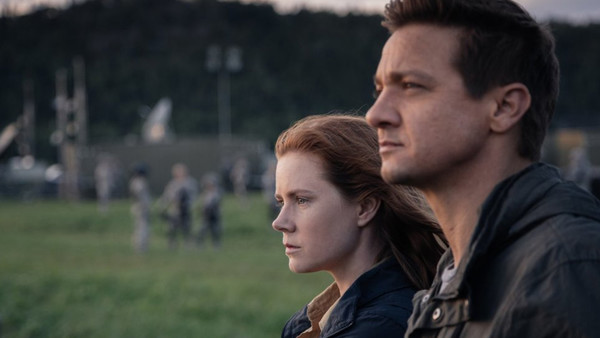
And finally, we have Denis Villeneuve's mind-blowing sci-fi thriller Arrival, which opens with the revelation that genius linguist Louise Banks' (Amy Adams) daughter died from an incurable illness as a teenager.
The rest of the film follows Louise's attempts to help the U.S. government understand and communicate with a series of extraterrestrial creatures which have landed on Earth.
Near the end of Arrival, it's revealed that the alien language allows those who learn it to view time in a non-linear fashion, and that Louise's memories of her past are in fact visions of her future. That is to say, her daughter hasn't been born yet.
Furthermore, it's revealed that Louise's colleague Ian Donnelly (Jeremy Renner) will be the father of her child, and her eventually telling Ian that she knew their daughter would die causes him to leave her.
The film ends with Louise embracing her envisioned future, in all of its beauty and pain. What really made audiences struggle with this ending, however, is its approach to time and how humans perceive it.
The way we live our lives encourages us to view it as a linear line from A to B, but Arrival challenges audiences to disregard that and view it instead as a flat circle with no real beginning or end.
What's your take on these noodle-baking movie endings? Shout it out in the comments!