10 Most Expensive DELETED Movie Scenes Ever
All that money wasted.
Making a big-budget movie is an extremely difficult process at even the best of times, and no matter how well-planned a production might be, there's always the possibility that, once back in the editing room, a scene just doesn't work as intended.
The reasons can be myriad, of course: perhaps the actors don't have the expected chemistry, maybe the scene was roundly rejected by test audiences, or it's even possible that real-life events forced the filmmakers to change their approach in post-production.
But whatever the cause, in each case these costly, pivotal scenes were removed from huge movies, taking a significant portion of the film's respective budget with them.
While in many examples these films were still massive commercial successes no matter the money wasted on scenes that never made it to cinemas, for some movies it simply rubbed salt in the wound as they went on to bomb at the box office regardless of the decision...
10. The Wizard Of Oz's Jitterbug Dance Cost...$80,000

The first cut of The Wizard of Oz clocked in at almost two hours in length, and due to the average movie runtime being about 90 minutes back in 1939, director Victor Fleming had to get ruthless, ultimately cutting 20 minutes' worth of material from the final film.
This resulted in several completed musical sequences receiving the chop, most controversially "The Jitterbug," which would see Dorothy (Judy Garland), the Scarecrow (Ray Bolger), the Cowardly Lion (Bert Lahr), and the Tin Man (Jack Haley) attacked by bugs in the Haunted Woods as they headed to the Wicked Witch's (Margaret Hamilton) castle.
It was an especially painful cut as the scene took five weeks to shoot at a cost of $80,000, amounting to almost 3% of the movie's $2.8 million budget. When adjusted for inflation, it would be roughly $1.5 million in 2020.
Sadly the scene is now lost, and the only footage that remains is an amateur recording of it being filmed.
9. Die Hard 2: Die Harder's Deleted Product Placement Cost...Up To $150,000

This is an especially bizarre one. Before Die Hard 2 started shooting, Fox secured a product placement deal with hardware company Black & Decker to feature their new Univolt cordless drill in the movie, with the production being paid $20,000 for the pleasure.
The scene in question was to feature John McClane (Bruce Willis) using the drill to remove a vent grill in the airport, and to that end, Black & Decker prepared a sizeable marketing campaign to accompany the movie's release.
Though the scene was shot, director Renny Harlin ultimately decided to cut it, and an extremely unhappy Black & Decker finding out just three days before Die Hard 2's release and consequently seeking legal reparations from Fox, demanding $150,000 in damages.
Fox ultimately settled for an undisclosed sum, and given that Black & Decker clearly had a pretty solid case for being disgruntled, we can assume it was probably the majority of their requested $150,000.
8. The Raid 2's Gang War Scene Cost...Around $270,000
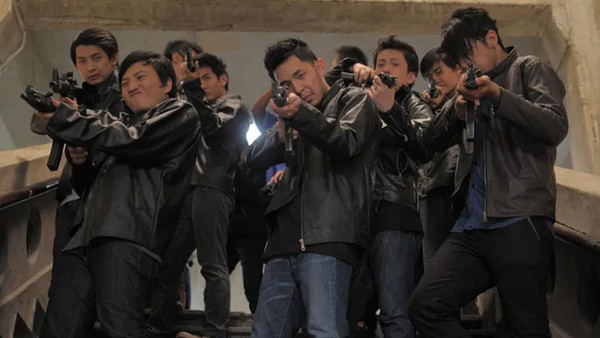
Gareth Evans' original martial arts masterpiece The Raid was made for a mere $1.1 million, but off the back of the film's surprise success, the sequel was given a sizeable $4.5 million to play with.
This allowed Evans to ramp up the ambition of the movie's set-pieces, resulting in the final cut of the film boasting an epic 150-minute runtime. But Evans actually filmed considerably more than that, ultimately having to cut a lengthy and elaborate deleted scene called "Gang War" due to pacing reasons.
The bloody shootout required hundreds of extras, and with its action-centric focus, took six days to film out of the approximately 100-day shooting schedule.
Though Evans has simply stated that the scene cost "a f**k load to make," we can estimate from the shooting time that it used up around $270,000 of the budget, and so for a film as inexpensive as this, it must've been absolutely agonising not to include it in the final movie.
7. Ghostbusters' Chris Hemsworth Dance Cost...$1-2 Million

Much has been written about how much of a mess the shooting of Paul Feig's 2016 Ghostbusters reboot was.
For starters, the film's colossal $144 million budget seemed hugely over the odds for a Ghostbusters movie, and according to Dan Aykroyd, Feig refused to shoot additional scenes suggested during principal photography, leading to expensive re-shoots when they were later required.
But there's one majorly expensive scene that was filmed during the main shoot which ultimately didn't make the cut: a dance sequence where receptionist Kevin (Chris Hemsworth) performs an elaborate boogie in Times Square set to The Bee Gees' "You Should Be Dancing."
With complex choreography involving dozens of cast members and extras, it took two days to shoot (not including rehearsal time) and reportedly cost in the "low seven figures," likely meaning in the $1-2 million range.
Feig cut the scene because it hurt the movie's pacing, and called it "the biggest decision of [his] life." He did, however, re-cut the sequence and include snippets of it in the end credits sequence, as well as including part of the dance on the movie's home video release.
Ultimately, Ghostbusters 2016 grossed a massively disappointing $229.1 million worldwide.
6. Gangster Squad's Theatre Shootout Cost...Several Million Dollars

Period crime thriller Gangster Squad suffered a most unfortunate setback, as the deleted scene in question wasn't removed due to any distaste for how it turned out, but the unavoidable confluence of real-life events.
Several months after principal photography wrapped, the Aurora, Colorado cinema shooting took place, causing 12 deaths.
Trailers for Gangster Squad had already showcased a sequence in which gangsters emerged through the screen of a cinema and fired machine guns at the audience, prompting an intense PR backlash and ultimately forcing Warner Bros. to drop the sequence.
But because the scene was in fact the climax of the movie, there was no way to simply pull it out, and so, a new finale had to be conceived and shot, shifting the action to Chinatown.
Though we'll never know exactly how much money Warner Bros. lost by moving the movie's release date back four months when it was just six weeks away from release and had a marketing campaign in full swing, the re-shot ending reportedly cost "several million dollars."
To make matters worse, the film was a box office bomb, ensuring it most certainly wasn't money well spent.
5. X-Men: Days Of Future Past's Rogue Scenes Cost...At Least $5 Million

X-Men: Days of Future Past had the unenviable task of trying to do a solid service to an massive roster of mutants, given that the movie's time-jumping narrative united the older mainline heroes with their younger counterparts.
This resulted in director Bryan Singer having to make some judicious cuts to bring the film down to a manageable 131 minutes, and the major casualty of his scissors was X-Men mainstay Rogue (Anna Paquin).
Rogue appears in the theatrical cut of the film for literally seconds during its epilogue, but Paquin actually spent five days shooting a more elaborate sequence where she is broken out of captivity and takes up Kitty Pryde's (Ellen Page) place as the facilitator of Wolverine's (Hugh Jackman) time travel.
Singer ultimately felt that the sequence was "extraneous" and so eliminated it during editing. Given that Paquin's scenes accounted for five of the film's 126-day shoot, we can generously estimate that they cost at least $5 million of the stonking $220 million budget.
These scenes were eventually included in the film's "Rogue Cut" on home video over a year later, and to her credit, Paquin seems relatively pragmatic about having 98% of her screen time cut.
She said, "I got to hang out with my friends for five days in Montreal, see people I've known for two decades, and go play. Did it end up in the movie? No. Well, it was fun anyway."
4. Little Shop Of Horrors' Grim Climax Cost...$5 Million

Frank Oz's 1986 adaptation of the legendary horror-comedy musical was originally supposed to conclude similarly to the source material, with gigantic man-eating plant Audrey II devouring both Audrey (Ellen Greene) and Seymour (Rick Moranis) before leading an army of plants that take over the world.
Unsurprisingly, test audiences were rather miffed by the unexpectedly downbeat ending, causing the entire 23-minute ending sequence, which cost $5 million of the film's $25 million budget, to be scrapped with a new finale shot in its place.
Of course, the new ending instead sees Audrey and Seymour surviving while vanquishing Audrey II, though it ultimately didn't much help the movie's commercial prospects as it still under-performed at the box office, yet has gone on to become a much-loved cult classic.
Mercifully, Warner Bros. restored the original ending for the 2012 Director's Cut Blu-ray, finally allowing fans to see the source-faithful finale in all its demented glory.
3. Superman Returns' Original Krypton Opening Cost...$10 Million

Bryan Singer strikes again, this time making the millions spent on Rogue's missing footage seem like mere chump change.
For Superman Returns, Singer originally shot a totally different opening sequence, an eerie and near-wordless depiction of Superman (Brandon Routh) exploring the remnants of Krypton.
Despite being utterly slathered in high-quality CGI and costing a reported $10 million, the six-minute sequence was ultimately thrown out, likely because it didn't exactly give the quasi-reboot an energetic intro for popcorn-gobbling audiences to enjoy.
On its own merits, though, it's certainly an interesting, ominous sequence, even if it's also easy to appreciate why the studio perhaps wanted something a little peppier, especially with a massive $223 million budget at stake.
Even so, the film was still a disappointment at the box office, failing to cross the $400 million mark worldwide.
2. All The Money In The World's Kevin Spacey Scenes Cost...$10 Million
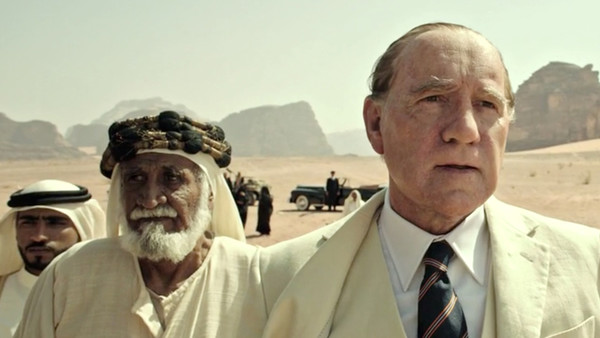
Roughly two months before Ridley Scott's dramatisation of John Paul Getty III's kidnapping was due for release, sexual assault allegations were levelled against star Kevin Spacey, who had already filmed the role of aging, thrifty billionaire oil tycoon J. Paul Getty.
Rather than delay the film and hope the outcry would eventually blow over, Scott decided to effectively delete Spacey from the movie, opting to quickly recast Christopher Plummer in the part, who was reportedly his original choice anyway.
Less than a month before the film's premiere, the production spent 10 days re-shooting Spacey's entire role with Plummer as his replacement, which due to the rush fees required to get the crew together and the new footage hurried through post-production, cost a whopping $10 million - that's $1 million per day.
Despite bombing at the box office, the film impressively wasn't the mess many expected, scoring solid reviews and even netting a Best Supporting Actor Oscar nomination for Plummer, who performed the role with just two weeks to prepare.
1. World War Z's Ditched Third Act Cost...$25 Million

As ludicrous as the All the Money in the World situation was, nothing quite tops the near-disaster that occurred while shooting 2013's zombie blockbuster World War Z.
The film's original third act saw protagonist Gerry (Brad Pitt) heading from Jerusalem to Russia, after which he would end up drafted into armed service as a zombie slayer of sorts. Gerry grows a beard and becomes a world-weary badass, eventually learning that the zombies can be defeated by the cold.
In a grim final setup for the planned sequel, Gerry has a phone call with his wife Karin (Mireille Enos), who is safe in a refugee camp, but implies that she has entered into a dubiously consensual relationship with the Air Force officer (Matthew Fox) who saved her earlier in the movie.
Ultimately the entire final 40-ish minutes of the film was scrapped, and seven weeks of re-shoots were undertaken at a cost of $25 million to deliver a new finale in which Gerry seeks out a cure at the World Health Organization in Wales and is reunited with his family, while humanity begins their assault against the zombie horde.
Though this caused the film's budget to balloon as high as $269 million, World War Z ended up grossing $540 million, ensuring it was relatively successful all things considered.
Yet despite the obvious promise of a sequel, Paramount quietly cancelled it early last year due to the inability to capitalise on the Chinese box office, which currently has a ban on movies featuring zombies and ghosts.