10 Most Expensive Movie Trilogies Ever Made

Three is the magic (and very expensive) number.
The phrase 'shared cinematic universe' is thrown around so often by the studios these days that its easy to forget that until recently, 'the first in a planned trilogy' was usually the default quote when referring to a recently-announced blockbuster. With hundreds of millions of dollars involved in creating a summer blockbuster, the studio executives will always have one eye on the franchise potential of their productions. Not everything has to be turned into a trilogy or a franchise, that just seems to be the way the movie business is heading. Of course, if a trilogy comes to a logical conclusion then there is always a chance that it will be rebooted or given a long-delayed sequel; Indiana Jones, Die Hard and Rambo all got fourth movies after a long absence, the Bourne series continued without Matt Damon and even the 30 year-old Terminator franchise is undergoing its second reboot in less than a decade. In the movie business you have to spend big to win big, and if there's money to be made from an existing property then Hollywood will attempt to squeeze every last drop of profit out of it, which is why we're now expecting a Star Wars and Spider-Man movie every year. A recent report that leaked the financial details surrounding The Hobbit movies (more on that later) served as the inspiration for this article that will count down the ten most expensive trilogies ever made. Let's not forget that there are also two massively expensive trilogies currently in the works that will easily shoot their way towards the top of the list in the years to come; Star Wars Episodes VII, VIII and IX along with James Cameron's upcoming Avatar trilogy but for now these ten trilogies are the costliest. There are several familiar franchises and a couple of very surprising inclusions in this list that demonstrates just how much money movie studios are willing to spend on a set of three movies, knowing that they are virtually guaranteed to make a huge return on their investment. What do you make of the ten most expensive trilogies of all time? Are there any surprising inclusions? Are there any missing franchises you thought would make the list? As always, sign off in the comments below.

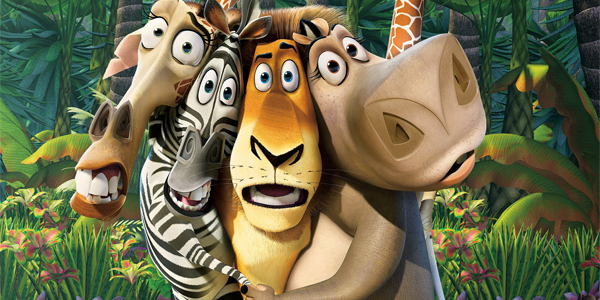
10. Madagascar 1-3 - $370m

Its more than a little surprising to find out that Dreamworks' Madagascar series is the most expensive animated trilogy of all time, and without even including the upcoming penguin-centered spinoff it ranks as the second most expensive animated franchise in history behind the $535m combined budget of the four Shrek movies. While the series isn't as critically-adored as some of its peers, each new entry has earned more than its predecessor, resulting in over $1.8bn at the box office. As well as the improving commercial performance, the quality of the movies themselves has also steadily improved. While the first Madagascar tended to sacrifice story in favor of broad gags and pop culture references, by the time third effort Europe's Most Wanted hit theaters the franchise had found a genuine sense of warmth and wit to go along with the A-list voice cast and colorful visuals. Given the increasing expense that comes with making an animated blockbuster and Dreamworks' reliance on their big-name brands to sell tickets, by the time the third installments of the Kung Fu Panda and How to Train Your Dragon franchises are released they will have easily eclipsed the hefty cost of the Madagascar movies.

9. X-Men 1-3 - $395m

One of the biggest and most enduringly popular franchises in Hollywood, the release of the original X-Men in 2000 revitalized the superhero movie as a bankable genre in Hollywood, a trend that still shows no signs of slowing down. The franchise now spans seven movies (with an eighth set for May 2016) that include sequels, prequels, spin-offs, reboots and over a billion dollars in budgets, yet eight years after its conclusion the original trilogy still ranks as one of the most expensive ever made. At $75m, Bryan Singer's original X-Men remains the cheapest entry in the whole franchise, partly due to studio hesitance on spending a huge amount of money on what was a risky project at the time. After the movie turned out to be a critical and commercial success, the sequel upped the budget to $110m and delivered one of the greatest comic book movies ever made. Brett Ratner's trilogy-closing Last Stand was the most expensive movie in history at the time of release, and the $210m blockbuster remains the most expensive X-Men movie ever made. However, with the two movies in the First Class series so far budgeted at a combined $360m, X-Men: Apocalypse will see the franchise's second trilogy become the costliest by far.

8. Men In Black Trilogy - $445m

Barry Sonnenfeld's Men in Black remains one of the most purely entertaining blockbuster of the 1990's, a $90m sci-fi buddy movie that features plenty of laugh-out-loud moments and exciting action sequences, held together by the sparkling chemistry between the mismatched duo of Will Smith and Tommy Lee Jones. While the two sequels failed to recapture the magic of the original, the franchise has earned well over $1.6bn at the box office, which has compensated for the ever-increasing budgets. After Men in Black grossed $589m at the box office a sequel was all-but-inevitable. Five years later came the incredibly disappointing follow-up, which upped the budget to $140m but was barely half as good as Agents J and K's first outing, with the rapport between the two leads being the movie's only saving grace. Thanks to poor critical reaction and declining box office takings, it would be ten years before another Men in Black movie would hit theaters, which would also be the most expensive yet. Thanks to going into production without a finished script, constant on-set rewrites and even a four-month filming shutdown, the budget for Men in Black 3 swelled to $215m. Luckily for the studio, the decade-long wait and addition of 3D saw the trilogy-closing chapter become the highest-earning entry in the franchise with a box office gross of nearly $625m.

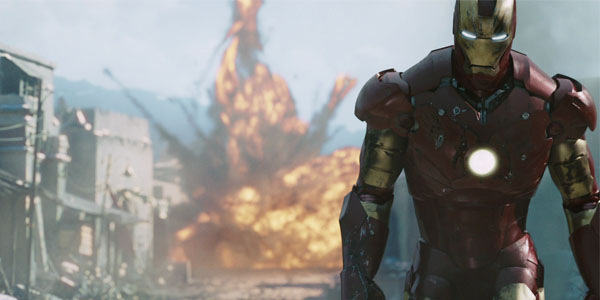
7. Iron Man Trilogy - $540m

As the first self-funded release from a fledgling movie studio, Iron Man was an incredibly risky project; a $140m blockbuster based on a second-tier character, directed by the guy that made Elf and a star that had never taken the lead role in a big-budget movie before. However, Iron Man turned out to be one of the most important blockbusters of the 21st Century; a critical and commercial hit, Robert Downey Jr's instantly-iconic turn as Tony Stark shot him to the top of the Hollywood A-list and laid the foundations for the Marvel Cinematic Universe, which in the six years since has firmly established itself as the biggest brand in the industry. The sequel upped the budget to $200m yet turned out to be a disappointment; with a slate of upcoming movies on the calendar it seemed that Iron Man 2 was more concerned about expanding the greater Marvel mythology than providing the title character with the best possible standalone feature. With Tony Stark firmly established as the crown jewel in the MCU character-wise, Shane Black's Iron Man 3 hit theaters a year after the Avengers, with the goodwill towards Joss Whedon's epic team-up and the popularity of Downey Jr's portrayal of the title character turning the threequel into one of the highest-grossing movies of all time. Given that Marvel Studios have announced their movies through to 2019, and the status of RDJ's contract (not to mention the $40m it took to get him to sign on to Captain America: Civil War), a fourth solo outing for Iron Man seems increasingly unlikely.

6. Transformers 1-3 - $545m

Michael Bay's mega-budget adaptations of the Hasbro toy line have all done incredible business at the box office, despite none of the movies being particularly good. Whatever shortcomings the franchise has in terms of writing, plot and character there is no denying that audiences can't get enough of giant alien robots beating the crap out of each other. Even though Bay claimed to be done with the franchise after the third installment, the director changed his mind and signed on for the fourth, in what was described as a 'soft reboot' of the series; set five years after the original trilogy and introducing a new cast of humans and several new Transformers. After watching it, it seemed that nobody had learned their lessons from the first three. The original Transformers trilogy revolved around Shia LaBeouf's increasingly-irritating Sam Witwicky, an ordinary young man that finds himself in the middle of an intergalactic war between the Autobots and the Decepticons and the cast of forgettable characters that surround him. The first movie actually provided a solid origin story in amongst the mayhem, before the $200m follow-up Revenge of the Fallen delivered a nonsensical farce that ranks as one of the worst blockbusters in recent memory. Dark of the Moon actually came in at a whole $5m cheaper than its predecessor, with Michael Bay proving surprisingly adept at shooting in 3D in an action-packed threequel that became one of the highest-grossing movies of all time. With the story seemingly at end, everyone involved promised that Age of Extinction would be a fresh start for the franchise. Of course, they lied and it just provided more of the same.

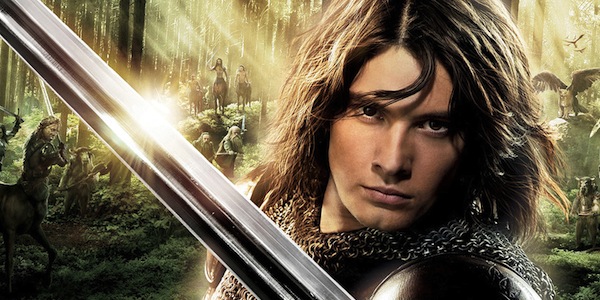
5. The Chronicles Of Narnia - $560m

That's right; the Chronicles of Narnia movies currently rank as the fifth most expensive trilogy in history. As a result of declining box office grosses, there has been little movement on the continuing cinematic adventures of the Pevensie children despite the franchise getting off to a very strong start. Thanks to solid reviews and a prime December release date The Lion, the Witch and the Wardrobe became one of the biggest hits of 2005, earning over $745m at the box office against a budget of $180m, and it seemed that a new fantasy franchise had come along to rival Harry Potter. Sequel Prince Caspian upped the budget to a mammoth $225m and shifted to a summer release date, which yielded incredibly disappointing results. Sandwiched in between box office behemoths Iron Man and Indiana Jones and the Kingdom of the Crystal Skull, the second Narnia offering grossed well over $300m less than its predecessor. Undeterred by the huge drop in profits, 20th Century Fox replaced Disney as the franchise's backers and dropped the budget to $155m for Voyage of the Dawn Treader, which would go on to earn almost exactly the same at the box office as Prince Caspian. With the huge investment required in making the movies failing to generate enough profit, the rights to the series expired with no fourth movie on the horizon until recently, when the Mark Gordon Company announced that The Chronicles of Narnia: The Silver Chair was in the works.

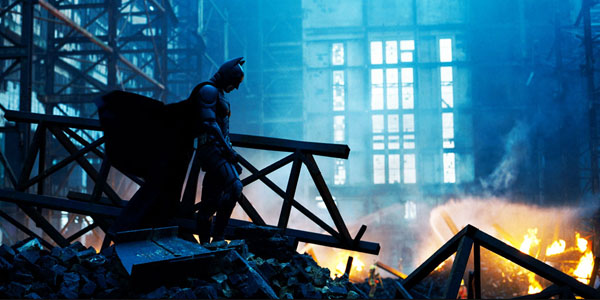
4. The Dark Knight Trilogy - $565m

Christopher Nolan's Batman movies are not just one of the most expensive movie trilogies ever made, but also one of the greatest. Taking the iconic superhero and grounding him in a heightened reality after the high camp of the Joel Schumacher era, the director delivered three highly-influential and epic blockbusters that grossed billions at the box office. Its easy to forget that Batman Begins was a huge risk at the time; coming less than a decade after Batman & Robin had effectively killed the franchise, Warner Bros. handed $150m to a young director that had never made a blockbuster before to deliver a grounded origin story that doesn't even feature the title character in costume until almost an hour into the movie. While Batman Begins would gross a solid-if-unspectacular $374.2m at the box office, the movie inadvertently became the yardstick by which all reboots were measured, with numerous productions referring to it as a direct influence. Three years later, The Dark Knight surprised many by scoring the highest domestic opening weekend of all time on its way to becoming the biggest movie of 2008, showered with praise as quite possibly the best comic book movie ever made, boosted by the late Heath Ledger's instantly-iconic turn as the Joker. $230m trilogy-closer The Dark Knight Rises came burdened with impossibly high expectations, but still managed to deliver a satisfying final chapter in amongst all the plot holes. Unfortunately for Zack Snyder, any future movies featuring the Caped Crusader will inevitably be compared to Christopher Nolan's incredibly popular, and very expensive, Dark Knight trilogy.

3. Sam Raimi's Spider-Man - $598m

Given the lackluster reviews and disappointing box office returns that greeted The Amazing Spider-Man 2, it seems that franchise fatigue is beginning to set in with the continued adventures of everybody's favorite wall-crawler. Which is to be expected really, given that in just 12 years audiences have seen five big-budget Spider-Man movies with plenty of spin-offs on the horizon. With $480m spent on Marc Webb's two entries so far, by the time The Amazing Spider-Man 3 hits theaters it will have eclipsed Sam Raimi's movies as the most expensive Spider-Man trilogy, which finally gives the reboots something to brag about at least. As the live-action debut of the iconic superhero, 2002's Spider-Man was one of the most highly anticipated blockbusters in history. The $140m flick didn't disappoint, with Sam Raimi marrying cutting-edge visual effects to a human story in order to creat a crowd-pleasing comic book movie that broke box office records around the world. Spider-Man 2 saw the budget increased to $200m and the director used his extra funds wisely in order to create several thrilling action sequences, with the end result still ranking as one of the greatest comic book movies of all time. While Spider-Man 3 isn't as downright awful as many would have you believe, it was a crushing disappointment given the quality of the previous two movies, not to mention its status as the most expensive production in history at the time with a mammoth $258m budget. It seems that Sony are content to keep churning out sub-par Spider-Man movies in order to keep hold of the rights, but with over a billion dollars spent on the franchise so far the quality really needs to improve.

2. Pirates Of The Caribbean 1-3 - $665m

The first Pirates of the Caribbean movie remains one of the greatest blockbusters of the 21st Century. On paper, turning a theme park attraction into a $140m special effects-laden movie in a genre that hadn't been popular for years seemed like a huge a gamble. In practice, director Gore Verbinksi pulled it off spectacularly; led by Johnny Depp's Academy Award-nominated performance, Curse of the Black Pearl offered a winning blend of action, heart and humor that turned out to be the first installment in one of the most expensive trilogies ever made. After the movie became one of the biggest hits of 2003 with over $650m at the box office, the decision was made to shoot two sequels back-to-back over the course of nearly two years in what was then the most expensive single production in history. Middle chapter Dead Man's Chest was budgeted at $225m, while the trilogy-closing At World's End became the costliest movie of all time with an eye-watering budget of $300m. While they weren't a patch on the original and suffered from unnecessarily over-complicated plotting, both movies were huge commercial hits. Hollywood isn't known for letting a profitable franchise go to waste, and fourth entry On Stranger Tides hit theaters four years later after jettisoning Verbinksi and most of the original cast, with the next installment Dead Men Tell No Tales in pre-production for a summer 2017 release.

1. The Hobbit Trilogy - $745m

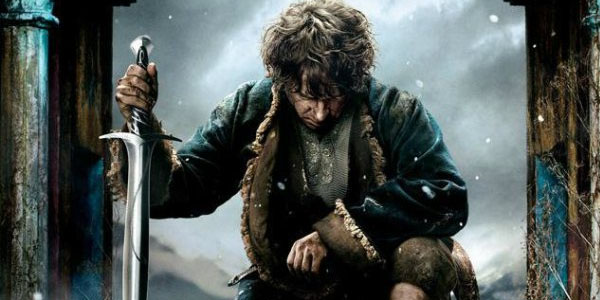
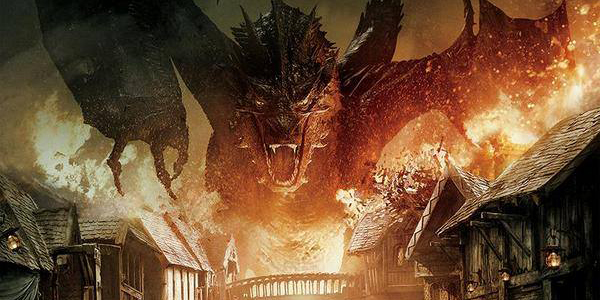
Based on financial reports that were recently filed in New Zealand, it came to light that the combined budgets for Peter Jackson's Hobbit movies had reached $745m, which is quite frankly a mind-boggling number. When you consider that those numbers don't include the final few months of post-production on December's The Battle of the Five Armies, it would be safe to assume that the final tally edges closer to $800m. To put it into perspective, that's almost three times as much as the $281m budget for the Lord of the Rings trilogy. So how did The Hobbit end up costing so much? The inflation argument goes right out of the window, because even adjusting for inflation the three Lord of the Rings movies still cost less than $400m combined. Jackson's preference for CGI over the practical effects and miniatures used in the Rings trilogy surely drove up the production costs, as did the director's decision to shoot the entire trilogy in 3D using the relatively new 48 frames per second technology. The cost of the Hobbit trilogy works out at almost $250m per movie, which would place all three installments amongst the most expensive movies of all time. Still, despite the latest offerings from Middle-Earth being vastly inferior to the Lord of the Rings movies, An Unexpected Journey and The Desolation of Smaug have still earned almost $2bn at the box office. With The Battle of the Five Armies almost guaranteed to gross at least a billion dollars, the huge cost of the production will still result in a healthy profit for the studio.

Contributor

I don't do social media, so like or follow me in person but please maintain a safe distance or the authorities will be notified. Don't snap me though, I'll probably break. I was once labelled a misogynist on this very site in a twenty paragraph-long rant for daring to speak ill of the Twilight franchise. I stand by what I said, it's crap.