10 Most Imaginative Shots On Film
Bullet time still blows minds today.

Hollywood movies can feature as little as a few hundred shots per movie and up to several thousand on the Michael Bay side of things, but how often do you see a movie image that truly burns itself into your brain?
Further still, how often do you see a shot in a movie and become obsessed with how it was achieved? These 10 shots, pushing visual effects, cinematography and sheer directorial skill to a new dimension as they did, left film buffs fascinated with the eye-popping visual insanity they'd just witnessed.
Every single one of them is a technical marvel in its own right, be it a tricksy visual effects shot or a simpler image achieved with state-of-the-art lensing techniques.
Whether instant-classic images from movies of this decade or unforgettable shots from 75 years ago, each will be discussed as an example of timeless, peerless filmmaking and cinematography forever more.
There are great shots, and then there are images so creative and visionary they basically help rewrite the potential of the medium...
10. The Mirror - Contact
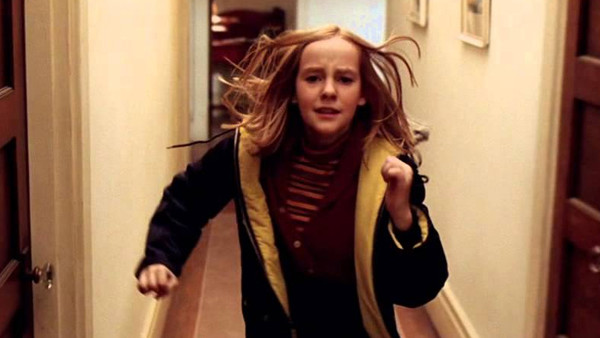
Robert Zemeckis' cult sci-fi drama is perhaps best remembered for a mind-meltingly impressive sequence in which a young version of Jodie Foster's protagonist Ellie (Jena Malone) runs to the bathroom to retrieve her dad's medicine.
The 25-second shot begins with Ellie running up the stairs towards the camera, and as she passes through the hallway, a mirror can be seen in the background, yet the cameraman bafflingly isn't visible in the reflection.
That's just the start, though. As Ellie finally reaches the bathroom, the camera pulls back to reveal that the shot we've been watching is in fact the reflection of the bathroom mirror.
It's one of those brilliantly composed shots you can watch dozens of times to try and figure out, and even over two decades later, the digital trickery - which involved shooting three different perspectives of the shot and blending them with CGI - is absolutely jaw-dropping.
9. Paris Folding - Inception
Christopher Nolan's masterful sci-fi actioner is a film jam-packed with impressive imagery: the rotating hotel hallway alone would've made the cut if it hadn't already been done by Stanley Kubrick many decades earlier.
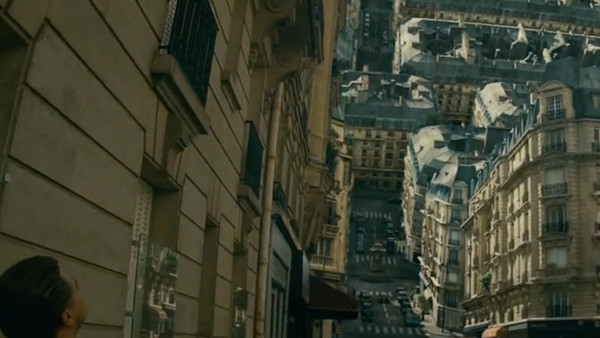
Perhaps nothing is more eye-popping in Inception, however, than the iconic dream sequence in which Paris is shown to fold in on itself.
Though the shot clearly had an influence on the physics-defying nature of Marvel's Doctor Strange, up to this point it was a virtually unheard of image for a Hollywood blockbuster (and one which no doubt helped the movie win both Best Cinematography and Best Visual Effects Oscars).
Anyone who's seen the movie, love it or hate it, will struggle to forget the visual of Paris folding over and locking onto itself. Considering the immense effort that went into conceiving the scene, it's unquestionably one of the most thoughtfully-constructed VFX shots in cinema history.
8. The Car Ambush - Children Of Men

Lengthy single-take sequences are always fascinating to observe, especially when they involve an extensive number of moving parts, as is most certainly the case in this gob-smackingly ambitious set-piece from Alfonso Cuaron's expertly-executed dystopian thriller.
The four-minute single shot sees protagonist Theo (Clive Owen) and his fellow activists driving through the British countryside when they're attacked by an armed motorcycle gang.
The mind-bogglingly complicated sequence involves the likes of flaming vehicles, crashing motorcycles, broken windows, Julianne Moore getting shot in the head and even a shootout with armed police.
While the scene wasn't actually shot in one continuous take - that would be virtually impossible - it was instead six individual shots sewn together digitally with five incredibly seamless transitions.
With a camera rig having to be inserted inside the car alongside the actors, it was a pretty snug fit indeed. The result in the final film, though, is basically magic.
7. Vertigo Zoom - Goodfellas
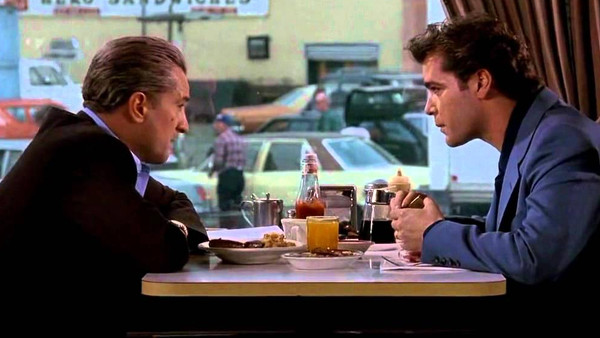
The "dolly zoom" isn't a new cinematic technique by any means, and was popularised by Alfred Hitchcock in his 1958 classic Vertigo.
The effect, which is achieved by moving the camera backwards while simultaneously zooming in, results in the frame's focal subjects remaining the same size but the background perspective shifting dramatically.
It was famously first used in Vertigo to depict Scottie's (James Stewart) fear of heights, and is generally employed to depict an uneasy or reality-altering moment.
Perhaps even more famous than Hitchcock's version of the shot, however, is the brilliant Vertigo zoom employed in Martin Scorsese's Goodfellas. When gangster Henry Hill (Ray Liotta) meets a jumpy Jimmy Conway (Robert De Niro) at a diner, Scorsese inches the camera away from the pair while zooming in, causing the street behind the diner to grow larger.
It's a masterful use of the zoom both because it defies expectations - using the zoom for a dialogue-based scene rather than its typical use in a set-piece - and because it heightens the already potent paranoia of the scene.
The viewer feels uneasy because they know something isn't quite right visually, reflecting Henry's own anxiety about him possibly being "whacked" at any moment.
6. Shadow Of The Vampire - Nosferatu

Though it might seem positively quaint to audiences nowadays, F. W. Murnau's 1922 horror classic remains an enduring influence on the genre, effectively serving as an early blueprint for how to deliver stomach-knotting tension through creative visuals.
No single image from the movie is more fondly remembered than the iconic shadow of Count Orlok (Max Schreck) climbing the stairs. The shot lasts just a few seconds but was a lightbulb moment for the genre, proving how uniquely a clever interplay between light and dark can distort an image to give it a truly horrifying visage.
We might be tempted to take it for granted nowadays, but almost 100 years later it's still a brilliantly unsettling, gorgeous image that the genre will remain indebted to forever more.
5. Twin Suns - Star Wars

There's nothing inherently creative about having the hero of your movie gaze wistfully at the horizon, though George Lucas gave the stock shot a subtly brilliant genre twist by having Luke Skywalker (Mark Hamill) stare out at Tatooine's twin suns in the first Star Wars.
It's not a particularly complicated visual effect, but seamless all the same, in cementing the literally otherworldly nature of this planet, while John Williams' iconic "Binary Sunset" track confirms the movie's irresistible operatic sweep.
It might be the best shot in the entire Star Wars franchise, honestly, serving as a simple yet deceptively smart realisation of the wonder and awe felt by every sci-fi fan every time they look up at the stars.
4. The Hospital Shootout - Hard Boiled

As insanely ambitious and impressive as that faux-single take from Children of Men is, John Woo didn't have the luxury of blending shots together with CGI back in 1992 when shooting his action classic Hard Boiled.
The movie's climactic action sequence sees heroes Tequila (Chow Yun-fat) and Alan (Tony Leung) blasting their way through a hospital, with a near-three-minute chunk of the scene unfolding over a single unbroken take.
There are no digital tricks here: Woo actually had his actors perform the scene in one shot, complete with dozens of squibs, exploding debris and broken glass flying everywhere.
Tequila and Alan enter an elevator mid-way through the sequence in order to head to the next floor, but Woo actually used the same floor for all of the shootout, giving the crew just 30 seconds to re-dress the set and make it resemble another floor.
You'd never guess, though, and the sequence as a whole endures as a mind-blowing testament to the sheer power of filmmaking will.
3. Deep Focus - Citizen Kane

Orson Welles' masterful drama continues to be hailed as one of the greatest films of all time over 75 years later, and with damn good reason.
In addition to its splendid direction, emotionally resonant script and top-notch performances, it's fondly remembered for Gregg Toland's boundary-pushing cinematography, with particular regard to his revolutionary use of deep focus techniques.
Almost every scene in the film sees both the foreground and background captured in the same, sharp level of focus, with the most memorable use of deep focus occurring during the scene where Thatcher (George Coulouris ) agrees to be a young Kane's guardian.
While the conversation between the adults is taking place in the foreground, we can see a young Kane playing in the snow outside the window, and as is uncharacteristic for film, both the background and foreground planes are in crisp focus.
As a technically dazzling work of pitch-perfect framing that further confesses the movie's primary theme of lost childhood, it's utterly remarkable and has lost virtually none of its lustre over the decades.
That Toland didn't win the Best Cinematography Oscar is, frankly, shocking (instead going to Arthur Miller for How Green Was My Valley).
2. Bullet Time - The Matrix

If you're old enough to have seen The Matrix during its original release, you'll remember just how utterly insane it was to watch that iconic bullet time sequence for the first time (and the hundred times more when it came out on DVD).
The shot of course depicts Neo (Keanu Reeves) defying conventional physics by dodging a series of bullets fired at him by an agent, all while the camera smoothly rotates around him in slow-motion.
It's perhaps the single most memorable movie image of the 1990s and of the action genre as a whole.
The brain-breakingly complex shot was achieved by setting up a computer-programmed series of cameras around Keanu Reeves as he performed the dodging manoeuvre against a green screen, with frames being strategically sewn together from these cameras to create the illusion of fluid movement around him. The rooftop background was then inserted digitally.
It's probably the best-aged visual effect from any of the Matrix films, and almost two decades later, still remains a high-point of cinematic VFX in spite of the many subsequent movies that imitated the technique.
1. The Star Gate - 2001: A Space Odyssey

Stanley Kubrick's 2001: A Space Odyssey is an epoch-making cinematic achievement from beginning to end, and even if the movie doesn't connect for you entirely, it's basically impossible to argue with the impeccable craft on display.
This is exemplified perhaps no better - and certainly no more inventively - than in the lengthy sequence where Dr. Bowman (Keir Dullea) takes a traumatic, visually stunning trip through a Star Gate.
Kubrick and legendary special effects supervisor Douglas Trumbull achieved the artful barrage of patterned light through slit-scan photography, where coloured images are passed in front of a camera for a long period of exposure, creating those unforgettable psychedelic planes.
It's an almost peerlessly hypnotic piece of photography that still has new audiences begging the question, "How the hell did they do that?" even half a century later.
What do you make of these insanely imaginative shots? Got any other suggestions? Shout them out in the comments!