10 Most Infuriating Movie Endings
10. Star Trek Into Darkness
 The Ending: Kirk enters the radioactive engine chamber of the Enterprise to fix the warp core, and dies from radiation poisoning, as Spock helplessly watches on the other side of a window. However, tragedy is averted when it is discovered that Khan's blood can be used to bring Kirk back to life, and all is saved. Why It's Infuriating: Firstly, it rips off the ending of Star Trek II: The Wrath of Khan - where Spock dies under similar circumstances, with the same tender moment of recognition between him and Kirk - and then brings Kirk back from the brink of death through the laziest of means - Khan's blood. Though it is implied throughout that Khan is no ordinary being, to suddenly reveal his magic blood at the most convenient moment possible is just poor writing. None of expected or even wanted Kirk to die, but c'mon, there has to be a better way to play this out...
9. The Mist
 The Ending: David Drayton (Thomas Jane) completely gives up on the prospect of being saved, and rather than facing a fate in which he, his son and the other survivors are ripped apart by alien monsters, they enter a suicide pact. David kills the three adults as well as his own son, but when he turns the gun on himself, he realises he's out of bullets. He ventures outside to be killed by the beasts, only for the military to show up, having quashed the alien onslaught and making it clear that had he waited just two minutes longer, David and the others could all have lived happily ever after. Why It's Infuriating: Though few will doubt the visceral impact of the ending, this is almost too devastating for its own good. It's frustrating to watch, and almost feels like Frank Darabont - who changed the ending from Stephen King's original text - trying to chastise us. It's an ending so deliberately intended to shock that, for some, it simply invites laughter - it's so grim that if you don't laugh, you'll probably cry. A lot.
8. American Graffiti
 The Ending: After a fascinating, nostalgic passage through the 1960s, a title card before the end credits that of the four main characters, one is killed by a drunk driver in December 1964, and another is reported missing in action in December 1965. Why It's Infuriating: It's needlessly bleak and thrown in there for no reason. Whereas, say, Stand By Me used the death of a central character as a framing device, here it just doesn't serve much of a purpose beyond saying "life is short". Sure, we were left wanting to know more about what happened to these four guys, but to make it so needlessly bleak smacks of a filming aiming to be "realistic" but overshooting. A sequel, More American Graffiti, explored the deaths of these two characters in more detail, and unsurprisingly, was a critical flop and nowhere near as financially successful as the original.
7. Martha Marcy May Marlene
 The Ending: Martha, who has spent the movie on the run from a cult, returns to her family and experiences paranoia-fueled visions of her captors, apparently trying to re-capture her. After noticing a vision of a man on the lake - who may or may not be real - the same man runs in front of the car being driven by Martha's brother in law. The man then gets into a parked car behind their own car, and appears to follow them, before the movie cuts to black. Why It's Infuriating: It's a madenningly ambiguous note on which to end the film; it's fashionable these days to be open-ended and leave things up to the viewer, but after 2 hours of subjectivity, a little closure would have been nice. Instead, Martha's delusions simply continue (perhaps), and we're left to debate until the end of time whether Martha and her family were followed and murdered - or perhaps Martha was returned to the cult - or if this is just another of Martha's visions.
6. Halloween 5
 The Ending: Michael Myers has been caught, and is locked inside a police cell at the sheriff's station, when a mysterious figure dressed all in black shows up, blasts the cell open and murders everyone with a machine gun. Myers gets broken out, and the movie promptly ends. Why It's Infuriating: Firstly, it's horrendously unsubtle sequel bait, and in its mysteriousness, damn-near begs folks to tune in for part six to find out who this mysterious figure was. Secondly, it doesn't make a lot of sense; who is this figure? Why are they helping Michael? Though we do eventually get some answers in the next movie, would it not have been smarter to at least give us a hint this time around, such that we can actually have something to talk about with our buddies? Instead, most were just left confused and annoyed.
5. Seven Pounds
 The Ending: Tim Thomas (Will Smith) wants to atone for a car accident he caused two years prior which killed seven people, and so commits suicide - by getting into a bathtub with the most poisonous jellyfish on Earth - in order that his various organs will be donated to seven good people he has previously acquainted himself with. The final scene has Emily (Rosario Dawson) meeting up with a formerly blind man named Ezra (Woody Harrelson), who has since inherited Tim's corneas, and when Emily realises this, she breaks down into tears. The two hug out of appreciation for what Tim did for them - Emily got his heart - and the movie ends. Why It's Infuriating: Though Seven Pounds has some interesting ideas, the execution leaves a lot to be desired. Aside from the sheer ridiculousness of the central concept, it's an ending that tries to be moving and heartfelt, but really, it's just weird and doesn't foster much of an appreciation for life, as it's clearly trying to. It's a movie so clearly striving to be Oscar bait that it in fact ends up being more than a little pretentious.
4. Signs
 The Ending: It transpires that the alien invaders are in fact allergic to H2O, and that fact essentially causes their invasion to completely fail. Why It's Infuriating: Even ignoring the fact that it's another laboured twist from the M. Night Shyamalan stable, it's a shameless rip-off of War of the Worlds' "nature saved us" twist, and given how seemingly advanced these aliens are, it's patently idiotic that they didn't scope out Earth's atmosphere before invading. It sacrifices a coherent ending for an ironic one that didn't so much thrill audiences as have them groaning all the way home.
3. Star Wars Episode VI: Return of the Jedi
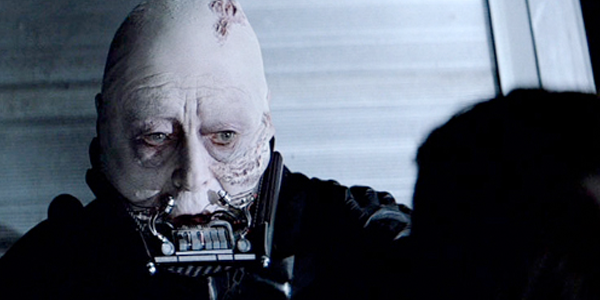
The Ending: Darth Vader, the vicious antagonist throughout the series, turns against the Emperor to save his son, Luke, and after dying, stands aside ghosts of Obi-Wan and Yoda, having seemingly redeemed himself for his past atrocities. Oh, and there's dancing Ewoks celebrating the Empire's defeat. Why It's Infuriating: After the brilliant darkness of The Empire Strikes Back, it all seems a bit rushed and haphazard by comparison. The redemption of Vader is sickly sweet, and there's not sufficient build-up for him saving his son, given that the two were trying to slice each other to pieces just moments earlier. Furthermore, it's hard to think of Vader as redeemed given everything horrible we've seen him do throughout the three movies; as a result, placing him next to Obi-Wan and Yoda seems like something of an empty sentiment. And the dancing Ewoks are so, so corny, clearly just part of Lucas' plan to sell more action figures. Though this film gets a lot right, it falls rather short in the denouement.
2. The Shining
 The Ending: Jack Torrance (Jack Nicholson) has become a murderous psychopath, Hell-bent on murdering his son and wife with an axe. Jack eventually freezes to death in a snowy maze while chasing his son, and the final shot of the film provides one last provocation; it is an image of Jack in the Overlook Hotel dated 1921. Why It's Infuriating: One of the most ambiguous and fervently discussed final shots in the history of cinema, it's difficult to know what to take away from this final glimpse of Jack, and that's why it's so frustrating. Kubrick added the scene of his own volition - it wasn't in King's novel - and while it provides a creepy jolt to an already supremely unsettling film, it seems to sacrifice coherence and logic for the sake of mood and atmosphere. Does this mean Jack had been a ghost the whole time? Or is there a distinctly more strange explanation that only Kubrick knew? Unlike the binary uncertainty of, say, Inception - where there is clearly one of two outcomes that is the right one - here we're left to debate the nature of this flourish forever more.
1. The Devil Inside
 The Ending: The protagonists are driving along, when the driver becomes possessed and crashes the car. The screen cuts to black, before a title card reads that the case remains unsolved, and that viewers should head to www.therossifiles.com for more information. Why It's Infuriating: Because it's not an ending. It gives the impression that the filmmakers, who shot the movie for $1 million, had no cash to finish their movie, and instead decided to ask audiences to do their own homework to find out what happened next. It's incredibly crass and resulted in the film being panned by both critics and audiences alike, because it's such a cynical move to try and part audiences with their hard-earned money. The film was hardly good before this, but it left an especially sour taste as as result. Which movie endings infuriate you the most? Let us know in the comments below.