10 Most Magnificent Bast*rds In Cinema

You're one microscopic cog in his catastrophic plan, designed and directed by his red right hand.

The €˜magnificent bast*rd€™ is a long-running and incredibly popular archetype in all kinds of narratives and genres: essentially, he or she is a Machiavellian planner, often ruthlessly, always audaciously so. Sometimes the protagonist, usually the antagonist by default, the magnificent bast*rd will often walk the line between the two, as well as between hero and villain. Their motivation will vary, but one thing will remain constant €“ always more than two or three steps ahead, the magnificent bast*rd will have planned for everything you€™re thinking of, and then some. Even if something goes horribly wrong with their scheme, they€™ll have a back-up that will achieve the same outcome, or will have an escape route set up to try again later. Mostly though, what distinguishes a magnificent bast*rd from your common or garden supervillain is their panache, the bold, show stealing nature of their plans. Lateral thinking is where they live. They€™re not prone to grandstanding€ it€™s more that the magnificent bast*rd simply doesn€™t have any truck with caution or fear, and can therefore do things with impunity that others might not ever consider. Here are the ten most magnificent€ and, of course, here be spoilers. Don€™t say we didn€™t warn you.

Honourable Mention: Jigsaw - The Saw Franchise (2004-2010)

On the face of it, John Kramer €“ called the Jigsaw Killer, or simply Jigsaw €“ is the epitome of the magnificent bast*rd archetype. He takes planning and ruthless, cruel cunning to new levels in his attempts to inspire people into a new appreciation of their lives€ by holding those lives in his hands. The problem is the law of diminishing returns involved in the seven-movie franchise. With each film layering another intricate addition onto the puzzle of the narrative, the narrative itself becomes bogged down in plot. The more involved it is, the less involving it becomes, and with that, it becomes harder to invoke a suspension of disbelief. Jigsaw stops being a Grand Guignol genius around halfway into the franchise with his own death at the end of Saw III, and his impact is further diluted by the apprentices that try (and fail) to become like him throughout the remainder of the films in the series. Had the filmmakers stuck to the axiom that less is always more, they might have created a true magnificent bast*rd for the ages.

10. Roy Batty €“ Blade Runner (1982)

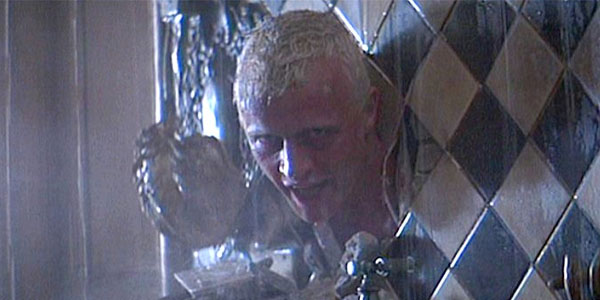
The leader of the disparate gang of mutineer Nexus-6 replicants that represent the antagonists of Ridley Scott€™s seminal sci-fi noir, Roy Batty is a combat model, activated on January 8th 2016, making him close to his fourth birthday by the time the events of the film occur€ and of course, the day of his death, the Nexus-6 replicants having been designed with an expiration date. That€™s the point of their journey to Earth, a place where they€™re outlawed and subject to immediate €˜retirement€™, or execution: Roy has brought them there to find a way to halt or reverse that expiration, to extend their lives. Unlike the others, Roy was designed to be both physically and mentally superior to human beings, possessing a near-genius level intellect. Where other renegade replicants run around like headless chickens until a Blade Runner catches up with them, Roy has a plan: find the father of their race, their demiurge, and persuade him to cough up a cure. We€™re looking at a magnificent bast*rd near the end of his options, with one final plan to see carried out€ or die in the attempt. The police never locate Roy Batty during the course of the film, and Rick Deckard, the titular Blade Runner, doesn€™t come close to catching him. He€™s a ghost throughout the film, always a few steps ahead, pursuing the goal of arranging an audience with his God. That plan succeeds: Batty meets Tyrell, head of the corporation that created him, but nothing can be done. The date of their demise is set in stone. Roy Batty kills God with his bare hands, and then hunts Deckard, the man who€™s killed four of his friends but hasn€™t even laid eyes upon him. That€™s when you realise, if you haven€™t already€ Deckard isn€™t the hero, Roy is. If Blade Runner is a tract, persuading the viewer that replicants are people too, then Deckard€™s a state-sponsored assassin. Roy is the man with the plan, defeating all of his enemies, smart, powerful, charismatic and compelling. Roy gets the magnificent, uplifting death scene, speaking poetry into his last dark night: Deckard just lies there, a literal footnote.

9. Amy Elliott Dunne €“ Gone Girl (2014)

There€™ve been a lot of column inches wasted on whether writer Gillian Flynn and director David Fincher have created a misogynist€™s wet dream in high society sociopath Amy Elliott Dunne. After all, she€™s the wife that goes off the deep end when her increasingly estranged husband Nick finds comfort in the arms of another. 'Bitches be crazy', right? Wrong, no and not a bit of it. Amy isn€™t your standard woman scorned, and the narrative makes it very clear that her long range, calculated, astonishingly brutal and single-minded scheme (to disappear and have Nick arrested and executed for her murder) isn€™t her first, although it is her worst. An only child of parents made rich by the publication of children€™s books starring an idealised €˜perfect€™ version of herself, Amazing Amy has little affect, instead simulating emotional expression based upon what she considers she€™s entitled to. Try to remove what she€™s entitled to, and she reacts poorly, and perfect Amy was most certainly entitled to the perfect, doting husband. Amy€™s machinations are months in the preparation and fiendish in their execution. The only things she wasn€™t able to plan for were being mugged of the funds she needed to lay low and being held captive by the obsessed ex-lover she calls to help her out of the jam. When things begin to fall apart around her, she simply redraws her grand scheme around her new circumstances, murdering her ex and blaming him for the kidnapping, to return to Nick: exonerating him and reclaiming him for herself in a breathtaking display of chutzpah. It doesn€™t matter to her in the slightest that her husband knows what she tried to do to him, who and what she really is. She covers all the angles, and Nick has no option but to acquiesce: the end of the film sees the two begin to cautiously resume their lives together. Amazing Amy always gets what she wants.

8. Dylan Rhodes - Now You See Me (2013)
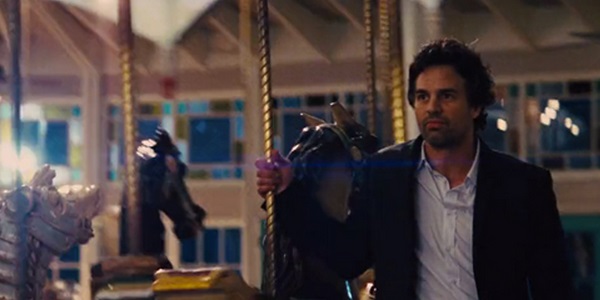
A convoluted revenge narrative, Now You See Me features four disparate illusionists brought together by a mysterious benefactor, who supplies them with the wherewithal to become the extraordinary magicians they cannot be on their own€ provided they enact his cunning master plan. The Four Horsemen, as they style themselves, soon find themselves hunted by the police and FBI when their outlandish, heavily publicised €˜event illusions€™ appear to be causing crimes to be committed. In turn, the FBI call upon the assistance of one Thaddeus Bradley, a former magician who now reveals the secrets of others for money, to figure out how they€™re doing what they€™re doing. Naturally, a film all about the delight in misdirection and surprise that is the basis of every good magic trick has a few tricks up its sleeve, and the denouement reveals that Special Agent Dylan Rhodes, the man in charge of the manhunt, is the Four Horsemen€™s secret patron and mastermind of the whole tangled web he€™s supposedly investigation. All of the victims of the crimes being committed were partially responsible for the circumstances surrounding the death of his illusionist father: Bradley being the final man he held responsible, he arranged for him to be brought in to frame him for the other crimes. Like all good magnificent bast*rds, Rhodes plan is complex but makes complete sense once it€™s laid out in front of you, and as played by Mark Ruffalo, he€™s not exactly lacking in charisma. Of course, since this is a film about very, very clever people, Now You See Me falls victim to the usual trap of not being as clever as it thinks it is€ it is, however, exactly as stylish as it thinks it is, and for a movie about magicians pulling off heists, style is key. And, like all good magnificent bast*rds, Rhodes makes sure to leave the ending open for a sequel€

7. The Langs €“ Arlington Road (1999)

Oliver and Cheryl Lang head up the perfect suburban family€ at least, that€™s how they appear. When widower Michael Faraday begins to suspect his far-too-normal neighbours of being domestic terrorists, absolutely no one believes him: his wife had worked for the FBI until her death in the line of duty, and he€™s considered to be acting out his grief. Naturally, Faraday begins his own investigations, leading to a second act where it€™s deliberately unclear whether this is a film about secret terrorists at the heart of America, or one man€™s increasingly out of control behaviour€ oh, who are we kidding? It€™s a film about secret terrorists at the heart of America. Tim Robbins and Joan Cusack are wonderfully creepy as the anti-government criminals murdering and bombing their way across the country, and Jeff Bridges gets to do his stoic face a lot as the lone man trying to stop them. Where this takes a turn for the magnificent is when Oliver lets slip that a car bomb is on its way to the local FBI headquarters with Faraday€™s son a passenger in the vehicle, leaving our hero going all out to stop the van and save the day in a tense, frenetic chase sequence. It transpires that Oliver deliberately gave up the information. When a wild-eyed Faraday drives straight through FBI security into the car park in the basement of the building to find the van empty, he realises that the only person with no authorisation to be there is him. The bomb is in his own car, and he€™s just delivered it€ and then it detonates, taking down the building and everyone in it, including Faraday. That€™s how the Langs operate: they find a patsy, someone with a history of erratic behaviour or a possible motive for wanting to hurt the government, and frame him or her for their crimes. They€™ve solved the problem most terrorists find themselves faced with: the fact that, although no one can stop a martyr, martyrdom is a one-shot deal. They make their own martyrs, and move on to the next target.

6. Aaron Stampler - Primal Fear (1996)

Gregory Hoblit€™s courtroom drama/homicide procedural takes a turn for the melodramatic when it€™s revealed that the prime suspect in the brutal murder of a beloved archbishop, a stuttering angel of a Southern altar boy named Aaron Stampler, may have carried out the crime after all - acting out in a dissociative state, under a distinct and separate personality named Roy. The kid€™s defence attorney Martin Vail, played with smarmy glee by Richard €˜Silver Fox€™ Gere, is frustrated because he knows that the judge won€™t let him amend the plea at this late stage, and that it€™s too implausible a set of circumstances to request a new trial. Convinced that his sweet-natured client belongs in a hospital rather than a prison, Vail engineers the emergence of the volatile, psychotic Roy in open court when Aaron is cross-examined on the witness stand, leaving the judge with no alternative but to dismiss the jury and have Stampler remanded to a maximum security medical facility. Vail is celebrating with his client, having used his scuzzy defence lawyer powers for good rather than evil for a change, when Stampler slips - just once, but Vail picks up on it. And Stampler smiles, and begins to clap, the €˜Roy€™ persona coming to the fore again€ or rather, dropping the mask of the €˜Aaron€™ persona. There was never any multiple personality disorder. He€™d exploited Vail€™s affection for him, playing up the sweetly naïve character he€™d created for the lawyer€™s benefit in order to manipulate him into making sure that the criminal case would be overturned. The murderous sociopath would find a way out of medical care far easier than he would a prison, and in the meantime, in the dying moments of the movie, the magnificent bast*rd manages to escape a conviction and the death penalty despite being found fleeing from the scene and covered in the victim€™s blood.


5. The Man With No Name €“ A Fistful Of Dollars (1964)

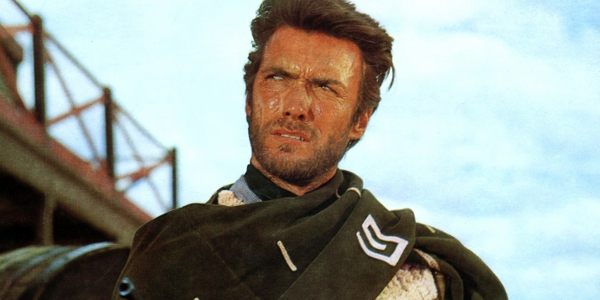
A no-brainer, this one: Clint Eastwood€™s Man With No Name, aka €˜Joe€™ rides into a small town split down the middle by rival criminal factions, and manipulates both sides against one another until all the men of violence except for him are dead, and the civilians made safe. A Fistful Of Dollars is an unspoken, unofficial remake of the Akira Kurosawa ronin flick Yojimbo, starring the legendary Toshiro Mifune €“ which itself heavily drew from Dashiel Hammett€™s books The Glass Key and Red Harvest. The material would also yield two quality Prohibition-era gangster flicks: Hammett€™s books were a significant influence on the Coen Brothers€™ peerless Miller€™s Crossing in 1990, starring Gabriel Byrne, while Yojimbo would spawn an official remake in Walter Hill€™s Last Man Standing in 1996, starring Bruce Willis. We€™ll gloss over the cheapass B-movie The Warrior And The Sorceress (1984). Everybody else does. So, given all of this, why have we chosen the spaghetti western? Out of all of the nameless protagonists in these films, Eastwood€™s laconic Man With No Name is the most iconic, exhibits the most effortless cool, a permanent wry squint on his face throughout. All four are beaten up and/or tortured, but only Eastwood makes it look as though it€™s a part of the plan. And Eastwood€™s ultrafast gunslinger has more fun taking the enemy apart: he comes at the final gang with a gun and a bag full of dynamite, and takes the Big Bad€™s best shots by sneaking an iron plate underneath his clothes and provokes him into aiming for the heart, before beating him in a contest, rifle versus pistol, to see who can reload and shoot first. Of course, this is an article about cinema: were the remit expanded, we€™d go for Dashiel Hammett€™s original protagonist every time. Nameless like his cinematic brethren, The Continental Op is a staple of Hammett€™s stories: always seven steps ahead of everyone, untouchable and deadly with his own cynical moral code, and plays separate antagonists against one another as a part of his modus operandi.

4. Andy Dufresne €“ The Shawshank Redemption (1994)

The second appearance of a Tim Robbins character here. Falsely imprisoned for the murder of his wife and her lover, fallen banker Andy Dufresne learns the hard way in Shawshank State Penitentiary that he can€™t rely on anyone but himself. He spends twenty years gradually building up trust with the prison warden and the sadistic captain of the prison guards, making himself indispensible to them to acquire untouchable status with the inmates, as well as instrumental to the money laundering of their embezzlement from the proceeds of kickbacks for prison labour. Meanwhile, he€™s been busy carefully carving a hole in his cell wall€ The Shawshank Redemption is a supremely uplifting film, a film that allows for hope in the face of hopelessness€ or appears to. In fact, only Andy could possibly have plotted for nigh on two decades to escape and steal all of the funds he€™d hidden for his enemies, having them arrested for corruption and murder: and only Andy would have had the sheer iron will to spend twenty years carving an escape route through his wall with a succession of spoons. His best friend Red says as much €“ all lifers are institutionalised, people without hope. All except for Andy Dufresne. His most magnificent moment, aside from the escape itself, is of course the scene where he locks himself in the wardens office to play Mozart€™s gorgeous The Marriage Of Figaro to the other inmates over the PA system, giving them the merest glimpse of beauty in hell: making them feel free. The little smile on Andy€™s face says it all: this feeling is absolutely worth two weeks in solitary confinement.

3. Danny Ocean - Ocean's Eleven (2001)
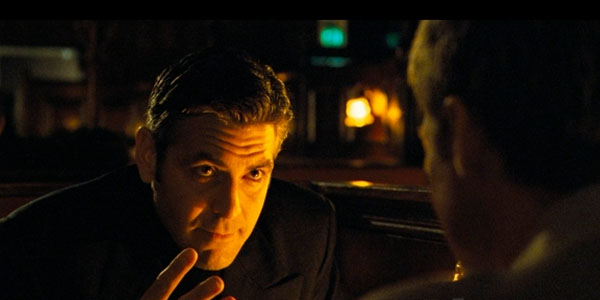
Paroled from a New Jersey prison after being caught trying to move stolen Incan matrimonial head masks, professional master criminal Danny Ocean is asked by the parole board what he€™ll do on the outside, and doesn€™t reply. Why? Because Las Vegas casino mogul Terry Benedict is sleeping with his ex-wife, and he€™s going to do something about it. Right from the very beginning, Ocean sets out his stall. The terms of his parole require him to stay in New Jersey, but upon getting out he immediately criss-crosses the United States to recruit his crew. The film isn€™t twenty minutes old, and he€™s shattered his parole into a million pieces before he even sets foot in Las Vegas, where the score is. And what a score. Terry Benedict is a dangerous, dangerous man, but Ocean intends to take down all three of his casinos in a single night, robbing their single shared vault on the night of a massive boxing match to net an ice cool $150 million€ oh, and get his wife back from Benedict while he€™s at it. Danny Ocean is the smoothest guy George Clooney has ever played, and that€™s saying something. His unflappable, affable demeanour masks a ferociously disciplined, creative planner and leader. He€™s incredibly well connected, able to locate the right person for the right job seconds after deciding what the right job actually is. When Willy Bank details the bad men he knows who€™ll make Danny pay for stealing from him, Ocean€™s unfazed: they like him better than they do Willy. Ocean likes to try and live by three rules: don€™t hurt anyone, don€™t steal from those who don€™t have it coming, and play the game like you have nothing to lose. Unusually for a magnificent bast*rd, Ocean doesn€™t prize ruthlessness above all else, hence the first rule. The second of the rules is obviously the most flexible of all: Benedict €˜has it coming€™ because he€™s with Tess, and because Danny thinks he can afford it, not necessarily because he€™s a bad man; Willy Bank, on the other hand, is robbed because he€™s crossed the line and because Danny doesn€™t like him. The third rule is quintessential magnificent bast*rd. Oh, and he manipulates events so that he gets the girl at the end, because of course he does.

2. Adrian Veidt €“ Watchmen (2009)

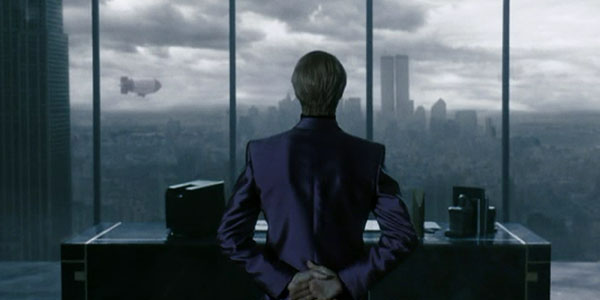
The man who would take the name Ozymandias as a costumed superhero is an altruist, but also a pragmatist. He gives his parents€™ colossal fortune to charity due to the repugnance he feels at how they made their money, but also because he has total confidence that he€™s capable of restoring his finances should he need to. Believing that his intellectual genius gives him a responsibility to his fellow man to improve their lot, he takes on a personal war on crime as a teenager, but broadens the scope of his remit as he realises the scale of crime in the modern world. He successfully predicts the turning of public opinion away from costumed vigilantes, and outs himself before he can be damaged by the fallout. More than that, he predicts that a nuclear world war is inevitable, and determines that he has an obligation to prevent it by uniting the feuding countries of the world. As Alexander the Great did by conquest, so Ozymandias intends to do by subterfuge. He orchestrates a series of events that cause the world€™s only true superhuman to be blamed for a series of appalling disasters and the loss of millions of lives, causing the governments of the world to abandon their infighting and join forces to protect themselves from the outside threat. It€™s certainly a more interesting and logically consistent idea than the plan his comics counterpart has: dumping a giant psychic squid monster in the middle of New York and telling everyone that the aliens are coming. But it€™s the little things as well as the grand schemes, like organising a genuine attempt on his own life to throw people off the scent. When his erstwhile teammates come to stop him, Veidt makes sure to have set the final wheels in motion half an hour before they get there. So convinced is he that those wheels can€™t be stopped, that his plan is foolproof, that he lets the others go, knowing that there€™s nothing they can or will do to reveal his actions to the outside world. The irony, of course, is that it€™s fools that may be his undoing. The unhinged, uncompromising Rorschach has left evidence of Veidt€™s involvement with a right wing tabloid newspaper. Not that he€™d ever let them stop him€

1. Keyser Söze €“ The Usual Suspects (1995)

The legendary demiurge of modern crime, Keyser Söze runs his shadowy empire through a rewriting of the dominant narrative convention of the criminal kingpin: far from being the antagonist of the usual alpha male crime thriller, Söze inhabits the murkier territory of a ghost-story-cum-fable. He€™s a bogeyman, a spectre: criminals are warned about him the way that children are warned about talking to strangers and walking in the woods at night. He€™s the Devil himself, and how do you shoot the Devil in the back? What if you miss? And that€™s the film, in a nutshell €“ a noir narrative rewritten as apocalyptic mythology, a story filled with false names, half truths and embellishments told by a conman, a habitual liar who talks too much: an unreliable narrator who may in fact be the villain, assuming that Keyser Söze even exists. After everything that occurs (or doesn€™t occur) the police are no closer to finding him at the climax of the film, and the stated implication is that Söze has only come out of hiding to make certain that the one man who can pick him out of a line-up is dead. One thing is certain, however. Keyser Söze's reputation has only been enhanced by the events of the narrative, the mystery deepened. The story will go that he appeared on the ship, killing many men, was taken by the police and walked right out of his prison cell, never to be seen again.

Contributor
Contributor

Professional writer, punk werewolf and nesting place for starfish. Obsessed with squid, spirals and story. I publish short weird fiction online at desincarne.com, and tweet nonsense under the name Jack The Bodiless. You can follow me all you like, just don't touch my stuff.