10 Movie Actors Who Refused To Talk To Directors On Set
Brad Pitt and Marc Forster had a massive falling out on World War Z.

Even the seemingly simplest movie production is an enormously complex tapestry of systems that need to work together in harmonious concert in order to deliver a quality motion picture.
But the high-stress, pressure-filled nature of a film shoot, where millions of dollars are on the line, means that flare-ups between members of the cast and crew are commonplace, typically due to disagreements about a film's given direction.
The most common and troubling disputes are between filmmakers and their primary cast members, which in a worst case scenario can lead to major stalls in production and perhaps even one of the parties walking away from the project entirely.
These 10 movies all hit screens after suffering through strained productions where relations between the director and an actor were worn enough that they even stopped talking to one another.
Clearly things need to get to a pretty ugly place that professional filmmakers and performers can't even stomach holding a basic dialogue with one another, but such is the outcome when passionate artists butt heads over their respective visions for a project.
In some cases you'd never have any idea there were creative frictions whatsoever, while in others that disarray is evident in basically every frame...
10. Val Kilmer - Batman Forever

It's no secret whatsoever that Val Kilmer had a reputation for being a major pain in the ass to work with throughout the 1990s, frequently clashing with co-stars and directors alike.
This included Batman Forever, where Kilmer grew frustrated with the constrictive nature of the Batman suit and consequently lashed out at members of the crew.
Kilmer's altercations with the crew caused director Joel Schumacher to step up and have his own "physical pushing match" with the actor, in Schumacher's own words. This led to Kilmer refusing to speak to Schumacher for an entire two weeks of filming:
"He was badly behaved, he was rude and inappropriate. I was forced to tell him that this would not be tolerated for one more second. Then we had two weeks where he did not speak to me, but it was bliss."
In an interview shortly before his 2020 death, Schumacher reiterated that Kilmer was "psychotic" despite praising his performance.
Evidently it was probably best for everyone involved that Kilmer didn't return for the execrable follow-up Batman & Robin, where he was replaced by George Clooney.
9. Eddie Murphy - Coming To America

It may be heralded as an unassailable comedy classic today, but production on the hugely popular 1988 Eddie Murphy vehicle Coming to America was anything but smooth.
As profiled in a recent episode of Netflix's The Movies That Made Us, Murphy and director John Landis got into a fiery argument after Murphy's production company, Eddie Murphy Productions, stalled paying an agreed salary to the film's writers David Sheffield and Barry W. Blaustein.
Landis called Murphy out on it, apparently in a joking manner, which nevertheless led to an incident where Murphy allegedly grabbed Landis in a headlock, prompting Landis to storm off the set.
Landis eventually returned to the production after learning he wouldn't be paid if he didn't complete the film.
The director then met with Murphy upon which the two agreed to finish the project but were no longer friends, leading to them being non-communicative for the rest of the shoot.
Landis would reportedly speak to Eddie through his uncle Ray Murphy Sr., who played the small role of Stu in the film, while the first assistant director would relay messages from Murphy to Landis. Oof.
And yet, the final film impressively bears no visible scars of this fraught relationship.
8. Warren Beatty - Ishtar

By all accounts 1987's adventure-comedy dud Ishtar was an absolutely nightmarish shoot, defined by production overruns which almost doubled its budget to a massive $51 million, and squabbling between star Warren Beatty, director Elaine May, and cinematographer Vittorio Storaro.
The Morocco shoot was a disaster - director May was deeply uncomfortable throughout the harsh desert shoot, and suffered from a toothache which she refused to have treated locally.
This surely only exacerbated her disagreements with producer-star Beatty, who she felt sided with DP Storaro during most of the on-set disputes.
Furthermore, May came to blows with female lead Isabelle Adjani, who not-so-coincidentally happened to be Beatty's partner at the time.
According to co-star Dustin Hoffman, for much of the shoot Beatty and May weren't on speaking terms, but settled on an agreement to shoot each disputed scene twice - once his way, once hers.
Ultimately having so much footage to choose from - reportedly 108 hours of dailies - did little to help the end product, which was a critical and commercial failure, in addition to winning May a Worst Director Razzie.
7. Linda Fiorentino - Dogma
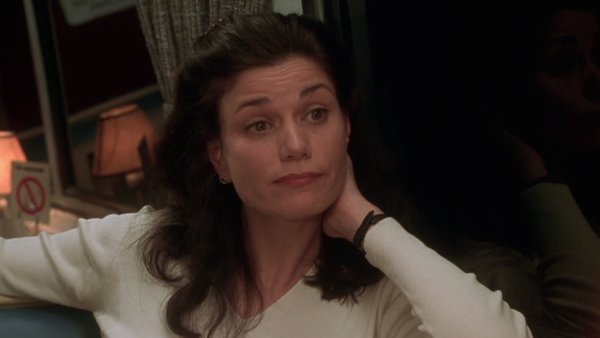
Kevin Smith's Dogma is such a ludicrously entertaining piece of work that it's difficult to picture the set having much of a hostile vibe at all.
But according to Smith himself, he had major issues with lead actress Linda Fiorentino, who played protagonist Bethany Sloane.
Smith claims that Fiorentino had hang-ups about her co-stars which made the shoot far more dramatic than it needed to be:
"Linda created crisis and trauma and anguish... She created drama while we were making a comedy. She was ticked off that there were other people in the movie who were more famous than she was."
According to Smith himself, the situation was bad enough that Fiorentino wouldn't speak to him on some shooting days, making him regret that he went to bat to cast her in the first place.
On the film's DVD commentary, Smith even suggested co-star Janeane Garofalo should've played the lead instead.
Unlike other conflicts on this list, however, time seemed to heal this wound, as Fiorentino wrote to Smith following his 2018 heart attack to wish him well. Smith said of the experience:
"It had been years since I had spoken with Linda and I got an email from her. And of course I was thankful to hear from her and it also gave me a chance to say I'm so sorry that I ever said that thing years ago. It gives you a chance to make amends. So that was my favorite one. I heard from so many people, but that one really stood out for me."
6. Alec Guinness - Bridge On The River Kwai

The Bridge on the River Kwai is a sure-fire classic war film from master director David Lean, though the lengthy location shoot caused cast and crew relations to deteriorate, especially between Lean and star Alec Guinness.
Guinness, who took the role of Colonel Nicholson after being initially reluctant to accept it, disagreed with Lean about how the part should be played. This came to a head in the later stages of shooting, by which point Guinness and Lean were refusing to speak to one another.
Reportedly the English cast were so hostile to Lean that he told them, "Now you can all f**k off and go home, you English actors," and when William Holden arrived to shoot his scenes, Lean said, "Thank God that I'm starting work tomorrow with an American actor."
Despite getting on well with Lean, Holden's presence only further strained the mood on set, with Guinness decrying the actor's "love to pontificate" while apparently boasting of his career successes.
None of this animosity evidently hurt the final film, which won seven Oscars including Best Picture alongside respective Best Director and Best Actor Oscars for Lean and Guinness. A happy ending, then.
5. Wesley Snipes - Blade: Trinity

The stories of Wesley Snipes' behaviour on Blade: Trinity are practically legendary at this point, mythologised so hilariously by Snipes' co-star Patton Oswalt.
The film was a majorly troubled production from the outset due to Snipes being dissatisfied with both the script and the decision to let writer David S. Goyer, who penned all three films in the series, direct.
This primed a noxious atmosphere from the outset as Snipes routinely clashed with Goyer to the extent that he outright refused to film scenes, and according to Oswalt spent a lot of time getting stoned in his trailer instead.
This forced Goyer to rely on stand-ins and even employ visual effects to complete Snipes' performance. Things got bad enough that Snipes allegedly became violent with Goyer, prompting Goyer to hire local bikers to act as his protection.
For much of the shoot Snipes refused to speak to Goyer and even some of his co-stars, instead using Post-it notes and his assistant to communicate.
Snipes has of course denied these accounts, though tellingly not a single one of his fellow cast members has stepped up to defend him. Unsurprisingly the resulting film is not good, if we're being polite.
4. Sean Penn - The Falcon & The Snowman
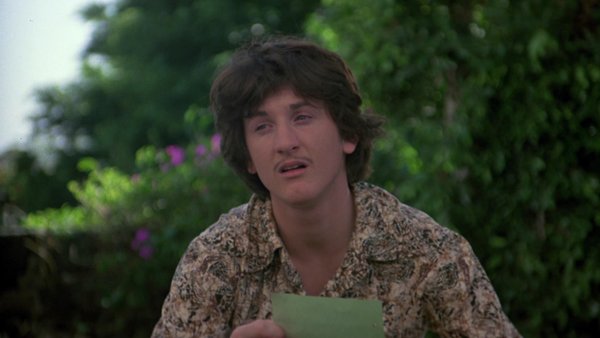
One of Sean Penn's first major roles was in the 1985 spy drama The Falcon and the Snowman, where he worked under veteran, three-time Best Director Oscar nominee and one-time winner John Schlesinger (Midnight Cowboy).
But Penn and Schlesinger never saw eye-to-eye during production, having different ideas for what his character should be, an argument which became heated enough they apparently stopped speaking. In a 2004 interview, Penn said of the experience:
"I had difficulty with John because he wanted my character to be something that I didn't think had anything to do with the story. Dustin Hoffman told me that he was jealous that I had won his crown from Schlesinger as the most unprofessional actor he had ever worked with. The way I see it, if the actor's instincts are against the grain of the director's, then the director cast the wrong guy. The director has got to support the instincts of the actor, every time. You can compromise and fit the director's mould, but the spark of spontaneity will be gone."
Given that Penn has a fair rep for being a difficult presence on movie sets and has himself said he's "not good with humans," we're going to give this one to Schlesinger.
3. Lon Chaney - The Phantom Of The Opera
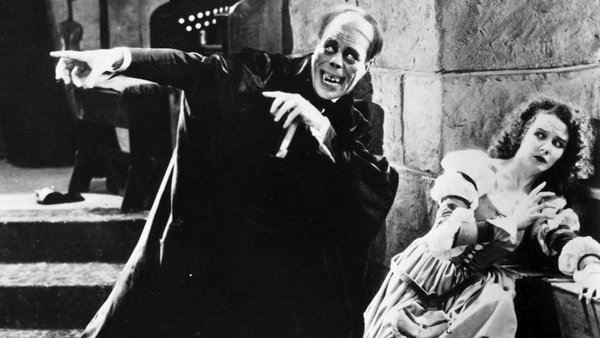
1925's The Phantom of the Opera may be regarded today as a classic of the silent era, but that's basically a miracle given the film's friction-filled production.
Director Rupert Julian had a reputation for his "uncompromising personality," causing him to bristle up against not only studio MGM but also most of the cast and crew, especially his equally steadfast lead actor Lon Chaney.
Julian and Chaney clashed enough that mediators had to be brought in to facilitate communications between them, who had given up speaking altogether by the end of shooting.
Cinematographer Charles Van Enger was largely responsible for acting as a messenger between the pair, and in one instance upon delivering Julian's direction to Chaney, the actor replied, "Tell him to go to hell."
Ultimately the catastrophic production led to massive reshoots with input from three additional directors - including Chaney himself - all of whom went uncredited for their extensive work shaping the film.
While initial critical response was mixed, The Phantom of the Opera endures today as an unassailable horror masterwork, largely thanks to Chaney's indelible performance.
2. Brad Pitt - World War Z

The fact that World War Z managed to score both solidly positive reviews and a healthy box office is nothing short of a miracle, given that it had one of the most infamously troubled shoots of any blockbuster from the last decade.
Almost the entire third act was re-shot over the course of seven weeks, unsurprisingly causing tensions to flare up among the crew, particularly star-producer Brad Pitt and director Marc Forster.
Reports allege that Pitt and Forster weren't speaking to one another throughout the extensive reshoots, with Forster's notes for Pitt even being given to him through a rotation of three different production members.
The matter was further complicated by Pitt's status as a producer, giving him authority to challenge Forster's creative calls and causing the post-production process to be dragged out by their conflicting visions.
For his part Forster has denied all this, but the specificity of the reports, corroborated by multiple sources, suggests they are indeed factual.
1. Henry Fonda - Mister Roberts
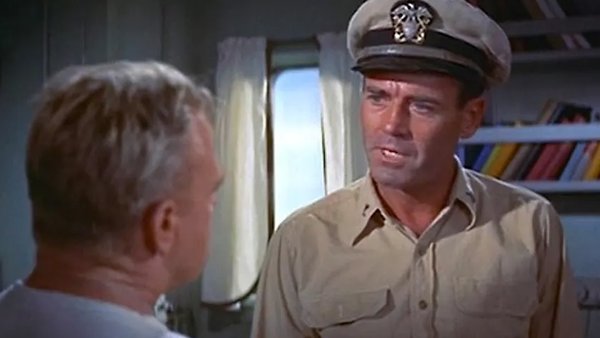
Henry Fonda's lengthy partnership with legendary filmmaker John Ford came to an unceremonious end with 1955's Oscar-winning dramedy Mister Roberts.
Fonda, who won a Best Actor Tony Award for playing the title role on stage in 1948, took major issue with concessions Ford had accepted to get the film made, namely offering a more flattering portrayal of the U.S. Navy in order to secure their co-operation on the project.
Fonda felt this excessively softened the film's themes and characters, resulting in a confrontation where Ford allegedly punched Fonda.
Ford apologised to his star, but the damage had been done, with Fonda reportedly refusing to speak to Ford for the rest of the shoot.
Heartbreakingly Fonda never worked with Ford again, though did speak fondly of the filmmaker in Peter Bogdanovich's 1971 documentary Directed by John Ford, released shortly before Ford's death.
But breaking off a professional relationship once it devolves into fisticuffs is totally understandable, as much of a shame as it was.