10 Movie Characters Totally Changed During Production
Reshoots, rewrites and recasting.
Making movies sure ain't easy, and no matter how rigidly set in stone a project might seem, there's always room for things to change from pre-production all the way through until the final stages of editing.
Take the upcoming Joaquin Phoenix-starring Joker, which the cast proudly admits was constantly re-written during filming, as the result of a collaborative process between writer-director Todd Phillips and his actors.
But things get especially interesting when an actor signs on to play a role only to have the nature of that character fundamentally altered, or perhaps even transformed into an entirely new character.
Just recently, Idris Elba was confirmed to be taking over Will Smith's Deadshot role in James Gunn's upcoming The Suicide Squad, but a few weeks later it was revealed that, in fact, Deadshot had been removed from the movie completely and Elba would now be playing an entirely new character.
It's pretty uncommon for actors' characters to be changed that drastically once the dotted line has been signed, but in the case of these 10 heroes and villains, each was shaped as a reaction to the actor's performance during filming, negative social media responses to the marketing, and of course, the ever-fickle tastes of test audiences.
Whether re-shot after the fact or simply "fixed" through editing, these 10 characters were all majorly re-worked before they finally hit screens, both for better and for worse (and very occasionally because there was no other option)...
10. Bodhi Rook - Rogue One: A Star Wars Story

The Character
Cargo pilot Bodhi Rook (Riz Ahmed), who defects from the Empire in order to help the Rebel Alliance in their plot to steal the plans to the Death Star.
By taking custody of a holographic message recorded by Galen Erso (Mads Mikkelsen), he plays a major role in kick-starting the movie's events, and ultimately lays down his life to see the mission through.
What Changed?
Rogue One was significantly changed during an infamously lengthy round of re-shoots, and Bodhi grew to become a far more important character compared to the original shooting script.
When filming started, Bodhi was actually an Imperial engineer named Bokan who was kidnapped by the Rebels and put to work for Saw Gerrera (Forest Whitaker), where he developed a Stockholm Syndrome of sorts and agreed to help fight back against the Empire. Ahmed himself compared the character to Dennis Hopper's insane photographer from Apocalypse Now.
Ahmed's character suffered near enough the same fate in both versions of the script - dying while helping Jyn (Felicity Jones) and co. deliver the Death Star plans - though it originally came slightly earlier in the film's climax.
It's easy to see how streamlining the character to make him a simple defector would be more palatable for casual audiences, as the whole Stockholm Syndrome aspect requires some tough tonal balancing and raises uncomfortable questions which would detract from the overarching story.
Bodhi ultimately turned out to be one of Rogue One's more likeable and interesting heroes, even if he - like most of the movie's characters - wasn't really given enough breathing room all things considered.
9. Robin Longstride - Robin Hood

The Character
Robin Longstride (Russell Crowe) aka the legendary folkloric figure of Robin Hood, a common archer and veteran crusader who assumes the moniker of Robert Loxley while squaring off against the impetuous King John (Oscar Isaac) and his scheming royal guard Godfrey (Mark Strong).
What Changed?
Ridley Scott's Robin Hood - originally entitled "Nottingham" - went through numerous iterations before Scott finally settled on a concrete narrative, particularly in relation to its portrayal of the titular protagonist.
Scott initially envisioned a version of Nottingham where Crowe played both the Robin and Sheriff roles as a single character, in a Fight Club-esque story where the Sheriff is essentially chasing his own tail. Ambitious, for sure, though probably a tough sell for the mainstream and very easy to screw up, so Scott eventually ditched it.
But Robin's characterisation wasn't yet firmly set, and after a more conventional Robin Hood script was completed by Brian Helgeland, he added a last-minute prologue which saw Robin taking up the mantle of Sheriff of Nottingham (rather than Robert Loxley as in the final film).
Scott rejected this new opening, having soured on the idea of the Robin-Sheriff duality, and only weeks before shooting began was the final script locked in, depicting a far more straight-forward Robin Hood than in any of the other, more interesting scripts floating around.
The Fight Club-aping script was especially interesting, but when you're playing with a $200 million budget, it's easy to understand why Scott smoothed out the edges and made Crowe's Robin a more familiar and safe interpretation of the iconic hero.
8. Evelyn & Winston Deavor - Incredibles 2
The Characters
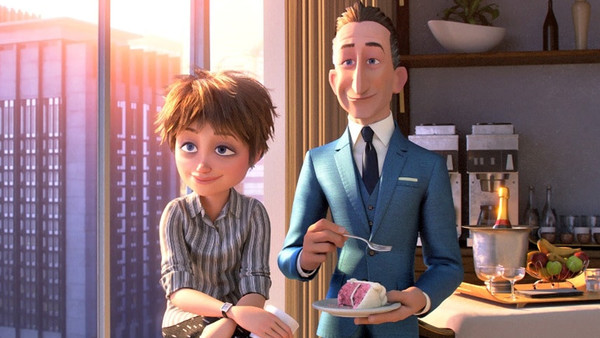
Evelyn Deavor (Catherine Keener), a technology expert and the younger sister of communications entrepreneur Winston (Bob Odenkirk), who together want to help the Incredibles rehabilitate their unfavourable public image.
But to the surprise of few, it eventually turns out that Evelyn is actually the villainous Screenslaver herself. Evelyn Deavor = Evil Endeavor. Get it?
What Changed?
The beauty of animation is that it's far easier to iterate upon material right up until the movie's release, given the lack of necessity for costly and headache-inducing re-shoots, with cast members able to re-record lines in a quick afternoon if need be.
Pixar frequently takes advantage of this, and made numerous late-stage changes to how the Deavors are presented to the audience in Incredibles 2.
For starters, Evelyn was originally conceived as Winston's brother Nelson, but during production this was gender-swapped, as it was felt that a woman would have a more interesting rapport with Helen Parr (Holly Hunter).
Consequently, Winston himself also underwent a bit of a personality tweak, with his character being re-written to be more earnest and genuine, rather than the slick, calculating figure audience might suspect upon first meeting him. This also helped differentiate him from the scheming Evelyn.
Though the Screenslaver reveal is ultimately too obvious to be truly effective, characterisation-wise this was definitely the right call.
7. Cpl. Fife - The Thin Red Line

The Character
Cpl. Geoffrey Fife (Adrien Brody), a totally unremarkable soldier who has just two lines of dialogue and a few scattered minutes of screen time throughout Terrence Malick's existential war epic.
What Changed?
In James Jones' 1962 source novel, Fife is actually the protagonist of the story, and Malick's shooting script similarly positioned Brody's character as the anchor of the movie's gigantic ensemble cast.
But as is now commonplace for Malick, he made huge changes to the structure of the story in the editing room, trimming his five-hour assembly cut down to "only" 170 minutes.
While substantially reducing an assembly down to a more manageable run-time is nothing new, it's virtually unheard of that it results in the protagonist's role being eliminated almost entirely.
Indeed, Brody's Fife was reduced from protagonist to also-ran day-player, with Malick re-focusing the story on Jim Caviezel's Pvt. Witt, who he reportedly found a stronger emotional connection to.
Brody, who expected the film to be his breakout role and wasn't informed of the editorial changes until he attended a screening himself, was understandably frustrated. In a 2001 interview, Brody said of the experience, "You know the expression 'Don’t believe the hype'? Well, you shouldn’t."
As great as the final film is, and as right as Malick may have been to shift perspective artistically speaking, it's incredibly easy to sympathise with Brody's frustrations about Malick's obtuse, ruthless filmmaking methods.
6. Doctor Doom - Fantastic Four

The Character
Victor Von Doom (Toby Kebbell), a genius computer scientist who is transformed into the villainous Doctor Doom after a catastrophic accident in the parallel dimension known as Planet Zero.
What Changed?
Josh Trank's Fantastic Four was by all accounts a nightmare of a production, and if reports can be believed, Trank's arguments with Fox executives combined with his own volatile behaviour were an easy recipe for disaster.
Much of the film ended up being altered in re-shoots and editing, and the character of Doctor Doom is one such element changed-up substantially after principal photography was completed.
Von Doom was originally re-conceived as an anti-social computer programmer by the name of Victor Domashev, who would use the online hacking alias "Doom". But after news of this hit the web and fans expressed their displeasure, his origin story was tweaked in re-shoots to be more comic-faithful.
Clumsy editing also introduced a jarring time jump following Von Doom's accident, in turn removing his gradual transformation into Doctor Doom that had originally been shot by Trank. And because Kebbell didn't participate in re-shoots, Doctor Doom's final rampage was almost entirely performed by another actor.
Kebbell stands by his performance and that Trank made a far more interesting version of the overall story than fans will ever see. Whether that's true or not, there's no denying the choppy, safe-playing nature of the final cut micro-managed by meddling executives.
5. Tony - The Imaginarium Of Doctor Parnassus
The Character
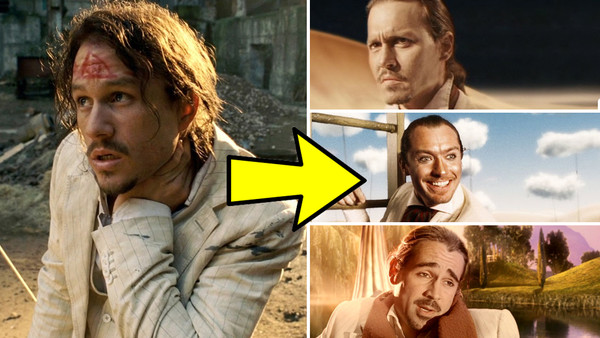
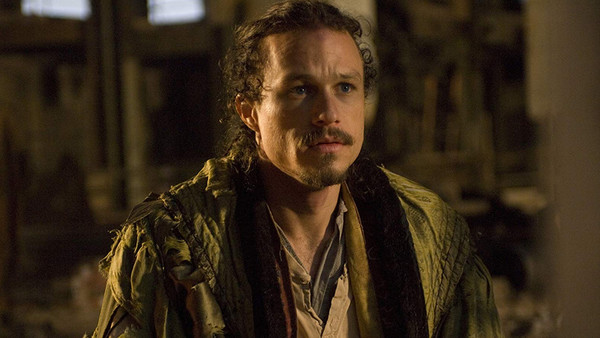
Tony (Heath Ledger), a con artist whose life is saved by a travelling circus troupe famed for their Imaginarium - a surreal dreamscape that allows visitors to shape its "reality" to fit their own desires.
What Changed?
In perhaps the most famous example of a character's role being re-worked mid-production, Heath Ledger died from an accidental overdose one-third of the way through shooting this fantasy romp, at which point writer-director Terry Gilliam considered shelving the film entirely.
Eventually, Gilliam was able to re-group, and decided that the film's fantastical nature would allow the story to be salvaged.
It was decided that Tony's appearance would change whenever he entered the Imaginarium, with Johnny Depp, Jude Law and Colin Farrell being cast to play the three altered versions of Tony (and all three actors donated their fees to Ledger's daughter Matilda).
Though the film as a whole is undeniably messy, the end result is absolutely impressive, near-seamlessly filling the void left by Ledger with the help of a body double to transition between Depp, Law and Farrell.
It's a classic case of necessity proving to be the mother of invention, and the final film is certainly worthy of Ledger's effort and inestimable talents.
4. The Shredder - Teenage Mutant Ninja Turtles
The Character
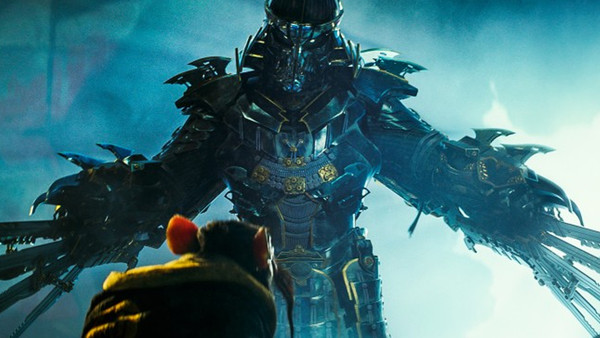
The Shredder (Tohoru Masamune), the leader of the mysterious Foot Clan, who is in league with Sacks Industries CEO Eric Sacks (William Fichtner) in order to decimate New York City and destroy both the Turtles and Splinter.
What Changed?
It was originally announced that Fichtner would in fact also be playing The Shredder, with the name Eric Sacks clearly serving as a whitewashed, westernised version of The Shredder's original Japanese moniker, "Oroku Saki."
But after word of this leaked online and Turtles fans registered their outrage, Fichtner's role was substantially altered in re-shoots, with Sacks simply serving as a businessman antagonist linked to the Foot Clan.
Ultimately an actual Japanese actor, Tohoru Masamune, was brought in to play the Shredder, even if the bulk of the character was achieved through CGI regardless.
It's a terrible movie, but given how representation still continues to be an issue in Hollywood, the producers definitely made the right call here. Fichtner's a terrific actor, but this whitewashing was just too blatant to abide.
3. Dewey Riley - Scream
The Character
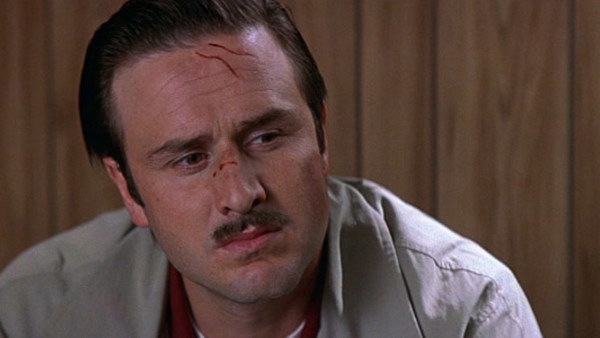
Dewey Riley (David Arquette), the lovable goofball deputy sheriff of Woodsboro, who finds himself on the tail of - and hunted by - the Ghostface killer, while serving as a confidante to Sidney Prescott (Neve Campbell).
What Changed?
The actual characterisation of Dewey stayed totally consistent during writing and shooting of Wes Craven's meta-horror classic, but one key change completely altered the character's destiny.
Dewey originally died from his nasty stab wound at the end of the film, but after test audiences consistently expressed their fondness for the character, an additional scene was shot showing Dewey surviving his injury and being loaded into an ambulance.
Considering that the character went on to appear in all three sequels and endure as a fan favourite throughout the series, it's a pretty damn substantial change in retrospect.
It's also one which clearly shifted the future of the franchise in ways we'll probably never fully appreciate (particularly by humanising Courtney Cox's standoffish journalist Gale Weathers).
2. Evelyn Salt - Salt

The Character
Evelyn Salt (Angelina Jolie), an extremely skilled CIA operative with a knack for disguises and, well, kicking ass.
What Changed?
Salt was originally conceived as a star vehicle for Tom Cruise, with the protagonist being named Edwin A. Salt, until Cruise bailed for fearing the character was too similar to his Mission: Impossible mainstay Ethan Hunt.
Columbia exec Amy Pascal suggested the possibility of a gender-swap for the character and offering it to Angelina Jolie, who accepted on the strength of the original script.
Brian Helgeland was then brought in to re-shape the screenplay, which included renaming the protagonist to Evelyn and tightening up her third act characterisation per Jolie's request.
The end result is pretty seamless despite substantial changes to the original script and character that were offered to Cruise, even if the screenplay is absolutely the worst thing about the film.
Despite turning in solid critical and commercial results, however, Salt never birthed the expected sequel.
1. The Mage - King Arthur: Legend Of The Sword
The Character
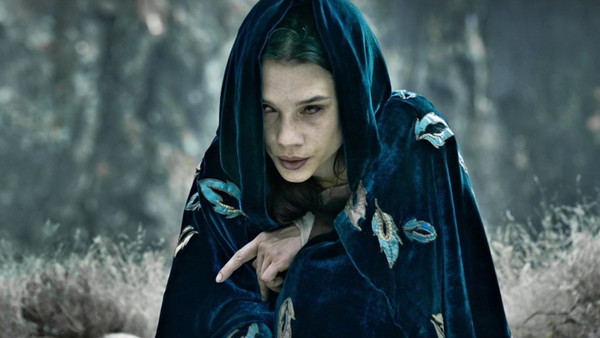
The Mage (Àstrid Bergès-Frisbey) working on behalf of Merlin to help Arthur Pendragon (Charlie Hunnam) secure his legacy as the rightful King of Britain from the tyrannical despot ruler Vortigern (Jude Law).
What Changed?
This is a really bizarre one. When Bergès-Frisbey was cast in Guy Ritchie's doomed King Arthur update, she was announced to be playing Guinevere, the wife of King Arthur.
And yet, despite the actress being billed in the movie's marketing as Guinevere until extremely close to release, the part was totally scrapped during re-shoots, with Bergès-Frisbey being re-cast as a mage sidekick simply dubbed "Mage", as though nobody could be bothered to actually come up with a name for her.
On one hand the Mage is the film's single interesting and badass female character, but given how fans of Arthurian legend rightly expected to see Guinevere show up in the movie, this was a pretty peculiar decision that's never been much elaborated upon.
Were these character changes for the better? Shout it out in the comments!