10 Movie Cliches Everybody Hates
Family ISN'T everything.
If you believe the doom-and-gloom crowd, originality is dead in Hollywood, with unique and creative films being released at an all-time low in favour of sequels, remakes, reboots, re-imaginings and so on.
Studios are undeniably keen to rely on tried-and-tested success rather than venture into "risky" territory, and that ultimately encourages the majority of screenwriters and filmmakers to simply rehash established, successful formula.
The problem is that this promotes creative stagnation, with plots, characters and individual sequences themselves being recycled so relentlessly over the years that they graduate to become flat-out cliches.
Though some movie tropes have become so tired and groan-worthy over the years that they can't be used without inciting laughter anymore, Hollywood's coming up with new cliches all the time, by taking appealing concepts and running them into the ground.
These 10 cliches, each of them effective at one point in time, have since become a hallmark for mouldy, thoughtless storytelling, where the goal is less about telling a compelling and singular story, and entirely to do with hitting the broadest genre markers imaginable.
You've never too far away from these cliches abounding while watching a new movie, likely prompting laughter, eye-rolls and exasperated disgust in the process...
10. The Unearned Sequel-Bait Ending (AKA Everything's A Cinematic Universe)

Teasing a potential sequel at the end of a movie isn't exactly a new trick in Hollywood, but it has taken on a more insidious and cringe-worthy form in recent years with the uptick in studios craving their own cinematic universes.
Because why focus on making a single good movie when you've got to keep studio executives well-fed with the promise of a steady stream of sequels and spin-offs in the same vein?
The most egregious recent example is surely Venom, which dredged up Woody Harrelson in a bad ginger wig to tease a Carnage-filled sequel, not to forget the comically bad sequel-bait ending of last year's Robin Hood, nor 2017's The Mummy aggressively teasing the doomed Dark Universe in its final moments.
The difference between these dubious prospective franchises and, say, the Marvel Cinematic Universe is that the MCU started small(ish) and didn't put the cart before the horse. It built up a fanbase with successful, disconnected movies before committing to the bigger picture.
But these days, just about every studio wants to copy Marvel Studios' formula, and there are precious few examples where it's actually been successful.
9. The Amnesiac Hero

There's no lazier way to place a protagonist on the same level of ignorance as the audience than to straight-up make them an amnesiac.
It's a trope that's been tired for years, and yet in recent times, movies like Bumblebee and Captain Marvel have kept trotting it out like it's still interesting and creative.
The amnesiac hero hasn't really felt fresh since the early days of the Bourne franchise, and it's an easy way to make viewers suspicious that they're going to be blindsided with a "the hero isn't who you thought they were!" plot twist (which is almost always the case).
It's a trope that fundamentally gets a movie off on cynical footing, and though it doesn't always suck - the original RoboCop did it masterfully, for instance - in 2019 it feels so thoroughly played-out and overdone.
8. The Villain Planned To Get Caught All Along!
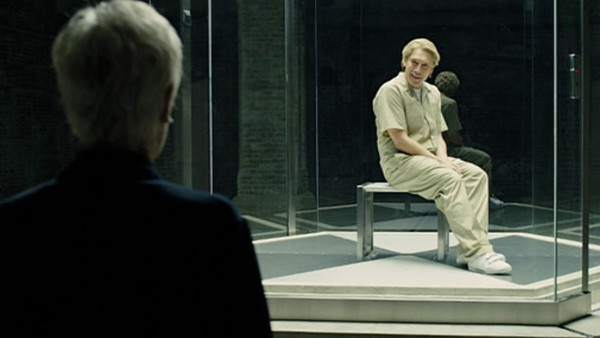
This is a relatively recent cliche albeit one that's been done to death over a brief period.
We've all seen movies where the villain gets captured mid-way through, but - surprise! - it's then revealed that they intended to get caught, and it was merely another step in their master plan. Cue the baddie escaping so they can set-up the third act finale, and Bob's your uncle!
Take Christopher Nolan's Dark Knight saga: The Joker (Heath Ledger) allows himself to be arrested in The Dark Knight only to stage an elaborate, explosive escape, and Bane (Tom Hardy) was absolutely a voluntary prisoner at the start of The Dark Knight Rises.
In fact, 2012 was a banner year for the cliche, with Loki (Tom Hiddleston) allowing himself to be captured in The Avengers in order to allow The Hulk (Mark Ruffalo) to run riot on the Helicarrier. Elsewhere, Skyfall's Raoul Silva (Javier Bardem) touted a hyper-convoluted plan that involved being caught so he could hack MI6 and attempt to kill M (Judi Dench).
It's one of those conceits that often works well in the moment when you're busy being overwhelmed by the spectacle of the villain's capture and escape, but it's decidedly less enjoyable on repeat viewings when the outcome is known and you're more likely to pick the logic clean.
Thankfully the trope became so infamous so fast that it's actually pretty rare these days, but don't be surprised if the MCU tries it again sometime in the near-future.
7. The "Ugly" Girl (Who Totally Isn't)

The "ugly ducking" is a laughably old-hat cliche that still persists in Hollywood, for some reason.
Typically it involves a conventionally attractive actor - typically a woman - being cast in the role of a bland, unattractive or even "ugly" character, owing to Hollywood's impossibly high, distorted standard of beauty compared to the realities of day-to-day life.
This is a most common trope in the rom-com genre, where the nerdy or "plain" girl gets a quick makeover and turns into a stunner.
She's All That is probably the most memorable instance from the last 20 years, as was so brilliantly sent-up in the criminally underrated spoof Not Another Teen Movie.
More recently, Steven Spielberg's Ready Player One flirted with the trope by revealing that Sam aka Art3mis (Olivia Cooke) has a port wine birthmark on her face, as though this completely diminishes her otherwise striking facial features.
You can argue that this is intended to reflect Sam's insecurity more than anything, but Spielberg doesn't adequately convey this to the audience. As a result, it's all a bit laughable.
The widespread mockery of the trope has at least made it less apparent in cinema today, though Hollywood's general barometer for attractiveness is still way off the mark.
6. Everybody Is Related To Everybody Else

Family may or may not be the most important thing there is, but Hollywood is absolutely obsessed with creating eye-rollingly incestuous character dynamics in most of its flagship franchises.
Sure, it felt fresh in The Empire Strikes Back to have Darth Vader be revealed as Luke Skywalker's (Mark Hamill) daddy, but movies have recycled this plot twist so aggressively over the years that making the antagonist the hero's parent/sibling/cousin twice removed is more embarrassing than shocking these days.
In the last year alone Fantastic Beasts: The Crimes of Grindelwald revealed in its cliffhanger ending that Credence Barebone (Ezra Miller) was actually Dumbledore's (Jude Law) secret brother, while Mortal Engines made the comically awful, ludicrously predictable reveal that Hugo Weaving's baddie was the protagonist's dad all along.
And if it's not villainy, then Hollywood is trying to conjure up convoluted familial relationships between heroic characters, encouraged by fans who desperately desire everything to be linked together, logic be-damned.
That's why Star Wars: The Last Jedi was so damn satisfying in dismissing all of the fan theories regarding Rey's (Daisy Ridley) parentage, with Kylo Ren (Adam Driver) insisting that she's nothing more than a junker's daughter. Fingers crossed J.J. Abrams doesn't go all gooey on us and retcon it, though.
5. The Gun Goes Off...But Who Got Shot?

The "gunshot fakeout" is a cliche almost as old as cinema itself, whereby the hero will typically get caught in a tussle with an enemy, after which a gunshot will ring out, with close camerawork making it unclear exactly who has been shot.
After a beat, one of the parties - usually the attacker - will drop down dead, in a trope so hilariously mouldy it's amazing modern movies are still using it at all.
But alas, Mission: Impossible - Rogue Nation boasts a comical scene where Ilsa Faust (Rebecca Ferguson) appears to get shot by villain Solomon Lane (Sean Harris), yet of course, he actually fired at one of his anonymous goons.
More recently in Widows, Viola Davis' protagonist ends up fighting over a gun with the movie's antagonist, only for a gunshot to blare out and, after a beat, it's revealed that the aggressor was the one to catch a bullet. That Steve McQueen of all filmmakers indulged such a rampant cliche with a straight face is utterly baffling.
It sure would be nice to see a filmmaker actually subvert this cliche and have the hero just drop down dead.
4. The Dead Wife/Girlfriend As Hero Motivation
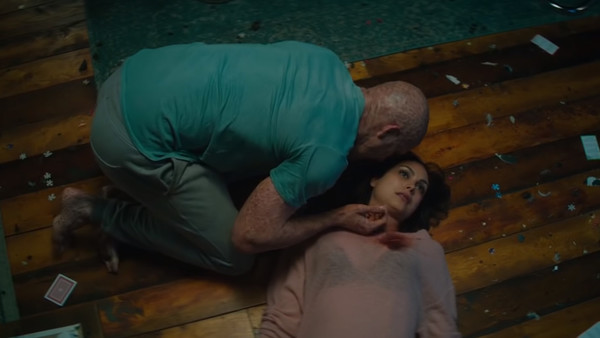
Killing off the wife/girlfriend/lover is such a widespread cliche in cinema that it's even got its own specific name - "fridging."
It's a trope that lazily attempts to heighten the drama of the (predominantly male) hero's journey, while generally reducing the agency of the focal female character, on a count of her being dead and all.
Christopher Nolan's had a hard-on for this trope through large swaths of his filmography, to the point that many have already joked about who he might be seeking to cast as the dead wife in his next movie.
But most recently, Deadpool 2 saw Wade Wilson's (Ryan Reynolds) fiancée Vanessa (Morena Baccarin) killed in the opening moments of the movie, despite many fans expecting her to have an expanded role in the sequel.
This was reportedly a result of scheduling conflicts with Baccarin, but even so, it felt like an extraordinarily lame solution to the actress' absence. On the flip side, she was ultimately resuscitated via time travel, and the Once Upon A Deadpool re-edit even flatly called out the fridging.
At least we recently got to see a reverse-fridging with Steve Trevor's (Chris Pine) demise in Wonder Woman, but honestly, wouldn't it just be nice to not have the love interest, be they woman or man, dismissively killed in order to cheaply heighten the drama? It's Hollywood screenwriting at its most stock and unimaginative.
3. The Genetic Hybrid Villain

One of the big problems facing just about every long-tenured movie franchise is the difficulty in constantly one-upping one's own sense of spectacle.
As a result, one of the most bizarre trends to emerge in recent years is the notion of the "genetic hybrid", which takes an iconic movie antagonist and combines them with something else to make a Bigger, Better Baddie (that so rarely actually is).
For instance, Jurassic World introduced the hybrid known as the Indominus Rex and the sequel, Fallen Kingdom, crossed this with a raptor to create the thoroughly underwhelming ultra-hybrid "Indoraptor", while also hinting at the prospect of human-dino hybrids.
Elsewhere, Terminator Genisys toyed with the prospect of human-machine hybrids courtesy of nanotechnology, and most recently, The Predator introduced a genetically modified Ultimate Predator, which harvested DNA from superior lifeforms to constantly upgrade itself.
And yet, not a single one of these "improved" antagonists could genuinely hold a candle to the original article.
It's ultimately a wider indication of Hollywood's desire to return to long-drained wells with as minimal effort as possible, and pretty much any time a new movie trailer mentions an upgrade or hybridised iteration of a classic movie monster, it's best to significantly lower your expectations.
2. The Beam In The Sky Finale
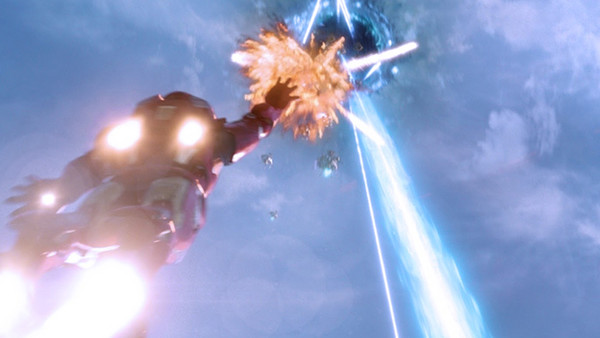
If blockbuster screenwriters can't think of a suitably bombastic finale to their movie, they seem to generally fall back on a trusty third-act "beam in the sky", whereby the antagonist launches an ambiguously apocalyptic, CGI-soaked plan which the heroes must quickly foil.
Some especially egregious examples include the various energy beams featured in the likes of Transformers: Dark of the Moon, The Avengers, The Amazing Spider-Man, Man of Steel, Fantastic Four, Teenage Mutant Ninja Turtles: Out of the Shadows and Suicide Squad.
Hollywood does appear to have eased off on the trope a little in the last year or two, but it's just a matter of time before another blockbuster hurls a digital beam into the heavens again and hopes we'll actually give a damn once more.
1. The Third-Act Exposition Dump

Being overly reliant on exposition is one of the worst crimes any movie script can commit, because nothing screams lazy filmmaking more than a movie keen to vomit an explanation for everything into the audience's lap.
Aside from being condescending to the paying audience, it's the least-creative way possible to get information across, to literally have a character spell out everything to another character.
The first and especially third acts of movies are often guilty of this, with the exposition monologue perhaps being confirmed and immortalised by Alfred Hitchcock's horror classic Psycho.
Despite the undeniable brilliance of the film, a finale that literally spells out Norman Bates' (Anthony Perkins) state of mind feels laughably on-the-nose, especially to contemporary audiences well-acquainted with the nature of psychology.
Other egregious examples include Silent Hill literally grinding the movie to a halt to play a film reel exposition dump for the audience's benefit, and just this past week, there's been plenty of hand-wringing over the surprising amount of ham-fisted exposition in the climax of Jordan Peele's new movie Us.
It's good to keep the audience abreast of what's going on, but a) don't over do it and b) if you can, do it visually.
What do you make of these painful movie cliches? Got any more to share? Shout them out in the comments!