10 Movie Endings That Basically Doomed Their Franchise
Johnny Depp? No thanks.

Now, nobody wants movie franchises to just rest on their laurels and do the same old, boring thing every single time, but it's also fair to say that sometimes filmmakers get a little over-eager and ahead of themselves.
The result is often a shocking ending that doesn't just harm the movie itself, but potentially condemns the entire franchise itself to the cinematic abyss.
Creative gambles can of course pay off - Avengers: Endgame introduced time travel to the Marvel Cinematic Universe and seems to have basically gotten away with it.
Elsewhere, franchises can make huge mistakes that actually lead to great things - Rocky V "ended" the series on a depressing low only for Rocky Balboa and the Creed movies to restore the franchise's glory.
But that sadly isn't very common, nor does it appear to be the case with these 10 movies, which with their brave, possibly stupid storytelling left-turns, created major creative roadblocks for their franchise moving forward.
In some instances these series have already come to an unceremonious end in light of these endings, while in others it remains to be seen whether or not they can escape the corner they've written themselves into...
10. Superman Dies...But Nobody Cares - Batman V Superman: Dawn Of Justice

The Ending
During the heroes' final battle against Doomsday (Robin Atkin Downes), Superman (Henry Cavill) is mortally wounded and dies, after which a funeral is held for the fallen hero, before the film's final shot hints at his impending resurrection.
Why It Doomed The Franchise
To be fair, the DC Extended Universe was very nearly derailed right out of the gate by the wildly divisive Man of Steel, which was widely criticised for its huge amounts of collateral damage and the decision to have Supes snap General Zod's (Michael Shannon) neck.
Batman v Superman was intended to be a corrective, then, and the marketing seemed to suggest Snyder might actually pull it off.
But then the movie came out, and Snyder made the ill-advised decision to kill off the Man of Steel way too early, only to suggest his return literally minutes later.
The problem is that Man of Steel and Batman v Superman both reinterpreted the iconic superhero as a dour, charmless dope, such that nobody really cared when he died.
This had the unfortunate knock-on effect of rendering his revival in Justice League completely flat and underwhelming, unaided by Henry Cavill's infamous mustache debacle and heaps of obvious re-shoots.
Justice League then grossly under-performed at the box office amid the blatant lack of fan interest, and though the DCEU is technically still a franchise, it's clearly moving away from the ensemble model and banking instead on standalone hits such as Wonder Woman, Aquaman and Shazam.
Honestly, it wouldn't be a surprise if we don't see a Justice League 2 for years, if ever, and it's all because of Batman v Superman.
9. The Architect Bores Us All - The Matrix Reloaded

The Ending
Neo (Keanu Reeves) meets up with the creator of the Matrix, the Architect (Helmut Bakaitis), an exposition-spouting Colonel Sanders knock-off who presents Neo with a choice.
He can return to the source and rebuild The Matrix or try in vain to rescue Trinity (Carrie-Anne Moss) from certain death and cause a system crash, likely killing everyone connected to The Matrix.
Neo, believing he can defy the Architect, saves Trinity and discovers that he can now manifest some of his powers in the "real world", before passing out.
Oh, and the film's "tantalising" cliffhanger? Agent Smith (Hugo Weaving) has found a way into the real world by possessing a resistance member, Bane (Ian Bliss).
Why It Doomed The Franchise
The hype surrounding the release of The Matrix Reloaded was indescribable, and though the film certainly delivered its fair share of epic action, it culminated in a fashion so woefully unsatisfying the third and final film grossed barely half of what Reloaded did.
The Architect's pseudo-intellectual exposition dump made it abundantly clear the Wachowskis were neither interested enough nor able to deliver a truly compelling - or concise - continuation of the classic original movie.
Duly, the third film followed in the same overwritten stead, all the way to an even more unsatisfying and equally incomplete ending, while not really doing much interesting with Neo's new real world abilities.
Though at least by this point, many fans had already given up expecting anything good.
8. No Fate But What We Make...Or Is There? - Terminator 3: Rise Of The Machines
The Ending
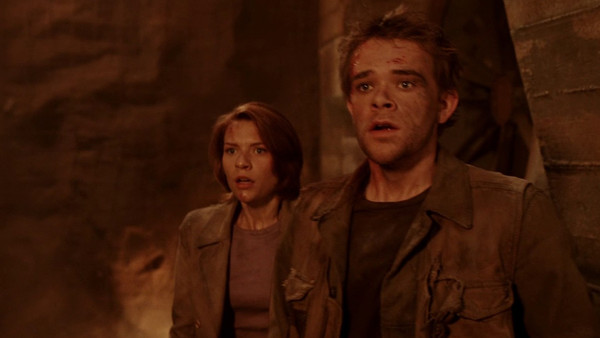
John Connor (Nick Stahl) and Kate Brewster (Claire Danes) reach what they believe to be Skynet's core, only to discover that it's actually a fallout shelter.
Skynet has now spread through the Internet and effectively become unstoppable, launching the nuclear holocaust known as Judgment Day, killing billions while Connor and Brewster are left to accept their helpless survival and plan the first steps of the human resistance.
Why It Doomed The Franchise
Removed from the wider context of the Terminator franchise, this is actually a pretty ballsy and impressive ending for a $200 million blockbuster, but it sadly also undermines the entire message of Terminator 2.
T2 of course ended with Sarah Connor (Linda Hamilton) looking to the future with hope for the first time, content that there's no fate but what we make.
Now, you can argue that this maxim actually applies to Skynet as much as it does humanity, but it does feel like a rather awkward thematic backpedal, and one that the rest of the series has further struggled with.
The increasingly desperate glut of sequels have gone back and forth on the inevitability of Judgment Day and tied the increasingly convoluted timeline in so many knots where even the most dedicated fans have stopped caring.
The contradictions began in Rise of the Machines and only got worse from there, sadly. No sensible fan will be expecting much from the new Cameron-produced sequel which, despite his more active involvement, still looks pretty rubbish.
7. Laurie Kills "Michael" - Halloween H20: 20 Years Later

The Ending
Laurie Strode's (Jamie Lee Curtis) intense final showdown with Michael Myers (Chris Durand) concludes with her unambiguously cutting his head off with an axe. Franchise over, right?
Why It Doomed The Franchise
Jamie Lee Curtis returning to the series for one final movie where she definitely puts Myers away is a great idea in theory, but of course, Hollywood loves money, and it's incredibly rare for studios to display actual artistic integrity and know when to say "enough" - especially in the horror genre.
Four years later, Halloween: Resurrection was released, which ret-conned Myers' death in the most hilariously stupid and insulting way possible, by revealing that Myers swapped his costume with a medic, whose larynx he crushed, preventing him from telling Laurie that she was about to decapitate him.
And to make matters worse, the movie began with Laurie being killed off after grabbing the idiot ball and refusing to kill Michael when she had the chance. Pfft.
The near-universal disdain for the film led to a 2007's Rob Zombie-led reboot and a painfully bad 2009 sequel, after which the series laid dormant for almost an entire decade, and last year's direct sequel to the 1978 original erased all the other sequels from the timeline.
Halloween 2018 wasn't bad, but after teasing a final, totally final showdown between Laurie and Michael, the film ended with yet another fake-out, with Myers' fate left ambiguous for the sake of the recently-confirmed sequel.
While on one hand H20 made it clear that Michael Myers will never die, it also demonstrated how little the franchise really thinks of its audience, which makes it tough to get even remotely invested in anything that's happening.
6. Clones. Clones Everywhere. - Resident Evil: Extinction
The Ending
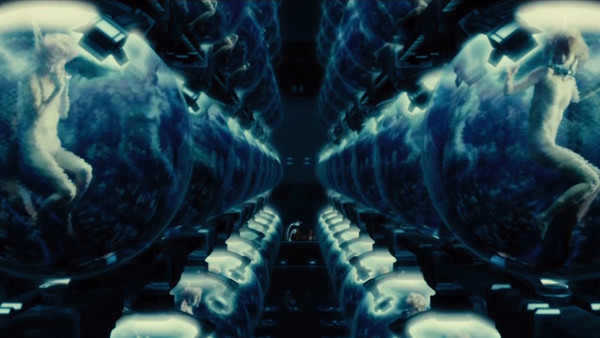
After revealing the existence of clones of Alice (Milla Jovovich) at the start of the movie, the ending hilariously teases that Alice is planning to take the fight to Albert Wesker (Jason O'Mara) with a massive army of her clones. Yup.
Why It Doomed The Franchise
Now, to be totally fair to the Resident Evil franchise, these films have always been spectacularly stupid, so throwing clones into the mix isn't an inherently terrible idea, but the way in which Paul W.S. Anderson integrates them into the series certainly is.
First and foremost, the next movie, Afterlife, kills off all the clones in its opening action sequence, destroying all the trashy promise of sitting through two hours of dozens of Milla Jovovichs fighting zombies.
Nevertheless, the whole clone plot lingers around awkwardly for the rest of the series, leading to the head-smackingly awful revelation in Resident Evil: The Final Chapter that the "real" Alice was in fact just another clone herself.
It's an ass-pull of monumentally contrived proportions that reduces Alice's agency as a character and retroactively makes the entire series worse.
And it's all the fault of Extinction's ending, which ensured those damn pesky clones would serve as an underwhelming and invasive staple of the franchise forever more.
5. "Fixing" The Timeline - X-Men: Days Of Future Past

The Ending
The film concludes with Charles Xavier (James McAvoy) convincing Mystique (Jennifer Lawrence) to spare the life of Bolivar Trask (Peter Dinklage), ensuring that the Sentinels are never created and the original apocalyptic timeline in 2023, where most of the X-Men are killed, never comes to pass.
Wolverine then wakes up back in 2023 at the X-Mansion, where all the mutants' lives have been saved.
Why It Doomed The Franchise
Though there's an argument to be made that Days of Future Past is one of the best X-Men movies and ties off everything with a neat bow while erasing some of the more problematic films from the timeline, that's only really true if it had been the final entry into the series.
Instead, Days of Future Past as a whole and especially its ending introduced several nagging problems.
First of all, the film's general time-hopping shenanigans snapped the series' already loose grasp on continuity in half, with both X-Men: Apocalypse and X-Men: Dark Phoenix leaping forward around a decade each into the future, despite the cast members clearly not ageing to reflect that time jump.
Days of Future Past also created the fixed end-point of 2023 where the timeline was repaired, an ending which the subsequent sequels didn't seem remotely interested in working towards, especially Dark Phoenix.
Now, there are definitely external factors that harmed the series here, namely Sophie Turner's questionable casting as Jean Grey and the Disney/Fox merger, but as good a movie as Days of Future Past is, it's also where the wheels began to come off the franchise.
This is exemplified by no subsequent mainline X-Men movie turning out much good, and the only quality offerings being spin-offs such as Deadpool and Logan.
You can certainly appreciate why Bryan Singer and Simon Kinberg wanted to make the movie, but the irony of it "fixing" the continuity is that it also created major problems for the rest of the series' tenure.
4. Shaw Is Dead, David Created The Xenomorphs - Alien: Covenant

The Ending
Alien: Covenant's third act reveals that malevolent android David (Michael Fassbender) was the creator of the xenomorphs, and that Prometheus' protagonist Elizabeth Shaw (Noomi Rapace) was killed during one of his nefarious experiments.
Covenant's final scene then goes full mustache-twirler on fans by having David reveal that he's taken the place of his good counterpart, Walter, and effectively condemned survivors Daniels (Katherine Waterston) and Tallahassee (Danny McBride) to a likely grim fate.
Why It Doomed The Franchise
First and foremost, Covenant took too many steps towards completely demystifying the xenomorphs, for while it's theoretically possible that David isn't the only person to create a race of xenomorph-like creatures, the reveal nevertheless completely stripped away the haunting, cosmic horror of their initially unknown origins.
That's to say nothing of Prometheus building up Shaw as a likeable protagonist only for Covenant to completely betray this for reasons unknown, before David, with all of his God-like pretensions, is finally confirmed to be the series' ultimate antagonist.
Now, we currently have little idea of how the recently announced follow-up will turn out, but it's safe to say that Ridley Scott has contorted the property in so many awkward directions that it's impossible to imagine any of this being resolved or expanded upon in a satisfying fashion.
At least we might get another banger of a Michael Fassbender performance out of it, right?
3. There's ANOTHER Apprentice - Jigsaw

The Ending
Despite appearing to "die" moments earlier, pathologist Logan (Matt Passmore) rises up to reveal he's still alive and that, by way of a convoluted flashback, he has been John Kramer aka Jigsaw's (Tobin Bell) extra-secret apprentice all along.
Furthermore, the barn game throughout the film actually took place a decade prior to the present day, with Logan himself being a participant before ending up recruited by Jigsaw.
Oh, and killing Detective Halloran (Callum Keith Rennie) at the end of the film is in revenge for Halloran letting a criminal walk free who went on to kill Logan's wife. Right.
Why It Doomed The Franchise
Granted, the Saw franchise is no stranger to pulling random plot twists totally out of nowhere, but some eight movies into the franchise, this "gotcha!" ending really wasn't good enough.
After Saw II, Saw IV and Saw 3D all introduced new surprise assistants to Jigsaw, doing it again here, and having had Logan wait in the wings for an entire decade before doing anything, just seemed impossibly convoluted, even for the low standards of this series.
It was ultimately a twist received with such utter indifference by the fanbase that, despite Jigsaw's box office success, the upcoming ninth film is going the reboot route and forgetting it entirely.
2. Johnny Depp Is Grindelwald - Fantastic Beasts & Where To Find Them

The Ending
It's revealed that the villainous Percival Graves (Colin Farrell) was in fact the evil dark wizard Gellert Grindelwald all along, and you know what? He's played by - surprise! - Johnny Depp.
Why It Doomed The Franchise
Warner Bros. clearly expected the introduction of Depp as the Thanos of the Fantastic Beasts franchise to be a hugely shocking rug-pull that dropped jaws the world over.
Aside from the fact that this was leaked weeks before the film came out, Depp's popularity started to take a major nosedive around the time that the first Fantastic Beasts hit cinemas.
His appearance, replacing the far more imposing Colin Farrell and kitted out in a ridiculous white-haired get-up no less, was met with both groans and laughs from many fans, frustrated that they'd have to deal with Depp's mugging for four (!) planned sequels.
And as expected, the first sequel, The Crimes of Grindelwald was an abject mess, though Depp's fairly ho-hum performance was ultimately just one of its many creative issues.
With three movies left to go and Warner Bros. reportedly frustrated that J.K. Rowling came out to defend Depp's casting in light of more recent legal and PR issues, there's clearly a sentiment among fans and the studio that Depp's casting was a massive mistake.
Granted, the series' reliance on Fantasy Nonsense at least allows the possibility of recasting Grindelwald, and maybe even bringing Colin Farrell back. If not, one suspects The Crimes of Grindelwald's slack box office performance might be repeated next time and beyond.
1. Introducing Time Travel - Paranormal Activity: The Marked Ones

The Ending
The fifth film in the Paranormal Activity franchise served as a spin-off to the main story, but dropped a game-changing final twist by introducing time travel into the franchise.
At the end of the movie, which takes place in 2012, poor Hector (Jorge Diaz) gets forced through a strange door, which transports him back to 2006, where he find himself caught in the middle of the first movie's ending, as a possessed Katie (Katie Featherston) kills her boyfriend Micah (Micah Sloat) and Hector is presumably killed off-screen.
Why It Doomed The Franchise
The introduction of time travel has signalled the death knell for countless movies and TV series, and though this twist did at least find a vaguely creative way to tethered The Marked Ones to the main franchise, it ultimately completely derailed the series' already loose sense of internal logic and continuity.
Time travel is one of those things that can't be put back in the box once it's been conjured, and the final movie in the series (to date), The Ghost Dimension, ultimately failed to do much to capitalise on the big reveal.
Sure, the series started running on fumes in its third entry and never really recovered, and so the addition of time travel was just a desperation move to keep fans interested, along with the inclusion of a 3D gimmick in The Ghost Dimension.
To all filmmakers out there - don't use time travel unless you're really, really sure about it.