10 Movie Flops That Became Cult Classics
They're not bad movies, just misunderstood classics.

It's hard to believe now that Hollywood initially resisted releasing its movies on videocassette. Not only did video make films available to a wider audience, it also gave box office flops a new lease of life.
One of the more notorious examples is Charles E Selliers' Silent Night Deadly Night (1984), which was picketed by groups that took issue with the depiction of Santa Claus as an axe-wielding rapist with nun issues. The film went toes up at the box office, but the controversy created demand for the title on VHS, where it proved so popular that it spawned sequels and a 2012 remake. It turns out that there's only one critic whose opinion matters, and his name is Old Father Time.
If a cheap slasher movie can enjoy an afterlife, then the door is open for any flop to seek re-evaluation. What's interesting about the following films is that, generally speaking, they demand (and reward) repeat viewings more than their once-celebrated contemporaries. The #1 film on this list was passed over for Best Picture in favour of How Green Was My Valley, but who remembers that film now?
10. Road House (1989)

Road House is your typical story of a world famous bouncer with a philosophy degree who accepts a gig at Kansas dive the Double Deuce, the kind of place where "they sweep up the eyeballs after closing". James Dalton (Patrick Swayze) sews up his own wounds and carries his medical records around with him because it "saves time", so when a local crook tries to take control of the Deuce, Dalton fights him and his goons off with broken bottles, Tai Chi and, in one of the best moments, a stuffed bear.
Swayze, hot off Dirty Dancing, and producer Joel Silver, hot off Die Hard, probably thought they were onto The Next Big Thing. They weren't. After proving popular on video, the movie found its true home on cable, where it was shown 65 times between 1994 and 2002, its popularity resulting in a DVD sequel in 2006. A year later, the movie received the Rifftrax treatment when former Mystery Science Theatre 3000 host Mike Nelson recorded an audio commentary.
"It's just so entertaining as it's being horrible," Nelson said. "In the entertaining bad movie genre, Road House is my favourite".
9. The Shawshank Redemption (1994)

When Frank Darabont's adaptation of Stephen King's novella opened in American cinemas on October 14, 1994, it had the misfortune of being up against Pulp Fiction, a film whose phenomenal hype allowed it to open at #1 with a $9 million gross. Despite playing in a thousand extra theatres, The Shawshank Redemption opened at #9 and disappeared from the top ten after its second week.
The following February, the film received 7 Oscar nominations, and even though the filmmakers went home empty-handed, it helped publicize the subsequent video release. Not only was Shawshank one of 1995's most rented titles, with its success attributed to positive word of mouth, it was also the first picture selected for Saturday Night New Classics on TNT, who then aired the film once every two months to record-breaking audience figures.
Gradually, the film transformed from being a flop whose name viewers couldn't remember (star Tim Robbins recalls people asking, "What was that Shinkshonk Reduction thing?") into a mainstay of All Time Best lists. In 2007, it was ranked #72 on AFI's 100 Years 100 Movies list, 22 places ahead of Pulp Fiction, while a year later, Empire Magazine placed it #4 on their 500 Greatest Movies Of All Time survey.
8. Plan 9 From Outer Space (1959)

Shot in 1956, Ed Wood's masterpiece sat unreleased for three years until a distributor placed it on the bottom half of a double bill with Time Lock, a British thriller notable for an early appearance by Sean Connery. Becoming a staple of late night TV, the picture came to the attention of Stephen King (who called it "the worst horror film ever made") as well as Harry and Michael Medved, whose book The Golden Turkey Awards elevated Wood from obscurity to the lofty position of "The Worst Director Of All Time."
Structured around footage of Bela Lugosi shot before the actor passed away, Plan 9 tells the story of pompous aliens who resurrect the dead in order to destroy humanity before it can discover "Solaranite", a means of exploding sunlight that will devastate the universe. With Lugosi, wrestler Tor Johnson and TV host Vampira under their command, the aliens plot is curtailed when their space ship catches fire, turns into a flying hubcap and explodes. The End.
7. Willy Wonka And The Chocolate Factory (1971)

Ideas are anathema in Hollywood, so a children's musical set in a psychedelic wonderland where green-haired, orange-skinned Oompa Loompas assist an eccentric recluse in creating lickable wallpaper, fizzy lifting drinks and everlasting gobstoppers was bound to have enduring cult appeal. It certainly didn't set the box office on fire, earning only $4 million on a $3 million budget.
In fact, Paramount had so little interest in the film that they allowed their distribution deal to lapse in 1977, so when repeat television screenings brought the picture to a wider audience, its popularity caused Warner Bros to acquire the property, leading to a 25th anniversary re-release (which grossed $21 million) as well as a 2005 remake and a 2013 stage musical adaptation.
Disowned by Roald Dahl, who'd wanted Spike Milligan for the title role, Willy Wonka remains the most popular adaptation of his work, ahead of Matilda, The BFG, Danny The Champion Of The World and The Witches.
6. Donnie Darko (2001)

A movie with cult following written all over it, Donnie Darko would've gone straight to video but for Drew Barrymore's production company, who secured a limited theatrical release in October 2001. Shown in 58 cinemas, the movie made $517,375 during its four-week run, recouping only a fraction of its $4.5 million production budget.
After failing to generate much excitement among critics, and having proved a washout at Sundance, the film was left for dead until it found its true audience on VHS. Word of mouth was so strong, in fact, that the film was re-released in a two-disc "Director's Cut" edition in 2004, which reinstates twenty minutes of footage and helped bring about a critical re-evaluation.
"The movie remains impenetrable to logical analysis," wrote Roger Ebert, "but now I ask myself: what logical analysis would explain the presence of a 6 foot tall rabbit with what looks like the head of a science fiction insect?"
5. Blade Runner (1982)

If ever a movie could lay claim to being misunderstood on its initial release, it's Ridley Scott's dystopian neo-noir, whose box office failure caused him to rethink his ambition of becoming the John Ford of science fiction. Released into American theaters on June 25 1982, Blade Runner proved unable to compete against Star Trek II: The Wrath Of Khan and ET: The Extra-Terrestrial because of a studio-imposed handicap.
Saddled with an extraneous voiceover and a truly bizarre ending cobbled together from footage shot for Stanley Kubrick's The Shining, the movie polarized critics, while audiences remained indifferent, resulting in a $33 million gross on a budget of $28 million. There was a good film in there somewhere, but it took 25 years for 'the Final Cut' to reach DVD.
In that time, Blade Runner set a new trend for visual design, influencing the Battlestar Galactica reboot as well as the Ghost In The Shell film series.
4. It's A Wonderful Life (1946)

A picture practically synonymous with Christmas, It's A Wonderful Life performed so badly on its initial release that it lost $525,000 for RKO, which may in part have something to do with how the picture was perceived by the authorities.
In a 1947 internal memorandum titled 'Communist Infiltration Of The Motion Picture Industry', Frank Capra's film is held up as an example of Commie propaganda because of its rather obvious attempts to discredit bankers, which is of course a common trick used by communists. In addition, the Bureau felt the movie maligned the upper classes because the people who had money were mean and despicable characters.
In a more enlightened era - well, the 1970s - the film became a staple of Christmas TV schedules, much to the bemusement of its director.
"It's the damnedest thing I've ever seen," Capra told the Wall Street Journal in 1984. "The film has a life of its own now, and I can look at it like I had nothing to do with it."
3. The Thing (1982)
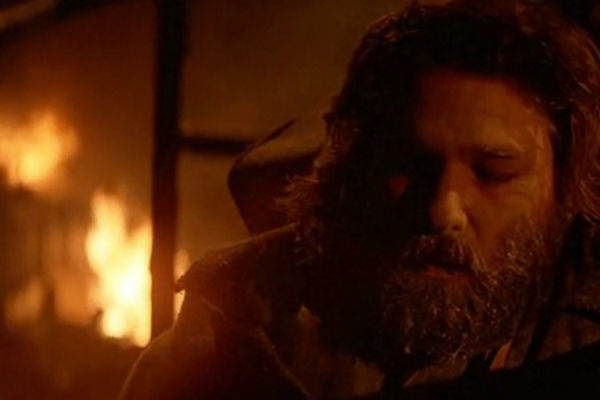
Like Big Trouble In Little China and They Live, John Carpenter's remake of the 1951 original was trashed by critics (Vincent Canby called it a foolish, depressing, overproduced movie) and ignored at the box office, yet it still went on to become a cult classic.
Overshadowed by the release of ET: The Extra-Terrestrial 2 weeks earlier, The Thing debuted at #8 and spent three weeks inside the top ten, earning little more than its $15 million production budget. If you watched the picture on network television, however, you saw an edited version shorn of violence, gore and profanity, with added voiceover and a pointless alternate ending that recycled footage from earlier in the movie.
It was enough to send fans scurrying to the rental version, where they saw Rob Bottin's effects in all their uncut glory and immediately resolved to become filmmakers. Famous fans include Robert Rodriguez (who references the movie in Planet Terror) and James Gunn (check out the store owned by 'R.J. MacReady' in Slither).
2. The Wizard Of Oz (1939)

Before its 1980 release on home video, the only way to see The Wizard Of Oz was to wait for its annual appearance on television. "It will occur this coming Sunday for the seventh straight year" claimed a 1965 Time article, and the children, with a special restlessness, will collect around the television set in much the same way that their fathers do for the professional football championships.
In fact, The Wizard Of Oz posted a loss of $1,145,000 for MGM on its initial release and didn't go into the black until 1949, when a re-release grossed $1.5 million for the studio. Nominated for Best Picture, it lost out to Gone With The Wind (also directed by Victor Fleming) from whose shadow the picture took years to emerge.
It's a sign of the film's popularity that even before it was available on VHS, it was being referenced by everyone from The Monkees to Ed Wood, who included a homage in his script for One Million AC/DC. Even Vincent Price references the picture in Dr Phibes Rises Again, singing Over The Rainbow as he leaves a nemesis to die in his underground lair.
1. Citizen Kane (1941)

When RKO became one of the first studios to sell its library of films to television, viewers were able to evaluate Orson Welles's debut feature without the furore that marked its initial release. Even before it reached cinemas, the story of a William Randolph Hearst-like publisher attracted the ire of Hearst himself, who used his influence to attack Welles, calling him a Communist and attempting to suppress his picture.
Depending upon who you believe, Radio City Music Hall's managers refused to host the premiere while several other theatre owners, fearing a lawsuit from the publisher, declined to screen the film, prompting Welles to threaten RKO with legal proceedings of his own. Promoted as a love story, the picture played to mostly empty houses, losing the studio hundreds of thousands of dollars.
Citizen Kane's status as "The Greatest Film Ever Made" grew after it gained popularity on television, where it caught the attention of critic Andrew Sarris, who called it "the work that influenced the cinema more profoundly than any American film since Birth Of A Nation."
Propelled by similarly laudatory reviews from Pauline Kael and David Thomson, Kane topped Sight & Sound's top ten list for the first time in 1962, a position it held until 2012 when it was dethroned by Hitchcock's Vertigo.
What other classics didn't hit big until after leaving cinemas? Share any we missed down in the comments.