10 Movie Franchises That Embarrassed Their Creators
All the regret.
The business of creation and ownership in Hollywood is extremely complex and delicate, such that the originators of a popular movie IP may no longer have much say in the property altogether.
And with producers being as forceful and money-hungry as they so typically are, it's not terribly surprising that ousted creators are often left unhappy with the results when their work is fed through the Hollywood sausage factory.
This has so often resulted in single movies which were diluted through a glut of unnecessary sequels, veering away from the original intent of the instigating filmmaker or author of the source novel.
And this is occasionally apparent enough that the creators themselves can't hide their humiliation, vocally making their feelings about said franchise felt.
But when it's the reputation of both yourself and the "baby" you've created at stake, it's easy to see why these artists have gotten so tetchy about their projects being pushed and pulled in unwanted directions.
Whether audiences felt the same, of course, is a whole other can of worms...
10. Star Wars

As much as Star Wars might be responsible for George Lucas' immense fame and fortune, to say that he's had a "complicated" relationship with the mammoth sci-fi property would be a massive understatement.
Lucas' issues stem all the way back to the original 1977 movie, which the writer-director to this day insists he's far from happy with.
Lucas infamously released massively controversial "Special Editions" of the original trilogy upon the 20th anniversary of A New Hope, in an attempt to deliver something closer to his original vision of the films.
Elsewhere there's the 1978 Star Wars Holiday Special, a one-off calamitous TV broadcast which, while not written or directed by Lucas, is nevertheless considered canon. Lucas famously said of the show, which endures in bootleg form, "If I had the time and a sledgehammer, I would track down every copy of that show and smash it."
But most recently, Lucas was again left red-faced following Disney's $4 billion acquisition of Lucasfilm and the subsequent continuation of the Star Wars saga. The purchase included Lucas' own plot outlines for a future trilogy, though Disney only bought them under the stipulation that they weren't obliged to actually use them.
In the words of Disney's CEO Bob Iger, "George immediately got upset as...it dawned on him that we weren’t using one of the stories he submitted during the negotiations. In the first meeting with him about the future of Star Wars, George felt betrayed, and while this whole process would never have been easy for him, we’d gotten off to an unnecessarily rocky start."
Though Lucas himself has given relatively measured responses about the newer Star Wars movies, Iger claims he "didn’t hide his disappointment" after viewing an early screening of The Force Awakens, declaring, "There’s nothing new."
Still, a net worth of $6 billion sure has to sooth the ego, eh George?
9. Jaws

Steven Spielberg's Jaws was adapted from Peter Benchley's 1974 novel of the same name, which was a commercial smash in its own right, selling more than 20 million copies worldwide.
The idea of a killer shark story came to Benchley after watching a news report about a 4,500 pound great white shark being caught off the coast of Long Island, and when Hollywood came a-knocking, he was invited to help co-write the film's script.
Yet in light of Jaws' incredible critical and commercial success, Benchley developed remorse for his depiction of sharks as aggressive, murderous animals, feeling that he played a part in the global uptick of shark hunting (which now numbers up to 100 million dead sharks per year, despite sharks almost never killing people).
He said, "What I now know, which wasn’t known when I wrote Jaws, is that there is no such thing as a rogue shark which develops a taste for human flesh...It provided cover for people who simply wanted to go out and kill sharks under the guise of somehow making people safer, which there’s no evidence that was the case at all."
In later life, Benchley devoted much of his time to promoting marine conservation and attempting to shift the public perception of sharks, and has even expressed regret over writing Jaws in the first place. "Knowing what I know now, I could never write that book today," he said.
Yet his book and especially the movie he worked on crystallised the public's fear of sharks, one which still endures over 40 years later.
8. The Exorcist

William Friedkin's 1973 horror classic The Exorcist was adapted from William Peter Blatty's hit 1971 novel, with Blatty himself both writing the Oscar-winning screenplay and serving as producer.
And though Blatty was by all accounts incredibly happy with the end result of the original film, both he and Friedkin were firmly against the idea of a sequel - or, gasp, a franchise - to the extent of having zero involvement with John Boorman's slapped-together 1977 sequel.
Blatty did go to the premiere of Exorcist II: The Heretic, however, and pulled no punches in describing how he was the first person in the audience to laugh at the travesty occurring on-screen. He said, "You'd think we were watching The Producers."
And though Blatty was seemingly good-humoured about the sequel's failure, he clearly felt the burn enough to return to the franchise himself for its third installment, keen to reclaim the series' good name and tidy up his association with the Exorcist brand.
In fairness, The Exorcist III was a major improvement over its predecessor, even including one of the best-executed jump scares in movie history.
But Blatty again came away dissatisfied, this time due to executive meddling, with the studio forcing him to shoot a more conventional ending, while his much-discussed Director's Cut has never been released in its original form.
7. Mary Poppins

Though Mary Poppins only recently met the bare minimum qualification for a franchise - that is, two movies - the author of the classic book series on which the original 1964 film was based, P.L. Travers, was staunchly against Disney's approach for the legendary musical.
Travers was fiercely protective of the character, for which she wrote eight books between 1934 and 1988, and served as a script consultant throughout the film's production.
She ultimately felt that Disney's Mary Poppins sanitised the harsher aspects of the title character (as well as making her too physically attractive), didn't care for the music nor the romantic implication between Mary (Julie Andrews) and Bert (Dick Van Dyke), and hated the inclusion of animated elements.
Travers reportedly wept through the film's premiere and subsequently stipulated that only English-born writers could be involved with any future adaptations of Mary Poppins.
For the rest of her life she insisted that Disney had betrayed her, and though Travers died in 1996, one can't imagine she'd have much approved of the whimsical, animation-packed belated sequel, last year's Mary Poppins Returns, starring an extremely appealing Emily Blunt no less.
6. Rocky

The Rocky franchise has been Sylvester Stallone's baby since inception, with Sly writing the script for the 1976 original without a penny to his name, landing Oscar nominations for Best Original Screenplay and Best Actor in the process.
But the film's titanic commercial success near-inevitably led to a franchise which, today, now includes a total of eight movies, with a ninth, Creed III, already in the early stages of development.
Stallone is uncommonly candid about his earlier career mistakes, though, and holds nothing back when talking about how misguided the terrible fifth film, Rocky V, was.
Originally mounted as the ending to the franchise, the 1990 sequel gave Rocky Balboa a miserable, depressing ending which couldn't have felt more counter to the underdog vibe of the original film.
In recent years, Stallone rated the film a 0/10 and freely admitted that he not only made the film for greed - being paid $15 million for his role - but only decided to make 2006's sixth film, Rocky Balboa, in the hope of reclaiming the character and making up for Rocky V's off-brand ending.
And that Stallone certainly did, even building on the character and netting himself a Best Supporting Actor Oscar nomination for his phenomenal performance in Creed.
One hopes that Rocky V and the character's tough road to redemption taught a vital lesson to Stallone, but considering that his Rambo franchise is also on this list, seemingly not...
5. Halloween

John Carpenter's 1978 Halloween is an unassailable classic of the horror genre, and by most accounts writer-director John Carpenter was incredibly satisfied with how the first film turned out.
Not so much for all but the most recent of the sequels, though.
Carpenter was ambivalent about a franchise and ultimately refused to direct 1981's Halloween II, though did end up co-writing the script, where he made the decision to retcon Michael Myers as protagonist Laurie Strode's (Jamie Lee Curtis) brother.
In subsequent years Carpenter expressed regret and remorse both about writing the movie and especially concocting its big twist, claiming to have written Halloween II "with a lot of beer sitting in front of a typewriter saying, 'what the f**k am I doing? I don't know.'"
Carpenter began to distance himself from the franchise after this, taking various "producer by" and "based on characters created by" credits in the glut of terrible sequels that followed.
Only when David Gordon Green and Danny McBride convinced him that they could restore some dignity to the series with last year's direct sequel to the 1978 movie did Carpenter finally agree to return, as both executive producer and composer.
Though it's a relief that Halloween 2018 turned out well and Carpenter is back in step with the franchise he birthed, he's made no attempt to disguise how much he hates being associated with all the terrible sequels - and Rob Zombie's grungy remakes, of course.
4. The Neverending Story

1984's fantasy film The NeverEnding Story was adapted by Wolfgang Petersen from Michael Ende's 1979 novel, and was met with considerable push-back from Ende himself, who felt the script deviated too far from the themes and vision of his source material.
Ende asked the producers to either change the film's title or stop production altogether, and when they refused, he unsuccessfully sued. After it was released, he went on to call it "revolting" and a "gigantic melodrama of kitsch, commerce, plush and plastic."
Ende then sued the German production company behind the film for breach of contract, claiming his "moral and artistic existence [was] at stake." Lofty words.
Ultimately Ende never got to see The NeverEnding Story given a faithful adaptation in his time, with the 1984 film nevertheless receiving positive reviews and getting two terrible sequels.
Numerous attempts have been made to acquire the rights for a remake in recent years, yet it doesn't take much reading between the lines to presume that Ende's estate might be taking a cautious approach this time around.
3. The Hills Have Eyes

Wes Craven's 1977 horror classic The Hills Have Eyes was a critical and commercial hit, and the director was finally convinced to make a sequel in 1984 - the same year as Craven's A Nightmare on Elm Street hit screens - because he desperately needed some cash.
Despite feeling that the story concluded within a single, self-contained movie, Craven quickly threw together the sequel for a fast turnaround, and to make matters worse, production was reportedly halted roughly two-thirds of the way through shooting due to limited funds.
Craven cut the film together as best possible, though ended up disowning it upon release.
He did return to produce the surprisingly decent 2006 Alexandre Aja remake, however, and also co-wrote the sequel to the remake released the very next year (to terrible reviews, admittedly).
Craven's legacy will always be best-defined by the Elm Street and Scream franchises, while The Hills Have Eyes endures as a messy curio that probably should've never been more than a standalone movie (and a remake, if you want to be generous), a fact Craven seemed plainly aware of.
2. Rambo
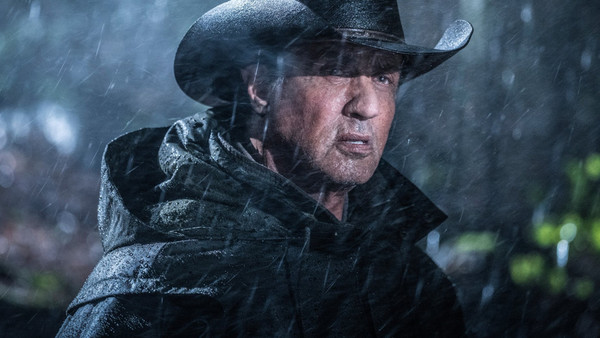
The first Rambo film, First Blood, was adapted from David Morrell's 1972 novel, and despite the conception that Sylvester Stallone broadened Morrell's tale of a Vietnam vet struggling to re-adjust to life back home, there's actually far less death in the movie - just one, actually - than the source material.
Sadly that can't really be said for most of the sequels, with First Blood Part II and Rambo III ramping the violence up to comical levels, while seemingly losing sight of the crucial humanist themes.
Morrell was allowed to review the scripts prior to release, however, and because he felt that they mischaracterised the protagonist, decided to write novelisations to make the character more consistent with his novel and the original film.
Morrel didn't opt to write a novel for 2008's fourth Rambo, however, as he felt that Stallone had returned to the essence of the character, and despite mixed reviews, the film was largely embraced by fans of the franchise.
But with the recent release of the critically-panned Rambo: Last Blood, Morrell couldn't resist but chime in, calling the film "a mess" and being "embarrassed to have [his] name associated with it."
Furthermore he added, "I felt degraded and dehumanized after I left the theater. Instead of being soulful, this new movie lacks one. I felt I was less a human being for having seen it, and today that's an unfortunate message...The sets here look cheap. The direction is awkward...Rambo could be called John Smith, and the film wouldn't change."
And he's not wrong. As far as takedowns go of movies that deviated from the author's original intent, that's about as damning as criticism gets. Fans haven't been much kinder to it, either.
1. Willy Wonka

When Roald Dahl's classic children's novel Charlie and the Chocolate Factory was first being adapted to the screen, Dahl himself was hired to pen the screenplay.
However, with Hollywood being Hollywood, Dahl's script was ultimately given significant rewrites by David Seltzer, much to Dahl's chagrin.
Dahl was also unsatisfied with Paramount's refusal to hire British comedian Spike Milligan to play Willy Wonka, opting instead for the decidedly more famous Gene Wilder.
Dahl was ultimately so upset by the final film, despite its enormous popularity, that he didn't grant the rights to any further adaptations of his work for many years, and made a legal provision that the sequel, Charlie and the Great Glass Elevator, could never be adapted into a movie.
In 1998, almost a decade after Dahl's death, Warner Bros. finally struck a deal with the Dahl estate to re-adapt Dahl's novel, the result of which was Tim Burton's Johnny Depp-starring equivalent.
While it's obviously impossible to know exactly what Dahl would've made of it, it's tough to believe the film's glossy excess and A-lister casting would've flown well with him.