10 Movie Goodbyes That'll Break You (When You Know The Truth)
These cinematic farewells are crushing once you know their true meaning.

Saying goodbye to a beloved movie character can be tough for audiences, because if they've gotten to know them over the course of many movies, they can basically feel like a close friend or even a member of the family.
Cinematic farewells can be hard going at the best of times, but sometimes there's an added layer or two which makes it that much more heartbreaking - once you know about it, anyway.
And that's absolutely the case with these 10 movies, each of which sent characters off into the sunset, but there was also another story going on behind the scenes.
More often than not we're sadly talking about actors who passed away shortly after the film's production.
And whether it came totally out of the blue or the actor knew they didn't have long left, it completely coloured how each of these performances were perceived by audiences, making them all the more devastating as a result.
While casual audiences might've watched these movies totally unaware of the wider outside context, once you know what was really going on, these farewells become something else entirely...
10. Sunrise For Roosevelt - Night at the Museum: Secret of the Tomb

The third and final entry into the live-action Night at the Museum franchise, Secret of the Tomb, had something of a melancholic pall cast over it by the tragic death of Robin Williams barely four months before release.
The film ends with the New York exhibits losing their ability to come to life, and that includes Williams' Teddy Roosevelt, who gets his own distinct farewell with museum guard Larry (Ben Stiller).
Roosevelt doesn't merely say goodbye to Larry, though, he tells him, "Smile, my boy, it's sunrise," before turning to wax forever more.
It's basically impossible to watch this scene without thinking of how Williams' own life ended, and so this served as a seemingly inadvertent goodbye to the millions of fans who had adored the actor's work for decades.
It becomes even more bittersweet in light of more recent revelations from the film's director, Shawn Levy, that Williams struggled to get through the shoot and was anxious about the quality of his performance.
We were in the midst of a man suffering through something truly horrible, and yet, he still managed to bring warmth and humanity to this character as he returned to wax.
9. To Absent Friends - Star Trek: Beyond
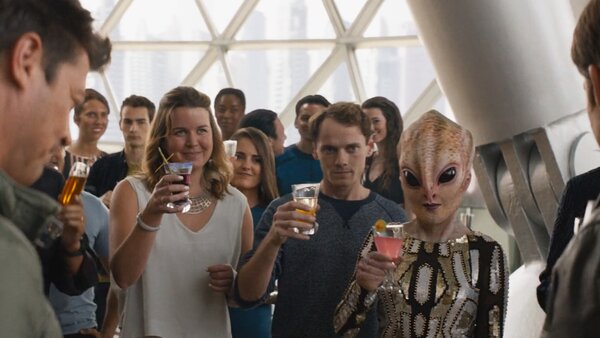
To more casual viewers of Star Trek: Beyond, Captain Kirk's (Chris Pine) closing toast "to absent friends" seems to be a pointed nod to the death of Spock Prime (Leonard Nimoy) at the start of the film, and of course also Leonard Nimoy, who passed away mere months before Beyond started shooting.
But that final toast - which was itself previously featured in the original Star Trek III: The Search for Spock - ended up taking on an extremely unfortunate double meaning due to the real-life tragedy which occurred mere weeks before Beyond's release.
Anton Yelchin, who played Ensign Chekov in the new Trek trilogy, died in a car accident at his home barely a month before Beyond came out, and so Kirk's toast ultimately felt like an unintended tribute to Yelchin also, aided by the camera almost immediately cutting to a shot where Chekov is in the center of the frame.
Knowing that this is our final glimpse of Yelchin's Chekov in this Star Trek universe, no matter whether a fourth Trek film ever actually gets made or not, lends an added layer of poignance to an already powerful closing sequence.
8. Carol Anne Is Saved - Poltergeist 3
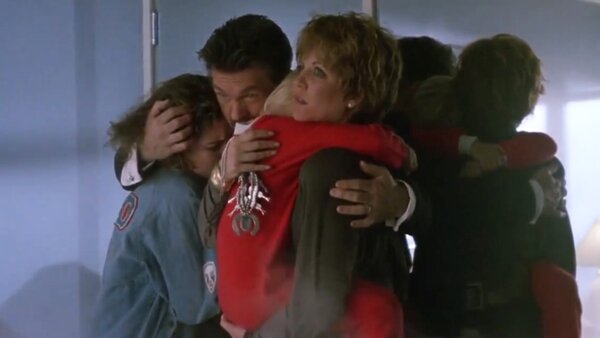
Poltergeist III ends with the series' young protagonist, Carol Anne Freeling (Heather O'Rourke), being saved and reunited with her aunt Pat (Nancy Allen).
It's supposed to be a triumphant moment, and yet, for anyone unaware, the production of Poltergeist 3 was beset by one of the worst things imaginable.
Several months after principal photography wrapped, 12-year-old Heather O'Rourke passed away from a congenital bowel defect.
This devastated the cast and crew, and also created major production complications as the film's ending needed to be reshot, with O'Rourke's Carol Anne expected to be a major presence in the sequence.
As a result, the climax ended up using a body double for O'Rourke, and so when Carol Anne is reunited with Pat in the new climax, Carol Anne's face is kept out of view, because of course, we're not looking at the original actress.
Knowing this, and that the cast and crew had to complete this sequence while freshly grieving their young co-star, makes it an especially wrenching conclusion to Carol Anne's arc and the original Poltergeist trilogy.
7. Edward's "Father" Dies - Edward Scissorhands
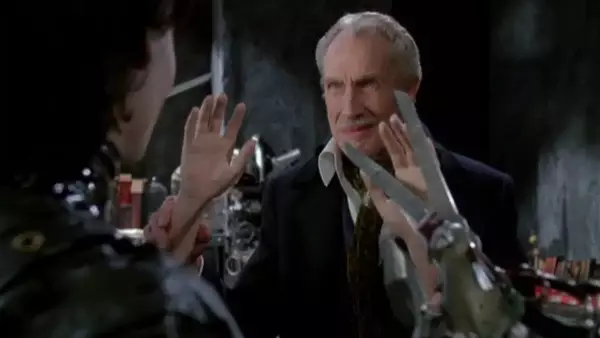
For the many who first saw Edward Scissorhands in their youth, and for which it served as a gateway drug into the mind of Tim Burton, the significance of Vincent Price's cameo appearance was surely lost.
Horror legend Price appears briefly in a flashback as the creator of Edward (Johnny Depp) - an inventor who dies of a heart attack before he can "complete" Edward by giving him human hands.
This ended up being Price's final major movie role, and once you're aware that you're watching a legend of the horror genre - someone who had a huge impact on Burton's own career, even - at the end of his life, the cameo takes on a whole other level of bittersweet poignance.
Price was suffering from both chronic obstructive pulmonary disease and Parkinson's disease during shooting, and as brilliant as he is in his scenes, his poor health absolutely transpires into his character, as is appropriate considering what becomes of the inventor.
6. M. Bison Goes Down For The Count - Street Fighter (1994)
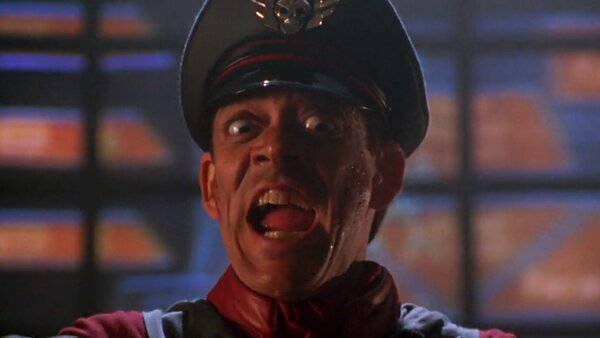
In theory, there shouldn't be anything even remotely emotional about the apparent demise of villain M. Bison (Raul Julia) at the end of 1994's Street Fighter movie, when he's kicked into his own monitor wall by hero Guile (Jean-Claude Van Damme).
However, it's not much of a secret that Julia was suffering from stomach cancer during production, and ultimately died just two months before the movie's release.
What's somewhat less known, however, is that Julia chose to star in Street Fighter as his final movie at the behest of his children, because he wanted to end his career in a film which his kids would enjoy.
Them being fans of the Street Fighter games, it was a no-brainer, and they also helped their father prepare for the role.
Julia was of course the only critically praised aspect of the film, many commending his campy performance, and knowing that Julia was swinging for the fences largely to entertain his own children, it's weirdly sad seeing M. Bison of all people get killed at the end.
We say killed but of course, the post-credits sequel-bait ending reveals that Bison in fact survived to fight another day, even if Julia's death ensured that this thread wasn't ever followed up.
5. Q's Final Words To Bond - The World Is Not Enough
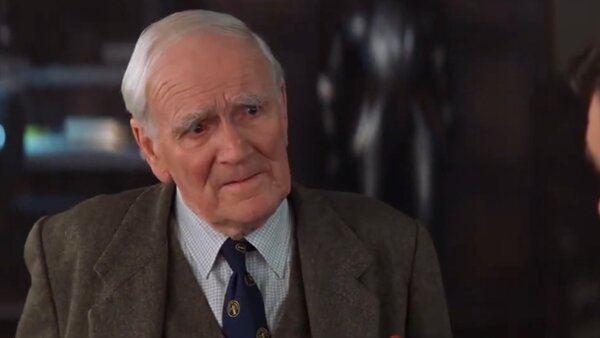
Though it was clear that James Bond's best-known Quartermaster (Desmond Llewelyn) wouldn't be sticking around forever, The World Is Not Enough wasn't actually intended to be Q's final film.
However, actor Desmond Llewelyn died in a car accident mere weeks after the film's premiere, ensuring that Q's departing words in the film took on a whole other, tragically unexpected meaning.
In his final interaction with 007 (Pierce Brosnan), Bond asks Q if he's retiring, to which Q cryptically replies that he's always tried to teach him two things, chief among them, "Always have an escape plan," just as Q disappears through a platform in the floor.
In retrospect it's quite the perfect farewell for the character, dropping a witty one-liner and then using a gadget to vanish out of frame.
And yet, despite how fitting the scene feels as a natural retirement point for this iteration of Q, especially with the film introducing his successor R (John Cleese), Llewelyn was fully expected to return for sequel Die Another Day.
4. Charon's Death - John Wick: Chapter 4
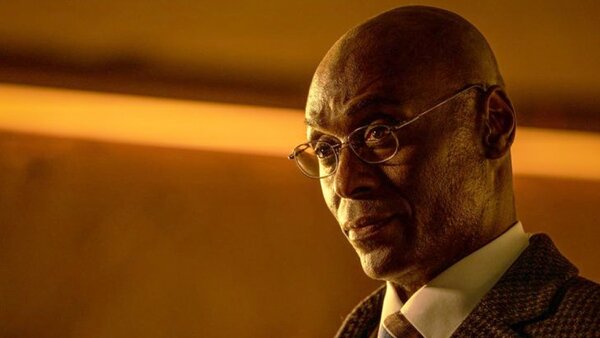
The fourth John Wick opens with the shocking death of a mainstay supporting character throughout the franchise - the concierge of the New York Continental Hotel, Charon (Lance Reddick).
Charon is shot dead by the villainous Marquis Vincent Bisset de Gramont (Bill Skarsgård) in front of his long-time colleague Winston (Ian McShane), immediately assuring fans that the stakes have been seriously raised in this sequel.
Charon's death was always going to make for a tough farewell, but it became decidedly harder to watch given that Charon actor Lance Reddick died suddenly of heart disease just a week before the movie's release.
And so, John Wick: Chapter 4's opening sequence became more haunting than anyone could've expected, especially as Charon tells Winston in his dying breaths, "It has been an honour my friend," to which Winston retorts, "It should have been me."
Later in the film the point is further hammered home when Winston and John (Keanu Reeves) attend Charon's grave and commend just how good of a man he was.
Obviously the pair had no idea what was going to happen to their co-star following shooting, but these words took on an altogether different significance in light of Reddick's untimely passing.
3. Norman's Heart - On Golden Pond
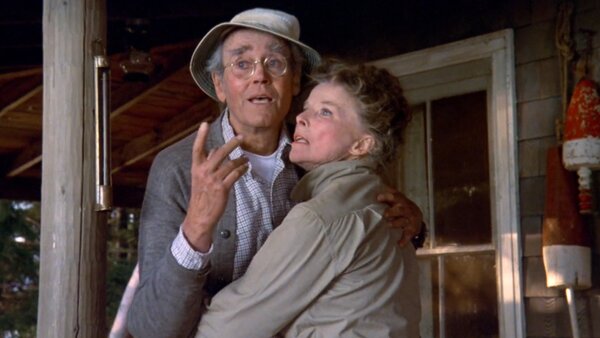
The 1981 drama On Golden Pond stars Henry Fonda as Norman, a retired elderly professor who finds himself grappling with the ravages of old age - namely dementia and heart issues.
At the end of the movie, Norman begins to have chest pains and collapses, much to the alarm of his wife Ethel (Katharine Hepburn).
However, after a moment the pain passes and Norman appears to be OK, as he and Ethel say farewell to the the lakeside cottage they've been spending the bulk of the movie.
On Golden Pond actually turned out to be Henry Fonda's final theatrical film role, and his closing moments on screen are nothing if not a reflection of the man's own health woes.
In later years, Fonda was himself stricken by cardiac issues, just like Norman, and ultimately died of heart disease just eight months after On Golden Pond was released.
However, prior to his death Fonda did win the Best Actor Oscar for his performance in the film.
It was the single Oscar win of his entire career, though due to his declining health, his daughter Jane - who also starred in the film, as Norman's own daughter - accepted it on his behalf.
2. William Bludworth's Curtain Call - Final Destination Bloodlines

The recent Final Destination Bloodlines marked the last appearance by the franchise's most recurring character, mortician William Bludworth (Tony Todd).
Here a terminally ill Bludworth has come to terms with the fact that Death will be imminently coming for him - an especially poignant revelation given that Todd himself was in the late stages of stomach cancer when he filmed his role.
Despite his physically weakened condition, Todd gives a superb final performance as Bludworth which offers up an affecting farewell to not only the character but the actor himself.
But it gets even more cutting, as filmmakers Zach Lipovsky and Adam Stein revealed that Bludworth's departing lines were improvised by Todd himself, to allow him to say goodbye to fans in his own way.
Before he exits the movie, Bludworth says, "I intend to enjoy the time I have left, and I suggest that you do the same. Life is precious. Enjoy every single second. You never know when. Good luck."
Surely nobody ever expected a Final Destination movie of all things to leave them fighting back tears, but here we are.
1. Wylie's Closing Monologue - An American Tail: Fievel Goes West
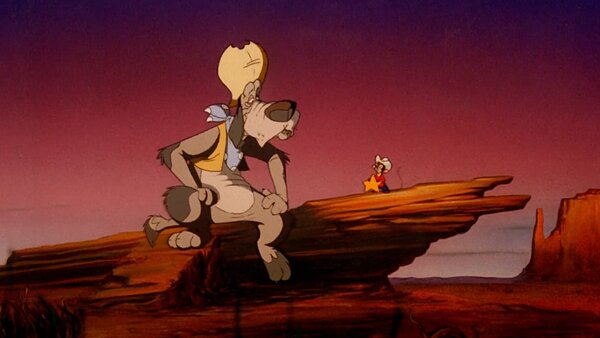
1991's Animated sequel An American Tail: Fievel Goes West sees mouse protagonist Fievel (Phillip Glasser) team up with canine Sheriff Wylie Burp, voiced with glorious gusto by the legendary James Stewart.
At the end of the movie, as Burp presents Fievel with his well-earned sheriff's badge, Fievel doubts his worthiness, only for Burp to retort with the film's heartfelt final monologue. He tells Fievel:
"Just remember, Fievel. One man's sunset is another man's dawn. I don't know what's out there beyond those hills. But if you ride yonder, head up, eyes steady, heart open... I think one day you'll find that you're the hero you've been looking for."
I'm not crying, you're crying. It's certainly a fantastic send-off for the Wylie Burp character as Fievel heads off on his own journey, and this ultimately turned out to be Jimmy Stewart's final film role before retiring from acting.
And so, Burp's wistful monologue earns a whole other level of meaning, reflecting the uncertain road ahead of Stewart himself, who lived for another six years after the film's release, though largely retired from public life following the passing of his wife in 1994.