10 Movie Holidays Which Went Horribly Wrong

Timely reminders that the dirty hotel room or the long-delayed flights we've experienced are a walk in the park.
Summer is here to stay, and what better way to celebrate than to pack up your tent and supplies or maybe a suitcase and head off on holiday for a week or two, escaping the daily routine of a mundane life, if only for a short while. While in real life nobody likes it when their holiday goes horribly wrong, at least when it does it's usually not the end of the world - bad service and inclement weather might be the worst case scenarios we could face. When it comes to the movies, such petty complaints would hardly make for entertaining viewing - we prefer disastrous holidays to crumble in more spectacular style, safe in the knowledge that when we pack up and head off ourselves we're unlikely to be subjected to the same ordeals. Here are 10 movie holidays which went horribly wrong, timely reminders that the dirty hotel room or the long-delayed flights we've experienced are a walk in the park.

10. Sightseers
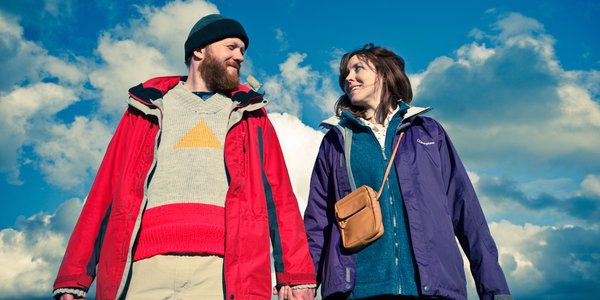
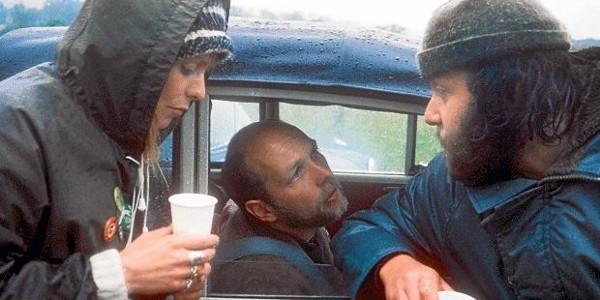
Holidaying in a caravan gets something of a bad rap in the UK - they're the bane of all motorway drivers, hogging up the slow lane in busy traffic jams, as annoying to be stuck behind as a tractor on a long and winding country lane. The holiday itself isn't much of a picnic either - unless your idea of fun is fetching your own water and emptying the toilets every couple of days. Still, none of this stops Tina (Alice Lowe) from packing up her belongings and abandoning her hypochondriac mother for a sightseeing tour of England with her new boyfriend Chris (Steve Oram) in Sightseers. Unfortunately, the tramway museum and England's largest pencil aren't the only highlights of their adventures, and Tina soon realises that Chris is more than just an aspiring writer seeking inspiration, as a number of people they encounter soon wind up dead. Directed by Ben Wheatley, Sightseers is a departure from his previous more serious film Kill List into dark comedy, carried throughout by strong central performances from the two leads. The moral of the story is clear - you might want to do a background check on your new partner before shacking up in a caravan for a few weeks

9. Eden Lake

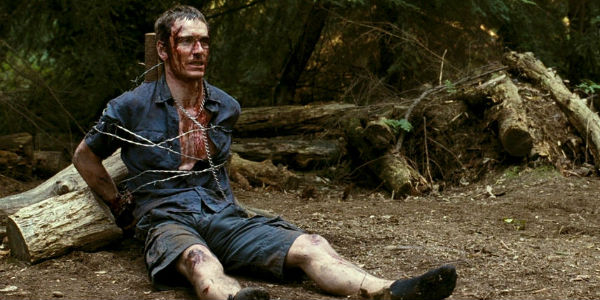
If the hassle of packing and unpacking a caravan isn't your cup of tea, you could always travel lighter and take a small tent somewhere nice and secluded for a romantic weekend break with your partner. Cheap and cheerful, if you know somewhere discreet and isolated you won't even have to fork out the pittance for a pitch on a camp site. Eden Lake starts out with this idyllic weekend break running perfectly smoothly, as lovers Jenny and Steve (Kelly Reilly and Michael Fassbender) head to the titular secluded lake for a lazy weekend in the sun. But before long a group of local youths start to make life increasingly difficult for them, and after Steve accidentally wounds the gang leader's dog matters start to escalate way out of control until their lives are well and truly in danger. Eden Lake might have come under some fire at the time of its release for perpetuating the negative image of "hoodies" and "chavs" in the UK but this doesn't prevent it from being a taut, edge-of-your-seat thriller which will make you think twice about going too far off the beaten track. It also features a great performance from rising star Jack O'Connell as gang leader Brett, a young actor soon to be rising through the ranks of Hollywood stardom.

8. Dagon

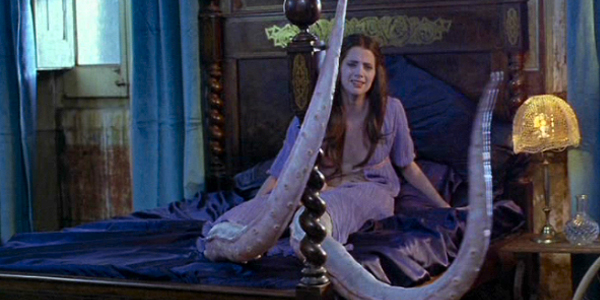
Going on holiday in a caravan or a tent is all well and good for those of us who like to get a little closer to nature when taking a break, but who wouldn't really prefer to be sunning it up on a luxury yacht, anchored off short in the sunny climes of the Mediterranean? For most of us, the decision wouldn't be a difficult one to make. Still, all it takes is for an unexpected storm to roll over the horizon and the lap of luxury can soon turn into a watery nightmare, which is exactly what happens to the holidaymakers in Dagon, Stuart Gordon's adaptation of H P Lovecraft's classic short story The Shadow Over Innsmouth. Taking refuge in a nearby coastal town, the couple soon realise that the locals are hiding a dark secret, where they worship the powerful ancient god Dagon and carry out ritual sacrifices to placate him. While Dagon received mixed reactions from the critics, Lovecraft fans were largely pleased to finally see their favourite purveyor of the macabre and twisted finally brought to the screen with some authenticity, capturing the crumbling village and pitiful souls wandering within it with vivid production design and attention to atmosphere.

7. Nuts In May

Most people don't like to plan too far ahead when they're on holiday - drawing up a strict schedule of places to visit and things to do takes the fun and spontaneity out of experiencing life as it unfolds, reminding us of the meetings and appointments which bind our lives in the workplace. In Nuts in May, Keith Pratt (Roger Sloman) takes an altogether different view on how to run a holiday, keeping to a strict itinerary with his wife Candice Marie (Alison Steadman) as they pitch up their tent in Dorset and explore the surrounding quarries, coves and castles. Unfortunately, Keith forgot to factor in one important thing before setting off - other people - and before long his idealised holiday becomes increasingly tattered thanks to his complete inability to interact with other members of the human race in a normal fashion. Nuts in May is one of Mike Leigh's earliest films, but already his keen observation on human foibles and the comedy of manners is abundantly clear. Keith is undoubtedly one of the most loathsome yet hilarious characters in the history of comedy - a kind of template for the Alan Partridges and David Brents which were to come decades later - and his inexorable slide towards a nervous breakdown is something to behold.

6. The Beach

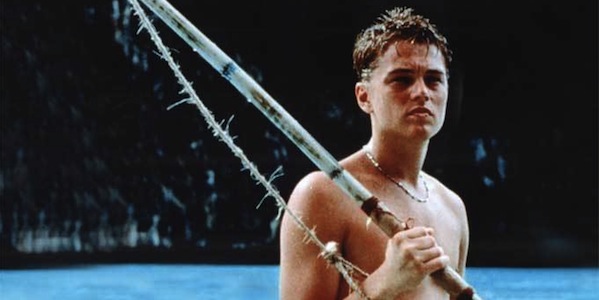
While Keith Pratt likes to plan everything to the smallest detail - with terrible results - the more adventurous amongst us prefer to leave things as open-ended as we possibly can. What better way to do this than to take a summer out from your studies to go backpacking in South East Asia, exploring the remote beaches and jungles of Thailand? The Beach - adapted from Alex Garland's novel of the same name and directed by Danny Boyle - takes the idea of unrestricted travel and the spirit of adventure to the extreme. Richard (Leonardo Di Caprio) learns about an idyllic beach paradise on a secret island and immediately sets out to find it. When he does there's more than a little trouble in paradise, and the free-spirited partying atmosphere of the the commune he discovers hides a darker, corrupted core which soon engulfs everyone involved. While the denouement to The Beach isn't as out and out horrific as it was in the original novel, where LSD and butchery merge into a nightmarish vision, it nevertheless teaches a valuable lesson - if you're going to set up camp in paradise, best check with the machine gun-wielding drug barons beforehand.

5. Wolf Creek

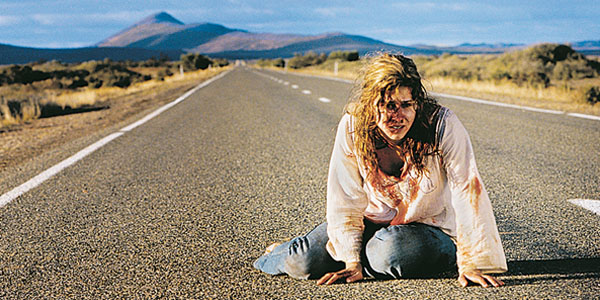
You'd be hard pushed to find an environment further removed from the thick, redolent flora and fauna of Thailand's tropical jungles than Australia, where the expanse of the outback recedes into the distance for miles around, a vast and anonymous landscape stretching for what seems like eternity. It's the kind of place you could explore for days without meeting a single soul - a far better scenario than the one faced by a group of intrepid backpackers in Wolf Creek, who are unfortunate enough to encounter serial killer Mick Taylor (John Jarratt). After showing hospitality, Australia-style, Mick drugs their water and they wake up in an orgy of torture and murder from which only one of them will be fortunate enough to escape from (typical of genre tropes, there has to be a survivor to tell the tale). As much a torture porn movie as a serial killer thriller, Wolf Creek begins with the old canard "based on true events" while compositing a variety of murder and disappearance cases which rocked Australian society. Graphic and disturbing, it's enough to put anyone off backpacking in the outback without a sturdy weapon or two discreetly tucked in their belongings.

4. What About Bob?

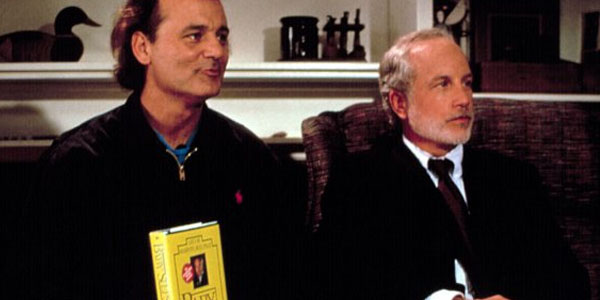
For most people, getting away from the workplace for a short while is the number one reason for going on holiday. We cancel our appointments, change out email notifications to the "out of office" setting and flee the building the moment we can. But what happens when your work follows you away regardless? It's a nightmare holiday scenario, destroying any chance of peace and tranquility. Richard Dreyfuss stars as Dr. Leo Marvin in What About Bob?, Frank Oz's wonderful comedy in which an excellent psychiatrist gets more than he bargains for when he takes on Bob Wiley (Bill Murray) as his patient shortly before setting off for a summer vacation by the sea. Bob, thoroughly pleased with the way his sessions are going, decides to track him down to the seaside. As Bob increasingly ingratiates himself into the Marvin household, Leo's patience towards his patient reaches breaking point. The more sensitive members of the audience might have taken objection to the use of mental illness as a source of comedy, but for the rest of us What About Bob? is a hilarious example of 90s comedy at its best. Murray and Dreyfuss bounce off one another in every scene, their mismatched double act perfectly pitched.

3. Deliverance

Getting as far away from civilization as possible might sound like an impossibility in a first world country like America, but there are vast swathes of land where few men have been for the adventurous to explore. Georgia is just one such state where unspoilt wilderness lies in every direction, and a canoe could be the perfect vessel for seeing as much of it as possible in just a short break away from business. It's an appealing prospect for the four businessmen in Deliverance, who set off down river undeterred by the sight of some decidedly inbred-looking locals, "mountain men" who appear to be inherently suspicious of city folks. The mysterious forms tracking them from amongst the trees on the river bank is an ominous sign that dealing with nature isn't the only thing they're going to face. John Boorman's Deliverance is a seminal thriller of the 1970s, with the notorious "squeal like a pig" rape scene one of the most memorable - and disturbing - in cinema history. The "inbred locals" threat has become something of a staple in the horror genre since, from The Hills Have Eyes to the Wrong Turn franchise, but none of them live up to the meticulous pacing of the Boorman classic.

2. The Evil Dead

Today, a group of horny, drug and drink-fueled teenagers heading out to stay in the middle of nowhere sounds like a recipe for trouble - such is the power of cinema folklore for capturing and shaping the popular imagination. The release of Friday the 13th in 1980 and Sam Raimi's groundbreaking The Evil Dead two years later have a lot to answer for when it comes to stoking adolescent paranoia. By far the superior of the two, The Evil Dead sees a group of students led by Ash Williams (the legendary Bruce Campbell) head out to a cabin in the woods for a short break, where they discover a mysterious book and audiotape which plays strange incantations in an unknown tongue. Before long demons are unleashed, taking over the woods and the occupants of the cabin in an orgy of tree rapes and possession as grisly and disturbing as it is over-the-top and audacious. Joss Whedon's wonderful parody of the horror genre The Cabin in the Woods would have been an entirely different picture if it wasn't for Sam Raimi's groundbreaking horror classic. The same can't be said for the many imitators which came over the following years - but at least the recent remake had the good sense to stick to practical effects rather than filling the screen with obvious CGI.

1. Jaws

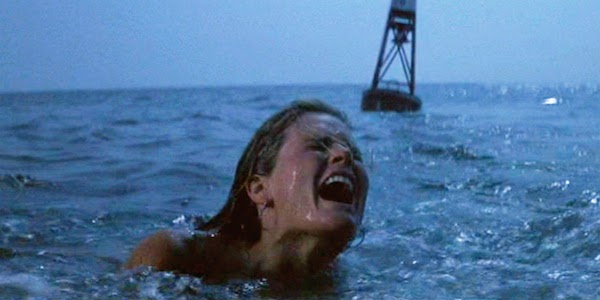
No other film in the history of cinema has had such a powerful effect on our perception of just how badly a holiday can turn out as Steven Spielberg's Jaws. Ushering in the dawn of the summer blockbuster, it's a film which made millions of people around the world afraid of dipping their toes into the sea, in case a shark lay waiting to tear them to shreds. The opening scene alone, in which a late-night swimmer finds herself tugged back and forth by the powerful great white shark before finally being dragged beneath the waves forever, is in itself a masterclass is tension building structure and editing. But Jaws is full of such moments, and by the climactic final half in which Chief Brody (Roy Scheider) joins a marine biologist (Richard Dreyfuss) and shark hunter (Robert Shaw) out on the open ocean, the viewer feels as if they're sat precariously over the waves with the shark's vast jaws lurking underneath. Of course, we all know that the statistical probability of being eaten by a shark is about as low as you can get, the power of a great movie like Jaws is its ability to make us suspend our rationality and better judgement, leaving us to our raw emotions and fear. Spielberg's early masterpiece achieves this like few other movies before or since.

In this post: 
Wolf Creek
 
Posted On: 
Contributor
Contributor

Andrew Dilks hasn't written a bio just yet, but if they had... it would appear here.