10 Movie Mysteries FINALLY Explained
Zack Snyder just revealed why Batman teams up with The Joker in Zack Snyder's Justice League.

Sometimes movies come and go in just a matter of days, after which they're basically forgotten and confined to the pop-culture ether. Others, however, linger around forever more, living rent-free in our heads for one reason or another.
Maybe they're just a great movie, or perhaps they present an unsolved mystery that's tantalised viewers ever since. This mystery could relate to an element of the story or be a strange quirk of the production, but whatever it might be, these cinematic enigmas continue to confound audiences.
Until now, that is.
In recent times, these lingering movie mysteries have all finally received the answers that fans spent years desperately chasing.
From finally resolving a character's ambiguous fate to addressing an infamous urban legend and explaining a bizarre filmmaking choice, we now have closure on these nagging, loose threads.
While it's often said that the mystery is more exciting than the answer, where these 10 films are concerned, it's simply a relief to have somebody with a measure of authority confirming the truth one way or another. And now, can't we all sleep a little better at night?...
10. What Happened To Yaddle? - Star Wars Episode I: The Phantom Menace

The Star Wars franchise is littered with nagging mysteries, but one which has especially puzzled fans for years is the true fate of Jedi Master Yaddle - effectively a female version of Yoda who could be seen sitting on the Jedi High Council in The Phantom Menace.
Yaddle disappeared without a trace following The Phantom Menace, and though she was technically killed off in the 2003 novel Jedi Quest: The Shadow Trap, this was rendered non-canon when Disney purchased Lucasfilm in 2012.
As such, Yaddle's fate was left uncertain, until the matter was finally resolved in last year's animated Disney+ series Tales of the Jedi.
In the season's fourth episode, shortly after Qui-Gon Jinn's (Liam Neeson) death, Yaddle learns that Count Dooku (Christopher Lee) has been working with Darth Sidious (Ian McDiarmid), leading to a lightsaber duel in which Dooku kills Yaddle, cementing his turn to the Dark Side.
It was certainly a sad outcome for fans, but a fitting one that brought necessary closure while slotting effortlessly into the existing lore.
9. Does It Really Take Place The Day Before 9/11? - Saw
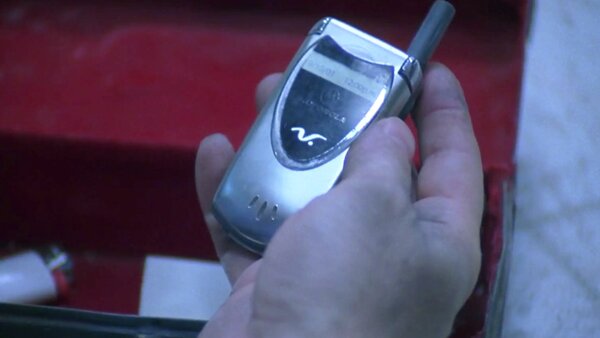
It's been whispered about for years that the first Saw movie takes place on September 10th, 2001, the day before the 9/11 terrorist attacks, ensuring its focal characters were about to have one hell of a bad week.
And though you'd be forgiven for assuming that this was actually a hoax, upon checking the film itself, the flip-phone that Jigsaw aka John Kramer (Tobin Bell) leaves in the grotty bathroom does indeed faintly read "9/10/01" in the American date format.
It's much easier to read the date on Saw's recent 4K UHD release, and if there's any lingering doubt, it's also been fact-checked by the fine folks at Snopes.
But in true Saw fashion, there's a twist - while the phone does indeed display the date September 10, 2001, there are numerous indicators throughout the franchise that the movies are set several years later than this.
It's reasonable to deduce that Saw is set in or around the film's release year of 2004. Going by the same logic, if 2017's Jigsaw takes place a decade after Kramer's death, then Kramer's death in Saw III would happen in roughly 2007, with the first film occurring a year or two earlier.
Though the series' timeline isn't terribly consistent, it's incredibly unlikely that the first Saw takes place in 2001 - it's far more likely that the phone was still working from a factory-set date and Kramer simply never bothered to set it correctly.
8. Where Is Bernard? - The Santa Clause 3: The Escape Clause
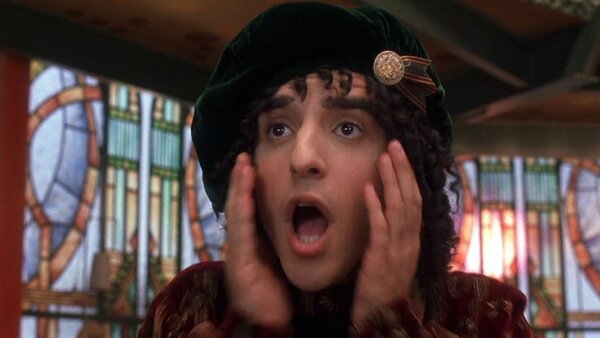
By far the most memorable supporting character in the Santa Clause franchise is Bernard the Elf (David Krumholtz), who inexplicably didn't return for 2006's The Santa Clause 3: The Escape Clause, with no explanation being given for his absence.
Fans have speculated ever since on what became of the character, and thankfully we finally got an answer in the recent Disney+ sequel series, The Santa Clauses.
Practically speaking the reason that Krumholtz didn't appear in The Santa Clause 3 is because he had scheduling conflicts with his hit crime drama series Numbers, but in-universe Bernard's sudden disappearance was never explained.
But The Santa Clauses brought Krumholtz back for a brief appearance, where Bernard reveals that he left without a trace after meeting a human woman and deciding to give up his eternal youth.
And better yet, the person he quit the North Pole for? None other than Dame Vanessa Redgrave, because why the hell not? After more than 20 years of fan speculation, it sure is a relief to have this lingering mystery finally tied off for good. Enjoy your retirement, Bernard.
7. What Fell Into The Ocean At The End? - Cloverfield

Ever since Cloverfield released in 2008, fans have speculated on what precisely fell out of the sky in the very final shot of the movie - a faint object which can be seen dropping into the ocean.
For years, the associated Cloverfield lore - namely a hugely popular alternate reality game (ARG) - seemed to suggest that the object was a satellite which fell out of the sky, sank into the ocean, and woke up the monster seen in the film.
But in an interview earlier this year, director Matt Reeves had a different take, and considering he's the director and all, we should probably believe him.
Beyond clarifying that the monster in the movie was a baby desperately seeking out its mother, Reeves also confirmed that the flying object wasn't a satellite but a meteor that was seemingly carrying the monster. Reeves said:
"At the end of the movie, you can see the moment when it comes to [Earth]. It's another one of those little Easter egg moments, but when we revisit that footage where they’re on the Ferris wheel at the end, you can see the meteor flying down and hitting the ocean. That’s actually the beginning of the baby being on Earth."
While this seems to contradict what was suggested by the ARG, Reeves certainly has word of god privileges in this situation, and so his take is basically gospel.
6. Why Was Kate Hudson Credited For Scream 3 On The Back Of The VHS? - Desert Blue
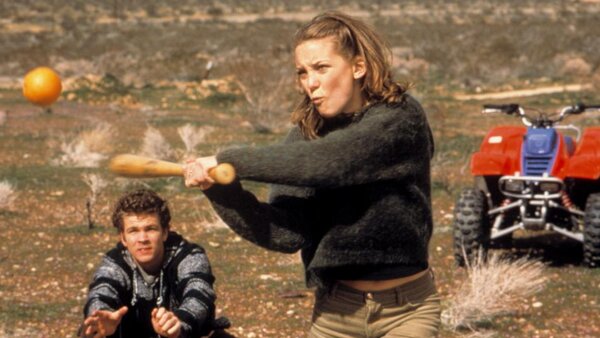
The original U.S. VHS release of the 1998 dramedy Desert Blue has a rather interesting mistake on the back cover. After Kate Hudson's name, she's credited as appearing in Scream 3, yet anyone who's seen the slasher threequel will know that Hudson has absolutely nothing to do with it.
Well, not quite.
Hudson doesn't appear in Scream 3, but she was originally cast in an unknown role, yet was ultimately replaced before shooting started for unknown reasons.
It's been suggested that Hudson had been hired to play an actress character, though given Scream 3's Hollywood-centric plot, that doesn't narrow it down too much.
All the same, it's fascinating that Hudson's name remained attached to Scream 3 enough that she was given an incorrect credit on the cover art of another movie.
This being 1999, where the Internet wasn't as ubiquitous as it is today, a cover artist working on Desert Blue evidently failed to do their homework. Ironically, though, mistakes like that probably make the original VHS considerably more valuable than the subsequent re-releases.
5. What Happened To The Enterprise-D's Saucer Section After It Crash-Landed? - Star Trek Generations

1994s Star Trek Generations saw the destruction of the beloved Enterprise-D, which was critically damaged by the Duras sisters, forcing the crew to evacuate to the ship's saucer section, which then crash-landed on the planet Veridian III.
It's stated that the saucer is beyond repair, and in the next film, Star Trek: First Contact, the crew are now aboard the Enterprise-E.
Ever since Generations, however, fans have speculated on what became of the Enterprise-D's saucer section, which while badly damaged was still largely in one piece on the surface of Veridian III.
Well, they finally got their answer in the recent third and final season of Star Trek: Picard, where it's revealed that the saucer section was eventually recovered from the planet, and Geordi (Levar Burton) spent the better part of 20 years restoring it.
The legacy cast then board the refurbished Enterprise-D to do battle with the Borg once again, and by season's end, it thankfully remains very much in tact.
4. Why Are The Cast So Old? - Grease
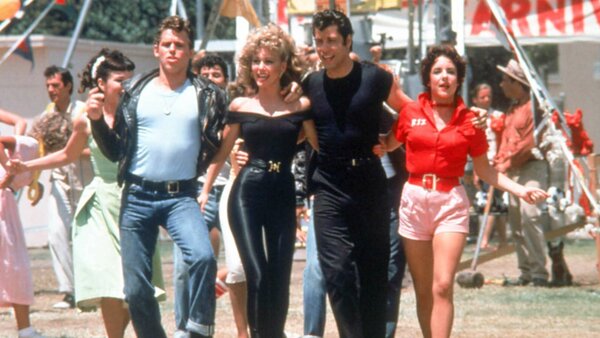
Much as Grease might be one of the most widely beloved movies of all time, even its biggest fans can't defend the decision to have its teenage high-schoolers be played by people who are clearly much older than that, even for the standards of American media.
The majority of the cast were in their mid-to-late twenties when Grease was being shot - around a decade older than their characters - with John Travolta being 23 years old, the late Olivia Newton-John 29, and most distractingly, Stockard Channing was 33 when she portrayed Rizzo.
While it's common practise for Hollywood to cast actors over the age of 18 to play high-schoolers in order to skirt pesky labour restrictions, going over double the character's age in the case of the 16-year-old Rizzo is a decision that's mystified fans ever since its 1978 release.
But in a new retrospective on the film, The Guardian spoke to Grease casting director Joel Thurm, who clarified that they knew they were casting older actors, and felt this was an appropriate choice given both the film's more adult undertones and slyly fantastical vibe. He said:
"People might say the cast is too old, but Grease is not a documentary; it's a fantasy. It is a non-PC fairytale that is better for the cast not being teens. The only thing that was important was that the cast all looked about the same age as each other, which they did."
That's pretty water-tight logic, honestly.
3. Are The Toys Immortal? - Toy Story

The Toy Story franchise has kept the mechanics of its living toys intentionally vague because, honestly, there's never going to be an answer that makes complete sense and pleases everybody, right?
All the same, back in the summer of 2020, Toy Story 3 director Lee Unkrich answered one of the fandom's most enduring questions - can the toys die, or are they effectively immortal?
Toy Story 3 of course flirted with the idea of confirming this one way or another with its iconic incinerator scene, though thankfully stopped short of showing what would happen if Woody (Tom Hanks) and co. were melted by the fire of a thousand suns.
All the same, Unkrich replied to a fan who asked about the toys' mortality, telling them:
"They live as long as they exist. But if they were to be utterly destroyed? Say, in an incinerator? Game over."
So it appears that while the toys can't ever die of old age, their existence is limited by the durability of their material. Given that plastic can take hundreds of years to decompose, the prospect of the toys slowly wasting away is actually quite horrifying.
2. Why Does Batman Team Up With The Joker? - Zack Snyder's Justice League

One of Zack Snyder's Justice League's final scenes sees Bruce Wayne (Ben Affleck) have an apocalyptic dream - a "Knightmare," even - where Darkseid (Ray Porter) has conquered Earth and Superman (Henry Cavill) has become a dangerous renegade.
Batman has teamed up with heroes and villains alike to resolve the situation, most surprisingly even striking a truce with The Joker (Jared Leto) - albeit an incredibly uneasy one.
Quite why Batman would ever join forces with the Clown Prince of Crime, and what a power-less Joker could possibly offer him, are left totally up in the air during the brief sequence.
But on a recent panel at the SnyderCon 2023 event, Snyder revealed that The Joker is the only person who knows where the Kryptonite is which can be used to defeat Superman.
In Snyder's own words - "If [Batman] kills him or gets rid of him, then he's screwed himself."
There you have it. While the DCEU is effectively dead once Warner Bros. burns off the remaining projects, it's nice to know why the Dark Knight forged an (admittedly iffy) alliance with his arch nemesis.
1. Why Does It End With A Shot Of The Washington Monument? - Wedding Crashers
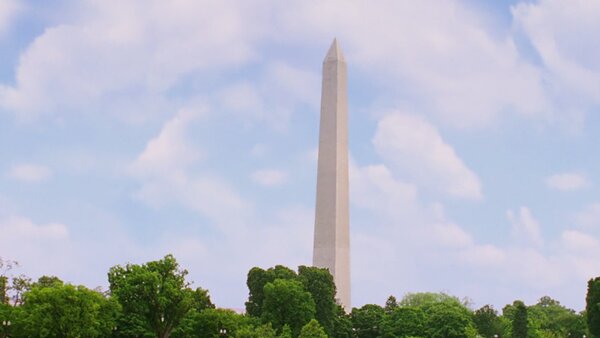
Wedding Crashers isn't a mentally taxing movie or one that leaves the viewer with much to think about when it ends, but nevertheless, there are those who have questioned why the hit rom-com ends on a memorable closing shot of the Washington Monument of all things.
As the two central couples drive away, the camera pans up and lingers on the triumphant visage of the Washington Monument in a way that feels incredibly pointed and meaningful. And yet, what does it actually mean?
Fans will of course remember that a scene earlier in the film is set at the Lincoln Memorial, as Owen Wilson and Vince Vaughn's protagonists consider whether their wedding-crashing behaviour might in fact be a little childish and irresponsible, with the Monument visible in the background.
In a 2020 interview with USA Today, director David Dobkin revealed the true meaning of the Monument in the movie.
In the scene at the Lincoln Memorial, it represents "the goal on the horizon that they want to reach," of moving away from their shenanigans and finding love, while the film's final shot sees them moving closer to that goal by literally being closer to the Monument as they drive away.
And no, having the physical embodiment of success being a giant marble obelisk wasn't lost on Dobkin:
"In the end, they got closer to the big phallus in the sky."
There you have it - Wedding Crashers is a more thematically rich movie than anyone surely expected.