10 Movie Remakes That Ditch Classic Elements
Brave? Or Just asking for trouble?

Film remakes are a tricky thing to handle. Switch things up from the original, and folks complain it’s lost its charm. Make them too similar, and the audience will be wondering what the point of doing the same thing twice is. The past few years especially have seen an influx of franchise reboots and second chances for a whole host of film types.
Anything from cinema’s most iconic movies, to some more questionable films from days gone by are all options for a return to the silver screen. There’s the potential for updated visual effects, recasts and cameos, and inevitable twists on stories we already know (and maybe love) but there’s also the fear that something is going to go terribly wrong.
It’s about time we took a deep dive into some those times we saw old favourites shaken up for a new audience – for better or for worse.
10. There's No Mushu - Mulan (2020)
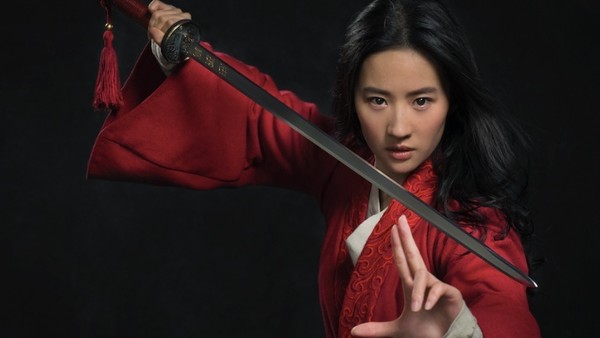
Disney are all over the cash cow of live action remakes of their old animated classics. The latest in this long line will soon be Niki Caro’s rendition of Mulan. The 1998 animated film is surely one of Disney’s best: a gender-role smashing plot, the vocal talents of Ming-Na Wen, Eddie Murphy, and BD Wong, and of course a musical soundtrack that has appeared on many a motivational Spotify playlist.
So it seems there’s been a bit of an uproar about the new Mulan missing out the titular character’s guardian spirit, Mushu. The pocket-sized dragon, voiced by Murphy, provided much of the original’s comic relief, and he remains a staple of Disney merchandise.
To leave him out speaks volumes about the upcoming movie’s tone, then, because there’s no way they would omit him without very good reason. If we look at the bigger picture, we’d also notice that they’re doing away with the animation’s classic numbers, too. No Mushu? No getting down to business to defeat the Hun? It looks like we’ll be getting a decidedly more sombre experience with this live action version.
But, for anyone worried that Disney have neglected Mulan’s more spiritual tones, never fear – she’s still very much in touch with her ancestral guides. It’ll just be via a majestic phoenix rather than a smart-talking lizard thing.
9. No Imhotep (And Lots More, Actually) - The Mummy (2017)

The Dark Universe is a lesson in how not to do an extended universe. Universal promised so much: an Invisible Man, a Wolf Man, a Frankenstein’s Monster.
Those dreams are now dashed, and it’s all largely thanks to their 2017 reimagining of the story first conjured by the Universal Horror film The Mummy (1932). For those of us who only really remember the actually rather loyal 1999 version with Brendan Foster and Rachel Weisz, hearing that there was already going to be another reboot had us thinking, “So soon? For why?”
For why indeed, since this new-fangled version with Tom Cruise and Russell Crowe just felt like another Mission: Impossible film with a supernatural twist. Gone were the period setting, Imhotep and his tragic backstory, even our beloved action hero Rick O’Connell.
Instead, we got a new Mummy in the form of Ahmanet, with a new backstory and new motivations. Imhotep was pretty content just resurrecting his old girlfriend, and maybe having the odd ritual sacrifice here and there. (Sure, The Mummy Returns (2001) had him summoning a dodgy CGI Dwayne “The Rock” Johnson to try and conquer the planet, but once his gf had ditched him, he gave up entirely on those plans.)
Ahmanet goes straight in for deity-summoning and world domination. It’s far less of a romp than the Brendan Fraser version, and far less classic horror than the original.
Maybe this complete departure from everything we knew and liked about The Mummy’s plot is what led to its downfall...?
8. <span Style="font-size: 15px;">Kayako Is Pushed Aside - </span>The Grudge (2020)

This is admittedly a complex one to unpack, since it’s the long-awaited sequel to the 2004 American remake of Ju-on: The Grudge. The original Japanese film loaned the majority of its plot to the American version and its sequels.
Kayako Saeki, an onryō or vengeful type of spirit who curses anyone who enters the house she haunts, is truly this series' most iconic imagery of this franchise. That long black hair, wild eyes, and jerky spider crawling is absolutely terrifying.
What’s more, The Grudge manages all that terror without an over-reliance on SFX. Remember those days when films had to use practical effects because CGI just wasn’t up to scratch? Yeah, those were the days. Kayako hits bang in the middle of the uncanny valley too: she teeters right on the brink between human and inhuman that makes your skin crawl on sight.
Some might call it a bold move that the 2020 release does away with Kayako almost immediately, and replaces her with gorier, more visceral versions of the vengeful ghost archetype.
Considering that the bulk of The Grudge’s original scariness came from Kayako’s unsettling performance of weird noises and inhuman movement, for this new version to ditch her so early on and then rely so heavily on gore is such a huge departure from the original. Anyone can splatter fake blood around a bit, but it takes much more skill to make a horror film without it.
7. The Sibling Rivalry That Never Was - Halloween (2018)

The Halloween franchise is one that has gone through so many iterations, it took substantial effort just to remember which plot points are relevant, and which got retconned.
The one thing that the previous nine continuities of the Halloween franchise had in common was that the character of Laurie Strode, played by Jamie-Lee Curtis in the original run, was the secret younger sister of Michael Myers. Everything else, from Myers’ psychic niece and the mysterious Cult of Thorns which appeared to be responsible for creating the infamous supernatural killer, would be ditched by each reboot eventually.
Halloween (2018) made it much easier to remember what’s canon and what’s not, since it completely wiped the slate clean to serve as a direct sequel to 1978’s original. 40 years on, an unrelated-to-Myers Laurie Strode has spent her entire life preparing for the day where she may eventually meet the Halloween killer again – essentially becoming a budget Sara Connor type character, with an estranged family to boot.
To be fair, the state of Halloween sequels was such a mess that a complete reboot of everything but the only bonafide good film in the franchise probably was the only way forward.
Or they could have just… you know, left the Halloween series alone?
6. No Tattoo - Fantasy Island (2020)

Let’s admit it, it’s pretty annoying when we get a remake of something that feels like it’s been out for five minutes. At least with the upcoming film adaptation of Fantasy Island, we’ve had a good 40 years since its first TV outing. The series, which ended in 1984, was a household staple. It featured the enigmatic Mr Roarke, a man capable of simulating any person’s fantasy for them to live through – as long as they pay the requisite fee (usually a tidy $50,000) and travel to his remote island.
The original iteration included Roarke’s assitant Tattoo, played by French-American actor Hervé Villechaize. Villechaize’s accent and his dwarfism (the medical terminology – Villechaize preferred the now pejorative term ‘midget’ for himself) was obviously the butt of many jokes. Would it even be a 1970s TV show if it didn’t dabble in ableism and xenophobia? Even so, Tattoo was a beloved character from Fantasy Island, but probably one better off staying in that decade. Even the short-lived revival series in 1998 knew better than to keep up the insensitive portrayal from the original.
Things look to be going a similar way for the 2020 Blumhouse Production's adaption of Fantasy Island. There’s no sign of a Tattoo-type assistant to Michael Peña’s Mr Roarke, instead there’s a bunch of workers on the island ready to get busy making people’s fantasies come to life. Except, since it’s Blumhouse at the reins, this new film version looks to be a nightmare rather than the dream the island’s visitors paid for.
Fantasies are getting twisted, and it looks like Roarke’s guests are in genuine peril; it’s a far cry from the original’s idyllic safety. It remains to be seen if this horror take is a worthy addition to Fantasy Island’s franchise, even if it is far from faithful.
5. The Boardgame - Jumanji: Welcome To The Jungle (2016)

Look, we can all recognise that sometimes the film industry has to make some necessary changes to keep film genres relevant. Jumanji is a prime example. The 1995 film is an absolute classic in the family film genre, and exceptional performances from Robin Williams, Jonathan Hyde, and a very young Kirsten Dunst make it an absolute masterpiece.
But what worked in 1995, a reality-bending board game that two kids willingly play without any wrangling from an older relative, is a smidge unrealistic by today’s standards. There’s definitely still enough in the film for it to work for today’s kids: the genuine peril of being stuck in the middle of a stampede, encased in quicksand, or that whole bit where one kid is turned into a monkey are still some great cinematic moments.
As far as updates go, however, Jumaji: Welcome to the Jungle (2016) does a fantastic job of keeping what we know and loved from the original, while putting a modern spin on it that speaks to modern audiences. Welcome to the Jungle does ditch a lot of the original movie. The board game becomes a video game, the “child” actors are replaced with blockbuster actor avatars, and the 20th Century game hunter Van Pelt is made over to fit the dark, brooding baddie stereotype we see in most action films.
But despite these cosmetic changes, it doesn’t ditch the most crucial aspect of Jumanji: the game’s sentience. Jumanji itself is a chaotic neutral type – it doesn’t really care what happens to its players, as long as the game itself is played (hence it knowing to revolutionise itself into a video game cartridge.)
Anyone who does play Jumanji to completion is graced with some kind of life improvement too: Judy and Peter’s parents avoid their fatal ski trip, Alan Parrish reconnects with his father, and even the four kids in the 2016 installment end up with deep friendship connections and a new appreciation for life. I suppose surviving being eaten by a hippo, trampled by rhinos, and flung out of helicopters will do that to you.
Yeah, Jumanji: Welcome to the Jungle does away with a lot of the aesthetic elements of the original, but it at least keeps its soul.
4. The Ending Was Completely Changed - The Jungle Book (2016)

There’s two types of Disney live action adaptation: those that are scene for scene remakes, and those that are vague approximations of the original. It’s the difference between Cinderella (2015) and The Lion King (2019).
The Jungle Book, though, that’s an interesting one. It keeps a lot of the visuals of the 1967 Animation (albeit more realistic animals thanks to some stellar CGI) but it also adds stuff here and there to change things up just a touch. Kaa is made female, for instance, with Scarlet Johansson lending her talents to the voice role. King Louie turns out to be absolutely massive – although having Christopher Walken as the King of the Swingers is a special kind of comedy I don’t think Disney were intending.
The most interesting change has to be the ending, though. The Disney classic ends when Mowgli takes a fancy to a village girl he spies at the river and chooses to begin life in the village with the other humans, in an unsettlingly covert message to stick with “your own kind” – if you catch my drift.
It’s a lowkey conservative message that really isn’t in keeping with Rudyard Kipling’s original stories, which show Mowgli never really settling with other humans until he’s much older and embracing his animalistic instincts alongside his human craftiness. Jon Favreau’s portrayal is truer to the page: Mowgli, once he has dispatched of his rival Shere Khan the tiger, reunites with his wolf pack and continues to live in the forest, away from “man”.
Turning the ending on its head does more for the film than many might realise. Mowgli, who should be alien to the jungle, fits better there than where some believe he should be. It’s a brave move, but something we should really appreciate.
3. Wonka's Likeability Was Sucked Out - Charlie And The Chocolate Factory (2005)

Let’s just set one thing straight before we continue: Willy Wonka and the Chocolate Factory is the 1971 musical starring Gene Wilder, and Charlie and the Chocolate Factory is Tim Burton’s 2005 gloomy adaptation. We’re all clear? Great. Now, let’s begin.
Willy Wonka and the Chocolate Factory is the most colourful, vivid musical to watch. Seriously, if you watched it as a kid like I did, it’s sure to leave an imprint on your infant eyes. You know how your eyes go all blotchy after you glance at a bright light? Kind of like that. So when it was first announced way back in the noughties that Tim Burton was going to put his own spin on Roald Dahl’s children’s story, it did sound jarring. And, let’s be real, it didn’t really work.
Roald Dahl’s work is best known for its subtle morbidity. Willy Wonka is an eerily secretive character who essentially set traps for four of the five kids invited to his chocolate factory, all in the name of finding an heir to his vast confectionary empire. That’s what the Gene Wilder musical got so right, and why it works so well. Remember his entrance? A timid, frail man – hidden from the public eye for years – shuffles out of the doors and into view, only to drop seamlessly into a forward roll.
From that moment on, we know not to underestimate him.
Tim Burton’s approach to his adaptation is little more… sledgehammer-like. Wonka is dark, yes, but Johnny Depp plays him off only as twisted and quirky, with little wiggle room for the dimensional characterisation we’ve seen before. Dahl’s work is meant to be subversive – The Twits ends with Mr and Mrs Twit glued upside-down to the floorboards and left to rot, and George’s Marvellous Medicine has the titular George shrink his abusive Granny into nothing.
But Burton took it a step too far, and made Mr Wonka truly odious with one seemingly subtle but ultimately significant change from both the literature and the 1971 musical – he hates families. So much so, that little Charlie Bucket refuses the inheritance of his chocolate factory because Wonka would force him to leave his family behind to claim it – and of course there’s no chance our moral centre would ditch his loved ones for fame and fortune.
Cue an unnecessary 40 minute subplot where Willy Wonka has to reconnect with his dad (Christopher Lee, how could you?) for him to discover the true meaning of Christm- I mean, family. Or whatever.
I get that maybe Burton wanted to add some drama or twist to the already well known tale, but when you have kids being blown up like a party balloon or threatened with incineration, I think we had all the suspense that we needed.
2. No More Mr J - The Suicide Squad (2021)

This definitely is the quickest reboot(ish) of a franchise on this list. Even Andrew Garfield’s The Amazing Spider-Man got a bit of a grace period before Tom Holland took Peter Parker into the Marvel Cinematic Universe. But, considering how Suicide Squad (2016) was kind of a mess of a film, who can blame the DCEU for trying to amend things?
The Suicide Squad is due for release next year, but the history of this follow-up film has been tumultuous to say the least. Rumours bounced around that it was going to be a direct sequel, then a total reboot (but with the same actors), until it was settled that it would be a standalone sequel. It’s the same DCEU, same characters played by the same actors, but chances are they will be leaving the first instalment in the dust.
That process has already begun with this year’s Birds of Prey (and the Fantabulous Emancipation of One Harley Quinn) which is cutting ties with Margot Robbie’s initial depiction of Harley Quinn to reinvent her character as one not reliant on the Joker. Speaking of the devil, it looks like The Suicide Squad, while not recasting anyone (yet), will be allowing Jared Leto’s interesting rendition of one of Gotham’s worst villains to go without reprise.
Meanwhile, we won’t be getting Will Smith’s Deadshot again any time soon either. Idris Elba was all set to go for a recast, but ex-Guardians of the Galaxy’s James Gunn, now at the helm of The Suicide Squad, has given Elba something else to do in the film, which at least left Smith open for a comeback. With a 2021 release date, there’s still a lot left unknown about this film. All we do know is that a lot of people seem desperate to right the wrongs of 2016, and I commend them for that.
1. The Southern Setting - Candyman (2020)

Candyman (1992) is already well known as a classic of the horror genre. As far as spookfests go, it ticks all the boxes: a vengeful spirit with a Bloody Mary style of summoning ritual and a ribcage full of bees, mysterious murders, and pretty visceral gory special effects. Tony Todd’s vampiric supernatural figure who feeds off the belief in his urban legend had only a limited backstory in his first outing; a black man in post-Civil War America fell in love with a white woman, and was cruelly lynched when her father found out about their relationship. His violent death at the hands of this racist mob led to his ghost’s manifestation.
Two sequels followed, Candyman: Farewell to the Flesh (1995) and Candyman: Day of the Dead (1999), but unfortunately they are not without their troubles.
Sure, it was nice we got to know Candyman’s name was Daniel Robitaille, and that the exact circumstances of his death caused his physical appearance - his murderers covered his body in honey while bees stung him to death, and one hand was amputated and replaced with a hook - but there were other alterations that didn’t work as well.
The sequels ditched the former’s Chicago setting, with the ghettoised Cabrini-Green housing project making way for more rural New Orleans. Candyman, too, was reconceptualised from a northern, free, black man, to the son of a plantation worker. This latter point especially was a gripe for Bernard Rose, director of the 1992 flick.
This change to his character might seem subtle – insignificant, even – but such an analysis barely scrapes the surface of its real impact. Horror movies are saturated with southern racist stereotypes: tere’s literally a film called Redneck Zombies. There’s no smoke without fire, and it was in those states where slavery was legal, and which enforced incredibly racist ‘Jim Crow’ laws following the end of the American Civil War.
But who are we kidding? Racism happened in northern America too, we just never see it as much in cinema because it doesn’t fit our vision of what the past was like.
The north wasn’t entirely a safe haven from racism, where escaped slaves would journey for their chance of freedom from racist slave owners. The first film dealt saliently with housing segregation in Chicago that had so drastically impacted its African American communities. There was that whole Rodney King Affair in 1991 – you know the one, when an unarmed black man being beaten by the officers from the Los Angeles Police Department was caught on video tape. It’s almost as if turning our preconception of racism on its head might have been a really useful thing for Candyman (1992) to do.
Candyman (2020) promises to be a “spiritual sequel” to the very first film, revisiting the Cabrini-Green region of the first, but maybe dealing with its demolition and the recent gentrification of the area. It’s not clear how much – if anything – is getting retconned, but since it’s been written by none other than Get Out’s Jordan Peele, we can but hope that there’ll be some liberal smatterings of social commentary which this iconic figure really deserves. Whether Candyman’s backstory as the son of a plantation worker remains, or if he reverts back to being a free man, I have no doubt that Peele will use this opportunity to its fullest extent.