10 Movie Sequels That Took Way Too Long

Sin City was so 2005 (because it actually was!)

Sin City 2 Generally when a movie enjoys astronomical success, movie studios will start prepping a sequel the second they realise they're onto a winner, either when a confident producer sees some raw footage from the set, or most often once those first weekend box office tallies start coming in. Hollywood is in large part driven by sequels, and though we frequently complain about this indicating a lack of creativity in the industry, if they're going to do it regardless, movie studios at least need to strike while the iron is hot. These 10 movies, however, did the exact opposite, making us wait years, even numerous decades before we got our hands on a long-anticipated, much-discussed follow-up, by which point too much time had passed and the results (for one of many reasons) weren't quite what we were hoping for. Perhaps audiences had just grown tired of waiting, or the original cast were nowhere to be seen, or perhaps had they were involved, but had aged too dramatically to be convincing in their role: whatever the reason, these 10 movies took far too long to hit our cinema screens, and as a result proved pretty underwhelming for the most part. Note that we've consciously left off a number of films that we feel either overcame the long wait, or even benefited from holding off and made it part of their story, such as Die Hard 4, Rocky Balboa, Men In Black 3, Tron: Legacy, Wall Street: Money Never Sleeps, and American Reunion. Still, did we miss any classically-stalled movie sequels? And did you like any of these films? Let us know in the comments!

10. Riddick (9 Years, 3 Months)

The Pitch: Remember 2004's The Chronicles of Riddick? That's right, the $120 million Pitch Black sequel that colossally bombed at the box office? Just shy of a decade later, Vin Diesel returned in the title role in a movie with less than one-third of the budget of the previous film, and written and directed by the same guy who ran that movie into the ground. The Result: In fairness, Riddick was by no means a terrible film, but it wasn't a particularly good one either. Still, after the abomination that was Chronicles, writer-director David Twohy taking almost 10 years to prepare another attempt was likely due to having to convince Universal Pictures that he wouldn't blow it this time (and the $38 million budget was likely the deal-breaker). Vin Diesel was, surprisingly, still a household name thanks to the continuing adventures of the Fast and the Furious franchise, and so Universal figured the movie would probably make back its budget. To their credit, they were right: Riddick made $98 million, proving to be a minor financial success for the studio, even if the decade-long wait left us mostly apathetic for another go-around on a franchise that pretty much faltered before it even got started. Furthermore, given how most people only ever watched Chronicles once and quickly forgot about it, Riddick's references to the events of that film pretty much fell completely on deaf ears.

9. Sin City: A Dame To Kill For (9 Years, 5 Months)

The Pitch: Remember that Sin City sequel everyone wanted? Well, it's (sorta) finally happened, but given that Michael Clarke Duncan and Brittany Murphy are dead, they'll have to be recast (or in Murphy's case, elided entirely), while Clive Owen's Dwight and Devon Aoki's Miho have also been recast with Josh Brolin and Jamie Chung respectively. It also features two new stories written by Frank Miller specifically for the film. The Result: Sin City: A Dame to Kill For hit US cinemas this past weekend, and was a surprising box office bomb, making an embarrassing $6.5 million for the entire weekend on a $70 million budget (compared to the original movie's $29.1 million opening weekend). The reasons cited include a shoddy marketing campaign, the numerous re-castings (more casual viewers are likely to be confused by the Owen-Brolin switch), mixed reviews, the movie's style lacking the freshness of the previous film, and the fact that, yes, there was simply too much time between this and the original. Rodriguez shot himself in the foot by talking up Sin City 2 far too much over the years, with the script-writing process beginning in 2006, and the film suffering constant delays ever since, to the point that most people figured it would never see the light of day. People gave up on Sin City 2, and by the time trailers finally came out, they couldn't bring themselves to get excited and go out and see it.

8. The X-Files: I Want To Believe (10 Years, 1 Month)
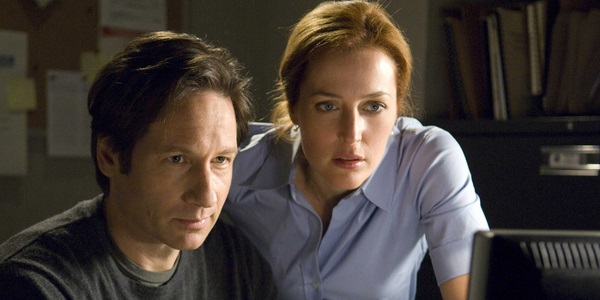
The Pitch: 10 years following the first X-Files film, and a whole 6 years since the series itself finished, creator Chris Carter wrote and directed a second X-Files movie, I Want to Believe, that functioned as a standalone one-off story for Mulder (David Duchovny) and Scully (Gillian Anderson). The Result: A disappointingly generic movie that could pretty much have been any regular episode of the series dragged out to feature length. The series had been finished for over half a decade, so why on Earth did Carter think that settling for a detached story like this would make it worth watching? If we were going to be interested in seeing Mulder and Scully again, it had to develop them further as characters and return to the "mytharc" that defined the series and the previous film. The movie was financially successful, though made only $68 million against a $30 million budget, which when compared to the previous movie's $189 million box office haul, is hugely disappointing. Had Carter struck while the iron was hot and got a movie released by 2005 and not deferred to such a generic storyline, then perhaps this would have been a much greater success. By 2008, people had moved on from The X-Files, and it just seemed kinda desperate.

7. Terminator 3: Rise Of The Machines (12 Years)
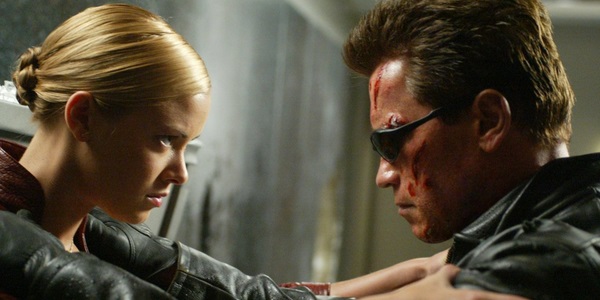
The Pitch: Terminator 3: Rise of the Machines follows the continued efforts of Skynet to eliminate the human resistance, released a whole 12 years after the classic Terminator 2: Judgment Day. James Cameron has been replaced in the director's chair by Jonathan Mostow, Cameron didn't write the movie either, there's no Linda Hamilton or Edward Furlong, and Arnie is, well, in his mid-fifties. The Result: T3 was by no means a bad film, but it just had the impossible task of living up to the previous two classics without the benefit of even having Cameron at the helm. Though the gap between the first two films was a hefty 7 years, the 12 years between T2 and T3 is a whole other story. The fact that John Connor had to be recast due to Edward Furlong's drug problems may not have occurred had the film been made in a timely manner (he didn't start abusing hard drugs until 1999), and of course, Arnie wouldn't have looked quite so old. As for Linda Hamilton? She likely would only have been in it if Cameron had made the film before Titanic (due to him cheating on Hamilton with Suzy Amis). Though Nick Stahl did well in the role of Connor, the fact that we could have had a T3 with Furlong reprising his role is such a missed opportunity. To see Furlong and Schwarzenegger bring their chemistry to the screen once again would have been incredible, and instantly would have given the film a solid boost. Still, T3 was a critical and commercial success, so it could be worse (literally, look at Terminator Salvation).

6. Basic Instinct 2 (14 Years)

The Pitch: Remember how insanely, dangerously hot 34-year-old Sharon Stone was in Basic Instinct? Well, Basic Instinct 2 basically serves up the same thing again...but with a near-50-year-old Stone tackling a new story, because Michael Douglas rightly deemed himself too old to reprise his role. The Result: After over a decade of languishing in development hell, Basic Instinct 2 was released in 2006 to a critical drubbing, largely due to its inane plot and cheesy performances. Stone did, however, receive some praise, and though she undeniably still looked attractive for a woman of her age, the film would have been infinitely more appealing had it been made just a few years following the first film as was originally planned. So long afterwards, it seemed kinda desperate, as though Stone was simply starring in a vanity project for the sake of it. Audiences appeared to agree, and it was a massive commercial flop, making just $38.6 million against a $70 million budget. All plans for a Basic Instinct 3 were then thankfully scuppered.

5. Escape From L.A. (15 Years, 1 Month)
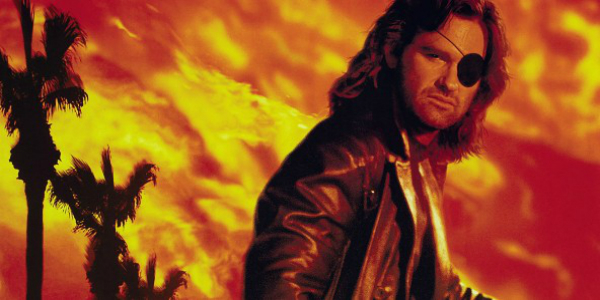
The Pitch: A decade-and-a-half after John Carptneter's rambunctious Escape from New York became a cult hit, Carpenter brought starring man Kurt Russell back for another go-around, with 1996's Escape from L.A., relocating a very similar premise to the West Coast. The Result: Though the urban troubles of L.A. in the early-to-mid 1990s were what reportedly allowed the movie to be made (given the thematic similarity), it had been initially given the green light in 1985, yet sat stagnant for around a decade, by which point there evidently wasn't much of an audience for the continued adventures of Snake Plissken. The film was produced on a budget almost ten-fold that of the original, yet only made half its budget back at the box office, while reviews were incredibly mixed. Though the original movie endured over the years as a cult classic, that didn't necessarily mean that waiting would still guarantee box office dynamite, and the wildly over-inflated budget certainly did it no favours either. Still, had Escape from L.A. come out within a few years of New York (and therefore featured a considerably younger Russell) and been budgeted a little more conservatively, it definitely could have been much more successful. Much like the Sin City sequel, it's likely that most audiences had just stopped caring 15 years later.

4. Indiana Jones & The Kingdom Of The Crystal Skull (19 Years)

The Pitch: 19 years after Harrison Ford and Steven Spielberg last enchanted us with an Indiana Jones movie, they were back with part four. This time around, there's no Marcus Brody (Denholm Elliot died shortly after The Last Crusade), no Henry Sr. (Sean Connery chose to stay retired), Ford was now 66 years old, returning love interest Karen Allen was nearing 60 years of age herself...and it co-starred Shia LaBeouf. The Result: The movie was a massive commercial hit and a decent critical success, even if hardcore fans of the series were generally less favourable, comparing the film negatively to the previous three films in the series, which had all been released within 8 years of one another. Almost two decades later, the adventure film and the Hollywood blockbuster had changed substantially, and it didn't really feel like Indy fit in anymore. Ford proved surprisingly lithe in the title role, but had Indy 4 been made a decade earlier, he could've brought even more physicality to the performance, there might not have been so much reliance on CGI, and Shia LaBeouf would've still been a nobody. In 2008, expectations were too high, and Spielberg just couldn't meet them.

3. Rambo (19 Years, 8 Months)

The Pitch: 20 years following the events of Rambo III, John Rambo once again picks up a huge gun and this time tackles the political crisis in Burma. Colonel Trautman is nowhere to be seen (actor Richard Crenna passed away in 2003), and Stallone is now a whopping 60 years old (as well as, for the first time in the series, taking up directorial duties himself). The Result: Though some might argue that the Rambo series benefited from a break given that the only particularly decent one out of the first three was the original, a major issue with 2008's Rambo is that, due to Stallone's age, he's confined to standing behind a giant artillery gun for the final set-piece rather than actually moving around much. Given the movie's gritty nature, it would seem patently ridiculous if stunt doubles were used to make Rambo fly around and run like a man half his age, yet this just makes us think the movie should have been made at least a decade earlier. The lack of a Trautman cameo is also a shame given how much he meant to the series, and though the movie delivers a gratuitously, almost hilariously violent finale, it still felt like too little, too late. It's still the best of the Rambo sequels by far, and was a financial success, but it was the lowest-grossing movie of the franchise, which when considering almost three decades of inflation since First Blood, is rather embarrassing.

2. Land Of The Dead (19 Years, 11 Months)

The Pitch: George A. Romero is credited as the father of the modern zombie film, and his "...Of the Dead" franchise enjoyed tremendous success with Night, Dawn and Day, released over an admittedly protracted 17 years from 1968 to 1985. Romero's output then slowed way down, and it wasn't until 2005 that Land of the Dead helped re-ignite the franchise. The Result: Land of the Dead was actually a relatively watchable sequel that did solid business, even if it wasn't up to the standards of the three previous films, in large part because the zombie genre had changed so much over the 20-year gap (and comedy horror was very much in vogue). Romero did, to his credit, include some more current political allusions, but the real tragedy is that Land's success led to the resurrection of his series by way of two incredibly sub-par follow-ups. Diary of the Dead and especially Survival of the Dead were certifiable duds when compared to what came before, and it just seemed that 20 years on, Romero didn't really have the verve or passion for the franchise anymore. Had Romero made Land some time in the late 1980s or early 90s, perhaps his later efforts would have come along quicker and not have seemed so tired and piecemeal.

1. The Wicker Tree (37 Years, 7 Months)

The Pitch: You might not know it, but the classically haunting 1973 horror The Wicker Man has a sequel sequel...released nearly 40 years later and with only a tangential relation to the original film. Christopher Lee returns in cameo form and original director Robin Hardy is back behind the camera, but that wasn't enough to earn it a cinema release in most countries. The Result: Likely due to the infamous reception of the 2006 remake rendering the words "The Wicker Man" dirty to an entire younger generation of viewers, The Wicker Tree didn't get a theatrical bow despite costing $8 million to make, and as a result was a financial bust. A ridiculous four decades later, though, anyone who loved the original likely expected the follow-up to be a cash-in, and though Hardy didn't write the novel on which The Wicker Tree was based until 2006, he was certainly misguided in thinking that people were really interested in delving deeper into this mythology when the original stands so well on its own. Perhaps had a sequel been made at least a decade or two ago with a still-mobile Christopher Lee returning in a lead role as the wonderfully villainous Lord Summerisle, then we might have been interested. As it stands? Not really, yet Hardy continues to press on, planning a third movie, The Wrath of the Gods, for release next year. We'll have to wait and see... Which movie sequels took so long to get made that you lost interest, or you feel the actors got too old? Let us know in the comments!

Watch Next


Contributor
Contributor

Stay at home dad who spends as much time teaching his kids the merits of Martin Scorsese as possible (against the missus' wishes). General video game, TV and film nut. Occasional sports fan. Full time loon.