10 Movie Special Effects Nobody Believed
Movie magic at its finest.
In its finest moments, Hollywood truly is a dream factory where the unbelievable becomes the believable, brought to life by incredibly talented and dedicated craftspeople of all kinds.
And while it's easy to bemoan the over-abundance of soulless CGI in movies today, a great special effect can stand the test of time whether it was achieved practically or digitally
Case in point, we have these 10 brain-melting special effects, each of them achieved with a ludicrously degree of creativity, such that audiences never would've guessed they were achieved quite this way.
From filmmakers employing decades-old practical tricks rather than cheaper and more time-effective CGI, to mind-blowing stunts that were somehow achieved without a green screen and, yes, even the occasional sneaky use of CGI itself, these movies represent the truly escapist, transformative power of special effects.
It's easy to see how everyone was fooled when these movies first came out, and even to this day, more casual viewers may still not be aware of exactly how these all-timer effects were pulled off...
10. The Hobbits - The Lord Of The Rings Trilogy

The Special Effect
In order to convincingly depict the massive height and size difference between the four-foot Hobbit characters and, well, everyone else, Peter Jackson employed a number of dizzyingly clever practical techniques, along with some necessary digital touch-ups.
Short and tall body doubles were used, entire sets had to be built to two separate scales and takes were often spliced together through clever, CG-assisted editing and compositing.
But the pièce de résistance? Jackson often used the brilliant simplicity of forced perspective photography to sell the size differential, placing actors further apart than they actually seem in order to imply a greater difference in scale.
This isn't too challenging for static, locked-off camera shots, but Jackson dared to also employ the tactic with a moving camera, and this is where things get really insane.
Jackson's crew used a motion control camera rig, which was linked to another motion control rig designed to move the actors and props around in perfect sync with the camera movements, ensuring that the illusion wouldn't be shattered.
Why Nobody Believed It
Because, honestly, your average moviegoer would (understandably) never believe that a film crew would actually go to all this trouble to film the scenes practically, when shooting the actors against green screens and compositing them together in post-production seems so much easier.
It's a perfect example of an effect so ingenious and so seamless that audiences would never even entertain the possibility it was actually executed that way.
Sadly Jackson didn't repeat the trick in his The Hobbit trilogy, citing the difficulty of making forced perspective convincing when shooting in 3D.
9. TARS - Interstellar
The Special Effect
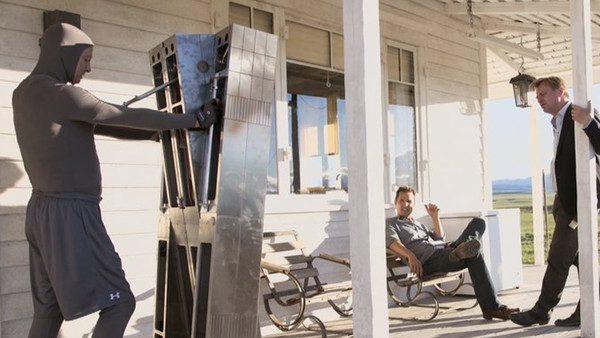
Interstellar's sarcastic robot TARS was yet another case of director Christopher Nolan employing unexpectedly practical effects to achieve a seamless end result.
You see, TARS was in fact a fully physical, manoeuvrable on-set prop, weighting 200 pounds and manipulated by actor Bill Irwin. Irwin also voiced TARS and even recorded all of his dialogue for the film while controlling the robot.
Irwin was obviously painted out digitally in post-production, but the TARS unit itself could be puppeteered to perform roughly 80% of his actions throughout the film.
More complex movements, such as TARS rotating to move through the water, were achieved with CGI.
Why Nobody Believed It
Because TARS simply looks too complex and cumbersome to be "real", and given the film's liberal use of visual effects, what harm could there be in making the robot a fully CGI creation?
As a result, the cast and crew spent much of their time on the film's press tour explaining to baffled journalists that TARS was a physical element of almost the entire movie.
Bar a few obvious movement shots where the lighting isn't quite perfect, the results are virtually indistinguishable, making it even tougher to believe that Nolan managed to (mostly) realise TARS practically.
8. The Mirror Trick - Terminator 2: Judgment Day

The Special Effect
Though it was sadly cut from T2's theatrical version, the scene in which Sarah (Linda Hamilton) and John Connor (Edward Furlong) remove the T-800's (Arnold Schwarzenegger) chip was thankfully restored for the film's Special Edition.
Because James Cameron can't do anything the easy way, he decided to shoot the scene in front of a mirror, and in order to prevent the camera from appearing in the mirror's reflection, he effectively had to stage the scene twice...at the same time.
To break the shot down - the back of Arnie's head is actually a dummy prop being worked on by Linda Hamilton, while the mirror is actually a window, behind which Arnold is sat.
And here's where things get truly, deliciously clever - to achieve the reflection of Sarah Connor, the actress' twin sister Leslie was hired, with both Hamiltons matching each other's movements precisely.
The end result is completely convincing, and Cameron also used Leslie again later in the movie when the T-1000 (Robert Patrick) assumes Sarah's form.
Why Nobody Believed It
Like The Lord of the Rings' perspective trick, this is way too creative and clever for any typical audience member to figure it out.
Even though CGI was in its infancy in 1991 - and also 1993, when the Special Edition was released - it was certainly easier to assume that Cameron had super-imposed a VFX plate over the mirror rather than Linda Hamilton having a secret twin nobody knew about.
Cameron has gone into great detail about the scene on T2's various home video releases, and understandably relishes revealing the jaw-dropping nature of the effect to his fans. Can you blame him?
7. The Car Chase Tracking Shot - The Raid 2
The Special Effect
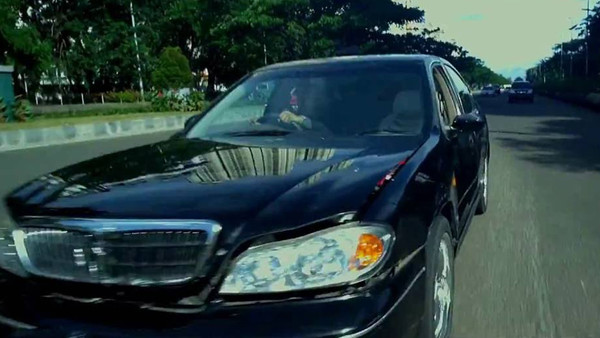
Nobody who's seen The Raid 2 will ever forget its astounding car chase sequence, shot with such brilliantly immersive seat-of-your-pants style it's incredible nobody was killed or seriously injured pulling it off.
The most memorable moment is unquestionably a tracking shot in which the camera exits from the window of one car, passes through the window of another and emerges out the other side just as another vehicle passes by, all captured in one smooth, unbroken take.
Director Gareth Evans pulled it off by having one cameraman pass the camera through the car window to a second cameraman who was disguised as one of the car's seats, allowing his face to be easily painted out in post-production.
This disguised cameraman then passed the camera out the other side of the car to a third cameraman, who was lying down on a piece of rigging on the other side of the car. Between them, they held the camera up for a few more seconds while a car zoomed by.
Why Nobody Believed It
Because it really doesn't seem like something you could achieve practically with total safety, and countless other films have used CGI to digitally stitch similar shots together.
Naturally most viewers presumed that the scene was comprised of several CGI plates joined in post-production, but aside from removing all traces of the car-seat cameraman, this was achieved fully in-camera with no invisible cuts.
6. Jack Nicholson's Sliced Nose - Chinatown
The Special Effect
Roman Polanski's film noir classic Chinatown is a mostly grounded, sober movie with little in the way of complex special effects.
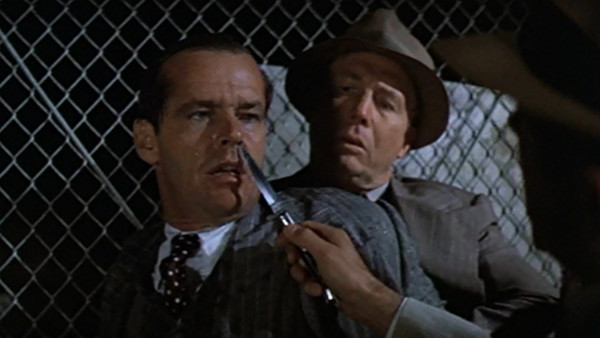
However, it does boast one particularly remarkable (and subtle) effect when P.I. Jake Gittes (Jack Nicholson) has his nostril sliced by a gangster (played by Polanski himself), causing blood to spurt all over his face.
The effect is actually incredibly simple - the knife had a hinge built into it on one side, ensuring that any pressure against the blade would cause it to fold into the handle rather than cut into the object.
Due to ongoing tension between Nicholson and Polanski on the set, however, the director would often flip the knife over between takes, ensuring Nicholson never knew whether the knife blade was "safe" or not.
In the take that was actually used, Polanski quickly pulls the blade away from Nicholson's nose, and if you look closely, you can see him press a concealed button on the knife handle, which triggers a squib of fake blood to squirt over Nicholson's face.
Given that the entire effect transpires over the course of about a half-second, it's incredibly tough to spot, and extremely convincing.
Why Nobody Believed It
Hilariously, Nicholson and Polanski are both to blame for the apocryphal claim that the director actually cut his star's nose for real.
The scene's realism prompted many to ask the men how it was achieved, and after being exasperated with having to answer the question so many times, they ultimately decided to claim that the cut was legit.
Granted, it helps that the execution of the effect is itself pretty much perfect, but their flat-out lies sure helped sell it.
5. Artificial Gravity - 2001: A Space Odyssey

The Special Effect
Stanley Kubrick's sci-fi masterpiece is jam-packed with shots and sequences which still inspire awe over five decades later, perhaps most of all the jaw-dropping scene depicting Dr. Poole (Gary Lockwood) jogging in artificial gravity within the Discovery's centrifuge.
The effect was hugely complex, with the production spending $750,000 on a 27-ton rotating wheel, within which the centrifuge props were secured, and Lockwood jogged on the spot while the set was rotated around him.
As for the camera? It was mounted to the rotating set itself to give the impression of Poole's movement, and for "stationary" shots was fixed independently from the set itself.
Why Nobody Believed It
In 1968, this sort of filmmaking ingenuity was pretty much unimaginable, and given the hyper-complexity of Kubrick's production, many simply believed it to be another of the movie's mind-boggling optical effects.
Even today, message boards and subreddits are full of people asking how the effect was achieved, utterly baffled by the brain-breaking brilliance of the sequence.
It doesn't help that Kubrick was notoriously cagey about his films were made, but thankfully, over the last half-century, plenty of behind-the-scenes materials have become available.
4. The Winklevoss Twins - The Social Network
The Special Effect
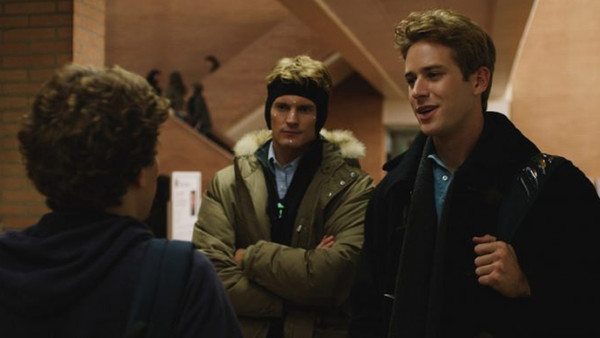
Rather than cast a set of identical twins to play the "Winklevi" in The Social Network, David Fincher made the baffling decision to cast Armie Hammer in both roles, using CGI to have him play Cameron and Tyler Winklevoss.
This was achieved by having actor Josh Pence act as a stand-in for Tyler Winklevoss on set, while Hammer would play Cameron.
In scenes where Pence wasn't required to do much, Hammer's face was digitally pasted over his, and for scenes demanding expressive movement and actual acting, a second take of Hammer performing the scene was blended through relatively simple split-screen trickery.
Why Nobody Believed It
For starters, the effect is completely convincing and, given that most people had no idea who Armie Hammer was in 2010, there was no reason for audiences to believe they were watching anything other than real twin actors.
Viewers naturally had quite a shock if they visited IMDB or the film's Wikipage page, then, and when a behind-the-scenes VFX breakdown was later released, the full stunning brilliance of the effect was totally cemented.
3. Pretty Much The Entire Movie - The Fountain

The Special Effect
Darren Aronofksy's surreal romantic fantasy film was a troubled production to say the least, with Warner Bros. halving the budget from $70 million to $35 million, forcing the director to get creative with his proposed special effects.
Aronofsky ended up hiring Peter Parks, a specialist in macro photography, who brewed chemicals and bacteria together for the film's effects team to shoot in extreme close-up.
The resulting kaleidoscopic images formed the basis for The Fountain's depiction of the star Xibalba and its nebula, and because Parks used simple materials such as yeast, dyes, solvents, baby oil and even curry powder, he ended up costing the production just $140,000.
In fact, the film's VFX company worked on a mere 87 shots, namely combining the macro photography with the on-set shooting and also providing set extensions.
Why Nobody Believed It
Because it was a frankly insane undertaking, and it's incredible that Aronofsky actually managed to pull it off. Parks himself even said, "Nobody believed he could make this film without CGI. The studio thought he was crazy."
Without knowledge of this film's production, how could anyone guess that it was mostly achieved through practical means? The beautiful irony, of course, is that the film ended up looking like it cost much, much more than $35 million.
2. BB-8 - Star Wars: The Force Awakens

The Special Effect
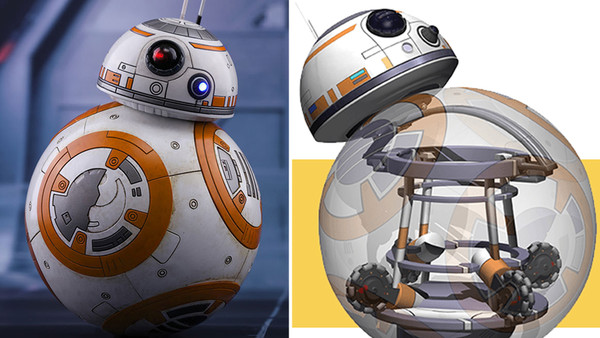
To make the instantly lovable droid BB-8 a tactile and free-standing entity in Star Wars: The Force Awakens, J.J. Abrams relied on a number of (mostly practical) special effects solutions.
The movement of BB-8's football-like body was achieved by wheels within the inside of the unit, which were counter-balanced by weights to ensure smooth movement, while a gyroscope maintained a continuous sense of direction.
As for keeping BB-8's head atop the body? Magnets worked in tandem with a centrifuge to ensure it could maintain a consistent position regardless of what the body was doing.
Seven different BB-8 props were made for The Force Awakens, and more complex action beats required them to be attached to a mobile "trike" unit, or even be pushed by a performer in a green leotard who was painted out in post-production.
Why Nobody Believed It
J.J. Abrams put it best himself, "There were a lot of discussions about how having a CG BB-8 would be so much easier."
We're so conditioned to expect complex mechanical objects like this to be rendered digitally that there was never any expectation from fans that BB-8 would be a practical, tangible object.
And so, Lucasfilm was able to have a ton of fun trotting out various versions of BB-8 on The Force Awakens' red carpet premieres worldwide, confirming that he wasn't simply a very, very convincing digital prop.
1. The Impaled Woman - Cannibal Holocaust

The Special Effect
Whatever you think of Ruggero Deodato's ultra-controversial 1980 found footage horror film, there's no denying the impressive realism of the film's gnarly gore effects - though in some cases, Deodato sadly resorted to actually killing animals for real.
The same wasn't true of the film's doomed humans, at least, namely the famous impalement scene, in which a woman is found with a pole seemingly inserted into her mouth, forced through her body and, er, out the other end.
In actuality, the effect is incredibly simple - the bottom of the pole had a bicycle seat on which the actress sat, while she simply held a stick of balsa wood in her mouth to suggest a continuous object passing through her.
Why Nobody Believed It
Shortly following the film's premiere, it was seized by the Italian authorities, who believed Cannibal Holocaust to be a snuff film featuring the actual deaths of people.
Deodato was charged with murder, unaided by the fact that most of the crew had signed contracts agreeing not to appear in any media for a year following the film's release (to sell their "deaths").
The four main actors nevertheless eventually appeared on a TV show to help clear Deodato's name, and he explained to a court exactly how he achieved the impalement scene.
Even though the charges were dropped against the director, it did little to dispel the myth that the film featured real human murder, especially coming two decades before widespread Internet adoption.