10 Movie Villains Whose Conscience Got The Better Of Them

When good things happen to bad men.
Watching a ruthless villain get what they deserve is among the most satisfying feelings a film can deliver, and for good reason, most times, the resolution of a film with a clear "good guy vs. bad guy" premise will play out this way. The bad guy will perish or languish in prison, the good guy will nod victoriously and set his jaw for the inevitable sequel, and things will return to normal for a while. But that trope is often turned on its head, with the villain realizing the error of his ways and moving toward some measure of regret or redemption before the end credits roll. Real life doesn't always follow this formula (wouldn't it be great if it did?), but this turnaround does humanize the villain and make him more than just a mindless killing machine. That's a sure-fire recipe for more delicious complexity. There are some villains that are just too bad to change their minds and suddenly try to make up for it - it's perverse to picture The Joker apologizing to Batman for all the wrong he's done, or Sauron deciding he doesn't really need control of Middle-Earth after all. Many times, though, it can be more satisfying to see a rotten film character turn over a new leaf than it would be to see them suffer for their crimes. Obviously, spoilers abound for the handful of films that follow, but most of them are famous enough or old enough to be fairly well-known by now. Without further ado, here are ten film villains whose conscience got the better of them...

10. Jason Voorhees - Friday The 13th Part VI: Jason Lives (1986)
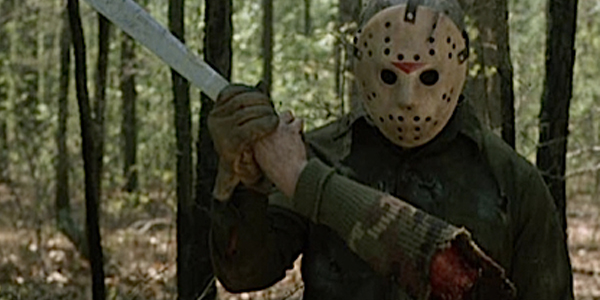
The Friday the 13th franchise has always been ripe for the ridiculing. Despite very few of the dozen-odd films in the series being deserving of the label "a good film", primary antagonist Jason Voorhees has nonetheless become an entrenched icon of pop culture. Seeing that hockey mask come at you through the fog of Crystal Lake means you're not long for this world, because Jason never spares anyone. Except once. In the sixth instalment of the franchise, which saw the return and explicit supernaturalism of the famous character, Jason is loose among campers at a newly renovated and renamed summer site, and in one scene, he stands among a cabin of sleeping children, one of whom wakes up and sees the serial killer standing there. For once, Jason walks away with everyone still breathing. Maybe his own childhood trauma - which caused him to slash countless lives following his "death" - informed the degree of mercy in this scene, but then the camp counsellors aren't that much older, though, and they certainly get the full dose of Jason's wrath. In any case, this is the only time something resembling a conscience surfaces in Jason Voorhees, and it occurs in one of the more worthwhile Friday the 13th outings.

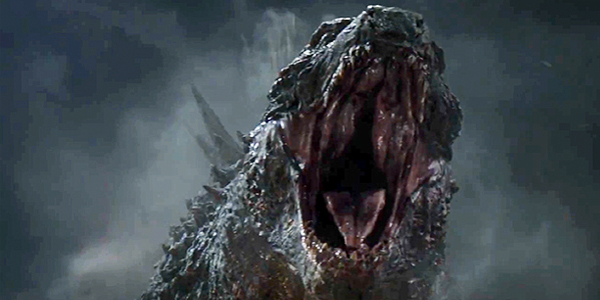
9. Godzilla - Various (1954-2014)

Like Jason, Godzilla began as a pretty simple character with a pretty simple purpose: to cause havoc among people who would otherwise be minding their own business. Godzilla can't always be placed firmly in the "antagonist" category, though, and in fact has been likened to a Shinto God of Destruction by producer Shogo Tomiyama, an entity that lacks moral agency and simply destroys in order to facilitate rebirth. More often than not, Godzilla is painted as a force of nature that must be taken down for the survival of humanity. On occasion, Godzilla is the lesser of two evils, still a destructive force and threat to humanity, but mostly cropping up in order to battle another massive beast. The recent American remake was largely boring due to a focus on the human characters and a distinct lack of kaiju punches, but one interesting point was the explicit depiction of Godzilla as a force that would ensure the survival of humankind, rather than their destruction. The moment where Godzilla almost seemed to nod at Aaron Taylor-Johnson's moronic protagonist Ford Brody (as if to say "I got your back, bro") was a bit excessive, but it did manage to show that the King of Monsters has some inkling of right vs. wrong.

8. Doctor Octopus - Spider-Man 2 (2004)

Sam Raimi's Spider-Man 2 remains one of the greatest superhero sequels of all time, and a major reason for that is the presence of Alfred Molina's Doctor Otto Octavius. An actor like Molina may not immediately leap to mind when considering comic book supervillains - but then, Raimi's Doc Ock is not your typical supervillain. Driven to crime by an accident that caused both the death of his love and the painful merging of four giant mechanical arms to his spine, Otto Octavius is driven to the brink of madness by his turn of ill fortune. Determined to right the wrongs and avenge his wife, Otto causes quite a bit of destruction across New York City in the process. The mechanical tentacles have more than a bit of control over Otto, but at the end the good Doctor realizes the insanity of his own devices and chooses to sink his unstable fusion reactor into the river. To do so, he has to sink along with it. On the plus side, this act redeemed the half-robot and showed that the human half is always stronger. The bad news is that pretty much everything goes downhill from there in Spider-Man 3.

7. The Winter Soldier - Captain America: The Winter Soldier (2014)

Keeping with the supervillain theme, this year's Captain America sequel The Winter Soldier showed that the MCU could have a cool villain other than Loki to combat the ever-expanding Avengers roster. Bucky Barnes, friend and confidante to Steve Rogers in his pre- and early Captain America days, met with tragic happenstance that wiped his mind and forced him to become the assassin known only as Winter Soldier. Yet, as in the comics, Cap is able to get through to the Bucky he used to know (or begin to get through, at least) and the Winter Soldier defies the kill order that has been placed on Steve Rogers, and the machinations of HYDRA are foiled once again - but what happens to Bucky now? He's spared the life of his former friend, finding some kind of conscience after decades of assassinations, and now he's on track to rediscover his humanity in full. We've only just begun to see the turnaround in the morality of Bucky Barnes, and that moral compass may have a major role to play in the future of the Marvel Cinematic Universe.

6. Derek Vinyard - American History X (1999)

Derek Vinyard is certainly the protagonist of the modern masterpiece American History X, but it's difficult to label him as either the "hero" or the "villain" in any definitive way. Enraptured by the bigoted ideologies of his father and drawn into the neo-Nazi culture of his hometown, the Derek Vinyard we see for the majority of the film is a brutal, aggressive skinhead dedicated to a perverted purpose - and blinded by it. But a long stint in prison begins to erode Derek's resolve, and upon his release he finds his younger brother is following in his footsteps and becoming a young neo-Nazi. He questions himself and all that he's done, and he changes in a very real way. Again, Derek isn't a movie villain in the traditional sense - but while it may seem that there's no clear-cut "hero" figure for him to battle, it can be said that both sides are contained within Derek himself. Edward Norton gives a tour-de-force performance throughout, but showing the conscience of his character take hold is perhaps the most effective scene. As he later testifies, anger has defined the majority of his life. His conscience gets the better of him, and his only hope is that it hasn't happened too late.

5. Anton Ego - Ratatouille (2007)

Pixar villains are always a treat; the sadistic Sid from Toy Story, Hopper from A Bug's Life, Syndrome from The Incredibles - all of them delight in their tyrannical ways, and all of them get their just desserts by the end of the film. Anton Ego is a different story: the ultimate food critic, Ego is singlehandedly responsible for the success or demise of any restaurant he reviews. He does delight in his work (admitting "negative criticism is fun to read and to write") but his demeanour is so sullen and melancholy that perhaps "delight" is too strong a descriptor. But all of his cranky, damning, posturing insults melt away with one taste of Remy's Ratatouille. A quick flashback to his childhood days seems to take hold of the cold heart of Anton Ego, and his days spent disparaging hard-working cooks suddenly end with a single bite, even when he discovers the chef's secret. He devotes himself anew to "the defense of the new" - and becomes one of the good guys in the process.

4. Severus Snape - Harry Potter (2001-2011)

Alan Rickman owned the role of Severus Snape from start to finish, exceeding lots of expectations for the portrayal of a major recurring character in the Harry Potter books. More of a minor annoyance when compared to the likes of the true villain (who shall not be named), Snape was undoubtedly painted as the bad guy throughout the majority of the magical epic. The revelation that Snape was an agent of Dumbledore from the very beginning was a great twist on his character, and his conscience actually got the better of him long before we (or Harry) realized it, as he was forced to keep up his surly facade by the Hogwarts Headmaster. Rickman's long, ashen face, black clothes, monotone voice and delightful sneer all added to the character's status as a villain (along with the name "Severus Snape" being fit only for a bad guy), but his morals were aligned with the right side when it counted most because of his unfaltering commitment to Lily Potter.

3. The Grinch - How The Grinch Stole Christmas! (1966)

Dr. Seuss's classic Christmas tale has been around since 1957, when it was published as a children's book, which remains one of the best-loved of the genre. It was the 1966 animated special however that was arguably responsible for the continued popularity of the tale more than half a century after publication. Languishing in his curly mountain abode and lamenting the Whos down in Whoville below, the Grinch decides to rob everyone in the little hamlet of the thing they love most: Christmas. He takes the presents, the lights, the mistletoe, the garland and candles, the ornaments off the tree and the tree itself. But he finds, of course, that he can't steal the Christmas spirit, and the singing Whos reinvigorate his shrivelled heart and instil a newfound charity within him. The spirit of Christmas turns him into a reformed, life-loving community man with a heart of gold - all of which sounds awfully familiar...

2. Ebenezer Scrooge - A Christmas Carol (Various)
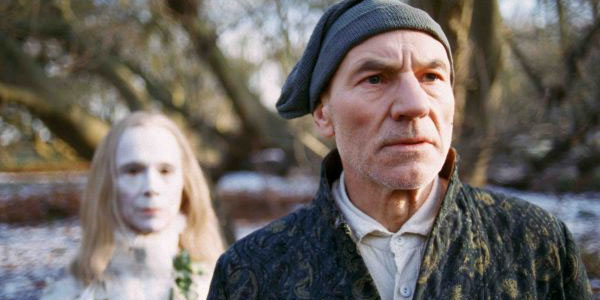
Two of the greatest examples of bad guys finding their conscience occur in movies about Christmas, somewhat unsurprisingly. The analogues between the Grinch and Ebenezer Scrooge are fairly obvious: Charles Dickens deserves credit for penning A Christmas Carol in the first place, while Dr. Suess applied it to modern materialism and the consumerism of the Christmas season. Scrooge's transformation is more significant because of the journey he goes on, and his conscience is certainly something that has to be hunted down and wrestled with. The entire story hinges on Scrooge's status as hero or villain, teetering back and forth until finally tipping to one side, and were it not for another iconic villain, his transformation from self-appointed antagonist to gleeful humanist good guy would be the most famous in cinematic history. Because of this, Scrooge has become one of the most popular film characters in history: first appearing on-screen in a five-minute silent film portrayed by an unknown actor, Scrooge has since been played by the likes of Orson Welles, Basil Rathbone, Albert Finney, George C. Scott, Michael Caine, Patrick Stewart and countless others.

1. Darth Vader - Star Wars (1977-1983)
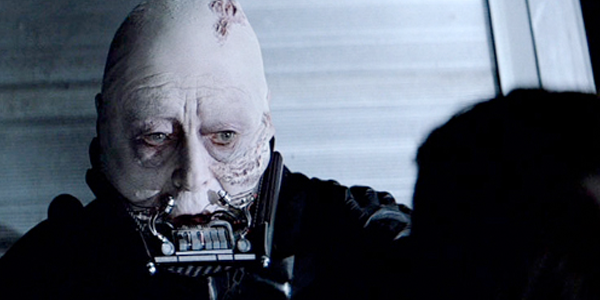
It can be easily argued that the Star Wars saga is Anakin Skywalker's story: the original trilogy focuses on Luke, yes, but the complete story arc belongs to Anakin, whose finest hour comes at the end of that trilogy in The Return of the Jedi. As Darth Vader, Anakin is as bad as they come, feared across the galaxy and questioned by no one: he is one of the greatest villains in film history - if not the greatest - and even he is still overcome by his conscience at the very end. The mechanical breathing of Vader as he enunciates lines like "apology accepted" is in stark contrast to the maskless Anakin hoarsely declaring that his son Luke is right with his final breath. His conscience is drawn out by his family, his legacy, his true name passed down into a new generation€ and all of this makes it harder to swallow that the I-III trilogy cast Anakin as such a whiner. Nonetheless, Vader rediscovering his humanity in the murk of the dark side still stands as the greatest example of a villain seeing the light and doing the right thing. What are your favourite examples of movie villains being overcome by their conscience before the end? Let us know in the comments section below.

Contributor

Matt is a writer and musician living in Boston. Read his film reviews at http://motionstatereview.wordpress.com.