10 Movies From 2014 The Academy Must Not Forget

The best movies that shouldn't be forgotten when Oscar season kicks off.

The Academy is notorious for their short memory: in their eyes, any movie released prior to the fall film festival season may as well not even exist. Indeed, more than one in five films nominated for an Oscar are released in the month of December, or in other words, the Academy's long-term memory is about as healthy as Leonard Shelby's from Memento. To be fair to the members of the Academy, some of this end-of-the-year bias is due to the release date strategies adopted by the studios. The idea that the Academy only considers films released in the last quarter of the year has become a self-fulfilling prophecy, as studios purposely save films that will most likely appeal to the Academy for the end of the year, in hopes that the extra Oscar recognition will boost the films box office. Even so, it would do the Academy some good to look past all the hype of the winter prestige releases and think back to some of the quality films that graced the silver screen earlier in the year. What follows then is a list of ten films released thus far in 2014 that the Academy would be wise to remember come nomination time. And if any Academy members are reading this list, make a mental note of it, write the list down, email the list to yourself, or do whatever it takes, but please just don't forget these films.

10. Guardians Of The Galaxy

As fans of The Dark Knight can tell you, the Academy doesn't really dig the whole comic book genre. While it is understandable why the Academy doesn't feel the necessity to award the generic fun of the vast majority of comic book adaptations, it is a pity that their prejudice against all things comics extends to the point where they refuse to recognize excellence in the genre even when it reaches the level of The Dark Knight or Guardians Of The Galaxy. But then, that's the Academy for you. Despite the unlikeliness that Guardians Of The Galaxy will be recognised by the Academy brass, the film is definitely worthy of their praise. It has become increasingly rare in the age of meticulously planned studio tentpole films for blockbusters to have much personality, but Gunn's disarming space epic has personality in spades. With a cast of superheroes who are defined by more than just their abilities, the film is an action/comedy hybrid where moments of conversation between the characters are something to be treasured, not simply a bridge between stuff blowing up to more stuff blowing up. The film also sports a fantastic soundtrack that actually plays a significant part in the story, and although it doesn't totally escape the bloated action sequence pitfalls of its Marvel brethren, Guardians Of The Galaxy is a unique entry in an overcrowded genre that should be praised for moving things in a new and fresh direction.

9. Boyhood

You have to hand it to Richard Linklater, the man likes to push the boundaries of cinema. Whether it be his surrealist, genre-defying take on lucid dreaming in Waking Life, or his decades-spanning tale of love in his Before trilogy, or now the 12-years-in-the-making Boyhood, the director isn't afraid to totally obliterate the conventions of cinema in order to obtain some greater truth. Boyhood, which first premiered at the Sundance Film Festival this January, tells the story of one boy's life, from the age of 7 to the age of 18. The film was made during the summer months from 2002 through 2013 and the effect of watching a boy literally grow up before your eyes is quite startling. Like most Linklater films, there are a number of fascinating philosophical conversations between characters about contemporary society, as well as some very heartwarming moments. Particularly in the scenes between Ethan Hawke and Ellar Coltrane (father and son), we are made privy to some very memorable bonding moments. The film doesn't totally overcome the "stunt" aspect of its premise, but even so, there are simply too many good scenes in Boyhood for the Academy to not give it some consideration.

8. Snowpiercer

Snowpiercer has been the underground hit of the summer. While its theatrical financial haul pales in comparison to that of the monster summer blockbusters, the actioner has managed to find a relatively large audience through Video-On-Demand. For those that have seen the film, whether in theater or at home, the film's vivid and unique take on a dystopian future quickly becomes a topic of conversation that forms a bond akin to that of belonging to some secret club. Directed by South Korean auteur Bong Joon-ho and based on a French graphic novel, the film takes place on a train that constantly circles a frozen post-apocalypse. The people on the train, who are the last surviving members of the human species, are divided up into two classes: the privileged and the unprivileged. The wretched poor live extremely meager existences at the back of train while the elite live rich, comfortable lives at the front of the train. This is how society on the train remains until the poor start a revolt and make their way to the front. The film has some really bizarre moments that clearly signify its South Korean roots, but its unique vision and style is fascinating and hard to take your eyes off. In a perfect world, the film would be a major Oscar contender in a number of categories, but if the Academy could at least nominate Tilda Swinton for her crazy, goofball villainess performance, the world will be a better place.

7. A Most Wanted Man

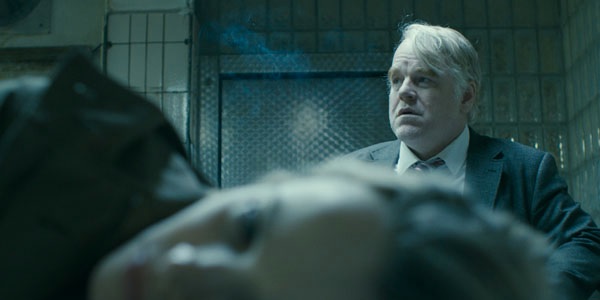
The last true performance of Phillip Seymour Hoffman (discounting his role in the upcoming Hunger Games films), A Most Wanted Man is a melancholy film made all the more depressing by the untimely passing of Mr. Hoffman. Based on the novel of legendary spy author John le Carre, it follows the fate of a suspicious Chechen immigrant who may or may not have jihadist intentions. Hoffman plays a German intelligence officer stationed in Hamburg who is tasked with uncovering the intentions and possible connections to prominent Islamic radicals of the suspected terrorist . The film touches on a number of pressing contemporary issues such as Islamic terrorism and intrusive government surveillance, but perhaps the biggest theme of the film is the subversive evils of the all-powerful bureaucracy. Anger and frustration over the lack of clarity and vision with massive bureaucracies is a prevalent theme in much of the best art of the 21st century, but it has hardly ever been as wrenchingly articulated as it is in A Most Wanted Man. The gut-punch ending, which stirs up a myriad of different emotions given Hoffman's death, is a particularly devastating scene that sticks with you long after the film's finish.

6. Chef

"Food" has never been a genre of film, but after seeing Chef, you will most likely wish it were. Written, directed, and starring the multi-hyphenate talent Jon Favreau, Chef follows the ups and downs of a world class chef in Los Angeles. After engaging in a very public twitter spat with a food critic over a negative review of his restaurant, Carl Casper (Favreau) is let go from his job by the restaurant's owner. Trying to rediscover his passion for food, Casper buys a food truck in Miami and takes a cross country trip back to Los Angeles with his son, serving hungry patrons in cities like New Orleans and Austin along the way. The film plays as an interesting allegory for Favreau's own career as a director and his love/hate relationship with critics. Beyond this interesting meta-angel though, Chef is simply a loving film packed with humor and humanism. It's definitely not the most sophisticated film of 2014, but what it lacks in tact it more than makes up for in heart. Chef also has the distinction of being one of the best films to capture the pure magic and bliss of taking a cross country trip across the United States. For this achievement alone, Chef should be considered a major player in the 2015 Oscar sweepstakes.

5. The Raid 2

When the first The Raid came out in 2011 it became an instant cult classic, and for good reason. The film took place entirely inside a tenement building in Jakarta and followed a SWAT team who was tasked with the unfortunate job of rooting out the Indonesian gangsters who infested the building, including the infamous drug lord Tama who took safety in the building's top floor. The film was jam packed with breathtaking fight choreography that was hard not to appreciate even for those not usually taken with fight films. What is shocking about The Raid 2 is that not only are the expected fight sequences just as amazing as the first time, but the film's plot is also incredibly intriguing and well executed. The Raid 2 picks up literally minutes after the first film and follows Rama, the protagonist from the first film, as he goes undercover in order to bring down the criminals who are really running the show. At times, the film is reminiscent of The Departed in both its story and its stark and uncompromising portrayal of violence. In fact, the story is so captivating that as brilliant as the film's final fight scenes are, it's a bit disappointing the story stalls toward its end. Even so, the talent of Welsh director Gareth Evans is undeniable after this film, and whatever genre he decides to tackle, film fans should have confidence in the man's vision and talent.

4. Begin Again

Originally titled Can a Song Save Your Life? when it premiered at last year's Toronto Film Festival, the simpler titled Begin Again is that rare romance film that hits all the right notes. The film stars Kiera Knightly (in one of her finest performances) as a struggling musician in New York City trying to get over her recent breakup with her boyfriend (Adam Levine) after his meteoric rise to stardom tears the two apart. At the other end of the equation is Mark Ruffalo, a divorced, once-successful music producer whose life has hit rock bottom. As you might have guessed, the two meet up and help each other grow as both human beings and musicians, although the film adroitly avoids the cliché romantic route you expect it to take. There are few films you will see this year that are imbued with as much pure love, for both people and music, as Begin Again. Some moments in the film that can only be described as cinematic gold. Whether it is the scene when Mark Ruffalo first sees Kiera Knightly singing in a bar and as he imagines his arrangement of the song, we see the instruments magically begin to play themselves, or the scene where the two use a headphone splitter to walk the streets of New York to the sounds of Stevie Wonder's For Once In My Life, it has been some time since a movie so memorably captured the spirit of love. Some critics have maligned the film for being overly schmaltzy, and it will always be true that director John Carney's previous music related film, Once, will always be the more "cool" film to like. However, anyone that tells you Once is a more fun film than Begin Again is simply a bold face liar.

3. Under The Skin

There are few films like Under the Skin: part experimental, part surrealist, part science fiction, Under the Skin is a bewitching little movie that's hard to describe but impossible to forget. The movie stars Scarlett Johansson as a disguised alien seductress in Scotland who peruses the Scottish streets for horny men, luring the men into a black abyss so they might be vaporized into some liquid juice that is apparently beneficial to her alien race. Of course, none of this is ever made explicitly clear in the movie itself, as dialogue is hard to come by in Under the Skin, but as you watch the bizarre images unfold before your eyes you more or less pick up on the film's "plot". What's astounding about Under the Skin is its stunningly cold and detached view of the human race. If you ever had the desire to see humanity from the point of view of someone other than a human being, this is your chance. Surprisingly though, the film does a complete 180 half way through, as Johansson's alien murderess begins sympathizing with her victims to the point where she desires to become human herself. Like a perverted version of Pinocchio, she desires to be a real human girl, but her non-predatory interactions with human beings ends up costing her. A movie this strange has zero chance of receiving any Oscar recognition, which speaks more to the limitations of the Academy than anything else. At the very least, the Academy needs to consider the film's chillingly haunting score which is one of the most hypnotic pieces of music you will ever hear.

2. The Double

The greatest cinematic crime of the year thus far has been the lack of attention and viewership that Richard Ayoade's masterpiece, The Double, has received. An adaptation of Dostoevsky's famous novel of the same name, The Double stars Jessie Eisenberg as Simon, a pathetic employee of some mindless bureaucracy in a dystopian future. Simon barely registers as a blip on existence until James, a doppelganger who looks exactly like him but has all the confidence and charisma that Simon lacks, appears suddenly in his life and tries to give Simon some tips on becoming the man he wishes he was. James though quickly subsumes Simon's life to the point where they begin to threaten each other's own existences, forcing Simon to fight for his place in the world. Stylistically, the film feels like a mix between Terry Gilliam and the Coen Brothers while simultaneously seeming like something you have never seen before. The film's lightning quick pacing, darkly subversive humor, fascinatingly unintelligible soundtrack, and outright brilliant art direction all announce Richard Ayoade as a directorial genius. The film has a terrific cast as well, first and foremost of which is the film's star Jessie Eisenberg, who proves yet again why he is one of the best actors of his generation. Whether you're a fan of science fiction, dystopian futures, existentialism, or jet black satire (Academy member or not), do the world of cinema a favor and find this film.

1. The Grand Budapest Hotel

Perhaps the biggest contemporary injustice of the Academy of Motion Picture Arts and Sciences is its failure to recognize the supreme and unique talents of Mr. Wes Anderson. Anderson has received three Oscar nominations in the past (two for writing, one in the animated category for Fantastic Mr. Fox), but none of the director's eight films have been nominated for Best Picture and perhaps even more shockingly, none of his actors have ever received an acting nomination, despite the myriad of brilliant performances that always accompany his films. Hopefully, this wrong will come to an end this year with Anderson's fantastic The Grand Budapest Hotel. The film takes place in a lavish European hotel in the fictional country of Zubrowka shortly before the onset of the Second World War. The film's star is the hotel's legendary concierge and expert on all things refined, Gustave H, played by Ralph Fiennes in the finest performance of his career. Anderson's trademark meticulous art direction is as prominently displayed as ever in The Grand Budapest Hotel, but what makes the film feel different from some of Anderson's previous films is just how humorous and fun the movie is. It's easily the most screwball film of Anderson's oeuvre, to the point where parts of the film almost feel like something out Monty Python, but Anderson never looses sight of the humanism that makes his films so endearing. The film will undoubtedly be too twee for Anderson haters and some of the older members that make up the Academy, but if the Oscars pass on both the film and Ralph Fiennes terrific performance, then it will be yet another black eye in the history of the Academy Awards. Which inevitably snubbed 2014 movies do you think deserve some Oscar love? Share your picks below in the comments thread.

Contributor
Contributor

A film fanatic at a very young age, starting with the Teenage Mutant Ninja Turtle movies and gradually moving up to more sophisticated fare, at around the age of ten he became inexplicably obsessed with all things Oscar. With the incredibly trivial power of being able to chronologically name every Best Picture winner from memory, his lifelong goal is to see every Oscar nominated film, in every major category, in the history of the Academy Awards.