10 Movies That Had A Bigger Impact Than You Realise

The unsung game-changers get their dues.

You can never know what impact a film will have until long after the change it heralds in is irreversible. Everyone thought Alice In Wonderland was a lifeless damp squib from a coasting Tim Burton, yet it's helped kickstart a sub-genre of dark revisionist fairy tales. And when X-Men first arrived on the scene no one could have expected superheroes to become the dominant force in blockbuster cinema. Heck, it's so unpredictable that the films everyone trumpets as the revolutionaries can often end up having very little impact at all. Avatar may have been heralded as a game-changer on release, but as 3D begins to fail there's little that it really impacted; it's just another stepping stone in the long journey towards photo-realistic CGI. And, as much as it pains us, Inception didn't lead to the barrage of smart, high-concept blockbusters we all expected. And even if a film does end up changing things, it doesn't mean it'll get the praise. Some movies are well known for being influential, but often some of their biggest contributions are overlooked in favour of their other achievements. In an attempt to correct the imbalance, today we bring you ten famous movies that changed a lot more than they're normally given credit for.

10. More Best Picture Nominees - The Dark Knight
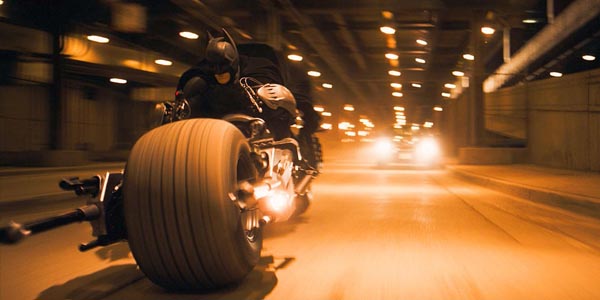
What it's known for: The Dark Knight was the point where Christopher Nolan's ascension to blockbuster king was completed. Making over a billion dollars without the aid of a 3D ticket surcharge, the film not only became an adored insta-classic, but shaped how Hollywood approached blockbusters. Although he'd given us a gritty take on the formerly-camp character previously in Batman Begins, this was the point where the realism really took over; less a superhero film, The Dark Knight was a crime movie that just happened to star a costumed vigilante. What it also changed: The Dark Knight was the undisputed king of 2008 (followed shortly by Pixar's equally stupendous Wall-E), not only being an incredibly popular film, but also boasting some impressive film-making. And yet when it came to awards season it was criminally overlooked. Pipped to a Best Picture nomination as the Oscars by the likes of The Reader and The Curious Case Of Benjamin Button, it brought out the age-old discussion about the stuffiness of the Academy. The direct response was to increase the number of Best Picture nominees from five to ten (later reduced to a variable number between five and ten) so a wider range of movies could be in the running for the big prize. It hasn't really affected which movies get a chance of winning, but has led to Up, Toy Story 3, District 9 and, in recompense for overlooking his previous, Nolan's Inception all getting nominated.

9. Fully CGI Characters - Star Wars Episode I: The Phantom Menace
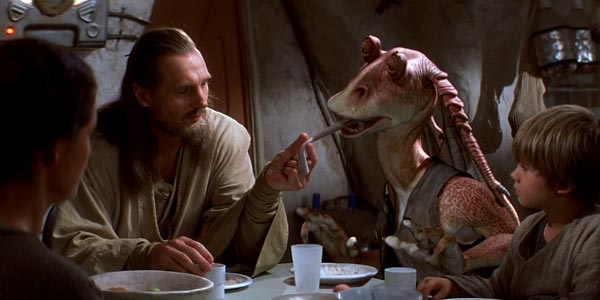
What it's known for: It's impossible to discuss The Phantom Menace without addressing the massive wall of hate constructed in the years following its release. It may have got critical praise initially, but long standing fans, disgruntled that the film wasn't aimed directly at thirty-somethings, slowly tore it down and turned mild disappointment into massive hate. And that's really what its biggest impact was. There may have been slight cases before (Batman And Robin's failure was aided by fan complaints), but Episode I marked a point where the internet commenters had the ability to totally ruin a movie's reputation. What it also changed: All this talk about the reaction to the film often distracts from the movie itself. And as a stand-alone piece its a serviceable effort head-and-shoulders above the other galactic fantasies of the late-nineties. That's saying nothing of the special effects. Although Steven Spielberg bringing dinosaurs back to life stands as a milestone, Lucas' film really pushed what special effects could do; Jar Jar, the much maligned hate figure, was the first fully CGI major character in a film and made breakthroughs with his interaction with the human cast. No Jar Jar? Then no Gollum or Na'vi. Not so stupid now.

8. Celebrity Voices - Aladdin

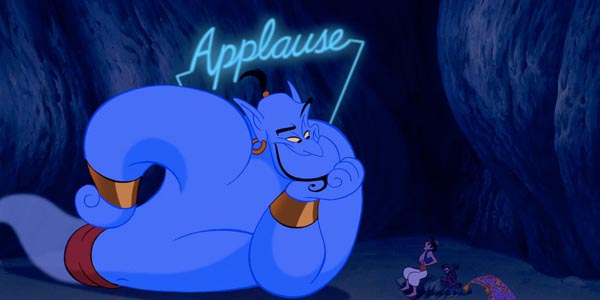
What it's known for: Aladdin was the third film in Disney's incredible early-nineties renaissance and successfully offered something a little more multi-gendered than the solely-princess focus of The Little Mermaid and Beauty And The Beast. But as well as boasting a human male protagonist for the first time since The Black Cauldron, Aladdin struck a decidedly different tone, with Genie's humour resting heavy on contextual jokes that really hit home for parents. This pop culture referencing was a tact that dominated the first decade of Dreamworks' existence and still find its home in other animations. What it also changed: Robin Williams didn't just shake up the humour of animated movies, but also how they sounded. There'd been famous names occasionally behind animated mouths before, but it was never a near necessity until Aladdin. Kurt Russell as Copper in The Fox And The Hound wasn't trumpeted from the rooftops, but a decade later Williams' turn as the Genie turned voice artistry into a celebrity past-time - it's now impossible to release an animated movie without A-List stars filling out the main cast.

7. CGI In A Period Movie - Titanic

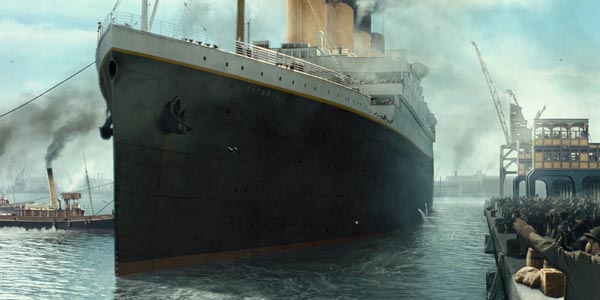
What it's known for: Titanic was an absolute behemoth that showed the box office didn't need to be ruled by sci-fi. James Cameron's three hour epic set aboard the doomed ocean liner had the brio of old-fashioned film-making in a wrapping that would appeal to just about anyone; everyone was catered for, from pre-teen girls (heart-throb Leo) to those who think romance is for sissies (the final hour is one big action sequence). The film became the highest grossing of all time (until Cameron's own Avatar knocked it aside) and swept the board at the Oscars. Even a minor backlash in the years since can't dent its majesty. What it also changed: It gets lost in all the jokes about Rose not sharing that piece of driftwood, but Titanic was, like The Phantom Menace, a pretty groundbreaking film in terms of visual effects. Whole shots (think the pan of the whole ship as it sails across the Atlantic) were created entirely in computers and so much of the period imagery was augmented digitally in a fashion that even now looks impressive. But what makes this amazing is that Titanic wasn't a fantasy movie, which was unheard of at the time; CGI had only ever been used for fantasy. The impact of this can be really felt now; it's rare to see a period drama that doesn't give things a little digital touch-up at some point.

6. Music And Image Intricately Linked - King Kong
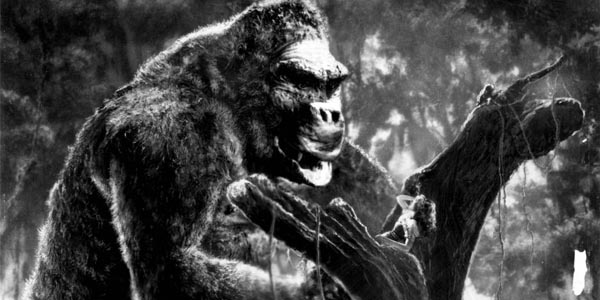
What it's known for: Although when compared to what subsequently was achieved looking rather unrealistic, it's hard not to marvel at the visual effects in the 1933 King Kong. Not since the ground-breaking The Lost World in 1925 had stop-motion creatures appeared in a live-action movie and here things were pushed to technical extremes; the effects looked great (the T-Rex fight is a standout) and there was actual interaction between the fake ape and the real actors. What it's also changed: So much focus is put on the visuals of King Kong that many people miss that its real breakthrough was in its sound. The studio originally wanted the movie's soundtrack to be compiled from pre-existing recordings, but director-producer Merian C. Cooper overthrew their decision, commissioning Max Steiner to create an original score. Good thing he did, because was Steiner delivered was revolutionary. He pushed the new (for film) fad of leitmotifs (recurring themes that denote a certain character or place - think Imperial March for Darth Vader) and, for the first time, had music actually react to what was going on screen - when Kong tickles Ann the music replicates it.

5. A New Certificate - Indiana Jones And The Temple Of Doom
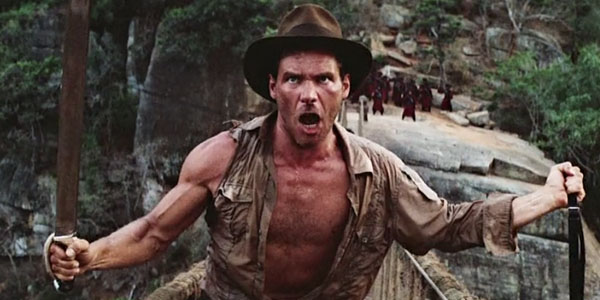
What it's known for: Temple Of Doom stands out as the weakest film of the original Indiana Jones Trilogy, but that really shouldn't be treated as a bad thing. Taking a different approach to Raiders (and the subsequent The Last Crusade, which likely went back to Nazis in the desert after Doom's decreased box office), the film moved the action to India, with a more outlandish story and less recognisable mythology. Serving as a prequel, it's refreshing to see a stand-alone adventure that in no way relies on the other movies. What it also changed: There is no denying Temple Of Doom is a much darker film in both look and tone to Raiders and this led to complaints after it proved too much for some children. Following this (and a lesser reaction to Gremlins), Spielberg lobbied for an intermediary certificate between PG and R to be introduced to put more onus on the parents and allow for movies with a wider appeal. This happened rather quickly (who ever claimed the MPAA wasn't motivated by profit) and in 1984 Red Dawn became the first film with a PG-13 rating. A similar situation happened in the UK in the early-naughties, where complaints about child-marketed films with a 12 certificate (chief among them the Bond movies) led to the introduction of the 12A certificate.

4. A Flushing Toilet - Psycho

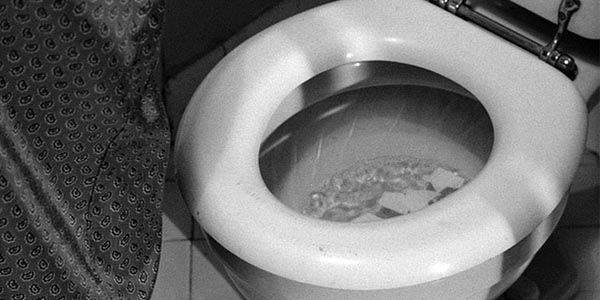
What it's known for: Psycho opens with an unmarried couple having just got it on during their lunch break and rolls from there. Boasting gruesome murders motivated by sexual repression, it was rather progressive for the time, with Alfred Hitchcock having to fight to get his version of the film released. The first time he submitted the film the censors baulked at the now-iconic shower scene, claiming it contained gore and nudity (frame by frame analysis proves this to be a lie). Hitchcock simply resubmitted the film untouched and this time it passed through. If that isn't testament to the sequence's brilliance we don't know what is. What it also changed: Although the violence was a strong talking point, the real point of contention with Psycho was something that seems utterly ridiculous by today's standards. In 1960 the highly restrictive Hays Code was still in effect, with some rather strict rules determining what could be shown and insinuated on screen. And it was the scene where Marion flushes away her rudimentary sum just before her death that really got censors on edge; it was not only the first Hitchcock bathroom to show a toilet, but also the first mainstream movie to show the bowl flushing. Scandalous.

3. Shooting Movies Back To Back - The Lord Of The Rings
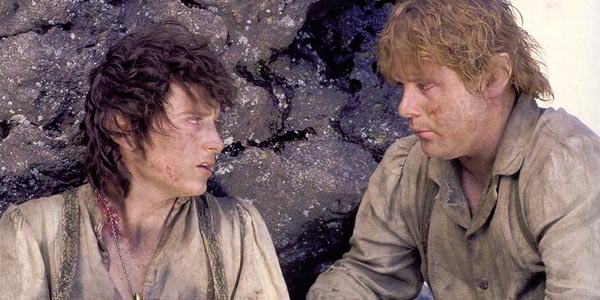
What it's known for: The Lord Of The Rings stands as testament to the fact that the word "unfilmable" really only means "just needs to wait for the right director". J.R.R. Tolkien's massive fantasy tome that is as descriptive as it is epic had been optioned for the big screen many times since its initial publication, with Ralph Bakshi coming close to doing it justice, delivering a solid, if greatly condensed, animated take on the first two books of the trilogy. But it was only when Peter Jackson came along that the films the book deserved got made. The defining movies for a generation, The Lord Of The Rings reignited the fantasy genre, making the domain of geeks cool. What it also changed: The number of films Jackson was going to turn the books into varied a lot through pre-production (for a long time it was just going to be two). One constant through the whole process, however, was that they were going to be shot back-to-back; the story runs through all the movies to an extent where to do it any other way would lead to a disjointed outcome. A year long stint in New Zealand saw footage for all three films shot at once allowing for more freedom in the extensive post-production process. Other films have since adopted this model, but, rather than coming from a creative avenue, its just so more movies can be churned out quicker (look at Avatar prepping three back-to-back sequels).

2. B-List Heroes Can Work - Iron Man

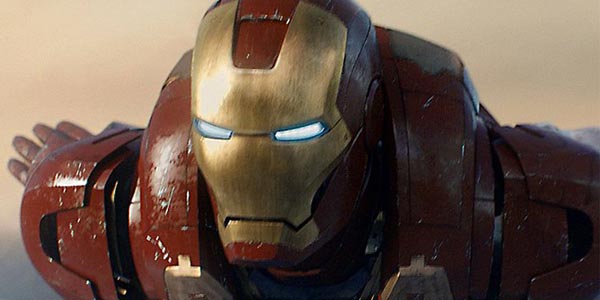
What it's known for: It wasn't really expected, but Iron Man shook up the superhero genre more than the likes of Spider-Man and Batman Begins. Although fundamentally it was a rather standard movie (the plot is the typical three act origin story and the action, once Tony Stark's escaped the cave, isn't that memorable), it brought something new to the table - continuity. In print these heroes were built around their crossovers and interactions, but due to rights issues this had never been exploited on screen. That is until Nick Fury popped up in Tony Stark's mansion in Iron Man's post-credit sting; things were changed forever. What it also changed: Considering Iron Man led to The Avengers and kick-started the who;e Marvel Cinematic Universe off it's easy to forget that his feature film was something of a last resort. Marvel was finally ready to step forward as a movie studio (the bankruptcy issues of the nineties were a distant memory), but they'd sold off all their big hitters and were left with only their lesser known properties. Before Robert Downey Jr. became Tony Stark, Iron Man was firmly in the superhero B-list, with the track record for this type of character (Daredevil, Ghost Rider) far from stellar. Iron Man, with Marvel going all in, changed all that, opening up whole new worlds of potential.

1. No Opening Credits - Star Wars

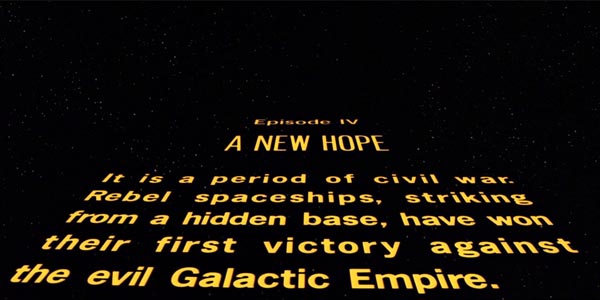
What it's known for: As we said ourselves a couple of months ago, Star Wars is the most influential blockbuster ever made. It not only pioneered some groundbreaking special effect techniques, essentially creating ILM, but helped cement the blockbuster formula. A couple of years before Jaws had made history by being released across hundreds of screen at the same time (things used to be much more gradual) and Star Wars only pushed that further, showing studios a way to make more money than ever before. What it also changed: One of the most distinct moments from Star Wars is the opening crawl. A throw-back to the Flash Gordon serials that originally inspired George Lucas to make the space saga, it provided a major point of contention upon initial release. Traditionally a film had a full run of opening credits before the action began, but as the serials hadn't done that, Lucas decided to go for the same approach, which didn't go down well. You see, it wasn't just a convention, but a mandatory rule all films had to adhere to; to ensure his film could get away with it, Lucas had to pay a fine and resign from the Director's Guild of America. Nowadays the convention's gone the other way; the majority of credits (perhaps excluding main actors and director) are saved until the very end of the film, something that never used to happen. Heck, some films (we're looking at you Nolan) don't even bother with a title card any more. All because George Lucas wanted to make a little homage. Which other unsung revolutionaries are there out there? Let us know down in the comments.

Contributor
Contributor

Film Editor (2014-2016). Loves The Usual Suspects. Hates Transformers 2. Everything else lies somewhere in the middle. Once met the Chuckle Brothers.