10 Movies That Changed Your Mind About Directors You Hated

What's worse than giant robo-balls and explosions? Michael Bay actually making a good film.
Some directors are made to be hated: their careers are provocatively geared towards annoying the majority of those who call themselves film lovers. In some cases they started out well, with a break-out debut that suggested a lot more than anything that would follow, and in others - as with Ed Wood - everything was terrible from day one. At least you know what you're getting with terrible directors, or those whose talent has very publicly deserted them - the real issue comes when they get ideas above their station and make something brilliant against the odds. Where you were once happy with your expectations of those directors, you're forced to re-evaluate every bad word so definitively uttered about them. Are they some kind of reverse film-making cuckoo? An undiscovered diamond in the rough who just needed a little more polish? Or could it be that they merely over-achieved and tricked you into thinking they were pulling off their own Matthew McConaughey renaissance? Either way, in every case the following directors released great (or at least comparatively impressive) movies that made you seriously re-evaluate your hatred for them...

10. Four Brothers - John Singleton

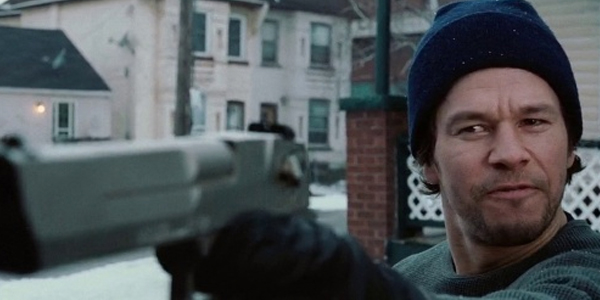
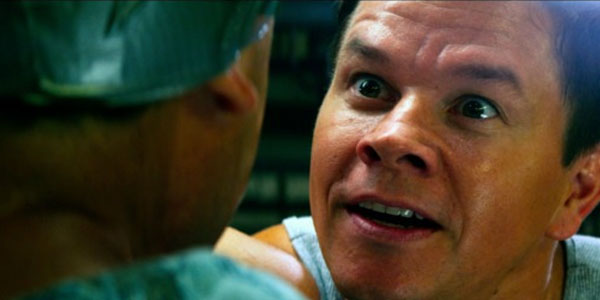
When John Singleton burst onto the scene with the seminal and viscerally affecting Boyz n the Hood big things were expected, but for whatever reason he spent the next 6 years or so working on poor follow-ups and with Michael Jackson. He did then enjoy something of a pick-up with Rosewood, but Shaft, Baby Boy and 2 Fast 2 Furious were basically dross compared to his debut. But then the formula worked again, just as it had for Boyz n the Hood with Four Brothers, the hard-hitting familial drama that helped prove that Mark Wahlberg really could act. Yes, it sagged at the end, but those first two acts are artfully, tightly constructed and the film is a slow-burning, tense affair that shows more maturity than anything Singleton made for most of the '90s. Did It Last? One word: Abduction.

9. Mysterious Skin - Gregg Araki

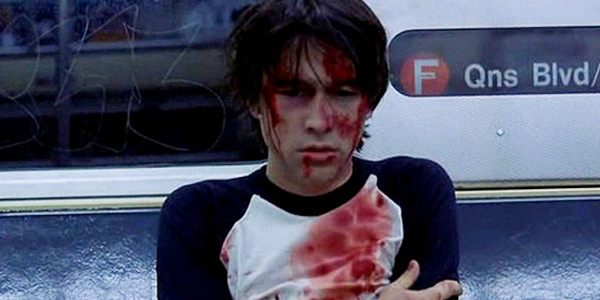
Gregg Araki is something of an anomaly as a film-maker: he is so unwaveringly committed to his creative agenda - and apparently to furthering the career of James Duval well past its sell-by date - and so provocatively anti-mainstream that his work is incredibly divisive. If you get Araki, you get him, and you love him. For everyone else, he's another bonkers film-maker who takes pride in seemingly unwatchable films. Such is the case of most of his earliest films, which watch like an anthemic anthology for broken youth - they are a call to arms for disaffected, troubled teens and liminal identities, with strong homosexual themes that seem almost closed off to anyone else from other backgrounds. It was never as if Araki was offering morality tales and compartmentalising characters and his films never felt inclusive, and could be particularly jarring, specifically because of Araki's provocative mix of whimsy and darkness. He's always looking to make a cult classic, and most audiences would count that as an agenda instead to just make bad movies. Mysterious Skin though was a mainstream success, which drew critical and audience acclaim and rightly so, suggesting that Araki could make films for everyone, which still conformed to the ideas he likes to explore most. Did It Last? Araki is a little like Takeshi Miike in many respects: even if he flirts with the mainstream and wider notoriety that extends beyond the cult, he will rail against that and produce something contradictory, and that is precisely why he followed Mysterious Skin up with Smiley Face - a comic oddity - before making the ludicrous, provocatively silly Kaboom! which will surely have turned off all of his mainstream fans again.

8. Tusk - Kevin Smith

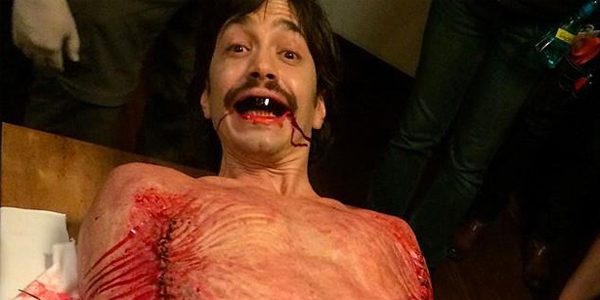
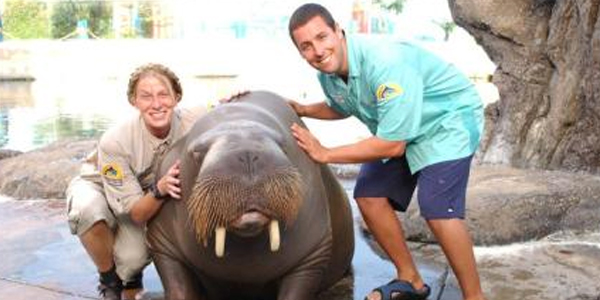
Because the Clerks supremo has currently got Tusk, his bonkers sounding horror movie based on a podcast based on a (fake) Gumtree post about a walrus, he's back being friendly with critics. So far so Kevin Smith. Reading the synopsis of the movie, and its genesis, you could well be forgiven for thinking that this was no more than another middle finger up to the establishment, and the proof Smith has needed since Cop Out that he can make movies while high and everyone who complains can kiss his increasingly shrinking backside. For most of the world, this is very much a speculative thing, as Tusk hasn't yet hit wide release, but the response from festival appearances should be enough to suggest to anyone who fell out of love with the never unknowingly controversial director that he's back. Critics should have been queuing to dismiss the movie, based on Smith's open hatred of anyone who expresses an opinion for money, but the fact that they mostly responded with excitement and four stars is testament to how good the film is going to land with fans. Did It Last? It hasn't happened yet, but with Clerks III on the way and two more movies from this universe, we might be getting some of the old Kevin Smith back. Fingers firmly crossed.

7. Midnight In Paris - Woody Allen

There's no disputing the fact that Woody Allen is a beloved director, but there's something almost archaic about his appreciation, and something a little insular about the way critics and fans fawn at his movies. Most of the cinephiles who like his work tend to be the kind of people that call themselves cinephiles, and like to deconstruct rather than enjoy films in a superficial way, which is absolutely fine and one of the many ways to enjoy films. But for everyone who goes to the multiplex to watch popcorn movies and be utterly thrilled, Allen's aversion to spectacle (despite his collecting of talents for his cast) is a major sticking point. He might be an old head, and a true great, but Allen's movies don't make a big purse, and they don't sell to blockbuster audiences, and for some reason he is a particularly divisive director (perhaps because of his personal life allegations) meaning he comes across as a sort of Marmite figure, and those who aren't utterly committed to every film he makes are beyond apathetic, and occasionally hate the idea of his work. But then Midnight In Paris came out, and Allen stamped down on the fact that he couldn't make a modern film that matters, and which audiences aside from his core could enjoy and share. It was infinitely charming, entertaining and disarming, and it was possible to remember - even for those who find the concept repugnant - that it wasn't JUST a Woody Allen film. Did It Last? So far, so good: since scoring a more mainstream hit with Midnight than he had for years - even with the critically adored releases that his fans ate up, he's made great movies in To Rome With Love and Blue Jasmine, and while they haven't actually been mainstream successes, you can't but feel that the director has earned more new fans in the past few years than he has for decades.

6. Frankenweenie - Tim Burton

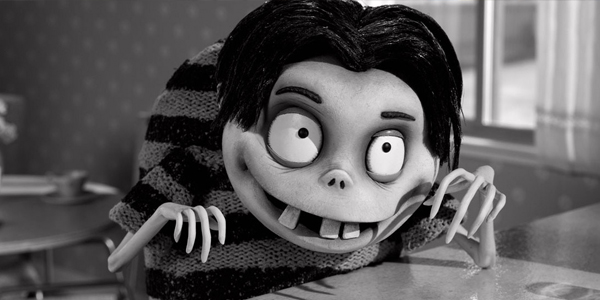
For some time, Tim Burton was no more than a cliche of himself: making oddities with Johnny Depp and giving a juicy supporting role to his wife Helena Bonham-Carter, as audiences who had loved his earliest works turned off their love affair with his idiosyncratic cookie imagination, and went elsewhere for their silliness. The problem for Burton in the wake of Sleepy Hollow was that his vision wasn't strong enough to paper over the cracks in his story-telling - which had never been an issue with Beetlejuice or Batman - and though he was still populating his movie worlds with delightfully weird characters and brilliantly conceived sets dripping in the nostalgia of half-remembered, sunny childish dreams of suburbia, it was no longer enough. There wasn't enough variation in there for new audiences, and even his most ardent older fans began to suspect that his bit was wearing thin, and that his imagination engine was running on fumes. He had lost it, plain and simple, and box-office results showed as much very tangibly. But then Disney decided to option Frankenweenie, the film that had pretty much got Burton sacked when he made the short that inspired it, and in the comfort of stop motion, the sparkle came back, and Burton's eye for retrospection and aesthetic nostalgia worked very well. His core fans flooded back and new ones were equally dazzled, and hopefully the old charm could hold. Did It Last? Probably not at this stage. Big Eyes seems something of a departure for the director, but everything else he's attached to at the minute looks like the usual, uninspiring cookie stuff he's been making with Johnny Depp and Helena Bonham-Carter for way too long.

5. Rampage - Uwe Boll

It goes without saying that Uwe Boll can't make good movies. Or so you'd think anyway. He is basically classed as the modern day Ed Wood, provocatively committed to making terrible, badly produced movies that look like second year film students' aborted, ironic attempts to make a bad film, and whose films are only ever enjoyed with a tongue pressed firmly into cheek. And hands over eyes. And fingers in ears. But then came Rampage: a movie that more people saw than would ever usually see a Boll film, because it was that mythical achievement - a Uwe Boll film that wasn't the equivalent of scratching nails down a chalk-board. Up until this point, despite those who said Boll always knew what he was doing, it seemed like he actually couldn't make good films, and that the ironic appreciation of his work was misplaced. But when Rampage was entertaining and well written (in relative terms anyway) it became obvious that Boll might actually have it in him to make good films, if he spent the right amount of time and money on them. Yes, it's a nasty little film, but it was actually good - disarmingly so in fact - and it really doesn't fit with the rest of Boll's canon. Did It Last? Of course not.

4. 50 First Dates - Peter Segal

If you can look past Rob Schneider's entire part in the film, and the unnecessary gross out bits, 50 First Dates is one of the best romantic comedies since 2000, and the premise would have worked with Tom Hanks and Meg Ryan 10 years earlier. Which is basically the best praise there is for that genre. To think that the film came from Peter Segal, who had made the worst Naked Gun movie (not the biggest crime in the world), Tommy Boy and Nutty Professor II was something of a stark revelation, considering how deftly the story is handled. Thanks to some excellent chemistry between Drew Barrymore and Adam Sandler, a charming script and a wonderful premise Segal's game was temporarily dragged up, and it seemed for a while like he had found his niche. Did It Last? It didn't even last another film, as Segal chose to remake The Longest Yard with Adam Sandler before making Get Smart, Grudge Match and somehow, tragically being given the job of remaking Harvey. Good move Hollywood.

3. Batman Begins - David S Goyer

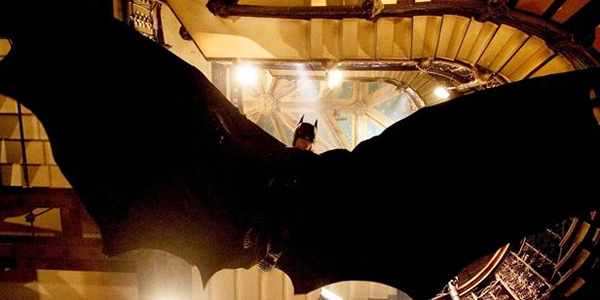
There was once a time when David Goyer wasn't counted as some sort of messianic writing whirlwind, brought in to oversee the creative conceptions of Batman movies, and Call Of Duty and high concept sci-fi and fantasy TV shows. In fact, there was a time when he wasn't considered very good at much of anything, writing things like Kickboxer 2 and David Hasselhoff's Nick Fury: Agent Of Shield and scratching a living until someone handed him a pen and told him to write Blade. At that point, the writer channelled all of his successes in writing really bad horror flicks into another, burdgeoning genre, and it paid off magnificently, earning him not only some pretty impressive writing gigs, but also the chance to direct for the first time. That he did with Zig Zag, which was entirely forgettable, before graduating from writing to directing Blade Trinity, which is where the wheels burst off. Despite some good ideas, the film was sloppy and silly, and it was very obvious that Goyer's writing successes with the first movie (and parts of the second) were no more than a blip. And he clearly wasn't a good director. But then, just as Goyer was being re-assessed as another mid-card, poorly skilled writer/director, Chris Nolan employed him to help on Batman Begins, and the tight, dark story he produced was a revelation. His comic book fandom shone through, and all of a sudden a Z-lister given a chance to direct proved that he actually maybe was as talented as we all thought for a while. Did It Last? As a director, Goyer is still awful: there was nothing in either The Unborn or The Invisible that disproved that theory, but as a writer, he continues to pick up gigantic billings, and fan adulation. And that will inevitably lead to some more directing opportunities.

2. Phone Booth - Joel Schumacher

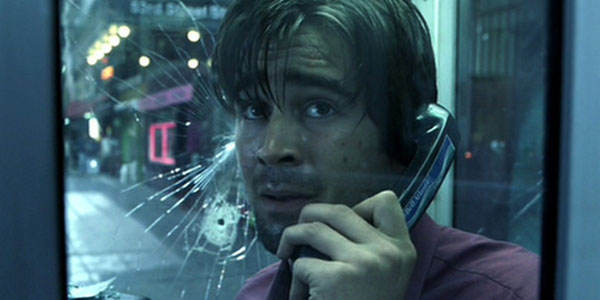
If you go back to the earlier days of Joel Schumacher's career - and in particular, St Elmo's Fire, The Lost Boys and Flatliners - the suggestion that he would almost single-handedly be blamed for killing a million dollar movie franchise would have been easily dismissed. But thanks to some infamous studio meddling, Schumacher went from the success of A Time To Kill to the luminous disaster of Batman & Robin. From there, Schumacher's name was poison: at the time it wasn't clear how much Warner Bros. had pressured him into toyifying the Bat sequel and it was assumed that Schumacher had simply gone insane. And while Tigerland was a step in the right direction it wasn't until Phone Booth came out that it became obvious that he was still able to make engaging, clever movies without hyperbole or over-blown, expensive effects. Did It Last? Sadly, not. Schumacher didn't exactly scrape back to the days of Batman & Robin, but The Number 23 was wayward at best and everything else has been pretty much utterly forgettable.

1. Pain & Gain - Michael Bay

As a satirical critique of the American Dream, Pain & Gain is about as smart a movie as you're ever likely to see. The fact that it came from Michael Bay - the king of puerile jokes, rampant, unnecessary sexualisation of female characters and explosion porn - was a revelation to end all revelations. Bay had enjoyed success with Armageddon and The Rock before that, but his more recent film canon suggested that those two movies were about as smart as he was capable of. If the gigantic robo-balls in Transformers proved anything, it was that those suspicions were utterly nailed on. But then, Bay threw a spanner into the works, adapting the near-real-life crime farce with uncharacteristic restraint (comparatively so at least) and with a great script and some phenomenal acting (especially from Dwayne Johnson), it was the most disarming surprise of 2013. And unbelievably, it suggested that Bay actually had another level to his film-making. Did It Last? It's Michael Bay, of course it wouldn't, and he proved as much with the fourth Transformers movie. Which movies changed your mind about directors you previously hated? Share your thoughts below in the comments thread.

Contributor
Contributor

WhatCulture's former COO, veteran writer and editor.