10 Movies Everyone Hated That Are Great In Retrospect
 "You're wrong. And here's why..." The gloriously satisfying few words you can use to intellectually smash your opponent next time they try to tell you Knowing or Event Horizon are big 'ol stinkers. The following list doesn't just comprise of some misunderstood films you may have a better time with than first thought, but contains some genuine gems that by circumstance or ignorance have been criminally overlooked.
10. The Cell
 Tarsem Singh's first feature, The Cell, is a violently underrated descent into the beautifully depraved mind of a killer. It was widely panned upon its 2000 release with critics and the public alike mounting a venomous assault against, as Common Sense Media put it, a movie with "no plot, no logic, no meaning". Behind J-Lo's skin-tight muscle onsie and the music video visuals, lies a brave, captivating cocktail of genres and creativity unrivaled on its release. I have a spacious place in my heart for the work of Tarsem, even his later follies such as Immortals (a stunning three-minute music video dragged out to two hours), perhaps less so with Mirror Mirror. He approached the would-be Silence of the Lambs rip-off with such verve and originality that it set The Cell apart from the run of the mill psychological killer thriller fare. Granted, this is helped by some terrifically inventive, squirm inducing gore. Tell me another film I can watch a horse be sliced into luncheon meat and I'll retract everything. The supporting cast cement the admittedly somewhat flimsy plot, with great turns from the likes of Vince Vaughn, Breaking Bad's very own Dean Norris and everyone's favorite serial killer, Vincent D'Orofrio (see Jenifer Lynch's Chained for his most recent killer). The hate laid at the film clearly stems from its overt, camp stylings but its undeniably visually arresting. Its been called a glorified TV advert however, despite the overwhelming negative response, I'm not alone in my flag waving. The great Roger Ebert awarded The Cell the top score of four out of four stars and championed it as one of the best films of 2000. And Ebert is never wrong. Tarsem's crowning achievement remains The Fall but The Cell is still a visually stunning precursor to The Fall's grand look and sensibilities. Ultimately it holds its own as a true originals and a bletter of a chiller.
9. Waterworld
 Mad Max on water! Kevin Costner with gills! Dennis Hopper as a one-eyed, punk oil baron! Three of the greatest selling points in cinematic history and still the film sank like that massive floating city would do in real life. I still see Waterworld as an enduring classic that I revisit regularly to see if it's just rose-tinted nostalgia clouding my judgement but every time I come away with a newly affirmed sense of certainty regarding its utter brilliance. Costner is at his stoic, camp best clad in what would seem to be a hugely inconvenient patchwork of fabrics and leather but, like so much in the film, it doesn't matter because it looks cool. Reputable in large part due to its horrifically bloated budget and the colossal, record-breaking loss it made, it should be remembered for its bold, epic vision. Praise should be laid at its feet for Hopper's performance alone as one of my personal favourite cinematic villains of all time. What's more is in the 90s, a decade defined by generic, neo-fascist action films, Waterworld was something of a brave film to stick to its guns with its green peace, eco statement before films like The Day After Tomorrow made it 'hip' and 'cool' to 'care' about our planet. I've never understood the hate for Waterworld, which I see to be every bit as good as Mad Max and Escape From New York. Go back. Give it another shot. Thank me later.
8. The Collector
 Easily disregarded as yet another sadistic wet dream for the torture porn school of horror, The Collector went above and beyond most horror outings of 2009. I'm not trying to say it doesn't revel in the fetishist torture on display but it ties it into a superior nail-biter. The ingenious cat and mouse premise produces some genuine hold-your-breath moments, as professional thief, Arkin, weaves his way through the wonderfully inventive death traps laid by the collector. Also, following on from the animal-decapitating motif I've made for myself with The Cell, the family kitty sees a particularly sticky end (yes, pun very much intended). The Collector shares industrial similarities with the Saws and Hostels but crucially puts the horror first. It's a ridiculously lean film that gives you just enough reason to care about its central character before the barrage of chaos ensues. Being from the writers of some of the worst Saw sequels I, for one, was expecting very little form The Collector so I was all the more impressed when it delivered. It's not perfect, its deviations from witty death traps to out and out torture do veer into the leering, overly nasty realms of modern horror that The Collector set itself aside from. However, it remains a superior shocker that rivets from the get go.
7. The Fountain
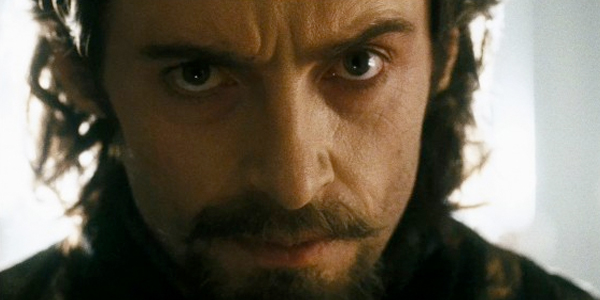
 Darren Aronofsky's The Fountain is a dizzyingly cathartic, ethereal exercise in the realms of narrative. Being Aronofsky's most maligned film, its reception seemed to stem from a certain obtuse miscommunication in what the film was, I feel deliberately on his part. No one could really get a grasp of what the film was about or understand what it was proposing and like Falcone notes in Batman Begins, "you always fear what you don't understand". Was it a mopey character drama? A historical epic? A 2001-esque sci-fi quandary? It was all of these and none of them. It is however a lush visual spectacle that literally glows thanks to Matthew Libatique's photography and space vistas that would make Douglas Trumbull blush. As well as boasting career topping performances from Hugh Jackman and the consistently brilliant Rachel Weisz, the icing on the cake is the haunting, epochal score by Clint Mansell. It's a film that trusts its audience to give themselves over to the heady flights of fancy that Aronofsky takes you on. But take his hand and you'll be rewarded massively with a deeply affecting fable about the fragility of life and the befuddling metaphysics that comes with confronting death.
6. Lakeview Terrace
As the remake of The Wicker Man was such a steaming mess of a project, it was easy to discredit Neil LeBute as one of the worst, most misguided directors working today. This film of racial tensions in American suburbs sets the stage for one of Samuel L. Jackson's most impactful and barnstorming performances to date. Some laid the accusation that the film was racist as it depicts controversial racial tensions. These critics are plain wrong; it's a film about racism, a fascinating and riveting one at that. Beneath the topical racial themes is a really well mounted, nuts-and-bolts thriller that even with the escalating implausibility doesn't lose itself in the final third. To back up Jackson's showboating role of Abel are thoroughly solid performances from Patrick Wilson and Kerry Washington as the catalysts of Abel's sociopathic racial explosion. Look beyond Lakeview Terrace's generic trappings and bask in the glow of Jackson at the very height of his powers.
5. Event Horizon
 Seemingly one of the most hated, turned-against films of the 90s, in retrospect Event Horizon stands out as a veritable gem of Paul W S Anderson's chequered (to put it very lightly) career. It's mental and ridiculous but ambitious and ballsy to such an extent that it's a film that should be respected as much as it is to be laughed at. Event Horizon has its own, distinct vision, one so good it was unashamedly nabbed by Dead Space. Featuring brilliant performances by Sam Neil and Lawrence Fishburne, it's been called, brilliantly, the "retarded Goth version of 2001" but this totally misses the point. It was an out-and-out exploitation film with A-list production values that actually had the strength of its convictions to see its story through, no matter how ludicrous and misguided that story may be.
4. Fear X
 Fear X is one of Drive director Nic Winding Refn's best but most obtusely inaccessible works. It's a film that probes at the psychological breakdown of its lead character Harry (John Turturro in one of his very best roles) and is more interested in wading in its ambient, haunting atmosphere than spelling out its narrative. It's the tone and Larry Smith's cinematography that are the highlights of Fear X and precedes Refn and Smith's stunning work together on Bronson and Only God Forgives. Fear X was a film no one understood; understandably, as strictly the film makes very little narrative sense. This was to Refn's great detriment as the hefty loss Fear X made forced his production company into bankruptcy. In the same way as Only God Forgives, it's a film many have and will find dense and portentous. Take it as a rich and layered exercise in near-ambient filmmaking, mired in thick atmosphere and Lynchian inflections and you may find it to be one of the most hypnotic, captivating experiences in recent history.
3. 8MM
 Okay, great may be overstating it but this scuzzy, sleazy riff on the PI formula isn't as bad as you may think or as bad as 'they' make out. In the tradition of good Joel Schumacher films along with Falling Down and A Time to Kill, 8MM sees buttoned down private eye, Tom Welles (Nic Cage), pushed to breaking point over the mystery of one young girl and a snuff film. Despite A-list credentials, the main draw is in it being Andrew Kevin Walker's follow-up to Se7en and while it doesn't have the same narrative innovations or Fincher's inspired, noir-soaked direction it does descent into comparable grungy depth of depravity that is at least disturbing if not utterly captivating. The film's charm comes in its nasty yet camp depictions of the grimmest corners of the sex industry headed up by the always-dependable Peter Stormare as the devilish fruitcake Dino Velvet. Padded out by the likes of Joaquin Phoenix, Catherine Keener and the late, great James Gandolfini as a supremely slimy douchebag, the cast don't disappoint. In the end it's not a classic to the same extent as Se7en but it's an intense, nasty little thriller that's well worth a revisit.
2. Punisher: War Zone
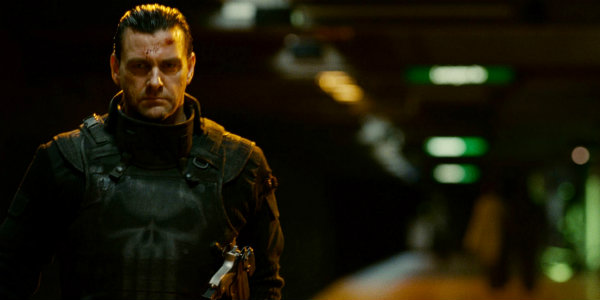 Now this film is just an out-and-out guilty pleasure. Forget The Expendables, forget Rambo IV, forget The A-Team, Punisher: War Zone is all the uber-violent, fascist wish-fulfilment 80s throwback you could ever need. Coming from Lexi Alexander, director of Green Street (one of the worst films I've had the displeasure of seeing), you'd be forgiven for expecting little from the third cinematic incarnation of Marvel's angel of death. Being a big fan of The Punisher, the Garth Ennis run in particular, I was always going to watch a new Punisher film and with the casting of Ray Stevenson and The Wire's very own McNulty, Dominic West, I was cautiously optimistic. It's an easy film to criticise but, assuming you share the same sensibilities to 80s-style ultra-violence as I do, it's an even easier film to enjoy. Crucially, it gets so much right. Ray Stevenson is the first man to don the skull emblem and make it his own. You believe in this guy. You believe he could throw someone into a glass crusher. You believe he could punch through a man's face... yes, through a man's face. That's just what Punisher: War Zone delivers on; it's a ludicrous orgy of blood and depravity. It's all topped off with a gloriously camp performance from West as the most unnecessarily, hilariously evil Jigsaw.
1. Knowing
 For me there was no doubt that Alex Proyas' Knowing was a belter of a sci-fi thriller from day one. I make no bones about it that I'm a huge Proyas fan and with veritable classics like Dark City and The Crow under his belt I feel I'm fully justified in my sentiments (let's forget about I Robot). More to the point, as I've said before, when in doubt trust Ebert who was also a big fan of Knowing garnering it with his prestigious four stars. Knowing has a cracking set up: Nic Cage's little boy digs up a time capsule with a sheet of numbers that predict every major global catastrophe, but what happens when the numbers run out? This sets the stage for some of the greatest, bravest sequences of mass destruction committed to film. It's the ending that is Knowing's most contentious point (along with one of the most Nic Cagey Nic Cage performances ever) and it's clear to see why it's so divisive. Without spoiling anything, Proyas wants you to come with him on a bafflingly illogical and metaphysical journey that, though totally at odds with the rest of the film, is so bold, bonkers and wildly creative it's worth the price of admission alone.