10 Movies Everyone Likes For The Wrong Reasons

These are great films. You just don't know why.
There's some movies we can all agree on being great. Those films that not only showcase some of the best cinematic techniques but manage to be bloody enjoyable in doing it. You know the ones, they've become part of the popular cinematic landscape and usually sit sit at the top of greatest film of all time lists like the IMDb Top 250. We just may not agree on why those films are great. Goodfellas is widely regarded as one of Martin Scorsese's best works, but why it attains that varies from person to person. Some delight in how it delectably sets up the mob world as this ideal as an ideal lifestyle before having the real dangers unveiled, others just lose it at the extensive use of tracking shots, while a sizeable group just can't get over the violence; Billy Batts' death to Atlantis or Jimmy bumping off those involved in the Lufthansa heist to Layla stick in the mind to the extent they dominate their song's legacies. No matter what it is, we all love the film. Sometimes people will praise a film for a legitimate reason, but in doing so miss what actually made the movie so great. They're not totally wrong, they're just missing the bigger picture. Here are ten of those films and why they're really so awesome.

10. The Thing

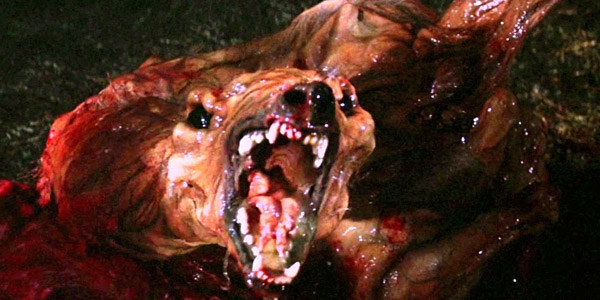
What everyone thinks: The practical effects are the real draw. When it was first released in 1982 The Thing wasn't met with much fanfare. John Carpenter had directed some of the most popular genre films in recent years (Halloween, Escape from New York), but this one just didn't connect. You could argue the bleak visual style and tone, as well as the menacing alien, weren't want audiences wanted; they were much more into a more upbeat extra-terrestrial film that year in the form of E.T. Another argument is that it simply took people a while to realise just how good the practical effects were; even today they're more visceral than what computers can produce. The real reason it's good: The interplay is the real draw. Rob Bottin's astounding effects certainly make the shape-shifting 'thing' a tangible threat, but what makes the film such an engaging piece is locked in the characters. Opting to go all in and give the film an all male cast, Carpenter (and screenwriter Bill Lancaster) spent a lot of time working out the human interplay as well as the sci-fi trappings; on top of obviously finding Kurt Russell's MacReady a likeable hero, the film has you understand the motivations of each person trapped in the Antarctic.

9. Aladdin

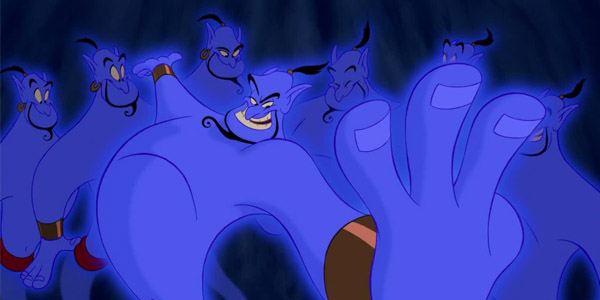
What everyone thinks: The Genie is the best thing in Aladdin by far. There's no film fan out there who can't have been affected by the loss of Robin Williams. He has such a strong filmography that everyone has at least one beloved movie of his they hold dear. For many it would be Aladdin, where his impression-fond Genie became the film's defining draw. Williams was so typically him that when recording the part he provided so much ad-libbed dialogue his role was increased just so it could all be fit in. The real reason it's good: Everything is great. Genie is no doubt an essential part of Aladdin's success, but he works as one part of a bigger machine. Coming slap bang in the middle of the Disney renaissance, the film boasts a progressive plot, memorably menacing villain, roguish hero and brilliant songs, all tied up by flawless animation (including some early CGI effects). It may not quite be up there with Beauty And The Beast and The Lion King between which it is sandwiched, but it's more than just a one character film.

8. 12 Years A Slave

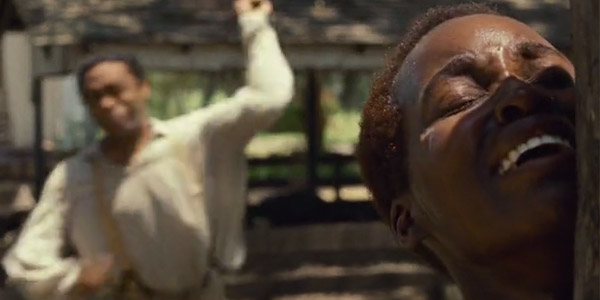
What everyone thinks: It's an important film. €œPossibility number one, 12 Years a Slave could win. Possibility number two, you€™re all racists,€ Ellen DeGeneres said at the start of this year Oscar ceremony, which perfectly captures the mood surrounding Steve McQueen's Best Picture winner; it's a film so powerful you must be in awe of it. This argument was carted out through the massive press push the release brought with it and while its true the film gives us an enlightening view of what it was like on the plantations, doesn't that distract from what the film is really about? The real reason it's good: It's an artistically made film focusing on a single journey. You can say slavery has never been covered seriously in media before only if you're a short-sighted fool who thinks what the director says on a press junket is gospel. There's been countless pieces that take a look at slavery (even ones without a terrible Aussie impression from the director). The obvious one is Roots, a landmark miniseries from 1977 that traced a family line from abduction in Africa all the way through to abolition. To put the weight of an issue on the back of a film really takes away from what makes it work as, well, a film. 12 Years A Slave is the story of one man who gets tricked, suffers and is eventually freed; it's probing the man, not the whole trade.

7. Avatar

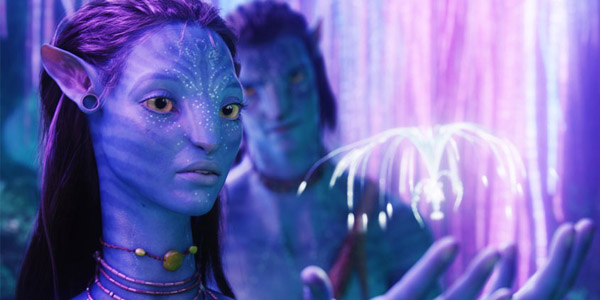
What everyone thinks: It was game-changer; the special effects and 3D were great. When Avatar came out there were people saying on message boards they wanted to kill themselves because they could never actually visit Pandora, the world from James Cameron's sci-fi. Not only does that show how the film's environmental message was clearly lost of some, it highlights just how massive the film was. A box office behemoth whose only potential equal may be the return of Star Wars, it completely captured audience's imaginations. The special effects were touted as decades in the making and 3D, a gimmick previously reserved for animations, was meant to be the best yet. If that all sounds like marketing spiel, it's because it is. The real reason it's good: James Cameron is a good storyteller. If staring at pretty landscapes was all audiences wanted then it'd be Koyaanisqatsi that was the highest grossing film of all time. The stereoscopy in Avatar certainly worked better than in the subsequent spate of cheap conversions (think the cut-outs of Clash Of The Titans), but it was still serving as a gimmick, not an artistic tool. And while people may have been brought in on the promise of ground-breaking effects (that aren't that beyond the internet standard) what got them staying was the actual story. Avatar certainly isn't the most original story ever told. But it's presented in a mature yet accessible way that gave it a wide appeal. As with Titanic James Cameron understood the broad strokes of blockbuster cinema and made something immediately crowd-pleasing.

6. Hot Fuzz

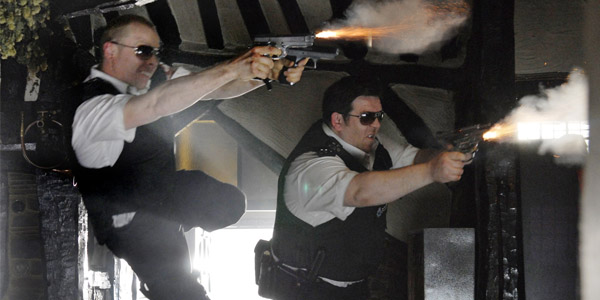
Universal PicturesUniversal PicturesWhat everyone thinks: Hot Fuzz is smart because it mocks action movies. The films in the Three Flavours Cornetto Trilogy main selling point is they're genre pastiches; Shaun Of The Dead is a "rom-com with zombies", Hot Fuzz transplants a Hollywood action movie to a quiet British village and The World's End is Doctor Who after one too many. The middle entry, Hot Fuzz (Blue), sees super-cop Nicholas Angel transferred to Sandford where he finds himself chasing swans, filing paperwork and solving a massive murder conspiracy. Surprisingly it's the middle one that takes the most time. With Danny, a film literate, but totally inexperienced PC at his side, the film delights in twisting all the genre conventions, particularly in its explosive final act. The real reason it's good: There's so many in-jokes to pick up on. We're not at all saying Hot Fuzz isn't good for being a spot-on parody, nor isn't it an illegitimate reason to like the film. However, if that's all you're taking from it you're really missing out. All three Cornetto films are so intricately plotted that pretty much every line and visual gag is actually setting up a much bigger pay-off later on. The World's End has the original bar crawl exactly mirroring the ink-tinged second attempt (right down to the relevance of the bar names) and Ed's plan for the next day at the start of Shaun Of The Dead is exactly what they do (just with alternative meanings). And Hot Fuzz... well Hot Fuzz takes it even further. Rewatching the film ten times doesn't mean you'll catch everything messrs Pegg and Wright have snuck in there. There's way too many to list here, so get watching that DVD.

5. Psycho
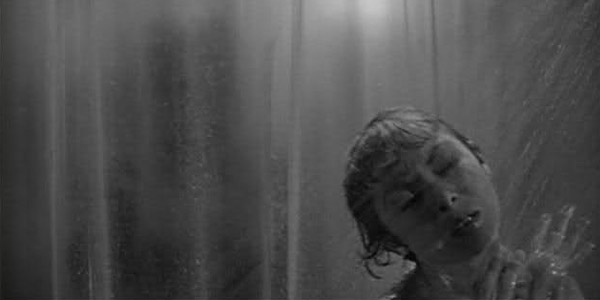
What everyone thinks: It's really scary. Although the truth that sits up in the house behind the Bates Motel is known to just about anyone who's ever set foot in a cinema, the thing everyone remembers from Psycho is the shower scene. An envelope pushing moment with over fifty cuts, its an audio-visual assault, with Bernard Herrmann's string score and Hitch's fast cutting of Mrs. Bates knife attack of young Marion Crane creating a sequence so suggestive the censors couldn't decide if there was gore and nudity or not. The real reason it's good: Hitchcock flat out tricks you. Psycho relies on the old bait-and-switch. The entire marketing campaign hinged on Alfred Hitchcock keeping the plot of the film a secret; he brought up all copies of Robert Bloch's novel, released a trailer that seemed enlightening but doled out no story details and produced posters telling audiences they wouldn't be admitted if they missed the start. This all builds into the film's opening; for the first forty minutes we follow Marion Crane, a seemingly normal secretary who steals $40,000 and goes on the run. Ah, she must be the Psycho from the tit... oh my God she's just been killed in the shower. The real movie doesn't kick off until we arrive at the Bates Motel and once there the money, up until that point the film's MacGuffin (a self-made trope Hitch was renowned for always employing), was completely thrown aside. Although countless hours have been spent dissecting the shower scene the real key to its horror isn't in the three minutes themselves; it's in what we went through to get there.

4. The Usual Suspects

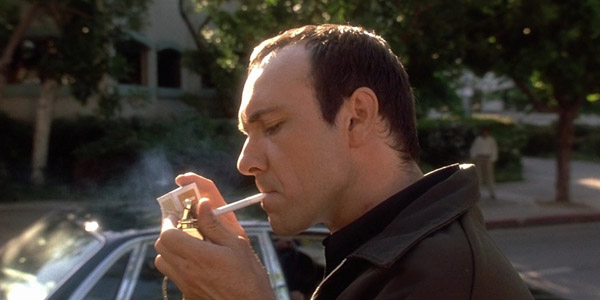
What everyone thinks: The Usual Suspects is a great film because of the twist. Verbal Kint is Keyser Söze. We're not that sorry for giving that away; Kevin Spacey said it in his Oscar acceptance speech when winning an award for the role, so that shouldn't be a spoiler almost two decades on. Aside from the line-up scene the twist is the most talked about moment of Bryan Singer's film; suddenly the previous two hours are thrown into ambiguity and it becomes clear the joke's been on us the whole time. How could that not be the defining point? The real reason it's good: It's perfectly plotted from the start. Wasn't that bit in The LEGO Movie when its revealed its all part of our world (oh, actually sorry for that spoiler) awesome? Suddenly the zany LEGO world we'd been in was giving an overarching real-world logic; things weren't crazy because the film wanted to appear kooky, it was crazy because it was from the mind of kid. Does that mean the previous notions of Lord Business segregating the worlds and all the silly hijinks aren't funny on a simple level? Of course not. The same is true of The Usual Suspects. By any conventional narrative The Usual Suspects is over when Kujan concludes it's Keaton who's Söze; from that standpoint you still have a cracking crime thriller that works on its own internal logic. The twist pushes the film over into greatness, but it only works because everything else before it was solid anyway.

3. The Silence Of The Lambs

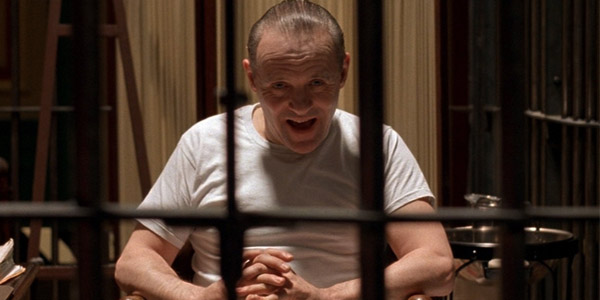
What everyone thinks: Hannibal makes the movie. As the overarching element of the series inspired by Thomas Harris' novels is the culinarily gifted doctor, it'd be easy to assume Anthony Hopkins' psychopath Hannibal was the glue that holds The Silence Of The Lambs. The main plot deals with the hunt for Buffalo Bill who keeps kidnapping young girls to build himself a woman suit, but it was Hopkins' performance that caught imaginations; Hannibal enters the plot as a psychiatric advisor to Clarice Starling and uses the wider plot to engineer his escape. He'd go on to have three more cinematic outings as a protagonist, with Hopkins returning for the first two. The real reason it's good: It works because Lecter is limited. Like fine cuisine, if we had too much Hannibal it'd end up not as delectable. Despite winning the Oscar for Best Actor (lead, not supporting) Hopkins only appears on screen for less than twenty minutes, highlighting how much else the film gets right to deserve its praise. Jonathan Demme not only got the material, but had the sense to reign back Hopkins in the role lest it fall into comedy. Compare Manhunter, the Brian Cox starring adaptation of Red Dragon, to Brett Ratner's version which brings Hopkins back. The former has Lecktor (as it was spelt) appear only at select moments, not only allowing more time with Will Graham, but making the character even more unnerving. Ratner's take includes a lot more Hannibal and the character begins to feel annoyingly overplayed.

2. Inception

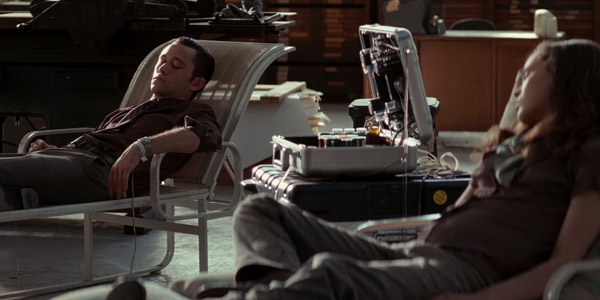
What everyone thinks: It's so damn complicated. Inception is a real head-scratcher. The plot moves at such a pace, with so much exposition littered about that to pick up on every key plot point in the first run through is nigh on impossible. You have the concept of shared dreaming, the idea of extraction, the possibility of inception, the whole Fischer/Saito company rivalry, all presented in a world where each dream level is shot in the same naturalistic style. At the centre of all this is Leonardo DiCaprio's Dom Cobb, a man on the run both from the authorities and his dark past. Phew - might need to re-read the Wikipedia plot summary one more time. The real reason it's good: You really empathise with Cobb. Christopher Nolan gets some slack for not giving us relatable protagonists, which seems a rather strange complaint; his characters are incredibly well-rounded, they just have their story explained as the story powers forward, rather than the typical plot diversions. The final shot cutting away just before the top (maybe) stops spinning has to be one of the most frustrating moments we've experienced in the cinema. Is he awake or were the visions of dead wife Mal right all along? While it's all based in the sci-fi techniques of the film, the emotional impetus behind wanting to know comes from the fact we're so invested in Cobb; did he make it back to his real children?

1. Citizen Kane

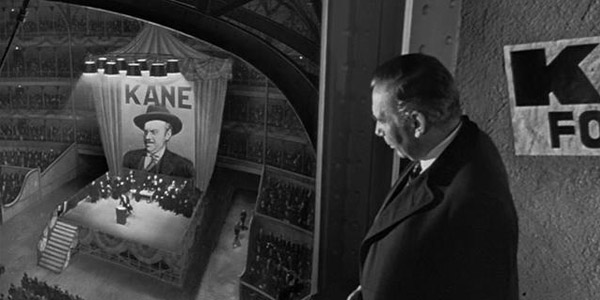
What everyone thinks: Citizen Kane is a technical masterwork. The phrase " is the Citizen Kane of " is one of the highest praises a film can get; The Dark Knight is the Citizen Kane of superhero movies; Transformers 2 is the Citizen Kane of eye-gouging-inducing cinema. That's because Citizen Kane was a revolutionary watermark for the entirety of cinema; Orson Welles' expansive movie tore up the cinematic rulebook that had, up until that point, been based off that of theatre. With the use of deep focus (shots where nothing was blury) and low angled shots (self-explanatory) the cinematic playing field was changed. Unfortunately that's all the film seems to be remembered for. Plenty of totally enjoyable movies - Jaws, The Shining, Pulp Fiction - have been dissected to understand their filmmaking influence without losing their sheer enjoyability, so why should it happen to Kane? The real reason it's good: It's an emotional, well-crafted story. Yeah, all that stuff is great and means that Kane as a film hasn't dated badly at all, but what really makes it work as a film-going experience is the story. Propelled by an enticing central mystery (what do Charles Foster Kane's last words, "Rosebud", mean) and told in non-linear flashbacks, it's a peek behind the curtain and an immensely powerful man that has an emotionally wrought twist ending that changes how the whole thing is viewed. That is why Citizen Kane is so good. The problem is that Kane spent fifty years with the title Greatest Film Of All Time, as voted for by critics in the BFI's decennial poll. And when we're dealing with something as stuffy as that (the only recent film to come close to placing in the latest Top 100 was The Tree Of Life) a film can't just be a good watch, so all the praise landed on the deep focus. Now Vertigo has displaced it, maybe now people can appreciate the film on its more emotional levels. Which films do you find audiences tend to like for the wrong reasons? Let us know in the comment selection below.

Contributor
Contributor

Film Editor (2014-2016). Loves The Usual Suspects. Hates Transformers 2. Everything else lies somewhere in the middle. Once met the Chuckle Brothers.