10 Movies From Your Childhood That Never Got Old

It’s not nostalgia when it’s still freakin’ awesome.
It€™s the mark of a genuinely good film - of any genre - if it€™s still got the same quality, the same allure, as it did when it was first released. Some films lose an element of what made them great when taken out of the era that spawned them. There are films that are specifically sixties, specifically seventies and eighties, which remain trapped in their era like flies trapped in amber, only watched and obsessed over by obsessives drawn to that time, those themes and those fashions. Children - especially those who grew up in the years following the expansion of cable TV and home media, when it was possible to watch fantastic kids movies from the comfort of their own homes - love to watch, and rewatch, and rewatch old films that they love, rewatch them so often that their copies can get worn out as they memorise every scene, every line of dialogue. It€™s that fascination that fuels fandom, that endless repetition that allows the creation of endless online resources dedicated to the minutiae of a film or a TV show. The films we love when we€™re kids stay with us long into adulthood€ but the big question is, are they still any good? These are the ten movies from our childhoods that never got old (unlike us, sadly).

10. Toy Story (1995)

With special mention to stop-motion musical The Nightmare Before Christmas, which came out a couple of years before and which has a small army of devoted Burtonites convinced that a) he directed it and b) that it€™s the greatest animation in recorded history, Toy Story deserves this spot more. Incredibly, the film is twenty-one years old: the sequel is seventeen years old. There€™s a whole generation of awkward millennial adolescents that have grown up in the shadow of the franchise, convinced that their childhood toys are probably whispering about them behind their backs. Genuinely witty and brimful of earned, character-driven pathos, Toy Story was the first animated movie ever to be nominated for a Best Original Screenplay Oscar and as the first ever CG animated feature film, helped to cement the style as the wave of the future. It was also Pixar€™s first feature length movie, and set the bar for all future Pixar releases, which in turn raised the bar for every other animated feature to be released since. And it€™s still as good as it ever was: in fact, watched in tandem with the two sequels, it represents a trilogy with no duff moments, something unprecedented in cinema history.

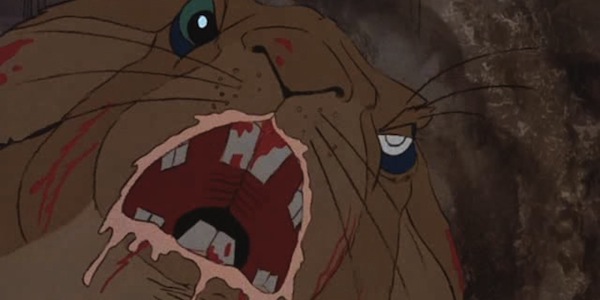
9. Watership Down (1978)

There are few children€™s movies more horrifying than Watership Down: few children€™s films are more tearjerking, or more honestly baffling to watch as a child. The mythology is confusing and the dialogue defiantly po-faced; the animals are almost entirely naturalistically drawn and animated rather than anthropomorphic; the story is apocalyptic and grisly, yet also about rabbits fighting in rural England. Despite this, Watership Down is a bloody triumph, and a youth-defining movie for generations of youngsters. Resolutely old-fashioned these days, the haunting moments have lost none of their power to pluck at the heartstrings or fill you with dread. And to cap it all off, General Woundwort is still the most horrifyingly badass monster to ever terrorise anyone€™s childhood. A rabbit. Now that€™s cinema.

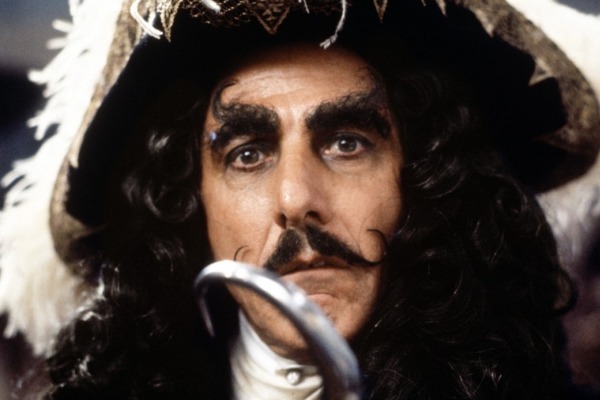
8. Hook (1991)

The victim of a near-total critical mauling when it was first released, Steven Spielberg€™s live action sequel to the classic Peter Pan story is proof positive that kids just don€™t read movie reviews. If you grew up in the late seventies or the eighties - or even the early nineties - the chances are that Hook played a huge part in your childhood. Children didn€™t care that forty-year-old Robin Williams was too old and too tubby to play the Boy That Never Grew Up, even if he was perfect as the middle-aged middle-management lawyer that Peter grew up into. No, children resonated with the garish, stylised, overstuffed production design, the lively action and the message that youth was a state of mind. They loved the skateboarding, Road Warrior Babies that stood in for the Lost Boys, and they especially loved it when Williams rediscovers his inner child by reconnecting with his actual children and learns how to fly and fight with a sword again. There was Dustin Hoffman€™s Captain Hook, impossibly flamboyant and camp as Christmas and Julia Roberts playing Tinkerbell as a toothy pixie-cut in tights. There was Thud Butt, rolling into a ball to knock pirates over like skittles, and there was everyone€™s favourite flame-haired punk gangleader, Rufio, played with hyper-aggressive proto-masculine peacockery by former breakdancer Dante Basco. Kids would shout BANGARANG! in the playground, chant RUFIO RUFIO RUFIO at one another€ and this behaviour would continue (with a slightly more ironic twist) into their teenage years. Hook was the gift that kept on giving. Even today, if you loved Hook as a kid you can watch it now - despite its many, many flaws - and experience an irrational swell of nostalgia and delight.

7. Willy Wonka & The Chocolate Factory (1971)
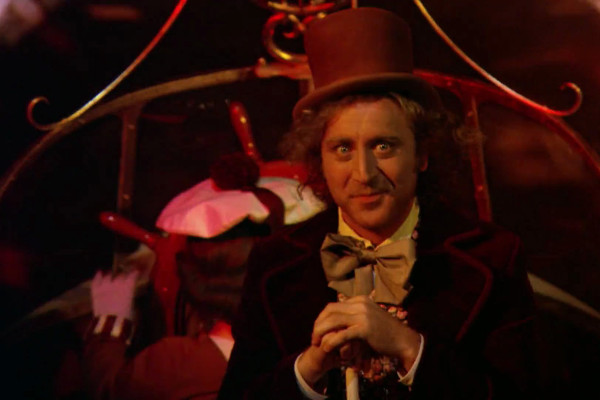
F*ck Tim Burton. When he superciliously sneered at the first adaptation of Roald Dahl€™s seminal children€™s book Charlie & The Chocolate Factory, he claimed he disliked it - calling it €˜sappy€™ and bemoaning, like Dahl himself, all the changes the film had made to the source material and Dahl€™s original script. There are, of course, more changes and alterations made in Burton€™s typically overblown fantasy. For a start, he gives Wonka a €˜sappy€™ backstory with an estranged father, not trusting the character as he was to appeal to the audience. He pulls out all his usual tricks: trying too hard to be dark and off the wall that he ends up being self-consciously look-at-me-I€™m-mad weird, like a dad trying to act cool for teenage kids. In trying too hard to be kooky, to be €˜Burtonesque€™, he screws up where the original adaptation succeeds best. Willy Wonka & The Chocolate Factory was one of the first kids€™ films to deliberately appeal to adults as well as to children, wickedly satirical and almost casually subversive. Like Watership Down, the 1971 film didn€™t really find the huge fanbase that it would develop later on until the advent of home video and repeated showings on television throughout the eighties. Still, it delivers on every possible level. The Oscar-nominated songs - especially Pure Imagination, one of the supposedly out-of-order inventions for the film - are fantastic, the soundtrack instantly memorable. Gene Wilder€™s sly, subtly misanthropic Wonka is the star of the film (something Dahl didn€™t approve of), carelessly inattentive, quoting classic literature apropos of nothing, gently mocking the horrendous predicaments that the spoiled children find themselves in. He tells more of a story with just those sad eyes and that wistful smile than Burton did with the entire awkwardly tacked on €˜bad dad€™ plot digression.

6. The Princess Bride (1987)

If Willy Wonka & The Chocolate Factory was one of the first family movies to deliberately invoke a slim thread of a more adult sensibility to rope parents into the fun, then The Princess Bride takes that thread, weaves it into a Holocaust Cloak and sets the damn thing on fire. Just as the film€™s tagline tells you (€œHeroes. Giants. Villains. Wizards. True Love. Not just your basic, average, everyday, ordinary, run-of-the-mill, ho-hum fairy tale€), this film packs everything into a relatively slimline, razor-sharp ninety-eight minute running time. That marketing spiel, of course, doesn€™t have space to include pirates, torture, the most lethal poison in the world, revenge, or the greatest swordfight in cinema history. It doesn€™t take in the Cliffs Of Insanity or the Fire Swamps, doesn€™t detail the R.O.U.S.es (Rodents Of Unusual Size) or the Screaming Eels that haunt the waters of Florin. It misses out the miracle man, the Brute Squad, the six-fingered man, and €˜To The Pain€™. It leaves out the part where Andre The Giant is beaten by a skinny English dude with a sleeper hold, and where the framing story is read to Kevin out of The Wonder Years by freakin€™ Colombo. It also fails to take into account the fact that the plot hinges around a failed effort at warmongering and profiteering between two countries named after obsolete currencies - Guilder and Florin - that were traditionally considered interchangeable. That€™s adult satire so obscure that it verges on the arcane. How marvellous.

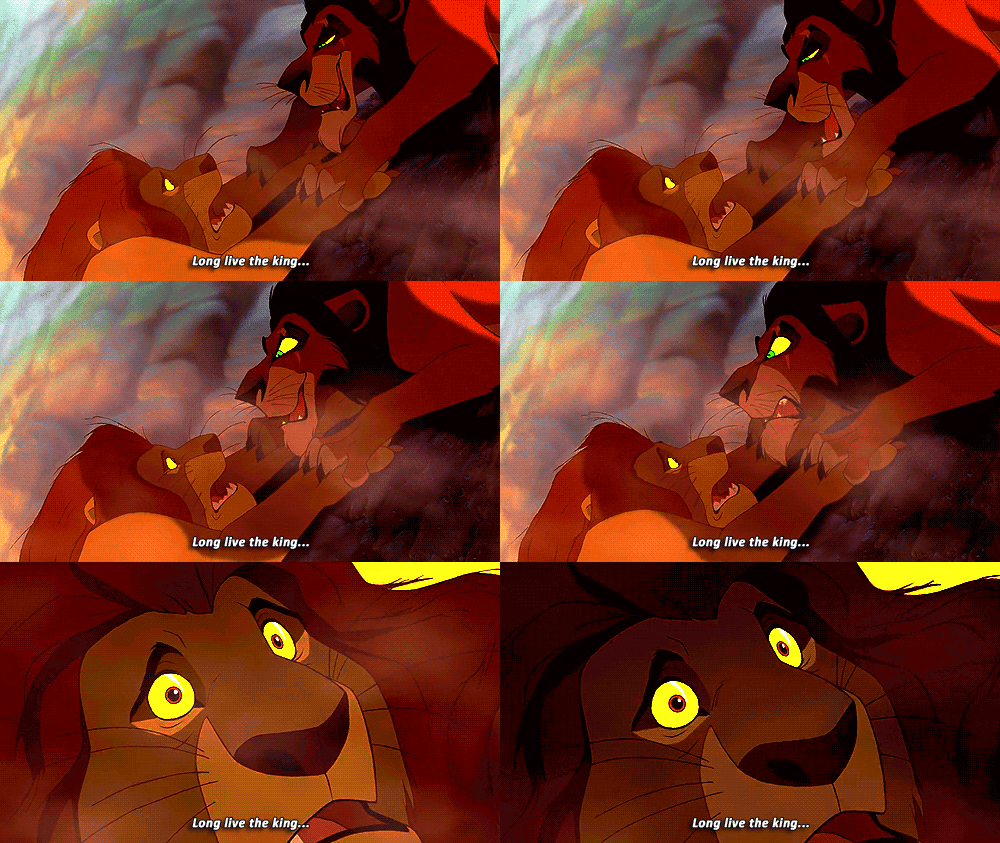
5. The Lion King (1994)

You can make a convincing argument for any one of three movies in this spot: The Little Mermaid (1989), Beauty And The Beast (1991) and The Lion King, the Holy Cartoon Trinity that (together with 1992€™s inferior Aladdin) formed the spine of the Disney Renaissance of the early nineties, the period that€™s cited as the one that saved the animation franchise of the company after the creative and financial doldrums of the eighties. All three won Oscars for their soundtracks and signature songs, all three have been turned into Broadway musicals and all three were massive successes, animated hits the box office had never seen before. Whichever film you choose of the three would probably say a lot about you in one of those personality quizzes that Buzzfeed like to hawk around, but really there€™s little contest. The Little Mermaid has charm out the wazoo, a great villain and the catchiest tunes, but no story to speak of. Beauty And The Beast has less tunes, a poor villain but a captivating story and compelling characterisation. The Lion King has the tunes, the villain (a practically never better Jeremy Irons voicing the malevolent, Shakespearean tyrant-in-waiting Scar), the story and the characters. Not for nothing is it still the highest-grossing hand-drawn animated film in history, having made close to a billion dollars worldwide in the last two decades. The film€™s seeped into popular culture since its initial release, and the animation and storytelling still hold up today.

4. The Neverending Story (1984)

The story of pre-teen warrior Atreyu€™s quest to find a cure for The Childlike Empress, dying of a malady similar to that ravaging the world of Fantasia, while in the real world shy, introverted bookworm Bastian bunks off school to read about his Fantasian counterpart€™s adventures, The Neverending Story is a metatextual fairytale about the power of storytelling and the imagination. On paper, the film shouldn€™t have had the longevity that it did. Adapted by the director of the arse-destroyingly long WWII submarine drama Das Boot from a German fantasy novel of the same name (but with an American cast), this should have been a horrible Euro-turkey of a movie. Yet, despite being disowned by Michael Ende, the author of the novel (the creator of the world and the characters that the film portrayed called it €œplush and plastic€), The Neverending Story is a towering achievement: a fantasy adventure that still feels completely fresh over three decades after its cinematic release, and hasn€™t dated a jot in all that time. Children€™s film and television has tried for decades to recapture some of the magic of the film, and failed. For some reason the eighties fostered this kind of leap of faith far more readily than any other decade before or since: the Neverending Story (ah-ah-ahhh, ah-ah-ahhh, ah-ah-ahhh) is brimming with sheer, unadulterated inventiveness from title card to credits. Ende€™s snarkiness notwithstanding, this is captivating, heart-on-sleeve world-building rarely attempted in children€™s cinema.

3. Star Wars (1977)

A no-brainer for inclusion in this article (in several senses), George Lucas€™ cheerfully straightforward space opera began life as the unwanted second film in a two film deal struck in 1971 in order to get American Graffiti to the screen. Although Lucas claimed when writing Star Wars (I€™m never going to call it A New Hope, so don€™t say a word) that he had enough scope to tell a full story covering nine films, of which Star Wars would be somewhere in the middle, the truth of the matter is that scope is all he had. Lucas€™ ideas for the saga mutated radically on a monthly basis back in the old days. Before the series became a monolithic franchise with its own narrative throughline and continuity, it was all in his head, and subject to change with a whim. However, the first film (not fourth) and original story is a relatively simple one, a goodnatured epic fantasy with the trappings of science fiction instead of sword and sorcery. That conceit would prove the most complicated part of the story, detailing the hero€™s journey of a farm boy who became the saviour of the galaxy. Long before secret twins, evil fathers and complex political shenanigans, Star Wars was about one kid€™s efforts to make a man of himself while fighting against a tyrannical oppressor. The mythology may have sucked future generations in, but that simple, compelling story is what got them hooked in the first place, and simple, compelling storytelling never ages.

2. Labyrinth (1986)

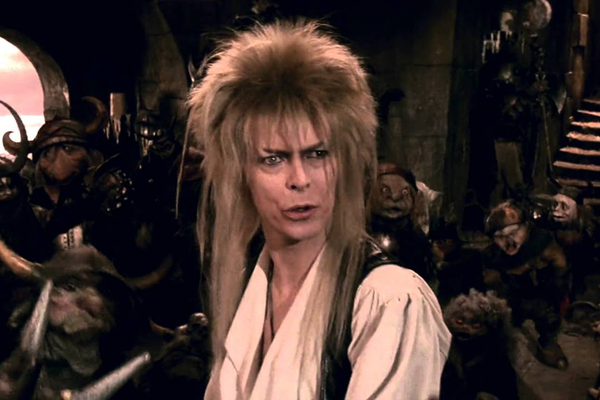
With a nod to other, similar films of the period - specifically the far darker and less accessible The Dark Crystal - Labyrinth is the one that€™s stayed in the public consciousness for the last three decades, the story of teenage hero Sarah€™s quest to journey to the centre of the Labyrinth of the title, confront the Goblin King and free her kidnapped The late David Bowie took a lot of ribbing for that fright wig and those tights €“ tights so tight that they make a photo finish look like a long distance relationship €“ but then his Jareth, the Goblin King is a teenage girl€™s prototypical sexual fantasy, a cobbled together creation concocted from the heroine€™s stories and her dolls, and from dim, unrealised feelings for her mother€™s boyfriend (also played by Bowie - check out the pictures in her scrapbook). Since this is a Jim Henson movie, it€™s probably not a revelation to say that he was originally looking at making the Goblin King a muppet, before he hit on the idea of appropriating the exoticism (and eroticism) of a mainstream pop star for the part. The productions design incorporates both human and muppet seamlessly: unlike other Henson film that attempt to draw a definitive line between the two, Labyrinth wants you to believe that its animatronics and puppetry is another world: a real other world, not just an eccentric, off the wall part of this one. The film exceeds all expectations by being imaginative, witty and even a little wicked, as well as being just as charming and sappy as you might anticipate a Henson fairytale to be. But it€™s Bowie€™s louche, lonely, dangerous Goblin King that remains the most memorable thing in this extraordinarily memorable film.

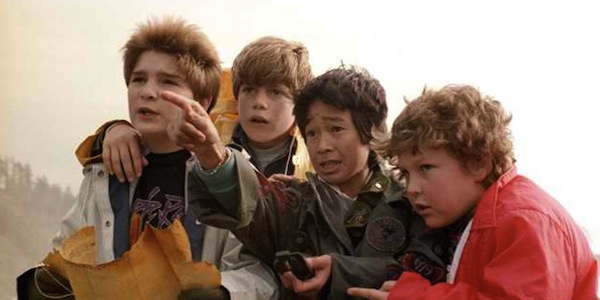
1. The Goonies (1985)

With a nod to Raiders Of The Lost Ark and Jurassic Park, both of which have occupied a similar action/adventure place in the hearts of the impressionable since their release, there€™s no other film that could take the top spot on this list. Everyone remembers The Goonies. The kiddie adventure flick, a pre-teen Indiana Jones, featured a practical who€™s who of young actors portraying the courageous children who, in following the clues on a secret map to the location of a 17th century pirate€™s gold, find themselves up against armed robbers, a supposed monster, and all the traps and pitfalls that you€™d expect from a treasure hunting film like this. Cheerfully zany, the cast of kids frequently talking over each other in their excitement, I hear that The Goonies makes for incoherent viewing if you€™re watching it as an adult for the first time. If you watched it as a child, however, you understand every single word, and every scene is indelibly printed on your brain: from the Truffle Shuffle to the puke story; from Sloth and his ugly, ugly family to the grinning, skeletal presence of long-dead pirate One Eyed Willy that haunts every other scene. It€™s exciting, funny, touching and dynamic viewing, a product of the eighties without being trapped in the era. That€™s part of the reason why it still holds up today: it€™s not just nostalgia that has forty-year-olds sticking on The Goonies on a Sunday afternoon with the kids. When at the end, the pirate ship finally sails free of the underground cave that held it for two hundred years, it€™s as stunning a moment in 2016 as it was in 1985, the audience as breathless for a moment as the kids on the beach watching.

In this post: 
The-Goonies
 
Posted On: 
Contributor
Contributor

Professional writer, punk werewolf and nesting place for starfish. Obsessed with squid, spirals and story. I publish short weird fiction online at desincarne.com, and tweet nonsense under the name Jack The Bodiless. You can follow me all you like, just don't touch my stuff.