10 Movies Which Got Science Completely Wrong

Just leave your brain at home.
Hollywood movies aren't exactly renowned for their commitment to accuracy - from rewriting history to turning political realities on their head, films have a habit of discarding reality in favour of something more, well, cinematic. It's hardly a great revelation and something that only the most naive and trusting person would struggle to comprehend. Still, scientific inaccuracies in movies sometimes put a bee in the viewer's bonnet, as the recent release of Luc Besson's Lucy - in which the myth that we only use 10 percent of our brains forms the basis for the plot about a woman (Scarlett Johansson) whose expanded brain power turns her into a hyper-evolved human - served to illustrate. From massive explosions in space to hackers accessing secure government networks via a laptop in a matter of seconds, films have frequently had a shaky relationship with the accuracies of the real world. The following list covers ten movies which got science completely wrong. Whether or not this affects your enjoyment of the film is entirely up to the reader - for some, it doesn't matter one bit, for others the lack of logic and coherence is a source of annoyance. At the end of the day, it's only a movie...

10. Dodgy Astronomy - Armageddon

As we'll see throughout the course of this article, the end of the world is a popular topic in the movies which is often utilized without any real consideration for scientific facts. Whether it's an alien invasion or a catastrophic natural disaster, the end of the world is pretty much guaranteed to get plenty of bums on theatre seats. Following hot on the heels of Deep Impact, Michael Bay's 1998 movie Armageddon opted for an impending asteroid collision to build up the tension for planetary destruction, even co-opting NASA to assist with the production. Needless to say NASA didn't exactly go out of their way to correct the many scientific flaws in the film's narrative. From radically underestimating the explosive force of such an impact (the movie states that the asteroid thought to have wiped out the dinosaurs had the power of 10,000 nuclear bombs whereas science conservatively estimates a figure of around 800,000), describing the asteroid as "the size of Texas" even though none in the solar system are such a size, or the inexplicable failure to spot something so large until it's only 18 days away, NASA's involvement clearly had little to do with ensuring scientific accuracy. Still, at the end of the day (or world) this is a Michael Bay action movie - expecting it to stick to scientific facts is clearly missing the point of what a movie like Armageddon is trying to achieve. Big explosions and dumb, loud action is the order of the day.

9. Exploding Children - Honey, I Shrunk The Kids
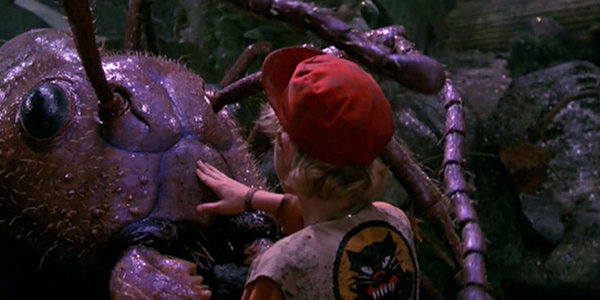
What would you do if you were shrunk to the size of a pinhead? The possibilities - and dangers - are almost endless, as the children in Joe Johnston's Honey, I Shrunk The Kids discover for themselves after their inventor father (Rick Moranis) accidentally shrinks his offspring in an experiment which goes horribly wrong. But what would actually happen if you were to shrink a fully grown person down to such a size in a matter of seconds? There's a matter of energy transference which Honey, I Shrunk The Kids conveniently overlooks: E=MC^2 . If your kids go from 100 KG to 1 KG, then where does all that energy go? 300,000,000 m/s ^2 * 99KG = roughly 2 Megatonnes - or, to put it in much clearer terms, 125 times the power of Hiroshima. Perhaps paraphrasing the title to the sequel - Honey, I Blew Up The Kids - would be more appropriate. Or maybe, Honey, I Blew Up Los Angeles. Still, that would have made for a considerably shorter movie than the one Disney released, and no doubt wouldn't have been anywhere near as successful at the box office.

8. Defying The Laws Of Physics - The Day After Tomorrow
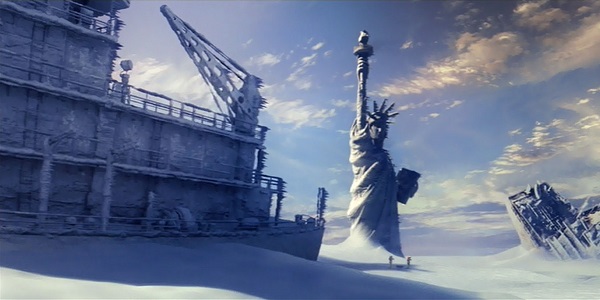
From Independence Day to 2012, Roland Emmerich has a bit of a thing for bringing the planet to the brink of total destruction - he also has something of a knack for cliched storytelling, predictable plots and incredibly clunky dialogue, all of which are present and correct in his global warming-inspired disaster movie, The Day After Tomorrow. Plenty of scientists have picked this film apart in terms of its inaccuracies, but some of the highlights (or lowlights, if you prefer) include: tornadoes like the ones which hit Los Angeles would never have the power to take down skyscrapers - the fact that helicopters are seen hovering nearby indicates that the physics of wind is conveniently ignored by the filmmakers; the eye of a superstorm is anything but ultra cold and could never cause freezing conditions in an instant (not to mention that the water would expand and tear apart the buildings in which everyone is taking shelter); and no matter how cool Jake Gyllenhaal may be, no one can outrun a tsunami. Gullible audiences who left the theatres after watching The Day After Tomorrow and lived in fear of the imminent end of the world thanks to global warming can rest easy - an instantaneous event like the one thought up by Emmerich is about as likely to bring about our demise as an ancient Mayan prophecy.

7. Power To The People - The Matrix

What would you do if a mysterious man approached you with a pill that would allow you to see through the illusion of the world around you, revealing that you are nothing more than a battery for a highly advanced system controlled by machines who have created a virtual world for your mind to conceal the fact that in reality you're little more than a battery for their consumption? If you were a nitpicking scientist, the first thing you'd do is probably ask the robots if the energy return on their input was really worth all the effort. The premise to The Matrix has humanity being harvested for their energy, but unfortunately humans produce very little energy - only around 100 watts of power in a typical day. What are the robots using to power our feeding and life support systems, you might ask? Wouldn't they be better off taking the energy from that instead, since machines like to be so efficient? Of course, had they done all of that then The Matrix movie wouldn't have any need to exist and we'd be deprived of one of the greatest science fiction movies in recent years - although perhaps they could have converted to post-human energy consumption after the first movie to spare us all the terrible sequels...

6. Shoddy Seismology - Volcano

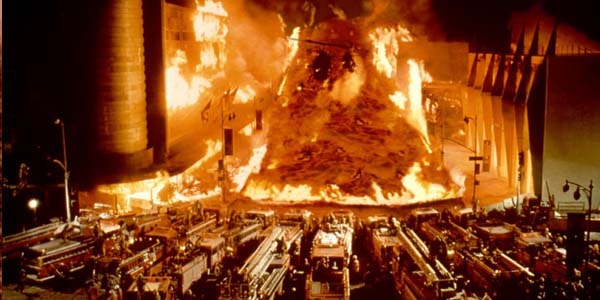
From the asteroid of Armageddon to the climate change disaster of The Day After Tomorrow we move underneath the earth for another end of the world scenario, this time predicated by a super-massive volcano lying underneath Los Angeles. Volcano is about as preoccupied with scientific accuracy as most effects-heavy natural disaster blockbusters - i.e. hardly at all - but we shouldn't let that get in the way of a touch of over the top destruction. If you want to quibble about the accuracy, though, you can start with the San Andreas fault - as a "strike slip" it means that it slides past the nearest plate, whereas for a volcano to form the two need to slide under one another in order for the magma to move to the surface, a process known as subduction. While much of that might sound like boring and irrelevant, it's perhaps infinitely more interesting than Volcano itself, which turned out to be considerably less exciting than watching a lava lamp for nearly two hours.

5. DNA Dos And Don'ts - Jurassic Park
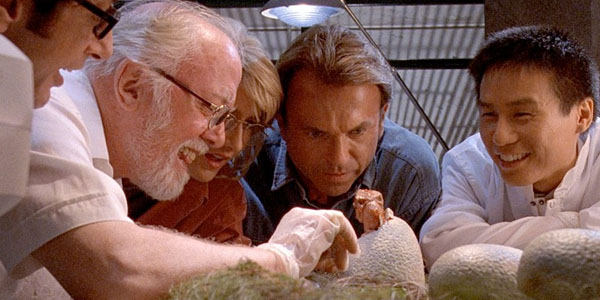
If a Jurassic Park opened up in the real world it's obvious that there would be a backlog of visitors as long as a strand of DNA. Provided that there was considerably more security than in Steven Spielberg's film it'd be a great day out for all the family, even if the little uns might find the T-Rex eating a live goat more than a little disturbing. Unfortunately, if real science has anything to do with it, a real life Jurassic Park is never going to happen. At least, not in the way it does in the film, by reconstructing the ancient beasts from DNA found in the bodies of prehistoric mosquitoes preserved in amber. No matter how well preserved the insects might be, DNA itself degrades over several million years and would be useless to even the most intelligent boffin around. Still, more recently extinct animals could be brought back to life with a similar process - theoretically, at least - although "Woolly Mammoth Park" doesn't have quite the same ring (not to mention the fact it could be achieved far more cheaply with a few elephants with blankets draped over them...)

4. Take A Deep Breath - Red Planet

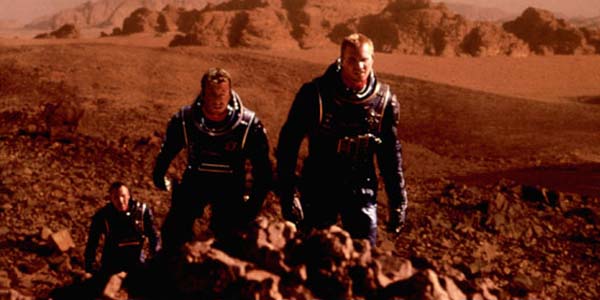
Certain types of movies are a bit like buses - they always arrive in twos. Whether it's Antz and A Bug's Life or Deep Impact and Armageddon, different studios take it in turns to cover the same theme, like a tag team playing out the same moves. Released shortly after Brian De Palma's Mission to Mars, Red Planet sees Val Kilmer and company head to Mars in the hopes of terraforming so that humanity can escape from a dying earth. The big scientific no-no comes when the characters remove their helmets and breathe freely on the planet's surface. Unfortunately, thanks to Mars's low atmospheric pressure, this is impossible regardless of whether or not the air is breathable, since without a pressurized suit your body would instantly bulge outwards. At least Paul Verhoven's adaptation of the Philip K. Dick short story We Can Remember It For You Wholesale, Total Recall, almost got this aspect right - the image of Arnie's face expanding and his eyes bulging out of their sockets is a decent visualisation of what would actually happen. That's until the planet is covered is air and his face returns to normal. So near and yet so far...

3. Clones With Memories - The 6th Day

Speaking of Arnold Schwarzenegger, another of his less successful movies, The 6th Day, has more than its fair share of scientific problems - admittedly, none of which make a bit of difference to the overall terrible quality of the movie. But in the interest of scientific scrutiny we'll take a look at it regardless. Set in the year 2015, The 6th Day depicts a futuristic world which is unlikely to come about in the next few months in which Adam Gibson (Arnie) discovers that a perfect clone of himself has been made without his knowledge or consent. This clone even has all of his memories intact, which is where the science starts to fall apart - a clone might have the same genetic make-up of its source but in no way can memories be transferred by the cloning process. Simply put, memories are not stored within DNA. The makers of The 6th Day seemed to be aware of this little problem with their plot and get around it by showing a sequence in which a light is flashed in the eyes to imprint the memories - that this technology gets no explanation as to the science behind it doesn't really matter - this is Hollywood, after all.

2. Solar Shenanigans - Sunshine

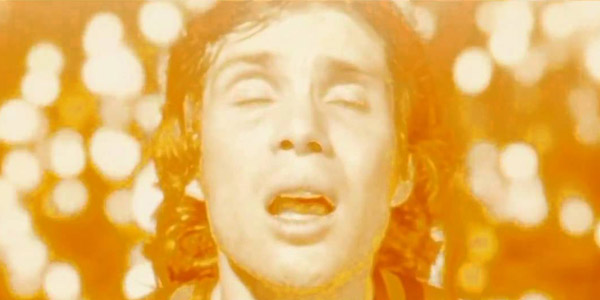
It is the year 2057 and our sun is dying, plunging the earth into a solar winter which threatens to wipe out all life upon it. In a last ditch attempt to save humanity, a team of scientists set out for the sun in order to fire a nuclear device into its mass and reignite the fading star. It's an interesting theory about how we'd save our sun if it really was dying, but sadly for the science geeks it's also one which is completely full of factual holes. For one, our sun isn't likely to die any time soon - in fact, scientists estimate that it will stick around for at least another 3 billion years. On top of that, when it does the last thing that will happen is that earth will be consumed by a solar winter - if anything, it will grow into an enormous red giant which consumes the earth in a ball of flames. Sunshine might have had media-friendly physicist Brian Cox on board as a consultant, but when it came down to it creative licence took precedence over scientific accuracy. Perhaps this should be expected - after all, the film transforms into something of a slasher thriller in the final scenes, so the boring sciency stuff probably doesn't really matter.

1. Where To Begin? - The Core

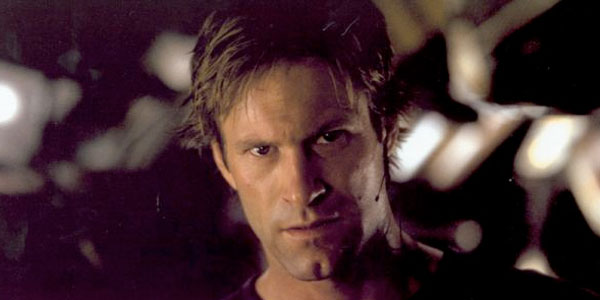
If there's one thing that can be said for Hollywood it's that they think up ever-inventive - and possibly implausible - ways to bring the population of earth to their knees. One of the most unusual has to be in Jon Amiel's The Core, which sees instability in the planet's magnetic field causing the core to stop spinning. Aaron Eckhart is joined by Stanley Tucci, Hilary Swank and Delroy Lindo in his mission to burrow down to the core and set off nuclear explosions to get things moving again. From the impossibility of maintaining radio contact with the surface and walking outside the vehicle in temperatures of 1000s of degrees, not to mention the intense pressure, to the small matter of the fact that if the earth did stop spinning we'd all be dead while the disappearance of the electromagnetic field might bring about an increase in cancer rates but certainly wouldn't melt the Golden Gate Bridge, The Core is full of scientific inaccuracies from start to finish. Perhaps this is why the movie's box office performance was so moderate - more likely, however, is the fact that it wasn't exactly the most exciting film to have hit cinema screens... Did you enjoy reading this article? Which movies have you seen which get science terribly wrong? Why not let us know and post a comment below?

Contributor
Contributor

Andrew Dilks hasn't written a bio just yet, but if they had... it would appear here.