10 Movies Inspired By Things NOBODY Expected
Movies are often born in the most unexpected of places.
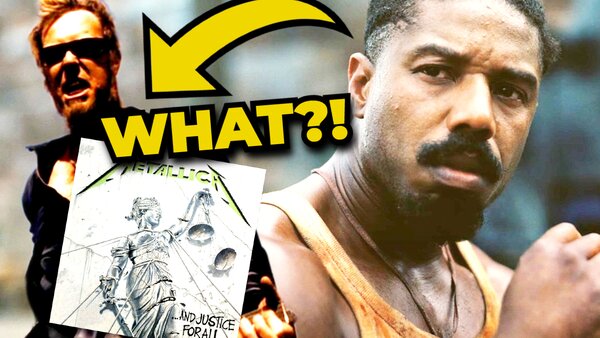
No movie exists without some sort of inspiration, and while the majority of filmmakers look to relatively familiar and expected sources like recent news, their own lives, and of course other movies, sometimes the impetus for a film comes from somewhere massively unexpected.
Sometimes a writer or director is just going about their day and something happens which gets the creative juices flowing from a most surprising avenue.
And that's most certainly true of these 10 movies, each of which came to fruition by means nobody could've seen coming, not even the filmmakers themselves.
Some of these films were sparked to life by a random thought during a most mundane of activities, while others stemmed from scary life encounters, and there were also those born from nightmares of all things.
Each film came from a wildly unexpected place that few, if any, who've seen the film would've likely been able to guess.
It just goes to show - you can smash your head against a wall trying to come up with an idea for a movie, but sometimes it'll just fall in your lap while you're living your life...
10. Christmas Shopping - The Texas Chain Saw Massacre

Though it's no secret that The Texas Chain Saw Massacre was somewhat inspired by the crimes of murderer Ed Gein, but writer-director Tobe Hooper only threw a chainsaw into the mix after an especially harrowing bout of... Christmas shopping. Yup.
At the 2014 Cannes Film Festival to celebrate the film's 40th anniversary, Hooper revealed that while he was working on the script, he found himself doing some seasonal shopping in a Montgomery Ward department store, where he became frustrated with the crowds.
As he attempted to escape the masses, he glimpsed a chainsaw in the store, and a macabre idea immediately took root in Hooper's mind. He said:
"I thought - 'This is a no-brainer. What a way to get out of this store!' But rather than go to jail, I decided to instead incorporate the hedge-cutting weapon into the script."
To think that arguably the single most iconic aspect of the entire franchise was the result of pure happenstance while its director was begrudgingly running errands. Wild.
9. A Fever Dream - The Terminator
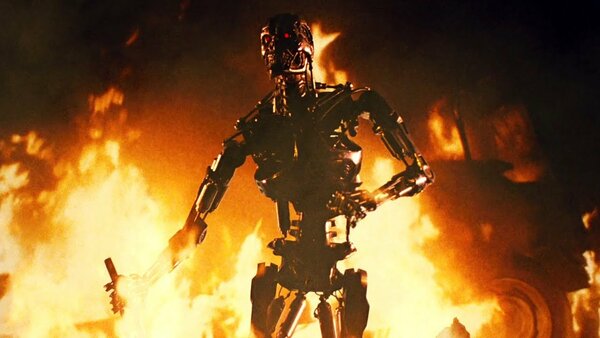
The Terminator is one of the most ingeniously-premised sci-fi films of all time, and laid the groundwork for James Cameron to later become one of the most successful filmmakers of all time.
Yet Cameron's conception of the film had a most "fortuitous" helping hand when he was in Rome working on Piranha II: The Spawning and suffering from a fever.
Cameron had a fever dream where he imagined a chrome skeleton emerging from fire, which ultimately became one of the most elemental images from the original Terminator.
Never one to waste time, Cameron quickly got to work upon waking up, as he told the BFI in 2021:
"The first sketch I did showed a metal skeleton cut in half at the waist, crawling over a tile floor, using a large kitchen knife to pull itself forward while reaching out with the other hand. In a second drawing, the character is threatening a crawling woman. Minus the kitchen knife, these images became the finale of The Terminator almost exactly."
And so, a fever was effectively responsible for Cameron's blockbuster filmmaking career as we know it.
8. The Director's Road Rage Incident - The Purge

The concept for 2013's The Purge is one of those genius ideas that just about every screenwriter wishes they'd come up with, but in the case of the film's writer-director James DeMonaco, it was actually born out of a violent incident itself.
During a 2014 interview with Complex to promote sequel The Purge: Anarchy, DeMonaco revealed that the seeds of The Purge were sewn following a road rage incident, where DeMonaco and his wife were cut off on the highway by a drunk driver.
The ensuing confrontation led to a fistfight between DeMonaco and the other driver, with the cops eventually being called.
Afterwards, the filmmaker's enraged wife said to him, "Wouldn't it be great if we all had one free one a year?," as in, every person was allowed to kill someone each year.
DeMonaco initially told his wife, "That’s so f**ked-up, honey," but the idea stuck with him, and was built upon for the very concept of The Purge, where for one night per year all crime, including murder, is legal.
Though the filmmaker credits his wife with the creation of The Purge, he insists that she's a "sweet woman" regardless.
7. A Fake Classified Ad From 1997 - Safety Not Guaranteed

2012's indie comedy Safety Not Guaranteed revolves around three magazine employees who head out to interview a man (Mark Duplass) who placed a classified newspaper ad seeking a time travel companion.
It's a perfectly adorable concept for the sort of quirky indie movie that typically premieres at the Sundance Film Festival, as this film did, but it wasn't actually an original idea from writer Derek Connolly.
Rather, in 2007 Connolly stumbled across a famous ad that was published in a 1997 edition of Backwoods Home magazine, where someone indeed put out an ad for someone to travel back in time with them, insisting that it wasn't a joke and adding that, yes, safety wasn't guaranteed.
Despite being a fake classified written for the mag by Senior Editor John Silveira, it became something of a phenomenon at the time, with Silveira receiving thousands of letters in response.
Connolly went on to write a character-driven drama propelled by the very concept, which received rave reviews and won Sundance's coveted Waldo Salt Screenwriting Award.
6. The Set of Blade Runner - RoboCop

The casual observer couldn't really be blamed for assuming that 1987's sci-fi satire RoboCop was based on, say, a comic book, especially considering the film's larger-than-life, unwaveringly pulpy vibe, as well as the fact Batman and Daredevil maestro Frank Miller was involved in sequels RoboCop 2 and RoboCop 3 as a screenwriter.
But RoboCop was actually an entirely original script penned by Edward Neumeier and Michael Miner, from an idea thought up by Neumeier.
Neumeier found inspiration in a most unexpected avenue, though, while working on the set of a little sci-fi movie called Blade Runner.
In a 2014 interview with The Dissolve, Neumeier stated that in 1981 he was working for Warner Bros. as a script reader, all while Ridley Scott was shooting Blade Runner next door.
And so after clocking out of his day job at Warner Bros., Neumeier started visiting the Blade Runner set where he began working as an unofficial, unpaid employee, helping the art department create garbage for street scenes.
At the end of his fourth night on set, a sleep-deprived Neumeier had the word "RoboCop" pop into his head, as well as the basic design idea of the character as a "bluish armored thing."
So in an indirect way, RoboCop is just another sci-fi masterpiece we can thank Ridley Scott for.
5. Articles About Hmong Refugees Dying - A Nightmare on Elm Street (1984)

A Nightmare on Elm Street is another one of those incredible loglines that every filmmaker wishes would just fall into their lap - a serial killer who eliminates his victims in their dreams.
Wes Craven came up with the idea after reading a series of Los Angeles Times articles in the late 1970s and early 1980s in which a number of Hmong refugees in the United States died mysteriously in their sleep.
The refugees, having fled war and genocide in Laos, Cambodia, and Vietnam, were plagued by horrific nightmares which left them refusing to sleep.
The spate of deaths baffled medical personnel, who considered the possibility that the refugees died from "nightmare death syndrome" - that is, being quite literally scared to death by abnormally traumatic nightmares.
Though the actual cause of the deaths is contentious to this day - most often described as sudden cardiac arrest of some kind - it served as the foundation for cinema's great dream killer, Freddy Krueger (Robert Englund).
4. Charlie Kaufman's Struggles To Adapt The Orchid Thief - Adaptation

Charlie Kaufman and Spike Jonze's Oscar-winning metafictional comedy Adaptation feels like it's precisely the movie that screenwriter Kaufman had in his head from the very beginning.
But that couldn't be further from the truth.
Kaufman was actually hired to write a straight adaptation of Susan Orlean's book The Orchid Thief, but after suffering from crippling writer's block, he decided to instead write a screenplay about his own struggles to adapt the novel.
Kaufman was well aware that such a zany concept would be immediately shot down if he mentioned it during development, and so he simply wrote the script without telling the higher-ups what he was doing.
The final script was especially surprising to Orlean herself, who initially refused to sign off on such a left-field adaptation of her bestselling book, and only later relented. However, Orlean was ultimately left very impressed by the film.
Few adaptations of hit novels have had quite such an unpredictable path to the screen, where the writer's own creative process unexpectedly becomes a driving force of the narrative.
3. Amedeo Modigliani's Paintings - Mama
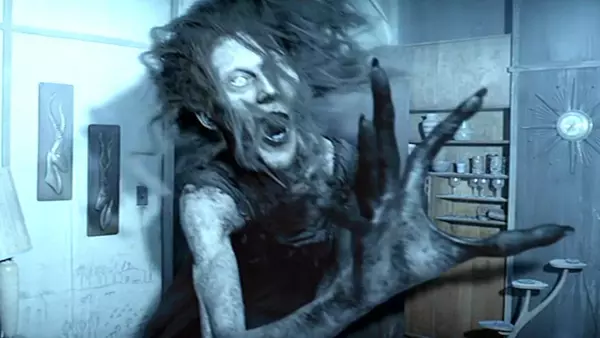
Andy Muschietti's 2013 horror film Mama has one of the more distinctive and memorable designs of any horror monster from the last decade-or-so, its angular, distorted facial features helping propel the film to enormous box office success.
In a 2017 interview with The New York Times to promote his adaptation of Stephen King's It, Muschietti revealed that Mama's design was inspired by the work of Italian-Jewish artist Amedeo Modigliani, known for his unconventional portraiture. He said:
"It's a literal translation of a very personal childhood fear... In my house, there was a print of a Modigliani painting that I found terrifying. And the thought of meeting an incarnation of the woman in it would drive me crazy... [Modigliani] often does these portraits with elongated characters. His vision of humans were with elongated necks, crooked faces and empty eyes most of the time. It was so deformed that as a child, you don't see that as an artist's style. You see it as a monster."
With that in mind, it's honestly surprising that more horror movies don't look to creepy fine art for inspiration, because plenty of it sure is freaky alright.
2. The Metallica Song "One" - Sinners
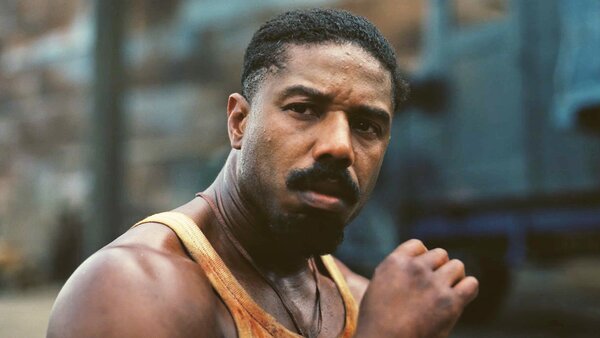
Ryan Coogler's incredible recent vampire film Sinners is undeniably indebted to musical traditions of decades, even centuries past, but did even a single one of us expect it to be heavily influenced by Metallica?
In an interview with The Detroit News to promote the film, Coogler revealed that Metallica's legendary 1989 opus "One" was instrumental in defining the film's structure. Coogler said:
"I wanted it to have the contrast, variation and the inevitability of a great Metallica song, like 'One.' It starts off with almost like an easy listening solo, you know what I'm saying? And then it just goes bat s**t insane, in a way you could have never seen coming - and at the same time, it felt like it was going there all along... The movie's basically that."
While Sinners wears many of its musical inspirations on its sleeve, who could've ever predicted that Metallica would be responsible for dictating the narrative's ebb and flow?
1. An Autocorrect Mistake - The VelociPastor
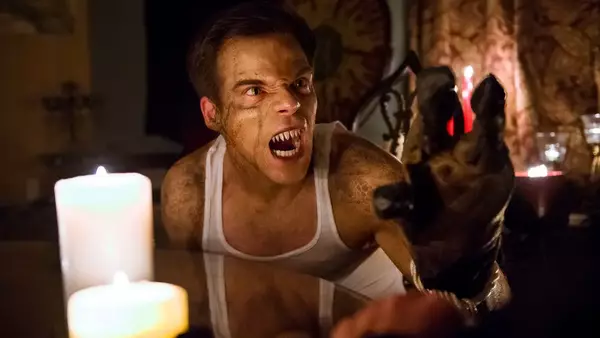
It takes a special sort of mind to come up with a movie like The VelociPastor - a comedy-horror film in which a priest discovers he has the ability to turn into a velociraptor. Sure, why the hell not?
And so, when Brendan Steere began doing press for the 2018 film, of course the first question from just about every journalist was, "How the hell did you think of this concept?"
Surprisingly it wasn't the result of controlled substances, but something as simple as an autocorrect mistake.
As Steere told Dread Central in 2019, he needed to make a project for film school and didn't have any ideas, and when he typed "velociraptor" into his phone, it was inexplicably autocorrected to "veloci pastor," almost as if the fates themselves willed The VelociPastor into existence.
Steere thought the concept could be "just dumb enough to be fun," and so made a short film which ended up going viral in 2011, leading to the full-fat feature film many years later.