10 Movies That Could Be Made In Middle-Earth After The Hobbit

Going there and back again, again.

"Will you follow me one last time?" Thorin Oakenshield says at the close of the trailer for "the defining chapter in the Middle Earth Saga", The Hobbit: The Battle Of The Five Armies. The franchise's marketing team are keen to stress that this will be cinema audience's final trip to Middle Earth. Thus far, Peter Jackson and the team from Wingnut Films, New Line and Warner Bros. have all been sticking to that line, telling us that this is the end. But is it really? Between them The Lord Of The Rings and The Hobbit series have earned almost $5 billion in box office receipts alone. It seems highly unlikely that the various money men involved will want to let that kind of profit disappear in future. Warner Bros. have already kick started the "finished" Harry Potter series with the prequel Fantastic Beasts and Where to Find Them, what's to stop them from doing exactly the same with Middle Earth? While The Hobbit and The Lord Of The Rings are the only complete conventional novels J.R.R. Tolkien published on Middle Earth, the Oxford don left behind an extraordinarily large amount of supplementary material, whether in the appendices of The Lord Of The Rings or the posthumously published Silmarillion, Unfinished Tales and The History Of Middle Earth. Elements of these have already provided Peter Jackson with additional material for his six Middle Earth films, what's to say that they could not provide stories for years to come? If Jackson, or just New Line and Warner Bros., do want to continue their stay in Middle Earth, here's ten more stories from Tolkien that they might want to think about filming...

10. The Adventures Of Tom Bombadil

What's the story? Oldest of ancient beings, Tom Bombadil lives in the Old Forest just outside the Shire with his wife, river spirit Goldberry. Unconcerned by the grand events of the wider world and unaffected by the magic of rings of power, Bombadil potters around the Withywindle river. The sound of his booming, merry voice, constant singing and tendency to refer to himself in the third person is enough to defeat various creatures from monstrous tree Old Man Willow to ghostly Barrow-wights. Why should it be filmed? Probably the most significant character from The Lord Of The Rings not to make an appearance in the film, there is definitely a dedicated fanbase who would like to see him on screen. The Adventures of Tom Bombadil, the verse book in which he also appears, is the only Middle Earth work apart from The Hobbit and The Lord Of The Rings that Tolkien published in his life time, which would lend a film a bit of credibility. Given the popularity of the hobbits and their key role in making the current films a success, this would be one of the few ways New Line could continue to tell a story set around the Shire and using hobbit characters. Why shouldn't it be filmed? Neither Jackson nor Ralph Bakshi's versions of The Lord Of The Rings used Bombadil because he does little to advance the story and he doesn't really fit with the rest of the mythology of the world. That kind of problem would be likely to continue here, as would the fact that his adventures are defiantly small scale against the epic nature of the rest of the films without a great deal of threat (although the Barrow-wights would make a creepy sequence). And, oh yeah, he's spectacularly annoying. There's always that.

9. The Lost Road

What's the story? Before the bending of a flat world into a round one, a straight road led to the West and Valinor, the Undying Lands. Now it exists only in visions. Alwin, an academic in present day Britain, has visions of the fall of Atlantis and discovers it to be one and the same with Middle Earth Numenor. From this point he travels through time in visions seeing the links between the likes of the Saxon England of Alfred the Great and the fall of Gil-galad in the battle with Sauron. Alwin realises that he is the Saxon Aelfwine ("Elf-friend") and the reincarnation of Elendil (seen briefly dying in the beginning of Jackson's The Fellowship Of The Ring). Why should it be filmed? Because it's bonkers. While Tolkien's "legendarium" has always been talked of as an alternate English mythic cycle that is set in an imagined pre-history past, it's still pretty enjoyably weird to have a story that actually explores that with a time travelling professor/reincarnated King of Gondor. The Lost Road was a concept Tolkien was obviously keen on, returning to it in The Book Of Lost Tales and The Notion Club (the latter rather oddly set in the 1980s and predicting the 1987 hurricane, which would make a good beginning to the film). It would prove an impressively ambitious concept that would jump the franchise off into other genres. After six films it would keep the series fresh. It's The Lord Of The Rings meets Time Bandits with Tolkien himself as the hero, what's not to like? Why shouldn't it be filmed? Because, frankly, it's bonkers. Producers and financers are likely to be put off by a project that takes a leap beyond the established parameters of the existing franchise and who can blame them? With so many elements in play it's easy to see where someone could mess it up in a big way.

8. The Rise Of The Witch-King

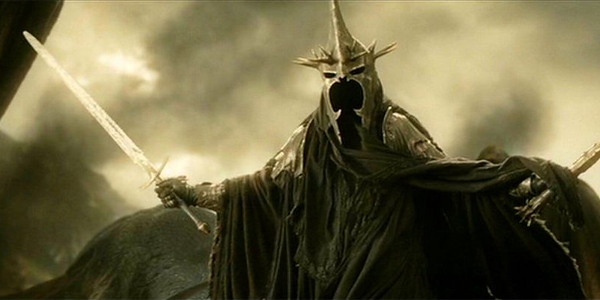
What's the story? A sorcerer from the noble line of Numenoreans in the far northern land of Angmar accepts a magic ring from Sauron with the promise of immortality and immense power, but at the cost of becoming a ghastly undead wraith and Sauron's lieutenant. After the first fall of Sauron he invades and conquers the northern kingdom of Arnor. It is prophesied that he cannot be killed by the hand of man. Why should it be filmed? In the absence of Sauron having much corporeal form beyond a flaming eye lighthouse, the Witch-king was really the main physical threat to the Fellowship throughout The Lord Of The Rings trilogy. Given the character's background as a formidable adversary in both The Lord Of The Rings and a brief appearance in The Hobbit, there would definitely be an audience for a movie that shows his rise to power. The likes of Elrond and Rivendell would provide a further link to the other films, as would a battle at Weathertop, which would tie in to the hobbits' later encounter with the Witch-King there. The Rise Of The Witch-King even has some brand recognition already having been a successful expansion pack for Electronic Arts' The Battle For Middle Earth strategy game. Why shouldn't it be filmed? The fact that the villain won't be properly defeated until the end of The Return Of The King might make any ending a little anti-climactic. Meanwhile, for all the promise of ice-bound battles, the villain is a lesser threat than that of Sauron or Smaug. The fact that the story has only the sketchiest of outlines from Tolkien would also make any imagined story potentially a little contentious with fans.

7. The Scouring of the Shire

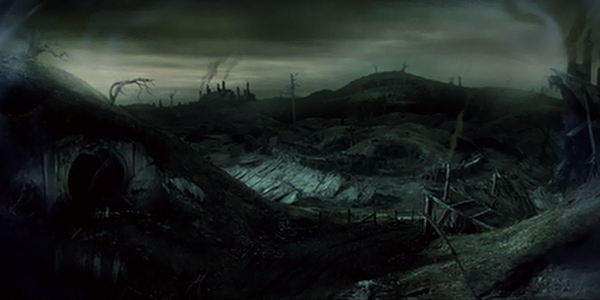
What's the story? The former pastoral idyll of the Shire has become a grim industrial landscape. Under the influence of evil wizard Saruman factories have sprung up, sheriffs enforce a rigid police state and abuse their powers and orcish ruffians overrun the area. Thanks to their experience serving with the rulers and armies of Gondor and Rohan, Pippin and Merry organise a hobbit resistance, win the Battle of Bywater, defeat Saruman and save the Shire. Why should it be filmed? If Tom Bombadil is the main character from The Lord Of The Rings left out of the movie, then the Scouring of the Shire is the main plotline that doesn't appear (except for in a vision in the Mirror of Galadriel), so this film would provide fans something they may feel that they missed out on. It would be one of the few unused Tolkien narratives that would allow story time in the Shire and the use of both hobbit characters in general and the cast of The Lord Of The Rings specifically. Given the humble home county hobbits are the thing that grounds the story away from the big high fantasy stuff, it would definitely be good to include them in a new film. This would also be one of the few options for a sequel rather than yet another prequel. Why shouldn't it be filmed? Jackson's existent version of The Lord Of The Rings excludes this episode and sees the hobbits coming home anyway, so the plot would have to contrive some way of having these events occur at a later date (not to mention bringing Saruman back to life!). An entirely Shire set sequel would be appealingly small scale in some ways, but its lack of the epic scope of the other films would be likely to put both studios and audiences off.

6. The Voyage Of Earendil

What's the story? The son of human hero and an Elvish princess, Earendil the Mariner, sets sail on his ship Vingilot carrying a Silmaril, the mythic gem prised from the crown of the Dark Lord Morgoth. Earendil sails to the Undying Lands of Valinor in the West to ask for the assistance of the Valar, Middle Earth's divine beings, in defeating Morgoth. In the War of Wrath, the Valar attack and defeat Morgoth with Earendil and his ship flying through the air and defeating a dragon. Why should it be filmed? The Silmarillion is Tolkien's most significant unfilmed work and the one that fans are now crying out for seeing on screen. In practical terms the book is a series of loosely connected episodes, so may make more sense tackled as a series of individually produced films rather than an all-in-one trilogy as we've seen with the other Middle Earth movies. The next four entries represent the four most likely Silmarillion episodes to film. The Earendil story would take Middle Earth adventure to the high seas, a location hardly covered by the films thus far. It has strong links to the Elvish story of the current films (Elrond is Earendil's son and the Mariner is also Aragorn's ancestor, while the starlight Galadriel gives to Frodo is from the star that he, his ship and his Silmaril became). The War of Wrath would provide an epic battle above and beyond what we've already seen (the promise of a flying ship fighting a dragon could be spectacular). Why shouldn't it be filmed? Despite links to the original series, Earendil's story wouldn't make a lot of sense on its own. It provides a climax to the Silmarillion story, but could only be made if other Silmarillion films are made and first and are successful. The gods at war climax and flying ship could equally prove as preposterous looking as spectacular.

5. The Fall of Gondolin

What's the story? During the lengthy war with Morgoth, the Elvish hidden city of Gondolin is one of the last places to hold out against the Dark Lord. A love triangle develops for the heart of Idril, daughter of King Turgon, between the king's dark elf nephew Maeglin and human prince Tuor. When Idril chooses Tuor, Maeglin betrays Gondolin and reveals its location to Morgoth. The city finally falls to a siege from an enormous army full of balrogs and dragons, but Tuor and Irdil escape with their child Earendil. Why should it be filmed? If audiences are looking for bigger and brasher action as the franchise continues then they need look no further than Gondolin, a battle that puts Pelennor Fields or the Battle of the Five Armies to shame. Audiences who were thrilled by the individual balrog in The Lord Of The Rings or dragon in The Hobbit would be amazed to see a whole army of them. Its plot themes of love triangles and betrayal are perpetually classic and in Tuor it provides a tough human hero so as not to be a purely Elvish story. Gondolin also gives an origin to Gandalf's sword Glamdring (wielded by King Turgon) and Bilbo's Sting. Why shouldn't it be filmed? It's essentially just one big battle, basically 300 by way of Middle Earth, which could see audiences bored despite the spectacle. Bigger is not necessarily better, it may mean a loss of subtleties, while the time honoured plot and character beats may appear a little cliched.

4. The Children Of Hurin

What's the story? Hurin, a king of men and uncle of Tuor, is captured by Morgoth after the cheerfully named Battle of Unnumbered Tears. The Dark Lord curses his children so evil will befall them for the rest of their lives. Hurin's son Turin is adopted by elves, but the envy of some elves and Turin's pride cause him to spend most of his life in exile and as an outlaw leader. The curse fulfils itself as Turin accidentally kills his closest friend, marries his sister and forms an enduring rivalry with the malevolent dragon Glaurung. Why should it be filmed? Published in 2007, clearly off the back of the success of the films, The Children Of Hurin is the most recent Tolkien book to be appear and drew quite a lot of critical and fan attention at the time, attention which could generate a strong film audience. As the story features in both The Silmarillion and published as a standalone, the movie could appear either as part of a Silmarillion series or as its own film. With its darker, tragic tone, morally dubious characters and story full of incest and murder it would be a Middle Earth film to appeal to the Game Of Thrones crowd. Meanwhile, in the dragon Glaurung it features a distinctive villain that would build on the previous films' success with Smaug. Why shouldn't it be filmed? All of the darker stuff that makes it appealing also makes it a much harder sell. It would be hard to make a family friendly version of the story to reach the same audience and make the same money as the earlier films. Turin, meanwhile, is kind of too much of an asshole to be a conventionally successful movie hero.

3. Beren And Luthien

What's the story? Mortal man Beren flees from his people's defeat by the Dark Lord Morgoth. In a glade he sees immortal elf princess Luthien and falls in love with her. Her father, King Thingol, disapproves of the union and sets Beren the seemingly impossible task of stealing a Silmaril, the Elvish jewels in the Dark Lord's crown. Followed by his Elvish lover, Beren sets out on a quest that involves battling werewolves and Morgoth's lieutenant Sauron. Why should it be filmed? Easily the best known part of the Silmarillion and the most obvious single narrative strand to begin a film series with, audiences will already be familiar with Beren and Luthien as ancestors and reflected archetypes of Aragorn and Arwen's human-elf relationship. Aragorn even sings about them in The Fellowship Of The Ring. It also features Sauron as a major antagonist, which would create continuity with the other films, while being driven by the kind of classic quest narrative that they utilised. Although it occurs a reasonable amount of the way through The Silmarillion, it is the first story that really uses humans as characters to provide a way into the grandiose Elvish storylines. The creation of the Silmarils and Morgoth's treachery could easily be told in a prologue similar to the openings to The Fellowship Of The Ring and An Unexpected Journey. Why shouldn't it be filmed? It's a fairly generic fantasy romance and quest narrative, which might make it seem a little unoriginal, especially as the seventh film in a series that has already featured a romance between a mortal man and an immortal elf.

2. Akallabeth

What's the story? Tar-Miriel, the rightful heir to the throne of humanity's greatest kingdom, the island of Numenor, is forced to marry her cousin Ar-Pharazon who usurps her throne. He liberates Middle Earth from the evil influence of Sauron, taking him captive. As Sauron talks his way into the king's confidence, he convinces him to sail to Valinor's Undying Lands to challenge the Valar and demand immortality. In response, the gods destroy Numenor, sinking it beneath the sea like Atlantis. Why should it be filmed? The story provides a lot more backstory for Sauron. It shows the development his relationship to the kingdoms of men and his antagonism with "the faithful" who do not choose to follow him, primarily Elendil and his family, leading to the events of The Lord Of The Rings' prologue. The film would feature a Sauron who is appealing and charming (a deleted scene from The Return Of The King showed him in this angelic form). Appealing to the legions of Benedict Cumberbatch fans, this would give the actor the chance to play a silver tongued take on his role as The Necromancer. Why shouldn't it be filmed? Like stories of Atlantis or Pompeii, the downfall of Numenor is essentially a deeply downbeat story in which an entire civilisation is wiped out. While there may well be an audience for a Middle Earth disaster movie, it would be something tonally very different to what fans are used to.

1. The Last Alliance

What's the story? As Sauron's power grows in Mordor and he attacks Elendil's "kingdoms in exile", Gondor and Arnor, a Last Alliance of Elves and Men is formed between Elendil and the Elvish King Gil-galad (with a little help from the dwarves of Moria and the wood elves of the Greenwood). Sauron's forces are defeated at the Battle of Dagorlad, but the alliance lose many of their soldiers in the Dead Marshes, leading to a final siege and assault on the Dark Lord's fortress of Barad-Dur. Why should it be filmed? The epic battle that occurs in the prologue to Peter Jackson's first Lord of the Rings film has already given audiences a tantalising glimpse of what a film of the Last Alliance might look like and the potential for actual hand to hand combat with Sauron himself. After The Hobbit, if there are any likely to be further prequels then this is the next story back that would make sense, offering an earlier stage in the story of the Ring, the ancestors of Aragorn and an early appearance from Elrond as one of Gil-galad's chief lieutenants. It would also include the death of Thranduil's father in a reckless attack on Mordor that makes results in Thranduil inheriting the throne, a plot that helps explain some of his closed off caution in The Hobbit. Why shouldn't it be filmed? The only reason for Jackson, or anyone else, not to make this movie would be the sense of re-treading old ground and the idea that the story had already been told adequately in the material that already exists. Although the same could be said for The Hobbit, whose story The Lord Of The Rings already made clear and yet was still adapted into three separate features. What about you, Middle Earth fans? Are you happy to make The Battle Of The Five Armies your final visit to Middle Earth or are you desperately awaiting the film dramatisation of Bandobras Took's invention of golf? Let us know in the comments.

Contributor
Contributor

Loves ghost stories, mysteries and giant ape movies