10 Movies One Mistake Away From Being Masterpieces
So close.

There's nothing quite like tearing a film to shreds; if you've wasted two hours on something, you really want it to pay. But even the most cynical writer would trade that for seeing a great film for the first time. You can sit through a year of a utter tat, but if one masterpiece sneaks along then it's all worth it.
And by that reckoning, with seeing a brilliant film the ultimate goal and basking in the irritation of a bad one a close second, the weirdest feeling has to be seeing a film skirt with greatness, only to mess it up terribly. So many times I'll sit in the cinema watching what I think is going to be a full-on masterpiece, only to have one silly decision ruin it.
What was a five star contender is reduced to a perfectly serviceable, but overridingly disappointing film. This list brings together ten of these almost greats. The reasons why vary greatly, from the dumb to the absurd. Some films failed to live up to their hype, others couldn't match what they initially brought to the table, but all left me personally with a disappointing pit in my stomach.
10. The Cabin In The Woods
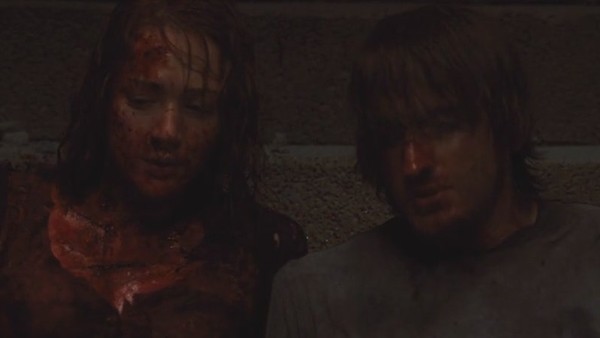
The Almost Great Movie: Billed as a game changer, The Cabin In The Woods took traditional horror tropes and spun a meta humour story around it, placing many of the genres favourites in the same, messed-up world. The film doesn't really have a twist, rather an incredibly high concept drip fed over its runtime. With Whedon-esque humour and a smart subverting of cliches (the jock acts that way due to gas pumped into the house), it could have easily become a cult favourite.
The Big Mistake: It explains everything at the end.
Cabin is a smart film that loses it about halfway through. When the red telephone rings, it's like the filmmakers panicked and just threw everything they could at the screen, opening up a good looking, but tonally out there sequence of gore that felt present only to pad out the film. It's the final scene, however, that really condemns the film.
Sigourney Weaver pops up as an administrator character and reveals to the heroes the nature of everything that's been going on. The problem with explaining everything isn't that the film would have worked better with ambiguity, but that it had already given enough clues for the audience to understand it. Spelling out what we've already worked out makes it look like you thought your film was impossible to grasp, rather than just tightly woven.
9. Cloud Atlas

The Almost Great Movie: Given that it's now fourteen years since The Matrix, you'd have expected The Wachowskis to have followed up on their breakthrough success by now. Evidently not. They admittedly can craft interesting visuals, but don't nestle them in anything worthy. Cloud Atlas, which saw them team up with Tom Tykwer, had them taking on David Mitchell's (not that one) epic, millennia spanning novel. With a high budget, big cast and impressive make up, it could have marked a welcome return to greatness.
The Big Mistake: There's no focused moral.
There's obviously a problem in carving a more traditional narrative. The book was almost like a Russian doll, starting in the past, working to the far future, then turning around and closing off the earlier stories, but the film axed that in favour of slowly developing each timeline to create parallels. But the real issue is that the film never makes it clear what it's going for; the cast play different characters in each time period, but the in-world reason for this, or the recurring birthmark, is left up in the air. It's clear there's a message here, but what it is is left irritatingly ambiguous. For a film trying so hard to be show everything is connected, Cloud Atlas sure does leave things seperate.
8. Star Wars Episode III: Revenge Of The Sith

The Almost Great Movie: The Star Wars prequels are perfectly serviceable blockbusters that receive so much hate thanks to a handful of dumb moments. But while it's impossible to say the first two come close to the original trilogy, Episode III gave it a good shot. The first film in the saga to showcase all out war, we see Anakin's fall, Luke and Leia's birth, the rise of the Empire, the end of the Clone Wars and countless other elements key to the overarching story.
The Big Mistake: It had too much to do.
And getting all those things are exactly what stopped this final prequel being great. Going into the new trilogy Lucas knew exactly where he wanted to end up, but oddly chose to spend the first two movies on tangential plots, lumbering the last film with a job too big for it to do. This isn't helped by the first hour of ROTS, which deals with plot elements entirely new to the movies. In retrospect, the prequels feel like five hours of slow build up for only half an hour of pay off. That ratio's not right.
7. Zero Dark Thirty

The Almost Great Movie: After Barack Obama, Kathryn Bigelow must have been the happiest person to hear about Osama Bin Laden's death. Now her much anticipated follow-up to The Hurt Locker, then unashamedly titled Kill Bin Laden, had a proper ending. The news meant the film shifted focus from the early days of the CIA's biggest ever manhunt to following Jessica Chastain through the past decade up to that fateful night.
The Big Mistake: You can't tell what's happening in the climax.
Now maybe this was the cinema I was watching Zero Dark Thirty in, but I could hardly see a thing in the final assault on Bin Laden's compound. In the wake of The Hurt Locker, it seems Bigelow's keen to carve out a niche for hyper realistic, war-based violence and for the most part Zero Dark Thirty succeeds. But as its final act kicks in and the commandos head towards their long-awaited goal, it seems the rent on the lights ran out and we're plunged into darkness. It's clear what the intention was, but here it doesn't work too well, having us straining to see what was happening rather than being invested in the well shot action.
6. Zodiac

The Almost Great Movie: David Fincher has an oscillating career. For every masterpiece he pumps out (Se7en, Fight Club, The Social Network) he has to follow it with a good, but nowhere near as great, film (The Game, Panic Room, The Girl With The Dragon Tattoo). The one film to buck the trend is Zodiac, the story of Americas biggest unsolved manhunt that spans four decades. With a great cast and magnificent pacing, what stops this movie being a masterpiece you ask?
The Big Mistake: It's not true.
Well, not entirely at least. Zodiac does follow the investigation quite closely, but both the character relationships and the eventual conclusion are both (arguably) very off from the truth. In reality cartoonist Robert Graysmith was never close to reporter Paul Avery, despite Jake Gyllenhaal and Robert Downey Jr.s relationship being central to the first half of the film.
More important, however, is that while the film concludes the killer must have been Arthur Leigh Allen, armchair investigators are hardly sold on the idea. The film is based off Graysmith's book on the subject and therefore some liberties can be allowed, but as the film presents everything as fact it can be a little hard to take.
5. How To Train Your Dragon

The Almost Great Movie: It looked dumb and the trailer showcased disappointing animation, but when it hit, How To Train Your Dragon impressed. Creating a believable and complete world, it stood out from the animated crowd and for the first time in a long while people are excited for a Dreamworks franchise. But why was this film parents and children loved not regarded as highly as some of its counterparts?
The Big Mistake: Dreamworks made it.
How To Train Your Dragon was the point when Dreamworks realised fart jokes and funny celebrity voices may get money, but that doesn't mean their previous systemic issues just went away. Even with Pixar's recent falters (thankfully behind them after Inside Out), Dreamworks' best is a cut below what Lasseter and co. produce, and while some of that is simply down to different methods, a big part of it is the company's hallmarks; cliches it's still yet to fully shake that drag the film down. And sadly these gags rear their head in Dragon.
4. The Woman In Black

The Almost Great Movie: Daniel Radcliffe had a hard job after Harry Potter ended. If he was to continue acting, something he has admitted does not come naturally to him, he needed to make a big post-Hogwarts impression that threw the boy wizard from everyone's mind. Taking on the role of a widowed single father, he leapt into the big screen adaptation of The Woman In Black, a novel that had already seen major success on the West End. And while it didn't quite match the heights of that two-man show, it was certainly a scary watch.
The Big Mistake: It tries too hard to make you jump.
In the UK, distributor Momentum Pictures were desperate to get a 12A rating so they could cash in on the lucrative young teen market. I'm fairly certain this is where this problem originates. Whenever the titular ghost appears on screen, rather than the creeping horror the play instills, we're met with an attempt at a jump scare, with a loud note playing at her appearance. Moments like this, along with false jumps (which show up more than once here), are incredibly common in low quality horror, but feel out of place in something so otherwise assured as this.
The thing is, in making the audience jump, the tension is lessened, making the threat less prolonged and thus the film a fraction as scary as it could have been.
3. Prometheus

The Almost Great Movie: It's rarely used as a phrase to describe him, but Ridley Scott is a typical hit-and-miss director. I guess people don't care because when he's on form, he's brilliant. Back in the late seventies/early eighties, he revolutionised sci-fi twice over, so with Prometheus marking his return to the genre, hopes were naturally high. In the end, it did well with critics, OK at the box office, but poorly with fans. Thing is, the film was far from bad - it had good effects and told a classical sci-fi story - but one element overpowered all that.
The Big Mistake: It had no relation to Alien.
Unlike Revenge Of The Sith, which was bloated from having too much to do, this film didn't do enough. Even the most staunch Prometheus defender has to admit that it did a rather poor job of tying itself into Alien; with an out there interpretation of the Space Jockey and contradicting references to the Xenomorph, fans actually knew less of Alien's backstory than when they went in. Of course, this wouldn't have been as much of an issue if Scott hadn't so publicly declared the film as being a prequel to his previous masterpiece.
2. Sunshine

The Almost Great Movie: Even after his big Oscar sweep and Olympic glory, Danny Boyle has kept his integrity. Once a British genre filmmaker, always a British genre filmmaker. And while the Boyle brand brings in bigger audiences thanks to his notoriety, all his films share that same exuberance. Sunshine is one of his more underrated pieces, telling the brilliantly apocalyptic story of a last ditch mission to reignite the sun and save a frozen Earth. In no other film on this list are the brilliant bits so masterful and the mistakes so glaring.
The Big Mistake: The entire third act.
Where Sunshine falters is in its final half hour. Up until then we've been treated to some believable science (Brian Cox was an advisor on the film), a multicultural crew (it's not just Americans saving the day) and some beautiful sequences (the space walk is breathtaking). But once Mark Strong's character, a crazed captain of a previous mission who's survived seven years on sunlight alone, starts killing people, it spirals into typical slasher territory. Stylistically brilliant slasher territory, but it's a jarring change that derails the film all the same.
1. Red Dragon

The Almost Great Movie: What's this? Brett Ratner makes a film that could have been a masterpiece. No it's not a parallel, opposite universe, it's Red Dragon. An adaptation of Robert Harris' first Hannibal novel, it covered very similar ground to Michael Mann's Manhunter, but used society's progression to its advantage; the psychology of the titular psychopath is much better explored, giving us a more well rounded plot.
The Big Mistake: Putting more of the focus on Hannibal.
But for every advantage the film has over Manhunter, there's a detraction. Manhunter used Brian Cox for Hannibal Lektor, a minor role in this exploration of mental illness, but when The Silence Of The Lambs switched him for Anthony Hopkins (and the k for a c), it became clear Hannibal was what people wanted.
In response to this, the bad doctor's role in Red Dragon is beefed up heavily from the book, leading to many superfluous scenes that serve only as scenery chewing excursions from the plot at hand. Hannibal works best as a support to a greater story (hence why Hannibal and Hannibal Rising failed) and the over reliance on him in Red Dragon detracts from the film's better moments.
Any more almost masterpieces you'd like to share? Or do you think these mistakes aren't enough to ruin the movies? Have your say in the comment section below.