10 Movies Only Directed As Experiments
Because why the hell not?
It goes without saying that making even the most simple movie is a massive undertaking, both in terms of time and money, and so it isn't something that filmmakers tend to dive into lightly.
But that doesn't mean there isn't room for outside-the-box artists to effectively approach movies as elaborate, costly experiments, testing the bounds of both themselves and cinema as a medium in the process.
These 10 films were all made as "what if?" challenges, where directors were more interested in seeing whether their bonkers idea could actually work rather than being confident that it would.
From sacrilegious remakes of unassailable classics to ground-breaking divergences from stylistic and narrative form, these 10 films were all bold provocations in their own way.
Whether they turned out successfully or not, you have to admire the daring on display, especially given some of the ludicrous filmmaking and acting talent on offer.
In an increasingly risk-averse, safe-playing Hollywood, this left-field bravery needs to be commended and championed, even when it doesn't always work...
10. A Shot-For-Shot Remake Of A Classic Movie - Psycho (1998)

The Experiment
Fresh off the Oscar-winning success of Good Will Hunting, indie darling Gus Van Sant wasn't much interested in any of the projects being offered his way, and instead suggested remaking Alfred Hitchcock's 1960 horror classic Psycho, this time filmed in colour with a contemporary late-90s setting and, er, Vince Vaughn as Norman Bates.
Van Sant's motivation was to see if he could take a classic, successful movie, remake it for a modern audience and net equal or superior box office returns to the original.
How Did It Turn Out?
Not well. Though Van Sant received some scattered praise for the sheer audacity of making a near-shot-for-shot remake of Hitch's masterpiece, Psycho 1998 was largely panned by critics and audiences alike, while winning Razzie awards for Worst Remake or Sequel and Worst Director.
The primary goal of Van Sant's experiment, to try and repeat the original's stonking box office success, was also an abject failure. Incredulously budgeted at $60 million (compared to the original's $800,000), the film couldn't even crack $40 million worldwide.
Today, the remake lives on as a curio for fans, to observe how a different cast colours the material differently, and how endemic the original black-and-white cinematography is to the identity of the movie.
As for Van Sant's perspective? He said, "So it didn’t work. But the idea was whether or not you could remake something and it would repeat the box office. That was the sort of weird science experiment…It’s more alive now than it was back when it failed, just with the art world or the modern world."
9. A Near-Wordless Movie Adapted From A Letter - All Is Lost

The Experiment
In 2011, up-and-coming filmmaker J. C. Chandor (Margin Call) wanted to test whether or not he could create a compelling film from a most simple cinematic hook: a written letter.
This eventually led to Chandor making All Is Lost, a minimalist, near-wordless survival drama following a man (Robert Redford, the film's single cast member) stranded at sea.
The film opens with Redford's protagonist reading aloud a letter which he writes in the event that he doesn't survive the ordeal, and this was also the first part of the movie that Chandor wrote.
Chandor's idea was to have this two-minute monologue lay the groundwork for a movie that otherwise features almost no words, and boldly, the film's final script ran just 31 pages.
As Chandor himself put it, "The letter came to me, then it was how do you take a character to a place in an interesting way to write a letter like that?"
How Did It Turn Out?
Terrifically. The film received near-universal critical acclaim for both Redford's performance and Chandor's direction, making the most of his resource-spare gimmick and proving that a film can be plenty compelling with little dialogue in earshot.
8. A Movie Shot Entirely On An iPhone - Unsane

The Experiment
Steven Soderbergh is one of the most dynamic and surprising filmmakers working today, and never one to rest on his laurels, he decided to take a deep plunge into the world of low-fi filmmaking with his self-funded 2018 psychological horror film Unsane.
Soderbergh's long-term frustrations with the expense of a Hollywood production prompted him to shoot the film on an iPhone 7 Plus in a mere two weeks with a minimal cast and crew, while allowing him to test how far kitchen sink, no-budget filmmaking has come.
How Did It Turn Out?
Impressively. Not only did Soderbergh's film actually get a significant theatrical release around the world, it proved that a compelling story and strong performances will always matter more than how slick a film looks.
Yes, the low-grade cinematography is evident throughout - especially when viewed on the big screen - but it's nevertheless a stunning testament to the results the iPhone can produce.
Financially things were trickier, as though Unsane went on to gross almost $15 million worldwide on a $1.4 million budget, a $20 million marketing spend and wide release meant it needed to be far more profitable to be truly successful.
This clearly didn't deter Soderbergh, though, as he shot his recent sports drama, High Flying Bird, on an iPhone 8, and managed to avoid the box office issue entirely by selling it to Netflix.
7. The First Major "Single-Take" Movie - Rope

The Experiment
Though Alfred Hitchcock is best remembered for his conventionally-styled horror and thriller pictures, he decided to work totally outside the box with his experimental 1948 cult classic Rope.
Hitchcock wanted to see whether or not it was possible to seamlessly blend lengthy takes together and give the impression that the entire movie was one unbroken sequence.
And while it's a clever trick that's been immortalised by more modern movies such as Birdman, over 70 years ago it was a far more imposing technical challenge, without the benefit of digital blending to "stitch" takes together.
Rather, camera movements were precisely planned to ensure seamless joins between takes, and the cast had to learn exact cues for movement and speaking.
Furthermore, the walls of the small apartment set could even be moved to accommodate the camera's movements, while the crew had to constantly shift furniture mid-take to make room for the camera, all without making any noise during a take.
Hilariously, when one crew member had their foot run over by a camera dolly, they had to be gagged and quickly removed from the set to avoid blowing the meticulously-assembled take.
How Did It Turn Out?
At the time, critics were highly mixed on both the narrative and the technical success of Hitchcock's stylistic sleight-of-hand.
Star Jimmy Stewart wasn't much impressed either, saying, "It was worth trying - nobody but Hitch would have tried it. But it really didn't work."
In more recent decades however, the critical and audience tide has turned massively on the film, which while hardly regarded as an essential Hitchcock, is nevertheless lauded as an audacious, ahead-of-its-time experiment topped by a blackly comic plot and fine performances.
While Hitchcock was limited by the resources of his era, Rope has aged spectacularly well all things considered, and is certainly a gamble that paid off in the end.
6. A Test Run For New Editing & Cinematography Techniques - The Fan
The Experiment
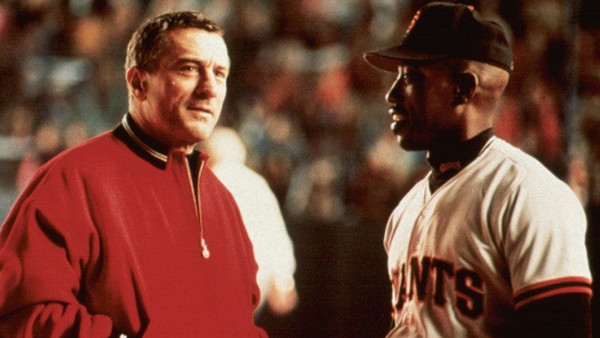
When director Tony Scott signed on to helm the 1996 thriller The Fan - starring Robert De Niro and Wesley Snipes - he was already putting together his next film, Enemy of the State, and effectively decided to use The Fan to test out some new stylistic tricks.
Scott made no pains about admitting that he agreed to direct the film in order to experiment with various cinematographic and editing techniques he was considering using on Enemy of the State, in order to give it a contemporary, urgent, edgy feel.
Above all else, he wanted to tinker around with whittling down his average shot length considerably, and that he certainly did.
How Did It Turn Out?
On one hand, The Fan isn't a very good film, and many critics took umbrage with Scott's kinetic, cut-happy visual style, though it is by far the most distinctive and memorable element of an otherwise relatively bland thriller.
And while The Fan quickly sank without a trace, Scott's prep for Enemy of the State clearly paid off, as that film was a solid critical and commercial success, and remains one of Scott's best-loved and most stylish films.
5. A Single-Take Movie Recorded & Broadcast Live - Lost In London

The Experiment
In an ultimate feat of "F**k it, why not?" filmmaking, Woody Harrelson decided that, for his directorial debut, he wanted to make a drama film shot entirely in one take, and crazier still, which would be simulcast live to cinemas across the world.
The film, Lost in London, was loosely based on Harrelson's own run-in with the law in London in 2002.
It featured 30 cast members - including Owen Wilson and Willie Nelson - and 14 shooting locations, both interior and out on the London streets where, theoretically, anyone could interrupt the live broadcast, which took place on January 19, 2017.
Harrelson made it clear in pre-film interviews that he simply wanted to see how the madcap idea turned out, whether a success or a failure.
He completed two filmed test runs of the project before the live broadcast, one of which went well, while the other was an abject disaster, with light batteries failing and sound becoming distorted.
How Did It Turn Out?
On the night? Surprisingly well. The material itself isn't great, but the fact that Harrelson is in practically every scene of the 100-minute movie and there are very few technical hitches to take notice of make it an impressive success.
Despite the obvious limitations of the concept, the story keeps up a frantic pace as it switches out actors and locations, while clearly aided by a cameraman with fantastic cardio conditioning.
4. A No-Budget Shakespeare Adaptation Filmed In Joss Whedon's House - Much Ado About Nothing

The Experiment
After wrapping principal photography on The Avengers in September 2011, Joss Whedon used his holiday before post-production began to shoot a no-budget adaptation of Shakespeare's legendary play Much Ado About Nothing...in his own house, no less.
Roping in many of his regular collaborators such as Nathan Fillion, Amy Acker, Alexis Denisof and Clark Gregg, the film was shot in just 12 days using mostly natural light, handheld-style, for that extra kitchen sink feel.
Given that he'd spent much of the preceding two years working on what was one of the biggest movies of all time up to that point, swinging in totally the other direction for this project must've been a welcome change of pace, no matter what became of it.
How Did It Turn Out?
Whedon's film ended up premiering to strong reviews at TIFF 2012, and was quickly picked up for distribution by Lionsgate.
While hardly a truly memorable adaptation of The Bard's work, there's a charming simplicity to Whedon's stripped-down approach, and Denisof and Acker are great in it.
This is clearly a movie Whedon made for himself rather than anyone else, and in that sense it's easily his most personal work to date.
3. A Single-Take Historical Drama With Thousands Of Cast Members - Russian Ark
The Experiment
Lost in London seems like a positively sane undertaking compared to Alexander Sokurov's 2002 historical art-house drama Russian Ark.
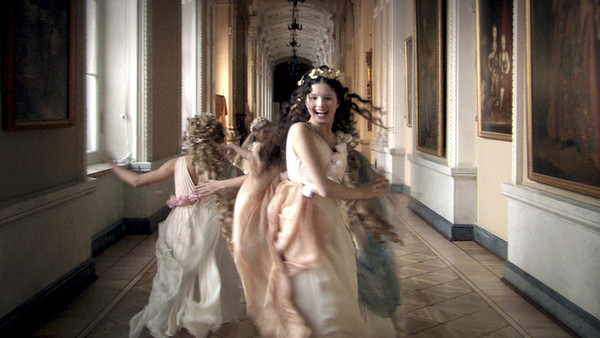
Though Sokurov didn't shoot his film live, it was filmed in a single unbroken take, and because shooting a movie with people just talking in one take wasn't tough enough, he decided to make the film a lively trawl through the history of St. Petersburg, featuring more than 2,000 actors and three orchestras.
The film's cinematographer and Steadicam operator, Tilman Büttner, was tasked with executing the 90-minute take, which would see him travel through 33 rooms of the Russian State Hermitage Museum on December 23, 2001.
How Did It Turn Out?
Astoundingly. Though the actual content of the film may not appeal to many beyond history aficionados, the sheer bravura nature of the project makes it compulsively watchable all the same.
The sheer mind-boggling complexity of the production, with elaborate dance sequences and absurdly fluid camera movements, is literally jaw-dropping, and completely gripping from first minute to last.
The successful take for the film was in fact the fourth, after the first three attempts failed and the camera only had enough battery power for one more take. Phew.
2. A Coming-Of-Age Movie Shot Over 12 Years - Boyhood

The Experiment
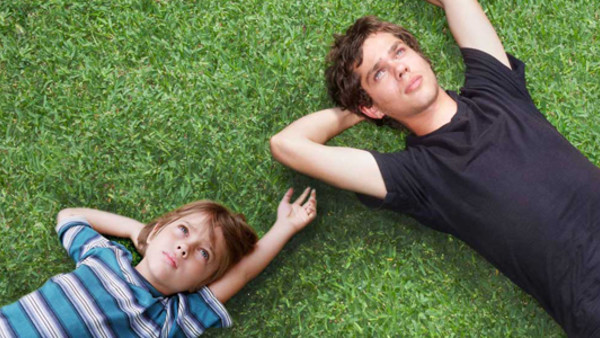
In 2001, director Richard Linklater made the seemingly insane decision to start shooting a coming-of-age drama which would be shot in real time over 12 years.
Linklater's plan was to reconvene with a small cast once per year and shoot new scenes, depicting the development of not only young lead Ellar Coltrane, but also his co-stars Ethan Hawke, Patricia Arquette and Linklater's own daughter, Lorelei.
The long-form nature of the project meant that Linklater wasn't entirely sure the direction it would take, writing material after reviewing the previous year's footage, and allowing the cast to incorporate elements from their own changing lives.
Linklater also made provisions for the worst, appointing Ethan Hawke to carry on the project should he die before its completion. Though of course, had Coltrane decided to drop out of the project mid-way, Linklater would've been up the creek without a paddle.
Incredibly, production company IFC never asked Linklater to view footage of the film throughout the 12 years, simply giving him $200,000 per year to complete that year's shooting.
How Did It Turn Out?
Better than anyone could've ever expected.
The film premiered at Sundance 2014 to near-universal acclaim, and went on to become a major box office success relative to its budget, while receiving six Oscar nominations, including Best Picture and Best Director, and netting Arquette a well-earned Best Supporting Actress award.
That Linklater managed to take 12 years of footage and edit it into such a holistic portrait of growing up is unprecedented in cinema, and about as creatively noble a use of narrative film as there ever has been.
And because 12 years isn't enough of a commitment, his next project will be an adaptation of the Stephen Sondheim musical Merrily We Roll Along, which will be filmed over 20 years in order to reflect the musical's own passage of time.
1. An "Anti-Hollywood" Drama With A Strict Minimalist Shooting Style - Festen

The Experiment
Festen (aka The Celebration) is the first film in the Dogme 95 series, an artistic movement conceived by Danish filmmakers Thomas Vinterberg and Lars von Trier.
As a protest against excessive Hollywood productions, Dogme films must conform to a set of strict stylistic guidelines, namely purely location shooting with no sets, only diegetic sound recorded during filming, handheld camerawork, colour film without any post-production grading and no "superficial action" (such as murders). This is in an attempt to train a focus on the story and characters above all else.
Vinterberg's Festen tells the tale of a family gathering to celebrate their patriarch's 60th birthday, with deliciously darkly comic results.
It was the first Dogme film and, therefore, a massive creative gamble, to see whether or not the dreamy Dogme manifesto was actually a viable filmmaking alternative.
How Did It Turn Out?
Festen was an instant critical hit, winning the Jury Prize at the 1998 Cannes Film Festival and quickly earning esteem as a cult classic of world cinema.
More importantly, though, it effectively made Dogme a dramatic subgenre of its own, with 35 Dogme movies being made between 1998 and 2004, before Vinterberg and von Trier decided the rules were themselves becoming formulaic stylistic shackles.