10 Movies You Most Regret Not Seeing At The Cinema

You can dim the lights and grab the popcorn, but it's never quite the same.

There's no better way to experience a movie than in the immersive environment of a cinema. The colours pop, the effects sparkle and the soundtrack booms through massive speakers. For a cinephile, there's no better place on Earth. Movies are designed for the cinema and so that is where they come into their own. The constant onward march of home viewing technology means that the living room experience is edging ever closer to the feel of a multiplex. But this just feels like damage limitation. There will never be a better way to see the latest releases than at your local cinema, whether it's a bombastic blockbuster, an elegant indie romance or a grubby horror movie soaked in Kensington Gore. Every film fan has their own selection of cinematic regrets. Everyone has sat, spellbound, watching a film unfold on DVD and wished that they could have first experienced that magic in the cinema. Sometimes it's a small film that just passed you by on its theatrical release and sometimes it's a classic of the past. The young film fanatics of today look back in envy at their parents' experiences of the original Star Wars films or Spielberg's pre-millennium blockbusters. It's clear that there are some films that are done a disservice if they are seen anywhere other than in a cinema. Here are ten of the most prominent examples, so prepare for splendour and spectacle.

10. Kill List (2011)

British director Ben Wheatley followed up his micro-budget debut Down Terrace with the truly shocking thriller-cum-horror movie Kill List. Wheatley's film is a masterclass of genre mixing that twists and turns in various different directions as it winds towards its chilling climax. The one thing that stays constant throughout the film's madness is Wheatley's stellar direction, which demands to get the cinema treatment. Wheatley makes every moment of his film visually stunning. Even when Neil Maskell's hired killer brutally bludgeons a target in the head with a hammer, it feels inherently cinematic. Visceral thrills build to the bizarre finale, in which the murderous protagonists are stalked through a series of underground tunnels by marauding cultists. That final sequence is a masterclass in creating the impression of a cramped environment on an enormous canvas. As we'll see later on in this list, the juxtaposition between the vastness of a cinema and claustrophobia on the screen can create a truly remarkable experience for audiences.

9. Elysium (2013)

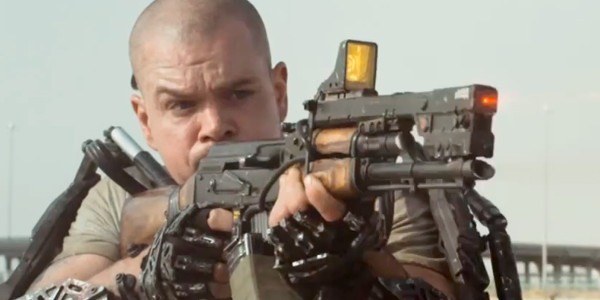
Neill Blomkamp's sophomore effort, after surprise hit District 9, received a mixed reaction from critics and audiences. With a much larger budget and an A-list leading man in Matt Damon, Blomkamp constructed an intelligent action movie with some really accomplished social commentary at its heart. The perfect marriage of style and substance, Elysium is a film that really benefits a cinema audience. Despite what critics had to say, Blomkamp's ability to create a good movie is just as prevalent with a bigger budget. Elysium lacks some of the down-and-dirty grit of District 9, but it's still pretty far removed from the glossy blockbusters that Hollywood churns out every year. There's a real sense of cyberpunk grime to Elysium that only becomes clear on the biggest possible screen, from the dystopian landscape to Damon's makeshift exo-suit. Blomkamp also brings a sense of realism to his fight sequences and, in a cinema, these scuffles feel utterly brutal, particularly during the third act battle between Damon and the psychotic Sharlto Copley. In the coming years, Elysium will be reassessed as an interesting, overlooked gem. Soon, people will be wishing they refused to believe the bad word of mouth and went along to the cinema.

8. The Descent (2005)

Neil Marshall's Brit horror The Descent was the potent shot in the arm that the genre so desperately needed in the mid Noughties. Set almost entirely within the confines of a labyrinthine cave network, the film is a terrifying tale of a group of women who are hunted by vicious beasts when they become trapped in the caves. As with the final moments of Kill List, The Descent thrives on its sense of claustrophobia and the inability to escape. The entire film creates an oppressive sense of walls closing in, even before the first terrifying appearance of the antagonistic "crawlers". In order to get the full force of the film's scares, the darkness and bizarre magic of an auditorium is the perfect place to experience The Descent. Marshall's film is the perfect example of how lo-fi filmmaking needs to be seen in the cinema exactly as much as the latest CGI blockbuster does.

7. The Raid (2011)

Martial arts movies and Indonesian cinema combined in the hands of a Welsh director to produce something really special in the shape of The Raid - known as The Raid: Redemption in the USA. Iko Uwais made a star of himself with his central performance, also contributing to some of the most impressive fight choreography ever committed to the big screen, at least until it was surpassed by this year's sequel. The Raid is 100 minutes of wall-to-wall violence, from quickfire gunfights to some truly innovative moments involving explosive fridges and jagged doorways. In whatever environment, The Raid is a film that has its audience experiencing a mixture of thrills and revulsion at the horrific brutality on show. In a cinema, however, the impact of the action goes through the roof. Gareth Evans is a remarkable director of fight sequences. Regardless of how frenetic the action is, Evans never loses sight of the individual performers and makes every kick, punch and strike feel like it legitimately hurt. In a cinema, the audience feels every blow too.

6. Sin City (2005)

Robert Rodriguez's artistic, ambitious adaptation of Frank Miller's comic book series gets a place on this list by virtue of its one-of-a-kind stylistic choices. Put simply, no other film ever made looks like Sin City. The handsome monochrome cinematography is punctuated by brilliantly controlled flashes of colour, creating the feel of a graphic novel on the big screen. As the sequel Sin City: A Dame to Kill For heads into cinemas, it's the ideal time to look back at the original film and wish that you had taken the opportunity to see it during its initial cinema run. The film made a reasonable $160m during its time in multiplexes, but became a real cult classic on DVD and Blu-ray. Whether the sequel is any good or not, Sin City is sure to be remembered as a franchise for daring to be different in terms of its visuals: visuals that deserve to be seen in the cinema.

5. Se7en (1995)

Se7en is more of an experience than it is a movie. David Fincher's pitch-black crime thriller drops the audience like a stone into the festering, stagnant pond of his dank, crime-ridden city. The oppressive power of this darkness, and the depraved artfulness of serial killer John Doe's work, must be seen on the big screen to achieve its full, horrible, impact. The genius of Fincher's film lies in its ability to create claustrophobic tension out of almost any setting. Even the wide expanse of land in which the finale unfolds feels like a prison for Mills. He can't escape the confines of Doe's unravelling scheme as it comes to its unsettling fruition. Paradoxical as it seems, this claustrophobia can only be enhanced by a huge, cinema setting. The juxtaposition between the huge screen and the cramped tone creates a real edge to the film that even the finest Blu-ray setup can't hope to replicate. Se7en is a film that deserves to be discovered anew by film fans for generations to come. But it will never be the same as it would've been in a huge multiplex back in 1995.

4. Life Of Pi (2012)

Compared to Avatar on its initial release, Life of Pi is an absolute feast for the senses. Few were surprised when the film picked up the Oscars for Best Director and Best Visual Effects. Ang Lee's film pushes the boundaries of what is possible in terms of big screen visuals, serving up an instantly iconic character in the shape of tiger Richard Parker. Parker, who is a true triumph of turning tech into realism, was created using a mixture of real tigers and visual effects techniques. The chemistry between the mammoth creature and Suraj Sharma, who plays the title character, is the centrepiece of the film. Parker is such an impressive creation that only the cinema can do justice to his majesty. Even the trailer for Life of Pi deserved to be seen on the biggest possible screen, showcasing some of the film's most memorable set pieces. It was one of the best teasers of recent years, turning a film based on a notoriously difficult novel into a must-see cinematic event.

3. Scott Pilgrim vs. the World (2010)
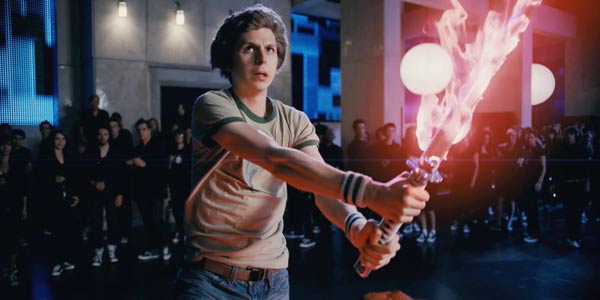
Edgar Wright is not a filmmaker who feels the need to abide by such rudimentary constraints as genre and logic. His movies walk nimbly along the line between genius and stupidity, from the Cornetto Trilogy to video game homage Scott Pilgrim vs. the World. The latter film is an inventive, witty use of the cinematic format that was at the height of its powers on the big screen. Unfortunately, despite some very positive notices from critics, the film only managed to make $50m at the box office, from a production budget nearer to $60m. This nixed any chance of a sequel and has rendered the film something of a forgotten gem outside of the nerd haven of the internet. That's a huge shame because Scott Pilgrim vs. the World is a refreshing film that dared to take huge risks, both in terms of narrative and certainly in terms of visual flair. It features Michael Cera's best performance to date and is full of loving, fan-pleasing nods to video game culture. However, there's more than enough spectacle to entertain those who don't know their PlayStation from their Mega Drive, spectacle which is greatly diminished anywhere other than the cinema.

2. Dredd (2012)

Completely chopping off the gangrenous limb that was 1995's Sylvester Stallone vehicle, Pete Travis' excellent big screen outing for comic character Judge Dredd is an orgy of ultra-violence. Utilising the trumped-up gimmick of stereoscopy to unusually impressive effect, Dredd is a movie that provides a deafening cacophony of sounds and pictures, complete with some shrewd visual tricks. Travis' film feels epic, whilst maintaining the atmosphere of a grubby little action movie. Its dramatic battles are at home on the big screen, but it is in its more unusual moments that Dredd really stakes its claim to appear on this list. Due to the presence of the film's fictional narcotic "Slo-Mo", scenes in Dredd are regularly shown to unfold in excruciatingly slow motion. This is when some real directorial flair arises as bullets puncture flesh and bone, with blood even splattering outside the frame in one delightfully unexpected moment. The shock value of that violence is diluted by a move to the smaller screen, with the reduced scale shedding much of the impact and invention. Dredd only made around $35m at the global box office, but has received a real boost on home media formats. It's a shame that so many people will discover the film without ever getting the opportunity to experience it in a cinema.

1. Gravity (2013)

There's a reason that Alfonso Cuaron's Gravity came within a whisker of being one of the first genre movies to win the Best Picture Oscar in years. Like no other film released last year, Gravity pushes the envelope in terms of what cinema is capable of and dares to boldly go where no film has gone before. Even the trailers for Gravity make it clear that it must be seen on the big screen. The inky vastness of space is rendered beautifully, with central actors Sandra Bullock and George Clooney little more than specks on the celestial landscape. Fans of Cuaron will expect the seemingly unbroken takes, but it's impossible to prepare for the opening sequence, in which his camera casually circles the entire Earth. He is also one of the few directors to actually justify the existence of 3D technology, using it to create a truly immersive world. Like Avatar before it, it's possible that Gravity could feel like quite a conventional film when stripped of its scale and enormity. It's a film that everyone should make an effort to see, but it really benefits from the cinema experience.

In this post: 
The-Descent
 
Posted On: 
Contributor
Contributor

Freelance film journalist and fan of professional wrestling. Usually found in a darkened screening room looking for an aisle seat and telling people to put away their mobile phones. Also known to do a bit of stand-up comedy, so I'm used to the occasional heckle.