10 Movies That Caused A Public Backlash
Hysteria, outrage and uproar - when the big screen causes a big fallout.

The film industry is geared towards public opinion. It may dress itself up in many different forms - appealing to our love of comic book characters, trying to capitalise on our nostalgia or simply giving us what we think we want - but it has always died or lived in the court of public opinion.
There are, however, some films that have caused a visceral reaction either with the viewing public or with the boards that decide their rating and their distribution. And sometimes it has led to either open rebuke or a huge backlash within the audience it was meant to reach.
Sometimes the drama is both caused and resolved before the film ever reaches the cinema, but on other occasions the interest and scandal built up by a production can be the single most famous thing about the ensuing project, regardless of intentions.
Whichever way you cut it, here are ten films that managed to cause a huge reaction with the viewing public and an overview of how the controversy helped or hindered the end result after everything was all said and done.
10. Salò (1975)

Also known as 120 Days of Sodom, this 1975 Italian film was based on an unfinished novel by the Marquis de Sade and the content certainly reflects it. The original material was never completed, written in secret while the Marquis was imprisoned in The Bastille, but has been outlined and fleshed out with notes from the man himself.
The concept of the novel and the film is that four Libertine men have locked themselves away with a cohort of young people of both sexes, some elderly prostitutes and necessary staff to tend to their needs. Both their intentions and the actions that they carry out do not need outlining here but anyone with a knowledge of the Marquis can guess at the sort of things it might include.
Due to the extreme depictions of obscene acts, sexual violence and many illegal behaviours, especially with characters that are purported to be underage, the film fell foul of many licensing boards the world over.
Australia, New Zealand and the UK all initially banned it but have allowed its release more recently with the highest rating possible.
*Note - the content of this film is not for the faint hearted. Research at your own risk.*
9. The Interview (2014)

Whoever decided that releasing a film making fun of a real life and still living dictator should be either commended for their bravery or fired for their stupidity.
2014's The Interview starred Seth Rogen and James Franco as a media duo who are recruited to assassinate Kim Jong-un, the real-life leader of North Korea, under the premise of the interview that they have managed to arrange.
While no one is going to accuse the film of being overly clever, there are laughs to be had here as long as you know what you're getting. It received mixed reviews, as most efforts with this style of humour do, but the real story was the issues that the film caused.
The North Korean government took issue, not with Sony but with the US government itself over the film, causing the release to be pushed back. In addition, there was a hack on Sony's systems which was alleged to have been carried out by affiliates of the North Korean government and real threats of terrorist attacks on any cinemas that screened the film.
Sony opted for an almost entirely digital based distribution off the back of these threats and the movie still made money regardless.
8. The Human Centipede 2 (2011)

Dutch director Tom Six is arguably most famous for his Human Centipede trilogy, the concept of the original being that a mad doctor connected three people into a "centipede" by sewing the mouth of the rearmost onto the anus of the one in front and so on. We won't dwell on the details here.
While each of the three created a buzz in their own rights, it was the second installation (subtitled Full Sequence) that caused the greatest issues and ones that the man himself admitted to having mixed feelings about. Initially being refused a rating at all by the UK board, Six made just over two minutes of cuts and was awarded an 18 certificate (the highest available).
His thoughts on the matter were that while he resented having to remove any of his material, it created interest in the film for better or for worse. In addition to the UK, it was outright banned in Australia and New Zealand.
It has been almost universally poorly reviewed, seen as being gratuitously violent and disgusting for its own sake with no redeeming underlying message or narrative to justify it.
7. A Clockwork Orange (1971)

Anthony Burgess, the author of the novella that this film was based on, was a great number of things. He was a talented linguist, he was a composer and he was unimpressed until the day he died that the work he would most be remembered for was A Clockwork Orange.
He wrote it in the course of three weeks for some quick cash and felt strongly that a lot of his other works were more commendable. Adding to his frustration, this Stanley Kubrick adaptation was based off the American version of the novella which omitted the final chapter where Alex finds redemption somewhat and reforms.
The film was alleged to have glorified violence and its sexual scenes caused it to be banned in the UK and initially rated X in the US for "extreme sexual violence". It was implicated in a number of copycat crimes and Burgess' displeasure was deepened because he felt that Kubrick not only left out the redemption arc but left the author to defend his book and take a lot of the flack for the derivative work.
It was eventually made available in the UK in 1999. Burgess had passed away six years earlier.
6. Cuties (2020)

One of the most recent films on this list, this 2020 French film was marketed and distributed by Netflix and caused an absolute uproar.
It tells the story of a young girl who is torn between her traditional background and her friends who are in a dance group that "twerks" and competes in competitions. It also includes a segment where she sends explicit photos of her genitals on the internet.
While critics have praised it (with 86% of reviews being positive) there was an enormous issue when it saw release, due to the perceived sexualisation of pre-pubescent girls, the dances they performed and the outfits that they wore while doing it.
The advertising campaign that Netflix ran ended up generating a CancelNetflix hashtag and there were calls from government officials to pull the film due it possibly appealing to paedophiles. The poster features the young girls in revealing dance costumes, posing in what has been called a "provocative" stance.
The director stands behind her work, saying that the complaints are based on out of context clips and from people who haven't seen the film which she says is based largely on her own experience as a refugee coming to France and the contrast in lifestyles she encountered.
5. Ghostbusters (2016)

When a Ghostbusters reboot was announced and they revealed that the cast would be all female, the internet did what the internet does and kicked up a massive fuss.
While the trailer was hit with more dislikes than likes on YouTube, there were also people just happy to see the series being redone in any form. However, cast members, producers and members of the community all began to speak out against the criticism as they believed it to be misogynistic and that it wouldn't have happened had they announced a reboot with male actors.
There were notable voices that disagreed with this sentiment, citing the lack of faithfulness to the original material and their general dislike of reboots as the reason they weren't happy. The trailer went on to be one of the top ten most disliked YouTube videos and there was a constant ongoing back and forth with everyone who expressed dislike of the film being accused of being sexist.
In the end, while it did bring in nearly $230 million, it lost more than $100 million once all costs were considered and the production company decided not to carry on with the reboot as a full series.
4. Mulan (2020)
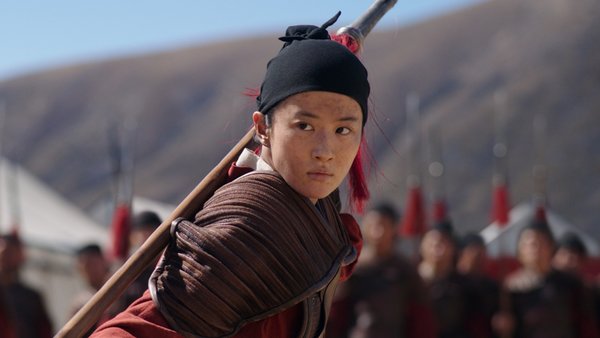
When Disney released Mulan in 1998, it was largely based on the folk tale of Hua Mulan, a female who disguises herself as a man in order to serve in the army in the place of her father. While there is debate on whether she existed in reality or is just a legend, the original stuck close to the folklore interpretation while adding in additional elements (such as Eddie Murphy voicing a dragon named Mushu).
In 2020, Mulan became the latest cartoon memory of a certain generation to undergo the live-action reimagining that Disney seems so keen on recently and it brought a number of controversies in its wake. From the lead actress voicing problematic opinions regarding the Hong Kong protests to the removal of characters from the original for reasons that were deemed a little odd, it seemed to attract heat from all angles.
The lack of ethnic diversity in the production team came under fire as well as accusations that it pandered to Chinese audiences too much. In addition, it used a shot of an area that holds a concentration camp of over a million Muslims in the Xinjiang region.
It bombed at the box office, losing more than $130 million.
3. The Great Wall (2016)
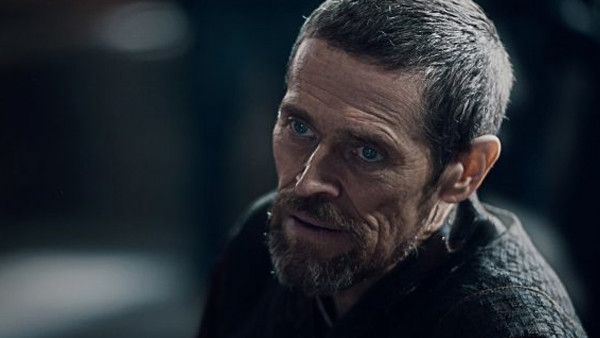
When this film was released towards the tail end of 2016 in China and early 2017 in the US, the resounding opinion of both audiences and critics was lukewarm to say the least. An epic adventure involving battles with monsters, the Great Wall of China (as could be expected by the name) and starring Matt Damon and Pedro Pascal as a pair of European mercenaries who have travelled to the Far East, the concept, the execution and the overall feel of the movie were not well-received.
The main backlash here was that the two men who could be viewed as "heroes" were both European and critics were quick to accuse the film not only of "whitewashing" but also of pandering to the "white saviour" trope that is less-seen and accepted nowadays than it maybe once was.
The Chinese critical community were just as harsh on the film as the Western audiences and when all was said and done, despite it making more than its budget, once the total costs of advertising and so on were considered it lost an estimated $75 million.
How much of this can be attributed to the backlash it received is open to debate.
2. Cannibal Holocaust (1980)

While it can be argued that Cannibal Holocaust paved the way for many of the found-footage style films that came after it, it is easier to sift through its content and find things that didn't cause a backlash than those that did.
Remaining banned to this day in a number of countries, the film is infamous for its real depictions of animals being killed in brutal ways, its extreme violence and its sexual scenes.
In addition, there were some legitimate concerns when it was first screened that it was in fact a documentary (as it was intended to appear) rather than a fictional work and the accusations grew to such an extent that the director was forced to produce the actors at a press conference in order to prove that they had in fact survived the ordeal.
Despite being arrested on charges of obscenity, director Ruggero Deodato went to extraordinary lengths to propagate the idea that this was legitimate found footage, including hiding the actors away until the aforementioned press conference. Also, it was only when murder was added to his charge sheet that he proved it was not a real "snuff" film.
Dedicated, yes. Deluded, perhaps.
1. Jaws (1975)

Based on Peter Benchley's novel, the Steven Spielberg-directed Jaws is oftentimes credited with the creation of the idea of a "Summer Blockbuster". It terrified audiences the world over and while working within a budget of $9 million, it managed to generate over $470 million in box office revenue.
While the sequels may leave a lot to be desired and the storyline on screen may not match the novel to a great degree, there was a secondary and arguably bigger issue at play here that no one could have anticipated at the time.
This movie in particular is accused of misrepresenting the behaviour of great white sharks to such an extent that it caused a public panic about all different sorts of sharks and has been blamed (to a degree) for the current situation where 90% of all shark species are considered at risk.
Dubbed the "Jaws Effect", it saw the public perception move to align with the film's portrayal of sharks as dangerous animals that hunted people for sport and saw a huge increase in the number of people attempting to catch them.
Benchley has been quoted as saying that if he could have foreseen the fallout, he would never have written the book.