10 Movies That Changed Drastically Midway Through Production
Who ya gonna call? A darn good editor.

In an ideal world, the creative team behind a film would get to execute the precise vision they had back in the project's earliest days, way before they even put pen to paper and the finished movie was but a distant glimmer.
But, this rarely happens. As is the case with any group project, visions collide, schedules don't line up, tensions rise, and things can easily change. While the bulk of these alterations will ideally take place before shooting has started, some movies are unfortunate enough - or fortunate enough, depending on the final outcome - to undergo major shifts in tone, story, or structure, while the cameras are actually rolling.
Obviously this isn't ideal, but because of how complex filmmaking can be, it's always a possible scenario. On the plus side, as fans, it's interesting to observe how different productions handle the pressure of being faced with a massive problem, at the least opportune of moments.
Some add extra scenes, others re-do the whole thing, and some aim for a change in tone, but either way, the movie ends up being a lot different from that initial vision.
10. WarGames

When WarGames first started filming, it was under the direction of Martin Brest, who was just coming off the success of his comedy-caper Going In Style, as well as some work on the sixth series of Saturday Night Live.
You'd think that hiring a director so strongly associated with comedy would mean that WarGames would also attempt to head down that tonal route - at least partially - but, reportedly, the movie that Brest started to make was anything but light-hearted.
Instead, Brest took a strangely cynical approach to the story, and this led to him being fired after roughly two weeks on the film, after the producers protested against his vision. He was replaced with John Badham, who took the reigns with the mission statement of injecting some fun into the movie, as well as loosening up the understandably nervous production team.
Badham has spoken about Brest's approach in the past, describing it as "dark", and giving us some insight into how he wanted to portray Matthew Broderick's lead character:
"From what I could tell out of what Marty was shooting, he’d taken a somewhat dark approach to the story, and saw Matthew’s character as someone who was rebelling against his parents... and the way it was shot, it was like they were doing some Nazi undercover thing. So it was my job to make it seem like they were having fun, and that it was exciting, but it wasn’t this dark rebellion."
While the final cut of WarGames can't be described as a comedy, there's a sense of enjoyment and fun that permeates the whole thing, a massive difference from the colder thriller that Brest was trying to make.
9. Sleeping Beauty

Changing an animated film can be much more difficult than changing a live-action one. While a real scene can be shot in a single day, it can take several days to animate and render even a few seconds of footage.
For this reason, most animated films have a story reel or animatic produced - which is basically the entire film assembled in picture form, often synchronized to a soundtrack - before any actual animation work begins. 1959's Sleeping Beauty was no exception, but after its first reel was put together, it underwent several story changes that involved differing the film from the original fairy tale, as well as tightening up the pace.
Originally, the curse placed on Aurora lasted for 100 years, but the decision was made to shorten this time significantly, in order to cram Philip's rescue mission - fighting through the thorns, battling the dragon - into a shorter time period. That 100 year spell would have lengthened the film significantly, forcing the filmmakers to cram in all sorts of needless scenes, so it was a good idea to change it.
Additionally, several major sequences were flat-out cut. A scene in which Aurora and Phillip met in the forest and danced was scrapped, as was a sequence that would've seen the king organize a treasure hunt. The intent with the latter was to beef up the romance between Aurora and Philip (presumably, they would've been at the treasure hunt together), but, since it bloated the film, it was removed.
It was eventually decided to just have Philip and Aurora meet by chance in the forest, and by slimming everything down and simplifying things, the result was a much tighter, pacier version of the original story.
8. Rogue One: A Star Wars Story

Rogue One is one of the most high-profile cases on this list, and by all accounts, the film was not in good shape when director Gareth Edwards handed in his initial cut. Disney executives were reportedly dissatisfied with this version of the film, and ordered extensive reshoots in order to massage it into a better shape.
During this period, a lot of scenes were removed from the film, and a lot were added in, with the ending of the movie being a particular focal point. That now-iconic scene of Vader butchering a corridor of Rebel soldiers? That was added in the reshoots. The final Scarif battle was also different in the original cut, with Jyn and Cassian being chased across a beach (a shot glimpsed in the first trailer), and Cassian and K-2SO dying together outside a bunker, as opposed to their separate deaths in the final cut.
In addition, the introductions of Cassian, Jyn, and Bohdi were all filmed during the reshoots, with the intent being to set up the story better, as well as give each of these characters a bit more definition.
And those are just some of the ones we know about. Actor Ben Mendelsohn told Collider that around 20 or 30 scenes ended up being altered in some way by the final cut, meaning that an entirely different version of the film could, theoretically, be assembled from spare footage.
While the overall story of Rogue One stayed pretty much the same from start to end (for example, it was always planned for the main characters to die), the individual pieces shifted around a lot, and it's a miracle that the movie ended up being as great as it was.
7. Payback

Shortly after director Brian Helgeland had finished the principal photography phase of his 1999 crime drama, the powers-that-be realised that the film had a problem: the main character - Mel Gibson's Porter - was too unlikeable.
Gibson's own production company - Icon - as well as distributor Paramount, thought that the film was too edgy overall, and needed some extra work to lighten things up. They returned to Helgeland with this request, but he refused, reluctant to knowingly compromise his original vision. Consequently, he was fired, and production designer John Myhre was drafted in as a replacement.
From here, roughly a third of the film was re-worked. Actor Kris Kristofferson was brought in to play an entirely new villain character, Porter was softened up significantly, and a happier ending was crafted. The changes were so huge that Helgeland considered taking his name off the film, but in the end, he remained as the credited director.
Ultimately though, Helgeland got some "payback" of his own, when his original cut was released in 2007 and received a much more positive response than the theatrical cut.
6. Solo: A Star Wars Story

A Han Solo movie without Harrison Ford was always going to be a risky play, and while it would've been reasonable for Disney and Lucasfilm to expect problems with the fans, they probably didn't anticipate the insane production problems the spinoff was unlucky enough to encounter.
Things actually started off beautifully, with the exciting duo of Lord and Miller hired to direct the film. Sadly, they left the project in mid-2017 after the dreaded "creative differences" ripped through the production like a bullet. Ron Howard was brought in to steady the ship, and the amount of changes he and Lucasfilm were forced to make were huge.
Reportedly, the film Lord and Miller were making leaned heavily on the comedy, a style the directors were known for. However, Lucasfilm wanted things to be played more straight, and this meant that a lot of Lord and Miller's footage had to be thrown out and filmed again. Howard reportedly re-shot around 70% of the film, including cutting a character played by Michael K. Williams, and substantially toning down the comedy.
Lord and Miller's set was more improvisational and freestyle, which would've resulted in an offbeat tone not a million miles away from their Jump Street and LEGO movies. But the Howard version essentially booted all of that to one side, adding a pinch of comedy rather than a bucket-load, leading to a more conventional Star Wars movie.
5. I'll Do Anything

The honour of "most bizarre change" on this list easily goes to James L. Brooks' 1994 comedy I'll Do Anything, which was dealt a major blow when test audiences reacted poorly to a significant aspect of the film.
With the project, Brooks wished to craft an old-fashioned musical, and wanted to include plenty of musical numbers peppered throughout the runtime. To that end, he brought in the likes of Prince, Carole King, and Sinéad O'Connor to record songs, and everything was shaping up quite nicely - that is, until a rough cut of the film was assembled and plonked in front of test audiences.
And unfortunately, the one thing they hated was the music. Naturally, Brooks was taken aback by this reaction, since he now had some major alterations to make. He basically had to pluck one of the core elements from his movie and fill in that hole with brand-new scenes, stripping the music entirely and heading back for reshoots to film some replacement footage.
The final cut was received relatively well so this re-jig wasn't a complete disaster, but going from a musical to a more straightforward comedy-drama can't have been easy.
4. The Emperor's New Groove

Despite it being a breezy, light-hearted family film, the production of The Emperor's New Groove was the exact opposite. It was a full-blown disaster, and came dangerously close to being cancelled on multiple occasions, before being completely overhauled into the movie we see today.
The flick was originally going to be called Kingdom of the Sun, and was headed up by two directors: Mark Dindal, who had previously worked on The Little Mermaid and Aladdin; and Roger Allers, fresh off helming The Lion King. The two men had impressive résumés, but unfortunately, their individual styles did not mix together well on this particular project.
Allers was reportedly trying to make a grand, sweeping musical akin to The Lion King, whereas Dindal was just aiming to make the movie as entertaining as possible, emphasising humour and a quick pace.
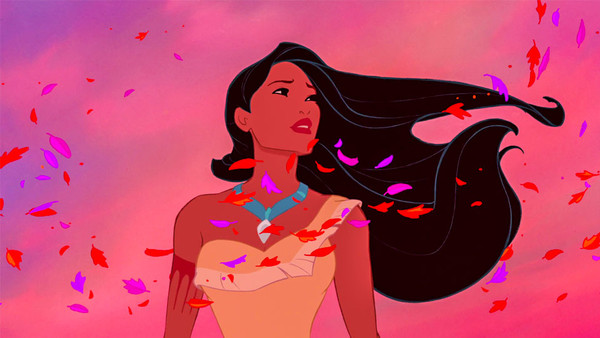
Unfortunately for Allers, Disney preferred Dindal's approach: the company was disappointed with the results of its two recent animated musicals - Pocahontas and The Hunchback Of Notre Dame - both of which were similar to the kind of movie Allers was trying to make with Kingdom of the Sun.
This led to Disney executives threatening to shut the film down if it could not be molded into a more cohesive shape, preferably one that took its cues from Dindal's ideas. Since Allers was the original director, the studio approached him with their concerns, but when the two parties couldn't reach an agreement, Allers left the project.
At this stage, roughly a quarter of the film had been animated, but Dindal - who stayed on as director - had to start from scratch, developing a brand new story, new storyboards, and completely reshaping several characters. The resulting Emperor's New Groove is essentially a buddy-cop comedy, a million miles away from the slower, emotionally-driven musical that Allers had originally envisioned.
3. New Mutants

While we don't yet know the full extent (or nature) of the changes that have been applied to New Mutants, pretty much everything we've heard about the film over the last two years has indicated that the final product will be completely different to the one that started shooting over two years ago.
Originally meant to release in early 2018, the film was first pushed back to February 2019, and then it was delayed again, landing in August 2019. Word on the street was that this extra time was being used to accommodate extensive reshoots that would drastically alter the tone and content of the film.
These reshoots were supposedly going to add in several new characters, alter the post-credits scene, and beef up the scares, partly as a response to the mega-success of horror film It: Chapter One, as well as New Mutants' own chilling debut trailer. However, to this day, these reshoots still haven't happened, and it's not clear if they ever will - or if the film will ever see the light of day.
Disney's purchase of Fox has, more than likely, been another big factor in the movie's delays and changes. Disney is a much more family-friendly studio so they perhaps want to see the scares reduced rather than increased, and this could be causing friction behind-the-scenes. It was also recently reported that New Mutants will be woven into the MCU, with the film removing all references to the previous X-Men movies. This change, naturally, would require a lot of extra work to be done.
It's a very messy situation, and the film's future really isn't clear at the moment. But no matter what happens, it's going to be a very different movie than the one we would have seen if it held its original release date.
2. Exorcist: The Beginning

Prequel to the classic 1973 original, Exorcist: The Beginning didn't just go through a few small changes, or even a few major ones: the entire thing was re-done from scratch, after the producers deemed the original version unsatisfactory.
This was the version helmed by Paul Schrader, who aimed for a more psychologically complex movie that was light on bloody violence. Unfortunately for him, this wasn't what the producers at Morgan Creek had hoped for - they wanted something that was more conventional, more "mainstream". So, they took the drastic measure of firing him, choosing to re-build the film from scratch rather than just release the completed cut they had in their possession.
Renny Harlin was brought in as the new director, and he re-filmed pretty much everything, removing characters, adding in new ones, and attempting to make a more straightforward scary movie. While some sets, plot points and locations stayed the same between both versions, Harlin's effort was, by definition, a brand-new film, with the tone and style established by Schrader having been excised.
Funnily enough, Schrader's version was eventually released under the title Dominion: Prequel to the Exorcist, after Harlin's version crashed and burned. So, basically, this mess of a production was a giant waste of money.
1. Enemy Mine

An oft-forgotten sci-fi film from the mid-1980s, Enemy Mine stars Dennis Quaid and Louis Gossett Jr as a human and an alien, respectively, who must team up in order to survive a hostile planet.
Like WarGames, the movie started shooting with a director who was then let go due to creative differences. Originally, Richard Loncraine was the man behind the camera, but he failed to deliver the goods and was subsequently replaced. Loncraine's film reportedly looked very cheap, with his directorial style not selling the otherworldy nature of the environments and alien characters. The film basically looked like what it was: a bunch of adults playing dress-up in the wilderness.
At this stage, the executives at Fox had a big decision to make: write off the millions of dollars they'd already spent on production and put the movie on the shelf, or start afresh with a new director at the helm?
In hindsight, they made the foolish decision (the film ultimately flopped at the box-office) to soldier on, bringing in Wolfgang Petersen to try and salvage the project. Petersen was completely unhappy with everything Loncraine had shot, insisting that the existing locations, costumes, and footage could not be used.
As a result, Enemy Mine was mostly re-built from scratch, sending it wildly over budget, and while Petersen's movie looked surprisingly polished, it could not recoup its steep, steep costs.
-
Any other films that had to be sent to movie surgery? Let us know in the comments section!