10 Movies That Chose The Wrong Lead Character
Jacob should've been the protagonist of the Fantastic Beasts franchise.

It goes without saying that a protagonist can make or break a movie. Get them right and they can bolster an entire franchise basically by themselves - looking at you, Tony Stark - but get it wrong and a potentially lucrative IP can crater overnight.
Sometimes the results are a little less dramatic, though, even as it's clear that the filmmakers hedged their bets on the wrong character to lead their movie and probably should've looked elsewhere.
From mega-budget blockbusters to standalone films, these 10 projects all suffered from finding the perfect protagonist... and then giving the part to another character instead.
While not all of these lead characters are terrible, they are all ultimately underwhelming compared to supporting characters who ended up playing second fiddle or, in a worst case scenario, straight-up died before the end of act one.
Had things been different and the clearly superior character were cast as the protagonist, these movies just might've enjoyed a greater degree of success both critically and commercially.
These movies all prove how underwhelming it can be to follow a main character who pales in comparison to those around them...
10. Sersi - Eternals

Though Marvel's Eternals is certainly an ensemble-led affair, the de facto protagonist is clearly Sersi (Gemma Chan).
She's an Eternal who possesses the promising ability to manipulate matter but spends far too much of her screen time trapped in a love triangle with Ikaris (Richard Madden) and Dane Whitman (Kit Harington).
Sersi isn't a bad character but she's just not a hugely compelling lead, despite a solid effort from Gemma Chan. Perhaps had more time been spent developing her complex relationship with humanity, she might've seemed a more fitting protagonist.
Ultimately the Eternals' lineup contains several more interesting and well-wrought characters, perhaps best of all Phastos (Brian Tyree Henry), whose unique role in shaping humanity's development through technology gives him a direct and fascinating tether to the audience.
Then there's Kingo (Kumail Nanjiani), by far the most charismatic and entertaining of the group, or Thena (Angelina Jolie), whose debilitating mental health could've made for a fascinating arc were she shunted into the lead role.
Sersi definitely wasn't the worst character to appoint as the lead, but a resolutely safe, somewhat boring choice compared to the more memorable members of the team.
9. Ford Brody - Godzilla (2014)

The MonsterVerse admittedly doesn't have a stellar track record with human characters as it stands, though the decision to assign Godzilla 2014's protagonist duties to the painfully dull U.S. Navy officer Ford Brody (Aaron Taylor-Johnson) was an especially egregious mistake.
The movie's first act benefitted considerably from the presence of Ford's father Joe (Bryan Cranston), with the marketing emphasising Bryan Cranston's role in the film, only for him to be suddenly killed off at the end of act one.
Even Bryan Cranston himself has been vocal about his character's death being the wrong call, deeming it "a waste," echoing the sentiment from many fans that Joe should've been the movie's lead and his son swapped into a supporting part.
Instead, Ford takes the reins in a movie where Godzilla's screen time is relatively scant, and without the character generating any sparks of interest at all, the film becomes a pure drag almost any time it focuses on him.
8. Sandy Olsson - Grease

Sandy (Olivia Newton-John) is the outright lead of hit musical Grease, though in more recent years there's been a fair amount of pushback against her character arc, that what qualifies as her happy ending is changing herself entirely for the boy in her life, Danny Zuko (John Travolta).
Regardless, Sandy's just a bit of a one-note character all things considered, especially compared to the leader of The Pink Ladies, Rizzo (a brilliant Stockard Channing).
Rizzo is a rough-edged character whose arc is considerably more interesting, yet while Sandy's decision to drop her pretensions towards "properness" are rewarded at film's end, Rizzo's free-spirited nature is largely shamed throughout the story (namely by way of the pregnancy scare subplot).
But Rizzo is a self-actualised person from the get-go and doesn't need a boy to get her there. Sure, she's pretty harsh to Sandy, but it's bore from a frustration with her slavish devotion to propriety, and the film still does a solid job of revealing Rizzo's more sensitive, vulnerable side.
Rizzo isn't as easily defined as Sandy, but that's part of why she's a far more interesting character and ultimately worthier of being the role model young girls look up to.
7. Cole Young - Mortal Kombat (2021)

Despite Mortal Kombat being one of the most iconic and recognisable video game franchises in history, Hollywood still thought that last year's new movie needed an audience insert character for some reason.
And so, the movie is led by an entirely original creation, MMA fighter Cole Young (Lewis Tan), who is later revealed to be the descendant of Hanzo Hasashi aka Scorpion (Hiroyuki Sanada).
Lewis Tan does a fine enough job with the meager scraps he has, but both he and his family feel like wildly unnecessary additions in a film overflowing with beloved existing characters.
There are several easy potential protagonists among the lot, especially Ludi Lin's Liu Kang and Scorpion, not to mention Johnny Cage, who doesn't even appear in the film.
Pre-release Cage's absence seemed so baffling that many fans, this one included, believed that Cole was actually going to become Johnny Cage by film's end, but alas, it didn't happen.
It's just totally ridiculous that, in 2021, with Hollywood supposedly adapting video games with a degree of respect and reverence, we're still getting cynical decisions like this.
6. Julie James - I Know What You Did Last Summer

I Know What You Did Last Summer's protagonist is Julie James (Jennifer Love Hewitt), a smart, sensible, beautiful young woman but ultimately a rather boring and dead-ordinary choice for the slasher flick's Final Girl.
Many fans of the movie believe that there was a far better lead character waiting in the wings, and that's Julie's good pal Helen Shivers (Sarah Michelle Gellar).
The fact that Helen has her own Wikipedia page, while Julie doesn't, really says everything that needs to be said about their respective impact on the audience and general pop-culture.
At first glance, Helen seems to be a stereotypical horror movie beauty queen, defined by vapid self-interest and little else, yet there's a surprising depth to Helen that exposes her deep running vein of emotional vulnerability.
Helen is evidently racked with guilt over the fatal car accident she was involved in, and has a fraught home life to boot.
We're compelled to root for Helen to survive, and so it's such a crushing let down that she's ultimately killed off at the end of an unforgettable chase sequence, despite surviving in the novel no less.
Julie's fate was never really in doubt, which could've made it such a fantastic surprise to kill the prototypical Final Girl and have Helen make it to the end instead.
5. Raleigh Becket - Pacific Rim

No disrespect to Charlie Hunnam, who does all that can be done with Pacific Rim's wafer-thin protagonist Raleigh Becket, but the movie really belongs to the infinitely more memorable and appealing supporting character, Mako Mori (Rinko Kikuchi).
Mako admittedly has a relatively large role in the film, but there's no denying that she plays second fiddle to Raleigh, who by comparison is a rather uninteresting, charisma-free Generic White Guy lead.
Perhaps the single-most memorable sequence from the film is the flashback detailing the loss of Mako's parents in a kaiju attack on Tokyo, resulting in her subsequently being adopted by commander Stacker Pentecost (Idris Elba).
Between Mako's tragic backstory, her strong-willed determination, and Rinko Kikuchi's terrific performance, it's really a no-brainer that she should've led this blockbuster.
However, releasing in 2013 as it did - long before Wonder Woman and Captain Marvel finally convinced crusty Hollywood execs that female-led tentpoles were viable - the apparently smart, sensible choice was picking the bland, interchangeable Dude.
Ironically with Raleigh not returning for the sequel, 2018's Pacific Rim: Uprising, it would've been the perfect opportunity for Mako to slide into the lead role, but instead she returned for a mere fleeting cameo in which her character was inexplicably killed off. Terrible.
4. Sam Carpenter - Scream (2022)
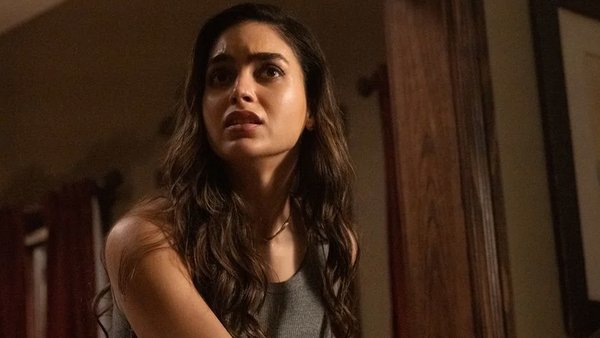
The recent fifth Scream film did a rock solid job of introducing audiences to a new cast of likeable young characters capable of carrying the franchise forward with or without the original surviving heroes.
Scream's lead character ends up being Sam Carpenter (Melissa Barrera), who is eventually revealed to be the biological daughter of one of the series' original killers, Billy Loomis (Skeet Ulrich).
While it's an interesting idea, to make the series' new lead the descendant of the original villain - who appears to have inherited their aptitude at blood-letting, no less - as a protagonist Sam pales somewhat in comparison to her sister Tara (Jenna Ortega).
Tara becomes an immediately sympathetic character from the film's very first scene, where she unexpectedly survives a run-in with Ghostface.
In addition to being a horror film fan, Tara takes an incredible amount of punishment over the course of the movie, cementing both her vulnerability and toughness, ensuring she feels the most Sidney-like of the new characters.
Furthermore, compared to Melissa Barrera's slightly flat performance as Sam, Jenna Ortega's turn as Tara is simply more deeply felt and persuasive. Both sisters are at least set to return for Scream 6, though, which begins shooting soon.
3. Jim Preston - Passengers

Passengers was one of 2016's most hotly anticipated films, the star pairing of Jennifer Lawrence and Chris Pratt in a big-budget sci-fi romance having box office gravy written all over it.
And yet, it ultimately released to a fairly muted response from critics and audiences alike due to the rather contentious characterisation of protagonist Jim Preston (Pratt).
After being awoken from cryosleep 90 years early and spending a year living on his own on a spaceship, Jim decides to wake up a fellow passenger, Aurora Lane (Lawrence).
The problem, of course, is that rather than focus on this action as a product of Jim's understandable loneliness, the script tries to segue it into a genuinely affecting love story in which a selfish schmuck romances the smoking hot woman he irreversibly woke from slumber against her will.
Many critics noted that a big part of the problem is its point of view, and that having the story unfold from Aurora's perspective rather than Jim's would've positioned the empathy in a more agreeable way.
It still would've faced an uphill struggle to convince audiences that Jim's act wasn't one of total scumbaggery - even accepting his suicidal loneliness - but given that we're firmly on Aurora's side, having us experience events alongside her would've righted a lot of the script's inherent tonal issues.
2. Newt Scamander - Fantastic Beasts & Where To Find Them

It's fair to say that Fantastic Beasts' protagonist Newt Scamander (Eddie Redmayne) is a fairly unconventional lead for a massive blockbuster IP - he's not even remotely charismatic, has a number of bizarre physical and verbal tics, and actor Eddie Redmayne believes he's on the autism spectrum.
There's a bumbling charm to Newt, sure, but he's simply not nearly as likeable as his good pal Jacob Kowalski (Dan Fogler), the "No-Maj" New York baker who ends up inadvertently joining Newt on his magical adventures.
For one, Dan Fogler gives an effortlessly rabble-rousing performance in the role, but more than that, Jacob is the perfect vessel through which audiences can be introduced to this corner of the Wizarding World.
Countless blockbusters have proven the success of using an audience surrogate character who is as clueless as the viewer, allowing them to organically experience the world alongside us - say, Jake (Sam Worthinton) in Avatar, or Ariadne (Elliot Page) in Inception - and Jacob fits the bill like a glove.
Though it would've been easy for Jacob to end up relegated to the comic relief role, his relationship with Queenie (Alison Sudol) and his passion for baking bring a lot of heart and soul to a series that's admittedly often lacking in it.
It's probably quite fitting that Newt often feels like a passenger in his own franchise, almost as if J.K. Rowling realises there are more compelling characters elsewhere.
1. Rey - Star Wars: The Force Awakens

And we wrap up with a possibly controversial choice now, that as potential-rich as Star Wars' Rey (Daisy Ridley) was, she shouldn't have led the sequel trilogy as its Luke Skywalker-esque protagonist.
After Rey's solid introduction, she settles into an over-familiar character rhythm, largely working through the archetypal hero's journey beats we've seen before with little in the way of creative variation.
There are two infinitely more interesting choices for the sequel trilogy's protagonist - Finn (John Boyega), a former Stormtrooper who fans understandably expected to be the sequels' true hero, and more ambitiously the villainous Kylo Ren (Adam Driver).
Kylo Ren is far and away the most complex and intriguing character of the entire sequel trilogy, and building The Force Awakens around him would've been an especially bold move.
Audiences clearly responded strongly to the character, in large part due to Adam Driver's superb performance, and several years removed from the sequels he's really the only new character who's had much cultural staying power whatsoever.
Granted, Disney would be understandably nervous about making an antagonistic character their lead, and so Finn would've been a solid second choice. Again, Rey's a fine enough character, if painfully unadventurous.