10 Movies That Completely Wasted Awesome Twists
Wait... Lex knows who Batman is?!

A twist doesn't make a movie great. Take away the last-minute reveal from any bona fide classic and you'll still find everything else working underneath; Fight Club is still biting social satire, The Wicker Man is still a freaky pagan trip and The Sixth Sense is still a showcase of how to expertly build tension. Heck, even Star Wars, which has been irreversibly altered in the cultural psyche because of those four lines at the end of The Empire Strikes Back, would still be a thrilling Flash Gordon-inspired epic.
Not all movies are this smart though. Of course, it's easy to see why movies would want to include a twist; done right, they're an excellent way to solidify a film as a smart, entertaining experience you definitely, definitely, definitely, definitely, definitely want to read up about online after (I know it's shameless, what of it). Yet so many manage to !*$% it up. And I'm not talking about dumb twists either, like our hero is really the killer the whole time or the evil future computer is just an app, but the times when a movie has a genuinely awesome concept that it completely wastes.
A lot of the time it's shoddy writing, with a great idea not explored to its full potential. However, judging by the way some films barge through interesting plot threads, some directors don't seem to even realise what they've got.
10. Earth Is Now Overrun By Apes - Planet Of The Apes (2001)

The ending of Pierre Boulle's Planet Of The Apes has the astronaut stranded on a planet where intelligent simians rule over humans escape his captors and pilot his way back to Earth, only to discover that his world too has become overrun my those damned dirty things (there's also a bookend narrative about chimps in space finding a message in a bottle, but that's one for another article).
If that sounds familiar, it may be because that's pretty much the end of the 2001 remake of the 1968 classic. That's right Tim Burton's shoddy remake is, at least for one scene, actually more faithful than the iconic Statue of Liberty one from the original. It's a great twist too, nothing as gut-punching as finding out you've been walking over the graves of everyone you ever knew, but still a haunting conclusion on man's inevitable destruction.
Of course, Burton didn't stop at lifting from the book - he also insinuated that the film's villain, Tim Roth's General Thade, was the instigator of the ape uprising, despite being from a totally different planet and having no way to beat Mark Wahlberg to Earth and already my head's hurting again. Take out Ape Lincoln though, and this could have been something alright.
9. President Coin Is The Real Bad Guy - The Hunger Games
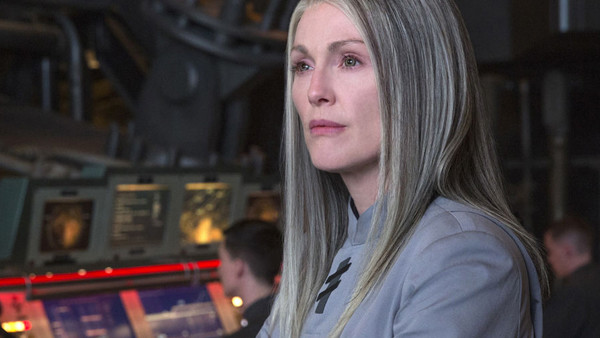
The Hunger Games spends the better part of eight hours with Donald Sutherland's poison-happy dictator President Snow as its one and only big bad. However, in a pretty mature move for something based on YA fiction, it's revealed near the end of four-entry trilogy finale Mockingjay Part 2 that resistance leader Alma Coin is just as devious as he is, leaving Katniss with a painful decision.
Regrettably, given how good The Hunger Games movies once were, the entire final act of the film is butchered - Prim's death was so sudden it took several later scenes to explain properly, while Katniss' final scene with Gale made you hate a Hemsworth - but it's this villain shift that director Francis Lawrence really fumbles. Snow reveals Coin is evil too early and Julianne Moore plays the turn far too sudden for it to have the profound impact it should. It didn't help Phillip Seymour Hoffman's essential role in all this had to be delivered by other characters or via letter, but that's only part of it.
This is an odd thing that many books split into two parts struggle with - all those involved trumpet how it's a creative decision that'll best allow them to tell the story, and yet the finished product still feels as rushed and lacking in depth as it would have one, often due to a misunderstanding of which elements of the source material are actually important. Hunger Games is definitely the worst in terms of comparison to the quality of what came before, although Harry Potter's handling of Voldemort's one weakness comes close.
8. Norman Is Cured - Psycho II

Everyone knows the twist to Psycho; meek motel owner Norman Bates is really the killer, dressing up as his mother to satiate his desires while storing her corpse in the fruit cellar. It's so well known you can make a TV series based on it without even worrying about crying spoiler (although, interestingly enough, I saw the movie in the cinema the other week and the shock at the reveal was palpable).
The same level of notoriety isn't true of the plot of its late-in-the-day sequel, although perhaps if they'd tried just that little bit harder things might have been different. You see, while Psycho II doesn't come close matching the timeless genius of Alfred Hitchcock, it's still a snazzy little slasher-thriller that packs on hell of a rug pull.
Picking up two decades after the events of the first, Norman is released after being cured. Few believe this, of course, and neither should you given how this was exactly the mother side of his mind's plan at the end of the original. However, as the movie runs on something dawns of you; he actually is now a normal, functioning member of society. All the murders in the film form part of a plot attempting to frame him, with Norman genuinely just wanting to live a quiet life.
The film couldn't stop at that decidedly unbloody resolution though and sadly undercuts all this in its final five minutes, with an old lady from the diner where he works revealing she's his mother and that the woman who raised him was her sister. Then he whacks her on with the head with a shovel, embraces his inner evil and we had to sit through the less defendable Psycho III.
7. S.P.E.C.T.R.E. Was Behind Everything - Spectre

In 2013, MGM finally reacquired the rights to Bond villain organisation S.P.E.C.T.R.E. and wasted no time at all in using them, getting a new film out in less than two years.
Although what we got in Spectre was a modern take on the terrorism syndicate, with a base inside a serious crater instead of a silly volcano and a scheme that involved government manipulation rather than stealing rockets, the film still ensured key elements remained; S.P.E.C.T.R.E. had been a threat to Connery throughout his tenure, building in the background before its leader being revealed in film Number Five, so Sam Mendes and co. went for a similar approach. Of course, because this hadn't been seeded earlier due to the rights issues, this was framed as a twist, drawing in the Q.U.A.N.T.U.M. subplot and Silva to create this massive plot against Bond. Which is a very 007 thing to do.
The big mistake was making the fact that Christoph Waltz was playing Blofeld a closely guarded secret. The movie's entire production was mired in an endless "is he, isn't he, he definitely isn't but he obvious is" game that seemed to ignore finding out the Austrian leader of S.P.E.C.T.R.E. in Spectre was named after the Austrian leader of S.P.E.C.T.R.E. in the Connery films was obvious to fans and didn't matter to anyone else.
Giving Blofeld a past with Bond already made things like a petty vendetta, but putting so much focus on this one character reveal distracted from everything else to do with the organisation, reducing the meddling twist to a few hasty printed images.
6. It Was All A Cover For Cannibalism (Maybe) - Life Of Pi

If you like being told long, pretentious, aimless stories, only to have a much more interesting version teased at the very end, then Life Of Pi is the movie for you.
Most of the film is about twee-as-f*ck Pi, a boy named after a swimming pool who believes in three different religions because that's how it works, apparently. He's stranded at sea after the ship transporting his family's zoo (I told you, twee-as-f*ck) sinks and he goes through various psychedelic misadventures while sharing a lifeboat with a freaking tiger.
If that sounds ridiculous, you're not alone - the investigators into the shipwreck probe further and everything is turned on its head. Turns out the whole film was actually a coping mechanism for some incredibly dark, definitely not PG-13 stuff that would never win a flailing VFX studio an Oscar; the animals were stand-ins for humans (Pi, his mother, a sailor and a violent chef) and the events a cover for how Pi killed a man and feasted on his corpse.
But before the real horror of that can sink in, adult Pi gleefully posits that the fake story is more fun, so why not choose that one instead. End credits. Best Director?
I get it - the movie is meant to be all about spiritualism and faith in the unknown, but the argument that picking the nicer option is how it is with God simply makes religious people look deluded and squanders a much more interesting moral.
5. It's All A Test - The Maze Runner
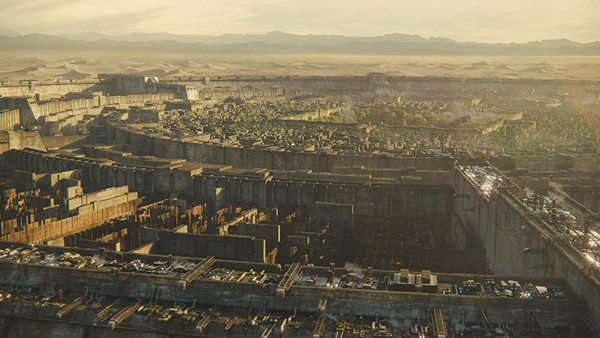
Like Divergent but for boys, The Maze Runner was one of countless Hunger Games rip-offs that constructed an entire futuristic society around competing teens for incredibly contrived reasons. This one's "ingenious" idea was that the kids were trapped in a maze and had no memories, providing all the conflict and motivation for a whole trilogy.
So what is the maze? Well, it's basically a test of the teens and their ability to be able to be candidates for some drug testing that can save humanity from a plague, or something. It's not very clear, because despite figuring it all out being the primary goal of the first film, it chose to only broadly allude to all that before entering right into a "this was just the start", sequel-bait ending that only sparked more questions.
The (marginally better) sequel on exacerbated things, vaguely resolving the original's dangling plot threads in a matter of minutes before switching to a totally different track. The thing is, a new generation immune to disease being used like lab rats is intriguing by itself, and much better than the more standard evil corporation versus resistance arc The Maze Runner has transformed into; a bit more time spent on its core, titular concept would have gone a long way.
4. Lex Knows Who The Heroes Are - Batman V Superman: Dawn Of Justice

Batman V Superman's biggest crime is totally mucking up the fight between Batman and Superman, and given it's the title bout that's a pretty big deal. Most of the actual skirmish is basically two schoolkids punching each other and it's resolved with one of the most inane observations imaginable. Although that's nothing on the motivation.
After an hour-and-a-half of legitimate build-up, Lex Luthor undercuts everything we've seen and reveals it's all been him; he was behind the desert attack, he was sending Bruce those letters, he had Martha (shudder) kidnapped. Fair idea, but it does mean Bats wants to kill the Kryptonian because of a misunderstanding and Supes doesn't want to be there and hang on a second, Lex knows both Bats and Supes - secret identities?
That's massive, shifting the status quo of the DC universe and posing some serious implications for any Lex-involved plots in the future. And yet the film skips over it like it's nothing, a self-imposed barrier to the good stuff (and, once again, the fight is not the good stuff anyway).
It feels a little perfunctory to talk about Batman V Superman's missed opportunities at this point, but when it spent so much time on things that were pedantic, dull or unnecessary yet couldn't even give this ground-breaking idea an extra minute to be expanded upon, it's even more of a waste.
4. Humanity Is Willing Our Own Destruction - Tomorrowland
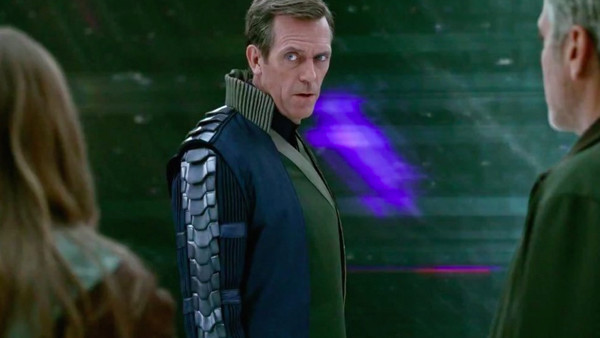
Tomorrowland is a movie so in love with itself it falls apart. The first hour-and-a-half is an extended recreation of the marketing, with teases of glorious future cities of clean, gleaming towers and Britt Robertson repeatedly asks 'no seriously, stop stalling, what is Tomorrowland?' The film explicitly asks you to stop questioning the logic of cinema and just be amazed, yet Damon Lindelof's narrative stalling is so tired by this point it never feels earned.
It spends so long building up the question of what Tomorrowland is that when we finally get there through some of the most eye-rollingly hand-wavy logic ever committed to celluloid (or rather digital, because this 50s throwback still need to be all done in computers), there's absolutely no time to focus on what is actually some really great subtext for a blockbuster based on the fevered predictions of Walt Disney.
Turns out Lindelof and Brad Bird came up with this idea of how our obsession with dystopia is driving us towards destruction. In the film it's augmented by psychic waves or something, but as a mirror to our own society the suggestion is one that feels incredibly pertinent to the current state of cinema and the world we live in.
Because the film couldn't manage to instil the audience with wonder and so rushed the explanation, the impact was lost, however, and we were left with one of the most spectacularly bland films of recent years.
2. Count Dooku Is A Sith - Star Wars Episode II: Attack Of The Clones

Count Dooku was obviously a villain. He's a Count played by Christopher Lee, for Anakin's sake. Nothing else needs to be said. Although that the toys (it's always the toys) had him with a red lightsaber certainly helped.
And yet everything in Attack Of The Clones itself seems to point towards the third act reveal of him being a Sith Lord, shooting Force Lightening, swinging a red blade and conspiring with the future Emperor, being a big shocker. Just look how he's presented up to that point: he's never seen as more than a ideologically driven activist, with a concerted effort made to make the Separatist cause at first seem logical; Mace Windu comments on how Dooku couldn't assassinate anyone; Jango says he met with a man named Tyrannus; Dooku reveals the existence of Darth Sidious to Obi-Wan (pretty dumb, that one) and conspires to defeat him; and there's a general shirking of direct Sith references.
All the elements are there, yet it's totally bungled, likely due to George Lucas' famously iffy screenwriting, with him unable to apply even a thin coat of subtlety to the character's motivations.
There's a strong element of the Darth Jar Jar theory that suggests Episode II was originally planned to end with Yoda showing off against the gungan in the ultimate CGI Force battle, but when that thread was dropped (and now we've seen Snoke it's 100% dropped people), a gentile politician became the Sith instead. Now that's convincing.
1. Smaug Is Already In League With Sauron - The Hobbit

The Hobbit may have always been doomed to be a lesser companion to the much more epic The Lord Of The Rings, but Peter Jackson tried his darndest to make it feel important. From the off he framed the dwarves' quest, which in print is highly episodic and has only a few links (rings, Bagginses) to the bigger picture, as a pivotal point in Middle Earth history; while the party was mostly concerned with getting their gold back from a dragon (technically wyvern), their mission was actually a big power play by Gandalf to stop a re-emergent evil from getting a fire-breathing ally and a strong foothold in the lands of men.
Shockingly, in The Desolation Of Smaug it was revealed they were too late; Smaug was already in league with the Necromancer/Sauron. It's not only a strong narrative device, but in diverging lightly from the source (in Tolkein's mythology there's only the threat of the duo teaming up) it actually provides an unexpected turn even for those familiar with the story.
Unfortunately, no time was spent on this major plot shake-up, with only a cautionary mention by Smaug before the film dived into a physics-flaunting action scene and then ended all of a sudden. There was a better scene filmed detailing the full reveal at Dol Guldur, Gandalf finds Thorin's father, Thráin, at Dol Guldur who reveals the whole thing is something of a trap - but that was only included in the Extended Edition.
Gandalf later repeated how important things were in The Battle Of The Five Armies, but by then nobody cared.
What other movies wasted awesome twists? Share any we missed down in the comments.