10 Movies That Didn't Know When To End
Just roll the damn credits.
Film editing is a masterful art, though one that so many directors, no matter how skilled they may be, can't seem to get a grasp of. Of course, most filmmakers decide not to edit their films personally but they almost always sit in on the edit and guide the editor along the way on a regular basis.
As a result, there's really no excuse when a film just seems to have no idea where to finish; this might partially be the fault of a script that drags on past the point of exhaustion, yet the laborious manner in which these ten films closed out made for a punishing viewing experience (even if most of them are on the whole pretty good).
There's nothing like a great film that takes you on an epic, sprawling journey; it's just a shame that these filmmakers didn't have the good sense to realise that not every one of their ideas was a good one, and sometimes, less is more. After all, am I more likely to forgive a film for its flaws if it's brief and to the point or bombastic and torturously long?
10. Speed

Don't get me wrong, this Keanu Reeves-starring action-packed thrill-ride is a whole lot of fun, but the final act taints things slightly because it goes on for about 20 minutes longer than was necessary.
According to director Jan de Bont, the film was originally planned to end once Jack (Reeves) and Annie (Sandra Bullock) escaped the bus (which will explode if it drops below 50mph), but the studio insisted that an additional climax be appended in which Jack faces off against the terrorist who planned the scenario, Howard Payne (Dennis Hopper).
Though it makes sense to find a way to do away with Payne, surely there were other, simple ways that could have occurred within the original climax? Instead we get a protracted finale on a train, in which Payne has incredulously kidnapped Annie, and ends up getting decapitated during a fight with Jack on top of the train. Oh, and then the train's brakes are broken, so Jack and Annie have to deal with that.
It's still a classic action movie, but damn, it goes on way too long...
9. The Shawshank Redemption

There's no denying that The Shawshank Redemption is one of the most inspirational movies ever made, telling the tale of a wrongly-accused man, Andy Dufresne (Tim Robbins) as he attempts to survive and eventually escape from prison.
This is all well and good right up to the moment (pictured above) when Andy manages to tunnel out of his cell and escape through the prison's sewer system; it's a triumphant and jubilant climax that proves the cathartic peak of the story. There's one very perfect moment on which the film should close, when Andy's buddy Red (Morgan Freeman) gets parole, visits Buxton and finds a letter asking him to visit Zihuatanejo.
It's hopeful but ambiguous enough that we don't know for sure if Red ever sees Andy again. Instead, Frank Darabont can't quite resist going a little too far and indulging our sentiments too much; we get to see the emotional reunion between Andy and Red, and though it is a nice moment, it feels like overkill in a film that could've been far more subtle with its ending.
Still, the rest of the film is so excellent that it's easily forgiven, though the beefy 142-minute runtime would've lost a good five minutes as a result.
8. Source Code
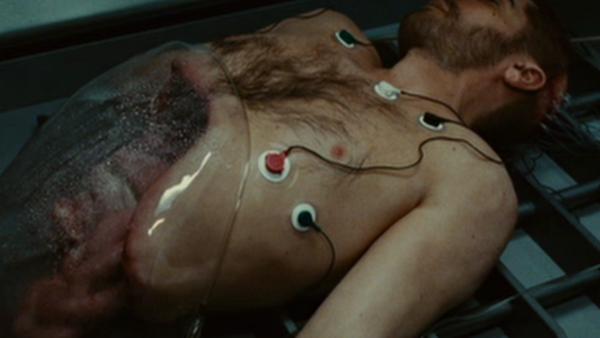
I know what you're thinking - "but wait, isn't Source Code only 93 minutes long?". Indeed, you're not wrong, but even short films can go on past their expiration date, and Duncan Jones' ambitious, thoroughly engaging sci-fi flick had a fantastically ambiguous departure point several minutes before the end, but couldn't resist going a little further with it. After Capt.
Colter Stevens (Jake Gyllenhaal) realises the true nature of his situation - that his mind is simply hooked up to a computer, as his body has been mutilated beyond repair in the war - and manages to provide the authorities with enough information to capture the train bomber they're after, he returns to the source code one more time.
This gives Stevens 8 minutes before his life systems will be terminated, and as the time runs out, he goes to kiss Christina (Michelle Monaghan), at which point everything freezes, as this scenario has essentially been "severed". However, things promptly unfreeze, as it appears that Stevens has managed to create a parallel universe in which his mind and body are free to live a normal life; it's a nice idea, but a little too happy - the freeze-frame ending would have been perfectly melancholic.
7. The Matrix Reloaded
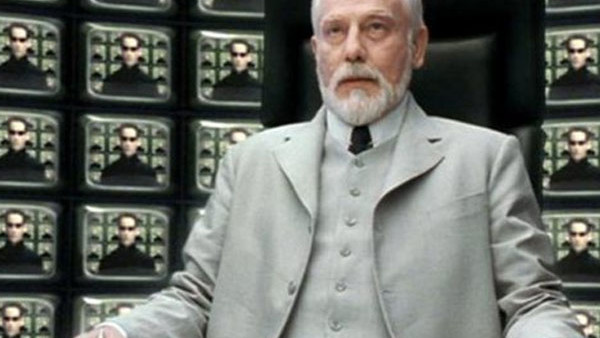
The Matrix sequels get a lot of flack, but The Matrix Reloaded is, for the most part, a thoroughly entertaining thrill-ride that nevertheless doesn't know when or seemingly how to end. It all goes to pot once Neo (Keanu Reeves) meets the Architect, a Colonel Sanders lookalike who spouts a stream of incoherent, pretentious drivel, while presenting Neo with a choice - reboot The Matrix, or save Trinity and cause the extinction of the human race.
Even once Neo has made his choice, the film drags on to Neo jacking out back to Zion, discovering that he can use his powers outside of The Matrix (something that has never really been explained), and it being revealed in an infuriating cliff-hanger that Agent Smith, disguised as resistance fighter Bane, has snuck on-board the ship.
Cut the bizarre Zion rave scene, come up with an end boss more interesting than the Architect, and devise an ending that makes sense and The Matrix Reloaded will be a Hell of a lot better...
6. A.I. Artificial Intelligence

Steven Spielberg's a great director, though he does have something of a reputation for not knowing when to stop - instead, piling on the saccharine sentiment to the point that it becomes just unbearable to watch.
The director's A.I., an ambitious and thought-provoking science-fiction film that was initially the brainchild of Stanley Kubrick, is no exception, going on about half-an-hour past its natural leaping-off point, even if it does provide some additional food for thought at the latter part of its 146-minute runtime. Still, the film should certainly have ended when robot prototype David (Haley Joel Osment) is trapped at the bottom of the ocean, repeating his request to become a real boy.
It's a haunting melancholic way to end a film, though of course, Spielberg wasn't having any of that. Instead, we cut to 2000 years later, where David is revived by an Alien-like machine race, who grant him a wish of being able to spend one day with a clone of his surrogate mother.
A syrupy ending that doesn't quite hit the emotional notes it strives for, A.I. would have been far more memorable if it ended with David frozen in the ice.
5. Superman Returns

Bryan Singer deserves praise for trying to do something different with the Superman legend - namely fashioning a gritty reboot in which Superman's main power is being a deadbeat dad - but the result was a distended, poorly paced effort that ran in an at a tiresome 154 minutes and didn't even deliver enough spectacular set-pieces to really explain that.
One of the talkiest superhero films ever made, it's all about a kid with abandonment issues, Lois Lane (Kate Bosworth) trying to figure out what's up with her Krypto baby daddy, and Kevin Spacey mugging to the camera as super-villain Lex Luthor. Though a lot of the core beats do work, the film is just too overstuffed; the personal story, though ambitious, drags on at the expense of the picture, and had this been toned the film could easily have come in at a far more reasonable 120-130 minutes.
Instead, Bryan Singer, hot off his success with the X-Men franchise, was indulged by Warner Bros. every step of the way, resulting in commercial disappointment at the box office.
4. Pearl Harbour

Michael Bay's 183-minute Pearl Harbour is in no way a good film, but it would have been a whole lot more tolerable if it wasn't so damn long. Frequently compared to James Cameron's Titanic (which I'll get to in a few moments), Bay's epic is proof just how hard it is to skilfully craft a film as well-assembled as Cameron's, as aside from its thrilling action sequences, Pearl Harbour is an inane bore.
Trying to replicate the Titanic formula, Bay wastes an hour of screen-time trying to get us invested in a love triangle between Ben Affleck, Josh Hartnett and Kate Beckinsale, but it's so melodramatic and unintentionally hilarious that it's nigh-on impossible to give a damn. Thus, by the time it actually gets to the good stuff - the 'splosions - half the audience has already nodded off or left the room/cinema.
We don't need a !*$% love story for every significant historical event; how about a more simple depiction of Pearl Harbour that runs in at around 2 hours? Also, ditch all those goofy comic relief moments ("It's the J-J-J-Japs!") and you probably save another 10 or 15 minutes as well.
3. King Kong (2005)

Peter Jackson's remake of King Kong deserves your admiration, but its staggering 187-minute runtime is yet another reminder that the director is probably incapable of producing a film of a reasonable length now.
This wouldn't be so bad if Jackson actually justified it, but like so many of his films, he wastes too much time on verbose preambles that should probably be relegated to DVD extras (oh, he's got them as well). It's just over an hour before we first see Kong in the film, and though some build-up is sensible, an hour is a lot of time investment considering nothing significant really happens.
Sure, the action scenes all dazzle once Kong shows up, but the film could easily have had a whole 30-40 minutes chopped and not suffered in the slightest. The length of the movie regularly meaning this one stands a little dusty on our Blu-ray shelf, when it probably otherwise would have more chance of being regularly chosen for a watch.
2. Titanic
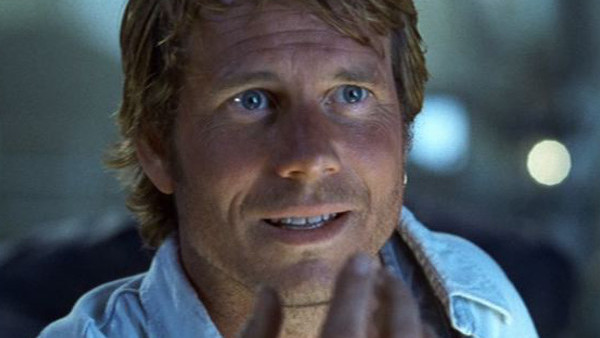
Another film that doesn't know how to start as well as how to end, Titanic spends almost half its run-time setting the stage before the iceberg hits the supposedly "unsinkable" ship. Though it's all ravishingly shot and the characters of Jack and Rose are intermittently engaging to watch, there's a wealth of "character development" that could have been cut; we get it, Kate Winslet doesn't really want to be with Billy Zane, now stop bashing us over the head with this cheesy class drama.
An easy way to lose some time is by chopping most of the scenes set in the present day, in which Old Rose (Gloria Stewart) relays her story to Bill Paxton and his crew. Furthermore, once Jack dies, the film drags on for another 10-15 minutes, with an extended epilogue which tells us everything that happened to everyone in painstaking detail, even if it is inevitably the part that has middle-aged women weeping themselves into a frenzy.
At 194 minutes, Cameron could have at least brought it down under the 3 hour mark. Jeez...
1. The Lord Of The Rings: Return Of The King

You knew it was coming; easily the biggest culprit of not knowing when to just let go is Peter Jackson's 200-minute finale to the Lord of the Rings franchise, Return of the King. After the epic journey is over, Jackson seems reluctant to say goodbye to this world, and so crafts the most drawn-out, laboured climax in cinema history, culminating in a whopping six endings.
Yes, Jackson gives every possible character a moment to say goodbye, and though this hews relatively close to the source material, you'll be astounded to learn that Jackson reportedly didn't include some other elements... in order to save time. I recall sitting in the cinema and seeing people getting their coats and bags ready to leave a few times at the end of the film; it became something of a joke how long the film dragged on.
How should it have ended? With Aragorn being crowned King, of course.
Which films do you think drag on too long? Let us know in the comments below.