10 Movies That Get Basic Facts Wrong
You're so much smarter than that.
In our age of "fake news" and rampant online disinformation, it definitely pays to be skeptical about the sources you're receiving so-called "knowledge" from, and that's perhaps no truer than in the world of film.
Hollywood is the grand dream factory after all, and even in the most apparently plausible and realistic movies, concessions are made for the sake of a more easily understood mainsteam product.
But sometimes these moments of narrative streamlining manage to permeate into the pop-culture consciousness in one way or another, because the filmmakers presented their spurious "facts" with an unearned degree of solemn believability.
No matter whether the film was a straight-laced drama or a ridiculous blockbuster, these movies all misled audiences with incorrect non-facts which many viewers nevertheless took at face value.
Granted, most of these cinematic lies could be revealed with nothing more than a quick Google search, but for many, there wasn't really any reason to believe that these films were just making things up.
Do these lies ruin their respective movies? In most cases absolutely not, because we as viewers are happy to suspend our disbelief, even if you might cringe slightly at just how shamelessly they peddled this blatant misinformation as true...
10. Dinosaurs Have Scales, Not Feathers - Jurassic World

If you've been keeping up on your required dinosaur reading over the last decade-or-so, you'll know that scientists are now virtually certain that the overwhelming majority of dinosaurs in fact had feathers rather than scales.
And while you certainly can't blame the original Jurassic Park trilogy for getting this wrong, it's fair to say that the recent Jurassic World movies had ample opportunity to correct the "mistake."
Though the filmmakers were wholly aware of this discovery, the executive decision was made to keep the series' dinosaurs scaly not only to ensure visual continuity with the original trilogy, but also because the general public hasn't really warmed up to the idea of feathered dinosaurs.
Granted, the series has an easy excuse to sidestep this criticism, that Jurassic World's dinosaurs aren't pure clones but bio-engineered with other animal DNA being spliced into the mix.
As a result this is slightly less annoying than most entries on this list, even if anyone who has Google within hand's reach can find the truth easily enough.
9. Glocks Can Pass Through Metal Detectors Undetected - Die Hard 2: Die Harder

You can blame Die Hard 2: Die Harder for propogating a ridiculous myth about the ability to sneak Glock handguns through airports - and probably causing a few embarrassing mishaps in the process.
After John McClane (Bruce Willis) takes on two armed goons in the airport's luggage area near the start of the movie, he has a chat with airport police captain Carmine Lorenzo (Dennis Franz) and makes a rather spurious claim about their choice of firearm.
McClane says, "That punk pulled a Glock 7 on me. That's a porcelain gun made in Germany. It doesn't show up on airport x-ray machines...and costs more than you make in a month."
And so the myth was born that Glocks can pass through airport security undetected. Except, but that's not even remotely true.
Even ignoring the fact that the Glock 7 is a fictional gun created for the movie, Glocks are made from more than 80% metal, and for decades airport scanners have been programmed to also search for gun-shaped objects, so its composition wouldn't really make that much difference anyway.
Oh, and Glocks are extremely affordable too, so nothing about this dialogue really makes much sense.
8. Hair & Nails Continue To Grow After Death - Resident Evil
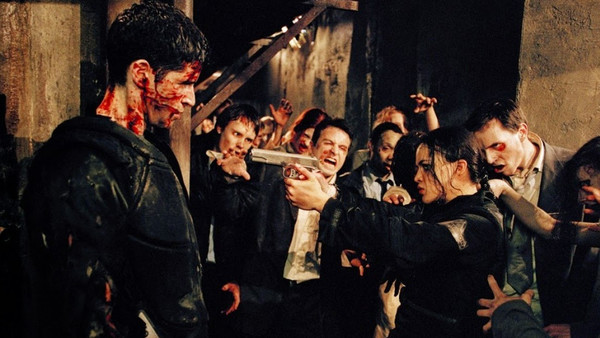
Paul W.S. Anderson's video game adaptation Resident Evil is probably the last place anyone should look for even the faintest morsel of scientific plausibiity, but even so, it incorporates an oft-parroted myth into its script that just isn't true at all.
When the Umbrella Corporation's anthropomorphic A.I. the Red Queen (Michaela Dicker) explains the nature of the zombie-creating T-virus to Alice (Milla Jovovich) and co., she claims that the virus takes advantage of residual human growth which continues after death.
To quote her, "Even in death, the human body still remains active. Hair and fingernails continue to grow. New cells are produced, and the brain itself holds a small electrical charge that takes months to dissipate."
But it's been long disproven that hair and nails keeps growing post-mortem, and is typically a result of skin dehydrating and shrinking after death, giving the impression that growth has continued.
While it is true that cell activity continues for a short time after a person dies, contemporary studies suggest that the brain's electrical activity ceases roughly 10 minutes after the heart stops. The idea that anything can be going on months later is, frankly, completely ridiculous.
Given that a Resident Evil movie of all things really didn't need to offer up a substantial explanation for its zombie apocalypse, it's pretty amusing that the filmmakers even tried.
7. You Can't Be Tried Twice For The Same Crime - Double Jeopardy

The 1999 crime thriller Double Jeopardy may have been widely panned by critics, but it made a stonking $177 million worldwide, even in spite of the fact that its representation of the titular legal doctrine was laughably inaccurate.
The film follows Libby Parsons (Ashley Judd), a woman who is convicted of the murder of her husband (Bruce Greenwood), despite the fact that he in fact framed her while faking his own death.
In prison, she learns of the "Double Jeopardy Clause," that a person can't be convicted of the same crime twice, and so believes that she will be immune to prosecution upon leaving prison and killing her husband for real this time.
As such, after being released, she ends up tracking her treacherous hubby down and killing him, with an apparently clean legal slate.
Except, the real-life premise of the Double Jeopardy Clause is that it prevents someone being convicted twice for the same criminal event, not the same type of crime.
Given that killing her husband at the end of the movie is a clearly distinct act from her supposed murder of him at the start of the movie, she wouldn't qualify for the Double Jeopardy Clause and would still be actionable for his death.
This isn't exactly a hugely complex legal concept, and yet, Hollywood "streamlined" it for the sake of a more easily marketable concept. And clearly, it worked.
6. The Mayans Predicted The World Would End In 2012 - 2012

Roland Emmerich's absurd disaster movie 2012 revolves around a series of apocalyptic disasters which threaten life on Earth, and is heavily inspired by the much-cited "prediction" from the Mayans that all life on Earth would end on December 21, 2012.
The film itself literally has a character explain to the audience, "The Mayans saw this coming thousands of years ago," despite the fact that this is a massively adventurous interpretation of the Mayan calendar.
Any Mayan academic will tell you that the apocalypse theory is a bunch of scaremongering hooey, as this date was simply when the civilisation's long-count calendar ended.
But just as a calendar hanging on your wall doesn't suggest that December 31 is the end of everything, neither was the conclusion of the long-count calendar an ominous foretelling of a world-ending event to come.
Better still, discovered Mayan monuments have only mentioned the date "2012" once and also included dates 7,000 years into the future, suggesting that they didn't see the end times coming for a good while yet.
5. Shooting A Computer Will Destroy The Hard Drive - The Negotiator
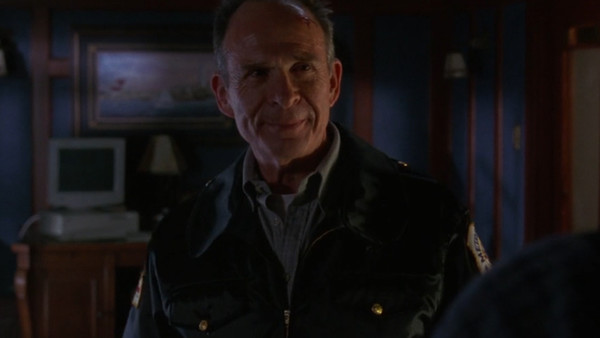
1998's Kevin Spacey and Samuel L. Jackson-starring thriller The Negotiator is a damn fun time, as long as you switch your brain off enough to forgive a vital plot point revolving around computer hardware.
At the end of the movie it's revealed that Chief Frost (Ron Rifkin) was the villain all along, and in an attempt to cover his tracks, he fires a single bullet into a computer containing incriminating information, causing the computer to immediately power down, apparently destroying all the data.
And while back in 1998 that seemed plausible enough to a less-computer-savvy general public, over two decades on it does seem rather silly.
Above all else, it's highly unlikely that Frost's bullet hit the computer's hard drive rather than any other component, making it probable that the cops could just remove the hard drive and find all the evidence anyway.
And even if the bullet did hit the hard drive, that still doesn't entirely discount the possibility that data could be retrieved from it by forensic investigators.
You can put this down to Frost being an older man without sufficient computer know-how, but it was clearly just an attempt to simplify things for the sake of an audience that, at the time, mostly didn't know any better.
4. "There Are More People Alive Now Than Have Died In All Of Human History" - Extremely Loud & Incredibly Close

Don't feel bad if you don't remember this 2011 Tom Hanks and Sandra Bullock-starring Oscar-bait flop, which had 15 minutes of the Academy's attention before basically falling off the face of the Earth.
The movie gets off to a bad start with literally its first line of dialogue, where young protagonist Oskar Schell (Thomas Horn) tells the audience, "There are more people alive now than have died in all of human history."
This just isn't even remotely true. In 2011, the global population was estimated to be 7.015 billion, while the total number of people who have ever lived is widely accepted to be in the vicinity of around 100 billion.
While it's easy to pawn this off as the naive declaration of a child, it's clear from the tone of the monologue that we're supposed to accept it as fact - and a poignant one at that.
It might've made for a potentially thought-provoking point, were it not so hilariously off-the-mark and not even close to the actual truth.
3. Melting All The Polar Ice Caps Will Flood The Entire World - Waterworld

Kevin Costner's infamous blockbuster dud Waterworld takes place in a post-apocalyptic 2500, where the world's polar ice caps have melted, causing the sea levels to rise over 25,000 feet, submerging almost all land underwater.
It's a neat enough premise for a mega-budget blockbuster in theory, though breaks down somewhat when you realise that even if every single polar ice cap on Earth melted, there's no physical way that it could effectively drown civilisation as we know it.
Instead, sea levels would rise about 230 feet, submerging coastal cities but certainly allowing more elevated ones to survive more-or-less unscathed.
This is particularly amusing as Waterworld specifically depicts Denver, Colorado, one of the most elevated cities in the U.S. at a mile above sea level, as completely submerged, even though that's an absolute scientific impossibility.
Granted, this is among the least of Waterworld's problems all things considered, but even so, it's a complete fantasy that such a bleak scenario could ever actually happen.
2. Humans Only Use 10% Of Their Brains - Lucy

Luc Besson's 2014 action film Lucy was widely ridiculed by audiences for further perpetuating the myth that human beings only use 10% of their brains, with the titular protagonist (Scarlett Johansson) unlocking enhanced use of her gray matter after being dosed with an experimental drug.
While the film as a whole is thoroughly silly and hardly something to be taken seriously, the 10% shtick is actually presented in Lucy's marketing and the movie itself as a legitimate, undisputed fact with the implication of scientific authenticity.
To the lay-person who doesn't do their own research - that's a solid 90% of people who saw the movie - they'd probably take the claim at face value, no matter that Lucy ends with Scarlett Johansson literally turning into a USB drive.
In actuality, scientists have long known thanks to brain imaging technology that the overwhelming majority of the brain is in active use at any one time, while the 10% myth was originally popularised by a quote in Dale Carnegie's 1936 book How to Win Friends and Influence People.
Since then it's endured throughout pop culture, and what better way to further propogate the myth than in a blockbuster movie that made almost a half-billion dollars at the worldwide box office?
1. Cary Grant Was Born In Surrey - The Holiday

Nancy Myers' 2006 hit comedy The Holiday is hardly the sort of movie you'd expect to field out factually incorrect scientific information, and so, its mistake is mercifully of the more benign variety - if still rather bizarre.
Mid-way through the rom-com, Iris (Kate Winslet) is having a chat with aging screenwriter Arthur Abbott (Eli Wallach), and after Arthur learns that Iris is from the British county of Surrey, he tells her that screen legend Cary Grant was also born there - as Grant apparently told him himself years prior.
Despite being a seemingly throwaway line, it nevertheless raised eyebrows among Grant's biggest fans, who of course knew that Grant was actually born in Bristol.
Though it might seem as though this is merely the confused words of an old man, Iris herself "confirms" in the very same conversation that Grant is indeed from Surrey, cementing a peculiar gaffe in a film recent enough that writer-director Myers could've easily Googled it in a matter of seconds.