10 Movies That Peaked In Their Opening Scene
Saving the best for... first?

It's a common filmmaking maxim to finish strong, to ensure that audiences leave the cinema filled with delight and wonder, rather than trying to make sense of a baffling last-minute decision that might colour their opinion on the entire movie.
But sometimes directors go the total opposite direction and, for whatever reason, get the prime rib material out of the way in the very first scene.
While the majority of these 10 movies are thankfully consistently good or even great, not a single one of them quite managed to top the intensity, the charm and the technical astonishment of their opening scene.
From unforgettable character introductions to all-timer displays of technical filmmaking craft, these opening sequences set an impossibly high bar from the outset, and one that made the rest of each movie pale in comparison.
And if you're left wondering why neither Up nor Saving Private Ryan made it onto this list - the marriage montage and Normandy sequence are in fact the second scenes in each respective film. That's how seriously we're taking this.
So, whether these movies simply went that extra mile for the opening scene or left audiences genuinely crestfallen for the remainder, each reached their unambiguous high-point within the first few minutes...
10. X2: X-Men United

The Movie
Make no mistake, X2 is a great movie in its own right, doing what every great superhero sequel must - upping the scale yet never at the expense of its characters or a compelling story.
Though the genre has changed so much in the 15+ years since X2's release, it remains a high-point for the genre, back when so few comic book movies dared to take themselves truly seriously - and actually get away with it.
The Opening Scene
The film hits an immediate high in its first five minutes, as Nightcrawler (Alan Cumming) breaches the Oval Office and attempts to assassinate the President of the United States.
The blue-skinned mutant uses his teleportation abilities to dismantle the POTUS' security detail in effortless fashion, but before he can stab the President, he's struck by a bullet and takes his exit.
Given how heavily the sequence relies on visual effects, it's shocking how well it's aged - a testament to Bryan Singer's kinetic direction (and inspired use of Mozart's Dies Irae never hurt anybody).
Though the rest of the film never sinks below being very good, it also never reaches this level of surging momentum ever again.
9. Scream

The Movie
Wes Craven's Scream is without question the quintessential horror satire, a deliciously inventive skewering of slasher movie tropes that also managed to serve up inventive death scenes and memorable, likeable characters.
Scream is also credited with killing the serious-minded slasher flick while revitalising more ironic, tongue-in-cheek genre fare in the late-90s, even if the glut of copycats couldn't hold a candle to the classic original.
The Opening Scene
The film's iconic opening scene sees Casey Becker (Drew Barrymore) receiving a seemingly flirtatious phone call from a charming stranger, who soon enough reveals himself to be the movie's murderous antagonist - Ghostface.
Ghostface toys with Casey by asking her questions about horror movies, before murdering her boyfriend and eventually gutting Casey, who is found hanging from a tree by her (naturally) horrified parents.
The white-knuckle 10-minute sequence honestly might be the best thing Craven ever directed - it's basically a short film that stands tall on its own.
It delicately blends self-aware writing with dread-soaked direction, and with Barrymore being unexpectedly killed off so early on, it sets a grim, expectation-defying tone from the outset.
As a whole, Scream certainly delivers a deft blend of genre-lampooning comedy and genuine horror, but this opening scene was the ultimate breath of fresh air, and one hell of a statement-of-intent.
8. Watchmen
The Movie
Zack Snyder's Watchmen is certainly one of the more divisive movies on this list, but whatever you make of it, it's tough deny Snyder's ambitions in attempting to adapt Alan Moore's "unfilmable" graphic novel to the big screen.
Though privy to most of the pros and cons of any Snyder joint - it's visually lavish and well-cast, but also overlong and a bit tone-deaf - Watchmen offers up a unique spin on the superhero movie formula, warts and all.
The Opening Scene
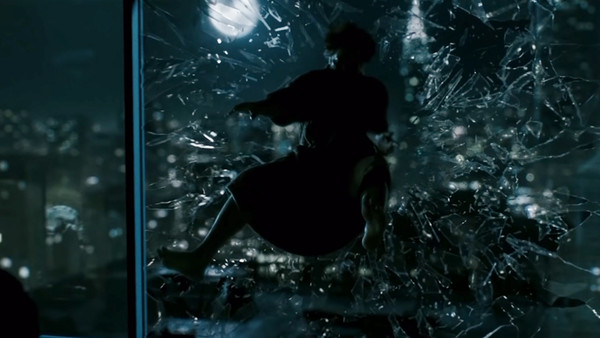
Watchmen begins with The Comedian (Jeffrey Dean Morgan) watching a series of news reports which cement the socio-political climate of the film's alternate universe, after which his home is broken into by a masked assailant.
A brutal fight scene follows, concluding with the former superhero being thrown to his death, which dovetails seamlessly into a riveting opening title sequence set to Bob Dylan's "The Times They Are a-Changin."
The titles chronicle the evolution of superheroes throughout the 20th century, while further crystallising the film's fundamentally altered politics (namely JFK being assassinated by none other than The Comedian himself).
It gets the movie off to one hell of a start, and one that, sadly, the rest of it hasn't got a hope in hell of matching.
Watchmen is certainly a good movie, but its strongest ideas, both stylistically and thematically, are largely crammed into the first 11 minutes of Snyder's 163-minute epic.
7. Drive
The Movie
It's fair to say that Nicolas Winding Refn's crime drama isn't for everyone - though marketed as a breakneck action flick, Drive is ultimately more of a character drama with genre film trimmings.
And though the director's slow, "art-house" approach was disconcerting to some, to many it served as a refreshing subversion of a genre so reliant on ham-handed cliches.
If nothing else, it's tenaciously directed, brilliantly acted (especially by Ryan Gosling, Bryan Cranston and Albert Brooks) and jam-packed with awesome music.
The Opening Scene
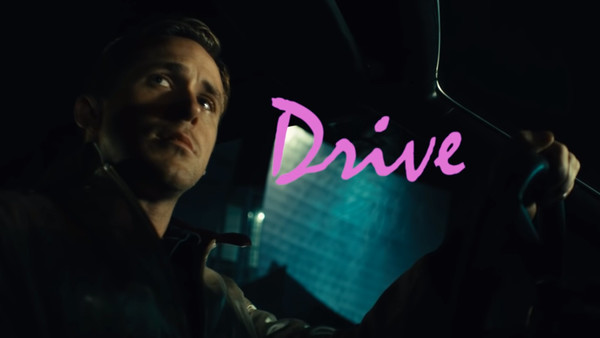
Much like Scream, Drive's opening sequence works on its own as an extremely tight and impressive short film, establishing the protagonist and serving up some delicious thrills in the process.
The scene introduces audiences to The Driver (Gosling), a mechanic and stuntman moonlighting as a getaway-driver-for-hire.
We learn the Driver's strict rules for carrying out a job, before he picks up two thieves and gets them safely across town with the police in hot pursuit.
Between Refn's claustrophobic direction - which takes place almost entirely inside the car - and The Chromatics' pulsing "Tick of the Clock", it's pure suspense at its most brilliantly sweaty-palmed.
And if that's not enough, once the job is done, Refn cuts straight to the opening titles, which show the Driver heading home, set to Kavinsky's incredible "Nightcall."
Whether you love the rest of the movie or find it a wilfully plodding slog, it never again reaches this level of sustained tension, excitement or sheer cool.
6. Casino Royale

The Movie
With audiences long-tired of the excess silliness and over-reliance on awful CGI in Pierce Brosnan's Bond films, 2006's Casino Royale was the perfect tonic - a serious, violent and practical-minded reboot that instantly confirmed Daniel Craig as one of the best-ever iterations of 007.
It's not perfect - the product placement and Richard Branson's cameo are embarrassing, and the poker scene is a massive chore on repeat viewings - but as far as "gritty" reinventions go, it's right up there with Christopher Nolan's Dark Knight saga.
The Opening Scene
Though many will point to Casino Royale's unforgettable Madagascar chase as the film's show-stealing opening scene, this sequence doesn't actually kick off until 10 minutes into the movie - and even then, it's not quite the best scene in the film.
Indeed, the movie kicks off with a deliciously simple, reined-in black-and-white sequence as Bond gets the drop on a traitorous MI6 agent in Prague.
With its eerie quiet and terse, silky smooth dialogue, the scene would feel more at home in a John le Carré novel than a Bond film - at least until director Martin Campbell brilliantly cross-cuts to Bond scoring his first kill.
Between savagely murdering a man in a toilet and coldly shooting this MI6 Agent dead, we get a glimpse at Bond's multi-faceted nature - at once a tenacious thug and effortlessly detached when the mission calls for it.
That the scene ends with the best gun-barrel in the entire Bond franchise and one hell of a titles sequence - scored to Chris Cornell's brilliant "You Know My Name" - is just the icing on the cake.
You can argue that the Madagascar chase is more of a spectacle, because it absolutely is, but in terms of firmly burying Brosnan's Bond and instantly establishing Craig as an all-timer 007, the film's opening six minutes are nothing short of perfection.
There are of course several superb set-pieces throughout the film, but nothing that services Bond as a character quite so succinctly.
5. Batman V Superman: Dawn Of Justice
The Movie
Zack Snyder strikes again, this time with one of the most anticipated - and, ultimately, disappointing - movies of the last decade.
Batman v Superman: Dawn of Justice arrived on a tidal wave of fan hype, aided by a (mostly) fantastic set of trailers, which promised one hell of an epic showdown between the Caped Crusader (Ben Affleck) and the Man of Steel (Henry Cavill).
Despite oodles of impressive style and a remarkable Affleck performance, though, BvS was a thoroughly sloppy mess of half-baked ideas, conflicting tones, nonsensical subplots and wonky CGI. The Ultimate Edition fixed some of these issues, but it's still an incredibly rough film.
The Opening Scene
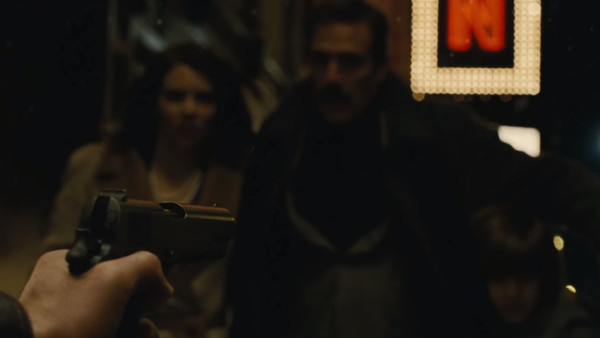
Just like Watchmen, all of the film's promise is wrapped up in its opening sequence, which juxtaposes the murder of Thomas and Martha Wayne (Jeffrey Dean Morgan and Lauren Cohan) against Bruce's dream of him running away from his parents' funeral and discovering the Batcave.
It's beautifully shot - as you'd expect from Snyder - wonderfully scored and gives audiences the most ravishing rendition of the Waynes' deaths yet put to screen. And yet, the rest of the film's bloated run-time can't match the elemental power of these images ever again.
Even the titular throwdown between Bats and Supes is a weirdly forgettable damp squib, lasting barely five minutes and ending with, uh, that moment.
When your movie is 151 minutes long and is supposed to climax with an epic superhero showdown but reaches its artistic peak five minutes in, you know you screwed up.
4. La La Land

The Movie
Nominated for a record-tying fourteen Oscars and winning six (including Best Director and Best Actress), there's little point denying that La La Land is a great movie.
Between Damien Chazelle's incredible direction, Emma Stone and Ryan Gosling's excellent performances and the film's unexpected dramatic heft, this is a rarest of musicals that refuses to let the theatricality overpower the core character drama.
The Opening Scene
Nothing Chazelle serves up really gets close to the technical virtuosity of the film's opening dance sequence, which takes place on a congested Los Angeles freeway, as dozens of drivers spontaneously exit their cars to belt out the song-and-dance number "Another Day of Sun."
Cleverly blending three takes into one seamless, six-minute whole, the scene boasts mind-bogglingly meticulous choreography and camerawork, while setting the tone for the rest of the movie perfectly.
But as well-crafted as La La Land might be, it never manages to replicate this level of slack-jawed, fist-pumping glee ever again - partly by design, but certainly not entirely so.
3. 28 Weeks Later

The Movie
With none of the principal cast returning and Danny Boyle passing directing duties off to the untested Juan Carlos Fresnadillo, it's fair to say that expectations weren't high for this belated sequel to Boyle's 2002 low-fi zombie classic.
So a pleasant surprise it was, then, when it turned out to be a chillingly bleak, character-driven gore-fest that didn't skimp on either palpable drama or gnarly thrills. It lacks the stripped-down purity of the original, but served as a worthy sequel all the same.
The Opening Scene
File this in the "opening scene is a short film" folder, because the first 11 minutes of 28 Weeks Later are more stomach-knottingly tense than anything else in either of the two movies.
Protagonist Don (Robert Carlyle) and his wife Alice (Catherine McCormack) are hiding out in a remote cottage when the Rage Virus breaks out, but their cover is blown when a young boy begs for shelter, bringing with him a horde of the infected.
In the sequence that follows, Don's fellow survivors are massacred, and he's also forced to abandon Alice to ensure his own survival, fleeing to a nearby boat while just scarcely escaping the horde.
Shot with inventive, claustrophobic tenacity by Fresnadillo and shrewdly reprising John Murphy's iconic score from the first movie, it's a gut-wrenching introduction that the rest of the film can't even begin to live up to.
The remainder of the movie may be a totally solid "zombie" film, but the opening scene is on a whole other level.
2. The Dark Knight Rises

The Movie
Christopher Nolan's The Dark Knight Rises was, of course, the climactic entry into his hugely successful saga of gritty, "grounded" Batman movies, and faced the thankless task of following-up the universally loved The Dark Knight.
Though the narrative is riddled with dubious eccentricities, it's still a thoroughly entertaining superhero opera, jam-packed with eye-popping action, emotionally involving character arcs and strong performances (especially Tom Hardy's Bane and Michael Caine's Alfred).
It doesn't touch The Dark Knight, but what does?
The Opening Scene
In an attempt to one-up the unforgettable opening introduction to The Joker (Heath Ledger) in the previous movie, Nolan takes the action to the skies this time for Bane's debut.
The sequence, which not-so-subtly homages the James Bond franchise, sees Bane being captured by the CIA and transported on a plane with nuclear physicist Dr. Leonid Pavel (Alon Abutbul).
But of course, once Bane is allowed to speak, he reveals that getting caught was all part of the plan, as his cronies show up to carry out an ambitious mid-air liberation of both himself and Pavel.
Given that so much of the sequence was achieved practically - this is Nolan, after all - it goes without saying that it must've been a headache to film. It was surely worth it, though, as the extremely tactile and believable nature of the otherwise absurd set-piece undeniably enhances the audience's immersion.
As an introduction to Bane in all of his theatrical villainy, it's a fantastic sequence, if one that the rest of the film can't really beat.
While The Dark Knight has at least three scenes which can hold a candle to The Joker's heist, none of this movie's subsequent action achieves the same ingenious fusion of boundary-pushing practical filmmaking and kinetic storytelling.
1. Touch Of Evil

The Movie
And we'll conclude our list with an oldie (but a goodie) - Orson Welles' terrifically entertaining 1958 film noir Touch of Evil.
An insidiously grim tale of murder and corruption transpiring on the U.S.-Mexico border, Welles' film stars himself and Charlton Heston as two cops on opposite sides of the border investigating a car bomb explosion.
Heston being "browned up" to play a Mexican is undeniably embarrassing by contemporary standards, but the devilishly bleak storytelling and Welles' compulsively repulsive performance coincide perfectly with some of his best direction ever. It's not quite an overall all-timer for Welles, but not far off.
The Opening Scene
Touch of Evil is most fondly remembered for its jaw-dropping 3.5-minute opening sequence, which transpires over a single unbroken take as a bomb is placed inside a car, the car is driven across the U.S. border, and it consequently explodes.
For 1958 it may have been revolutionary, yet even today, it demonstrates a filmmaker in full mastery of their craft, taking an urgent ticking clock scenario and mining every last possible drop of suspense out of it.
The remainder of the movie is plenty entertaining, for sure, but it never again feels this unique, technically accomplished or efficient in its storytelling.