10 Movies That Pissed Audiences Off The RIGHT WAY
You got mad, but you liked it.

Most people don't watch movies to be left annoyed or pissed off - they want to be entertained and feel happy with how a story was wrapped up, allowing them to effortlessly escape their everyday lives.
Hence why fans responded so abrasively to the likes of Iron Man 3, Man of Steel, Star Wars: The Last Jedi and countless other divisive tentpoles which took major risks and angered a good portion of the audience in the process.
But sometimes the right move isn't the one that leaves viewers smiling, it's the one that makes them righteously angry, whether to sell the injustice of a downbeat moment, or even draw attention to a pressing real-life issue.
It's a fine line, admittedly, but skilled filmmakers can frustrate their audience with a lack of catharsis and still deliver an end result that's satisfying or at least appropriate for the story and characters.
These 10 films, whether fantastical or disconcertingly true to life, all dared to push viewers' buttons and came out the other side in tact.
You were surely left exasperated, irritated and maybe even a bit baffled by these films, but in each case it was also the right creative call, as you perhaps only appreciated in retrospect.
Nevertheless, if you're going to watch these movies, make sure you've got something safe and frothy lined up afterwards - or at least a box of antacids to keep the bile at bay...
10. Billy Dies - The Departed

Martin Scorsese's Best Picture-winning crime epic concludes with a shocking and unexpected - for anyone who hasn't seen the original, anyway - gut-punch.
As he attempts to bring criminal mole Colin Sullivan (Matt Damon) to justice, undercover cop Billy Costigan (Leonardo DiCaprio) is shot in the head by the corrupt Trooper Barrigan (James Badge Dale) totally out of nowhere.
And it's an absolutely perfect moment, frustration and all.
Costigan got so damn close to putting the mole away and escaping with his life, but he instead dies like a dog in an exceptionally brutal way.
To rub salt in the wound, the villain gets away with it (for now) and even recommends Costigan for the Medal of Merit.
It's an ending for the character so infuriating that Scorsese had to give Sullivan a last-minute death at the hands of Mark Wahlberg in order to prevent audiences from straight-up revolting in cinemas.
But it's a fittingly grim end for a character who, let's face it, had been playing with fire from the beginning, even if mainstream audiences were most certainly expecting him to live.
9. Upham Fails To Save Mellish - Saving Private Ryan

Though Saving Private Ryan is ultimately a melancholic meditation on the tens of millions of lives pointlessly lost in World War II, it invites genuine exasperation with one of its most brilliantly upsetting moments.
Poor Pvt. Mellish (Adam Goldberg) gets waylaid by a German soldier while Cpl. Upham (Jeremy Davies) stands on a nearby staircase, paralysed with fear and unable to save him.
The audience is forced to watch as the soldier eventually overpowers Mellish, slowly driving a knife into his chest and killing him, while Upham does nothing to help.
It's a scene tailor-made to leave the audience throwing up their arms in despair at Upham's inaction even if, on reflection, it's a perfect summation of how the average person would act when forced into the throes of war.
It's unquestionably the most disturbing scene in a movie filled with harrowing moments, and arguably its most tellingly human, all the more so with the strong feelings it brings out in viewers.
8. The Military Arrives...Two Minutes Too Late - The Mist

Frank Darabont's adaptation of Stephen King's sci-fi horror novella culminates with one of the most soul-shattering endings to any movie, well, ever, and one that pissed its fair share of viewers off - if clearly by design.
Protagonist David Drayton (Thomas Jane), his son and a few fellow survivors have spent the entire movie escaping a fleet of grotesque, spider-like inter-dimensional aliens, and are driving through the mist when they come across a gigantic, Lovecraftian beast, after which they run out of gas.
The message seems clear - there's no hope and no chance of survival, so the adults enter into a suicide pact to avoid a painful death at the hands of the alien monsters. Moments later, David shoots his own son and also the three other survivors.
With no bullet left for himself, a distraught David then walks into the mist, waiting to be devoured by the approaching creatures...only for the mist to recede and the U.S. Army to emerge, revealing that humanity has regained the upper hand and the alien threat is being taken care of.
If that's not devastating enough, David also has to watch as survivors are shepherded past him, including a woman (Melissa McBride) who, seemingly foolishly, left the supermarket earlier in the movie, but has now been rescued along with her children.
It's about as much of a "f**k you" ending as a film can muster up, and yet, it's an absolutely sublime downer. Had David just waited two minutes longer, his son and friends would still be alive.
It's an ending that invites plenty of anger, especially from more casual-skewing audiences expecting a slightly cheerier human triumph.
But even King himself agrees that it's a superior ending to his source material - which basically just ends - and offers up a uniquely effed-up twist on the typical victory over alien invaders.
It might leave you fuming on a first viewing, but once you've let it sit for a while, it's easier to appreciate just how brilliant it is.
7. Patrick Returns Amanda To Her Mother - Gone Baby Gone
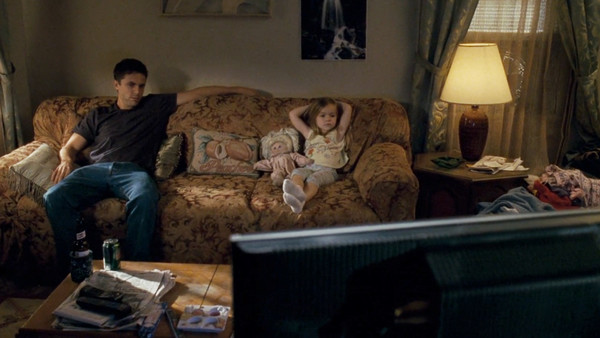
Ben Affleck's fantastic thriller about the hunt for a missing child concludes with the revelation that the girl, three-year-old Amanda (Madeline O'Brien), was kidnapped by Captain Jack Doyle (Morgan Freeman), who felt he could offer her a better life than Amanda's cocaine-addicted mother Helen (Amy Ryan).
Protagonist Patrick (Casey Affleck) then discusses whether or not to turn Doyle in with his partner Angie (Michelle Monaghan), who insists she will leave him if he reports Doyle to the police.
After a beat, we see that Patrick did indeed call the cops, and the film ends with Amanda being returned to her mother.
In the final scene, Helene is once again getting ready to go out without arranging a sitter for Amanda, and Patrick shows up to look after her instead.
Audiences have agonised over Gone Baby Gone's final dilemma for over a decade, as to whether or not Patrick did the right thing.
And naturally, the film's ending is a major source of frustration for many, who felt that Patrick made a huge mistake by placing Amanda back with her mother rather than allowing her to live out a "better" life.
But that's the brilliance of the ending - it's satisfying because it's unsatisfying. It's a decision totally consistent with Patrick's established character, raises a provocative moral question and then leaves the audience to ponder it forever more.
Had the film simply ended with Amanda living a happy life with Doyle, it wouldn't be anywhere near as poignant. The blood pressure of everyone watching might've been a bit lower, though.
6. Jimmy Murders Dave - Mystic River
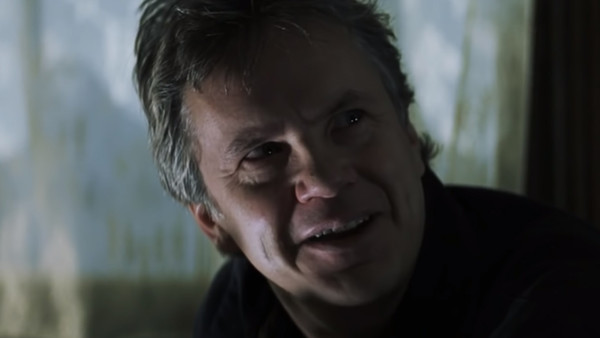
Clint Eastwood's Oscar-winning drama follows ex-con Jimmy Markum (Sean Penn) as he investigates the murder of his 19-year-old daughter Katie (Emmy Rossum).
This culminates in a desperate, understandably angry Jimmy blaming his childhood friend Dave Boyle (Tim Robbins) for the killing, ultimately coercing him into a confession on the promise of sparing his life.
But of course, after confessing, Dave is stabbed and shot by Jimmy, who subsequently dumps his corpse in the Mystic River.
The next day, Detective Sean Devine (Kevin Bacon) - another of Jimmy's childhood pals - informs Jimmy that he caught the real killers, and Katie's death was part of a prank gone wrong.
Sean then realises that Jimmy has killed Dave, and the film ends with Sean indicating that he will be watching Jimmy from this point on.
It's an almost unbearably depressing ending, especially as Dave was himself a victim of sexual abuse and clearly suffered with the effects in his adult life, while Eastwood passes infuriating comment on the dangers of mob mentality.
It's an ending that makes the audience feel dirty for rooting for Jimmy, and want to take a damn long shower after watching - but that's also why it's so damn great.
5. Delacroix's Execution - The Green Mile
Frank Darabont strikes again with another brilliantly enraging Stephen King adaptation, The Green Mile. As if the heartbreaking climactic execution of gentle giant John Coffey (Michael Clarke Duncan) isn't tough enough, there's a moment earlier in the film sure to leave viewers fighting back angry tears.
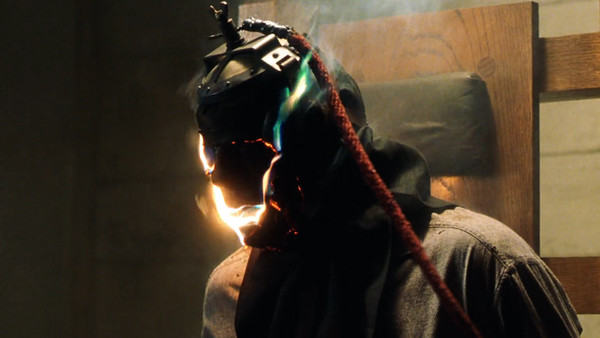
As death row inmate Eduard Delacroix (Michael Jeter) is being prepped for his electrocution, antagonistic warden Percy Wetmore (Doug Hutchison) - who (temporarily) killed Del's pet mouse Mr. Jingles earlier in the film - intentionally "forgets" to wet the sponge which will hasten Del's death and minimise his suffering.
The result is a sequence more horrifying than almost anything you've ever seen in another Stephen King movie.
Del is horribly burned as the electricity passes through his entire body, eventually causing him to set on fire as the other wardens wrestle with whether or not to stop the execution.
Del eventually expires, leaving the audience in a state of seething disgust with Percy, who avoids formal punishment due to being the governor's wife's nephew.
Satisfyingly, however, he gets his comeuppance by being possessed by Coffey, who ultimately leaves his mind in a vegetative state.
A fitting end, a prison even, for the most sadistic warden this side of Shawshank.
4. The Killer Isn't Caught - Zodiac
David Fincher's Zodiac is a masterful, meticulously accurate account of the Zodiac Killer's rampage across the San Francisco Bay Area in the late 1960 and early 1970s.
Fincher goes into immense detail about both the brutality of Zodiac's killings and also the desperate quest of both the police and cartoonist Robert Graysmith (Jake Gyllenhaal) to catch him.
And while just about every serial killer movie ever made ends with a big reveal and the killer blown away by the hero, Zodiac was never actually caught in real life, and rather than rustle up a Hollywood ending, Fincher stays entirely true to reality.
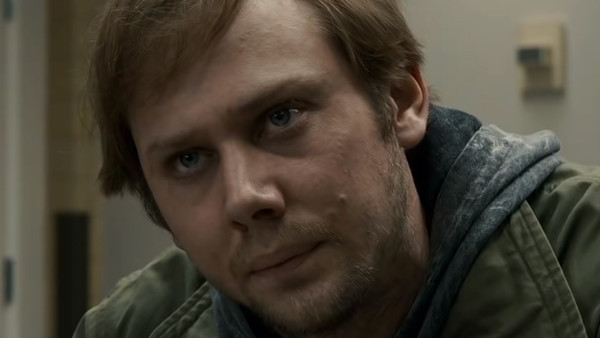
The film's final scene sees surviving Zodiac victim Mike Mageau (Jimmi Simpson) identifying Arthur Leigh Allen (John Carroll Lynch) as the man who shot him 22 years prior.
But of course, Mageau's identification is far from concrete, supporting evidence against Allen was weak and Allen died the year after Mageau ID'd him.
In a film wholly concerned with Graysmith's fascination to unmask Zodiac, it's quite brilliant that Fincher manages to convey that irritated fascination to the viewer.
3. Wash's Death - Serenity

Never, ever trust Joss Whedon to keep a beloved supporting character alive, because there's always a good chance he's going to off them and piss off the entire fanbase.
Such was the fate afforded to Serenity's beloved pilot Wash (Alan Tudyk), who after flying the titular ship through an extremely perilous battle between the Reavers and the Alliance, quickly discovers that his number is in fact up.
Following a brief moment of respite, Wash is impaled through the chest by a Reaver harpoon, dying near-instantly and throwing the remaining Serenity crew members into a vengeful battle.
Given how Wash was an easy fan fave and in many ways the heart and soul of the Firefly series, seeing him die such a brutal death was deeply traumatising - if not incredibly annoying - to fans.
Still, Wash's death totally serviced the story and led to an affecting payoff with River (Summer Glau) inheriting the title of pilot, but of course refusing to remove Wash's famous dinosaur toys from the dashboard.
But to reiterate - don't fall in love with anyone in a Joss Whedon show or movie, because he's just gonna snap your heart in two like his life depends on it.
2. Nick Stays With Amy - Gone Girl

And now for another exercise in David Fincher chastising the audience. His remarkable 2014 thriller Gone Girl sees Nick Dunne (Ben Affleck) attempting to clear his name as he becomes the prime suspect in his wife Amy's (Rosamund Pike) disappearance.
But as it turns out, Amy staged her own disappearance, and in revenge for Nick's infidelity, is attempting to frame him for her murder.
In the end, Amy is forced to change her plan and frame another ex-boyfriend, Desi (Neil Patrick Harris), for her kidnap, before she returns home to Nick (and the media).
Nick is cleared of all charges and wants nothing to do with Amy, who soon enough announces that she's pregnant, having inseminated herself with Nick's frozen sperm.
Nick, feeling a sense of duty to his unborn child, decides to stay with Amy, and maintains the facade to the media that he and his wife are simply a happy, reunited couple.
Audiences are practically left screaming at the screen when Gone Girl ends, because Nick's behaviour seems so asinine and yet, so bizarrely relatable.
As a blackly comic commentary on the power of the media and our relentless obsession with the lives of others, it hits the piss-boiling mark and then some.
1. The Charlottesville Montage - BlacKkKlansman

While each of these aforementioned movies at least had some semblance of Hollywood artifice to hide behind, that's not at all the case with the jaw-dropping conclusion to Spike Lee's BlacKkKlansman.
After the main KKK storyline has been concluded, Lee seamlessly cuts to footage of the 2017 Unite the Right rally in Charlottesville, Virginia, where a white supremacist terrorist drove his car into a crowd of protestors and killed 32-year-old Heather Heyer.
We then cut to footage of President Trump comparing the white supremacists and the peaceful protestors while refusing to fully vilify the perpetrator as a terrorist, a tribute to Heyer and, finally, an image of the American flag upside down, a common sign of distress or protest.
The closing montage was an extremely powerful, upsetting and righteously angry way for Lee to draw parallels between historic white supremacy and that which still pervades today.
If you weren't foaming at the mouth by the end of this movie, were you even really watching?