10 Movies That Smashed The Box Office With A Totally Unknown Cast

Success doesn't always rely on Brad Pitt.
There was a time in Hollywood when finding a bankable star to be associated with a new movie was the ultimate priority of the movie studios. In the silent era, films were often propped up by a recognisable face, and getting Marlene Dietrich or Greta Garbo to place their signature on a dotted line pretty much guaranteed success. Things changed with the advent of sound, and by the 1940s the €˜Golden Age€™ of Hollywood was over. By the 1950s the actor had been replaced by the rock and roll star as the primary object of cultural worship. More than a cultural shift in how movie stars were perceived, however, was a greater emphasis on realism in cinema. It was a gradual process, but eventually directors began seeking out lesser known talents in order to make a more believable film. Famously Alfred Hitchcock killed off Janet Leigh, the star of Psycho, just 40 minutes into the movie, in a decision which manipulated and permanently altered audience expectations. Steven Spielberg requested unknown actors to star in Jaws €“ though Roy Scheider and Robert Shaw were hardly anonymous in Hollywood at the time. Eventually it became both practical and trendy to cast lesser known, or potential, stars in big movies. From the studio's point of view it cost less money, and for the director, it allowed him or her to execute a more realistic story. Here are ten films which really made it big despite a cast of relative unknowns.

10. Mean Streets

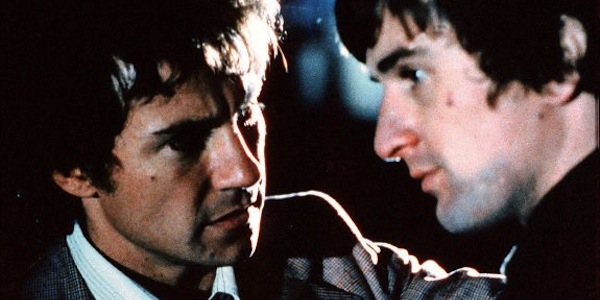
Mean Streets has been lauded by audiences since its first release in 1973. What€™s more it made six times the $500,000 Warner Bros paid for its production. That said, it was hardly riding a wave of big names on its way to critical and commercial success. Harvey Keitel played the lead role Charlie, a small-time New York gangster. While he is today considered one of the finest actors of his generation, back then he€™d had just one major movie part (in Scorsese€™s first film, the still unwatched Who€™s That Knocking At My Door). Remarkably Robert De Niro€™s first film role came just two months earlier, ensuring his part as Jonny Boy came in completely under the radar. To top it all off, this was Martin Scorsese€™s first proper directorial effort on a project of his own choosing. So that€™s three unknowns - one director and two actors - who would use the success of this minor hit to become some of the most acclaimed and recognisable stars in Hollywood history.

9. Alien

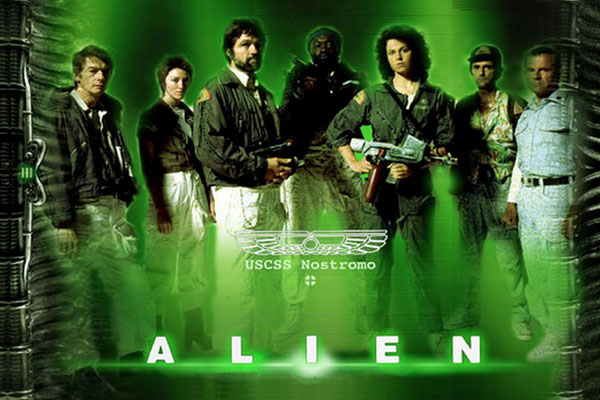
It€™s obvious why Ridley Scott was so set on the cast of Alien being plucked from relative obscurity. This wasn€™t a film about the glamour of space exploration: it focused instead on the gritty functionality of future space travel, and the dread of what we might find if we looked long enough. A film of this nature with a bunch of well-paid stars just wouldn€™t have captured the horror that was required, and the audience wouldn€™t have been immersed in the way they were. The most experienced actor involved was Ian Holm, playing the android Ash, while the rest of the cast either still resided in obscurity or were just starting out. Sigourney Weaver€™s principle experience came from Broadway, while John Hurt was only really known for his work on television in England with The Naked Civil Servant and I, Claudius. The lack of star appeal didn€™t hold the film back however, with the movie becoming a big hit at the box office and earning a number of sequels, including the similarly acclaimed, and imaginatively titled Aliens. Spin-offs and merchandise are still being churned out to this day. It€™s fair to say Alien is an exemplary case of an unknown cast working in a film€™s favour, rather than holding back its appeal.

8. Halloween

If you€™re looking for an example of a film that comes totally out of the blue, with a tiny budget and a cast of unknowns, to succeed on a massive scale at the box office, look no further than Halloween. Donald Pleasance was the only recognisable face involved in the project, and even he was third choice after Peter Cushing and Christopher Lee both declined the role of Dr Loomis. Jamie Lee Curtis had never appeared in film up to this point, limited instead to television parts. At the same time Nick Castle, playing the masked Michael Myers, is still unrecognisable to this day, except to the most die-hard horror fans. The film followed in the footsteps of Psycho, not just in terms of tone and subject matter, but in how an obscure cast was assembled for a greater sense of threat and realism. It is a peculiar fact of the horror genre that it seems to be most successful when suspension of disbelief is at its greatest, and this can only occur when the actors on screen are not associated with other films or projects. Whereas once a horror flick would involve a cast of high profile actors to ensure greater box office returns, the low budget feel seems to reap the greatest rewards in modern cinema. Halloween itself made an incredible $70m from a shoestring budget.

7. Cloverfield

Cloverfield is notable for all sorts of reasons, not least combining the 'found footage' format, typically associated with horror films, with the monster movie genre. At the same time this is one of the rare 'found footage' films with the involvement of a big name producer - at least in hindsight - with JJ Abrams heavily involved in the process. The surprising hit featured no recognisable actors and not a single one of its cast had featured in a major Hollywood role until this point. This is, of course, one of the major ploys of this type of film - put together a cast of relative unknowns and the audience are more likely to swallow the idea that this stuff really happened! It turns out the audience must have got into the spirit of things because it made a very respectable $175m at the box office - an excellent return of an outlay of just $25m. Even better was that this was a very strong film in its own right, regardless of the much maligned genre it belongs to. The shaky cam conceals the creature from the viewer for as long as possible and really does lead to a sense of dread as we wonder what the hell this thing is.

6. Paranormal Activity

The second of a whopping three entries in our list from the 'found footage' genre. It really is no surprise that Hollywood has been churning out a couple of these every year since The Blair Witch Project hit audiences; it's so easy to make a profit back, so long as the studio has a clever marketing strategy. This film is a perfect example of that: pretty much the entirety of the film features a young couple experiencing a haunting in their new house. The couple is played by Micah Sloat and Katie Featherstone. Heard of them? Didn't think so. Featherstone had a couple of bit parts in minor films up to this point while this was actually Sloat's first piece of acting experience. Since then he's acted in just two more films, both from this franchise. But the lack of any recognisable faces didn't hold the film back financially, as it grossed an incredible $200m from an outlay of just $15,000. Those really are crazy numbers, and while audiences claim to be tired of this type of movie-making, can you really blame the studios for sticking with such a bankable formula?

5. Texas Chainsaw Massacre

Another slasher, but the lack of stars in this horror really do help chill the bones, Texas Chainsaw Massacre helped kick off the genre, along with the likes of Black Christmas, and took a number of cues from Psycho, the 1960 film directed by Alfred Hitchcock (more on that film later). While it mined Psycho for themes and camera trickery, it really took everything Hitchcock did and multiplied it by a factor of ten. A more isolated setting, more killers, this time even creepier than Norman Bates, more deaths. The list goes on, but is also notable for one of the most obscure casts ever to be put on film. Sally Hardesty, the films main heroine and only survivor was played by Marilyn Burns, who had only played a minor part in one film at that point. Then there was Paul Partain, playing the wheelchair-bound Franklin Hardesty. He'd only turned to acting a couple of years after returning from Vietnam and being laid off from his job at the manufacturing plant. Again the film was hardly the worse for the lack of involvement of recognisable stars. Making $300m at the box office - a remarkable 100 times what the studio paid to have it made.

4. A Fistful Of Dollars

By the mid-60s the Western genre, once a Hollywood staple, had stagnated. Plenty of people still turned out to watch cowboy flicks, but the general sentiment was that the artistic merit of such films had slumped. Enter Sergio Leone, an Italian film-maker who saw potential in marrying a traditionally American genre with the grit and realism traditionally association with the cinema of his own country. All he had to do was find a star to bring it home. Henry Fonda, Charles Bronson and Rex Harrison all declined, citing a poor script and being unconvinced by the project. Eventually the unknown Clint Eastwood was cast and the rest is history. Actually an unknown actor, though only cast through circumstance, was a perfect fit for a film which did not name its lead character €“ now known as €˜The Man With No Name€™. Also the anonymous anti-hero complimented Leone€™s desire to add Italian realism to a genre which had become increasingly verbose. The film made around $15m on its American release. It only cost $200,000 to be produced. By the release of The Good, The Bad and The Ugly Eastwood was a Hollywood mega-star, but it all started with this role he will for ever be associated with.

3. Psycho

While it would be unfair to describe Janet Leigh and Anthony Perkins as totally unknown quantities before Psycho, in many ways this is the film which started the trend towards independent film-making and turned the traditional approach to casting on its head. Hitchcock had his initial pitch to make the film rejected by Paramount. They preferred the idea behind a film titled €˜No Bail For The Judge€™, which was eventually shelved, and projected to star Audrey Hepburn. Really they wanted another star-studded thriller in the classic Hitchcock mould. Ultimately Hitchcock persisted, and got his wish to make the film €“ though the studios refused to finance or promote it; instead they would only distribute it to cinemas. Hitchcock had to find the money for every aspect of the film himself. The film may have starred two relatively established actors of the time, but it was how these actors were used which most was interesting. Neither actor was allowed to promote the film, for fear of giving away the plot. Rather than using two stars to get punters in, Hitchcock deprived the film of this traditional marketing routine. Leigh lasted just a few scenes before she was killed off, a move which was totally alien to audiences until that point, while Perkins was cast as Norman Bates, the murderer €“ again an unusual choice. It was this sort of film which eventually necessitated directors, particularly in the horror genre, avoided well-known actors.

2. Blair Witch Project

The hand-held/ found-footage horror genre is an obvious reservoir of high-grossing films with relatively obscure casts, but The Blair Witch Project really kick-started this type of movie-making, for better or worse. While it is arguable that Cannibal Holocaust is the first example of the €˜found-footage€™ genre, this is the first of the format to reach a wide audience beyond horror nerds. It almost goes without saying that a film of this nature could only work if the audience suspends disbelief to such an extent that they don€™t consider the actors to be actors at all. The aim here is to convince viewers that they are witnessing reality shockingly unfold before them. So successful was the found-footage device, aided by a cast of unknown actors, that controversy stirred regarding whether this was a real documentary or not. The actors in this film were so obscure upon release that it would be perhaps be wrong to call them actors at all; they even use their real names throughout. Anyway, for a film shot for almost no money, distributed on the internet and featuring no real professional acting talent, this did stunningly well at the box office, making $250m worldwide. Basically $250m more than it cost.

1. Rocky

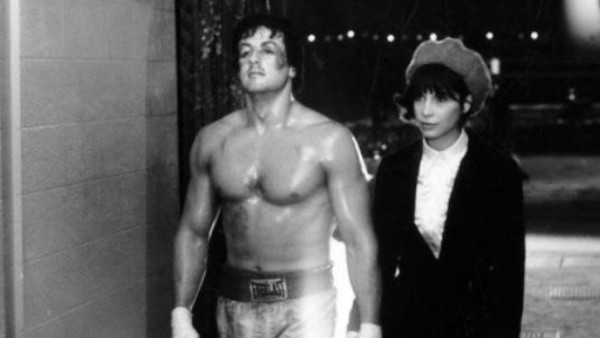
Of all the films on this list, it is perhaps Rocky which is the most surprising success. Sylvester Stallone showed up at United Artists€™ door with a script he€™d written about a down-on-his-luck boxer who somehow gets a shot at the heavyweight title, which he wrote after witnessing the Ali v. Wepner fight. His previous experience of movies was limited to sporadic appearances in softcore pornography. Remarkably the studios liked the script, and somehow Stallone held tight until he got the leading part €“ on the condition the film cost next to nothing to make and therefore wasn€™t a gamble. What followed was one of the most extraordinary successes in film history, when one considers it was made for next to nothing by a complete nobody. Rocky made $225m at the box office €“ the biggest hit of 1976 €“ and even won three Oscars, which included Best Picture. It has spawned five sequels so far, and has entered into wider popular culture with a host of soundtracks, video games and other media to its name. Stallone himself became one of the biggest action heroes in the industry, a €˜bankable€™ star in his own right who is still churning out movies (of varying quality) to this day. Did you enjoy this article? Share your appreciation below in the comments thread.

In this post: 
Alien
 
Posted On: 
Contributor

Adam Thompson hasn't written a bio just yet, but if they had... it would appear here.