10 Movies That Tried To Change Cinema Forever (And Failed)
High frame-rate is a bust.

Making a good movie is difficult enough, let alone a great one or, better still, one that actually changes the landscape of cinema forever more.
Without The Jazz Singer we wouldn't have sound, without The Wizard of Oz we wouldn't have Technicolour, and without Toy Story we wouldn't have CGI animation, to name just a few key innovators.
But beyond those precious few films which genuinely changed the game, there have been dozens of pretenders who admirably tried to give viewers a totally new type of cinema, yet categorically failed in their attempt.
Whether met with a hostile audience response, commercially unsuccessful or simply failing to skyrocket in the way the filmmakers hoped, these various technologies and efforts to spruce up the moviegoing experience became curious novelties at best, if not actual embarrassments.
It remains to be seen which new gimmick will be shovelled into cinemas next, but in the meantime, these are the most outlandish and ambitious that have yet been attempted...
10. House On Haunted Hill Featured Live Performance Elements

If cinema has any one clear "limitation," it's surely the barrier between the flat screen and the audience.
The audience knows they're looking at a lifeless, pre-recorded image, and so the cinema is effectively a safe, hermetically sealed space in which to watch a story unfold.
But there have been periodic attempts to add live performance elements to theatrical movie screenings, as most famously occurred for the release of the Vincent Price-starring 1959 horror classic House on Haunted Hill.
For a sequence late in the movie where a skeleton rises from a vat of acid, director William Castle encouraged cinema managers to rig up a skeleton in the screen where the film was being shown, and then "levitate" it around the screen on a series of pulleys in a gimmick Castle dubbed "Emergo."
The gimmick helped propel the film to stonking box office success, even if Emergo was ultimately a one-off, likely due to the cost of requiring an actual pair of hands to operate and maintain the rigging for every screening.
It has, however, been recreated in more recent retrospective screenings of House on Haunted Hill with amusing results.
9. Clue Distributed Alternate Endings To Random Cinemas

When in-cinema props are too much bother, why not just film multiple endings for the movie and randomly ship them to cinemas across the globe? That's what happened during the theatrical release of the 1985 black comedy classic Clue.
For while it's not uncommon for filmmakers to shoot multiple endings, typically the alternate climax will only show up on the home video release, perhaps in piecemeal form having not gone through the post-production process.
But writer-director Jonathan Lynn shot three endings for Clue and, on release day, audiences were shocked to discover the different outcomes they were experiencing compared to their pals who lived in the next town over.
Quite ingeniously, these endings were all included on the film's home video release, with the first two serving as fake-outs before the third proved to be the "canon" ending.
Despite the potential for this to drum up greater repeat business with popular movies, it's a novelty that's scarcely been repeated.
Unfriended: Dark Web reportedly pulled a similar trick last year, but probably due to the added costs and impracticality of shipping two versions of a film to cinemas, there hasn't been much studio enthusiasm.
8. Earthquake Introduced Ultra-Bassy "Sensurround"

Though there have been countless attempts to innovate the look of a film with IMAX and 3D presentation, innovations in sound are generally far less-publicised, if only because the general public has a far more limited understanding of the aural exhibition of a movie.
But for Universal's 1974 disaster flick Earthquake, they boldly shipped a series of gigantic sub-woofers to cinemas and pumped 120 decibels of "infra bass" into screens during the film's destruction scenes, hoping to replicate the feeling of an actual, life-threatening calamity.
During a test screening, the speakers' bass was intense enough to crack the ceiling's plaster, such that when the film was released and re-screened there months later, a net had to be installed to catch any falling debris. Yikes.
Despite Earthquake grossing almost $80 million against a $7 million budget, seemingly making the experiment a success, it was employed on just three more movies throughout the '70s before being quietly phased out.
The attempt to shine a light on the immersive power of sound was admirable, but if the modern film market is any indication, a hefty IMAX sound system is enough.
People don't want to feel like they might burst an eardrum or, you know, get smacked with actual debris.
7. Unsane Tried To Kickstart The iPhone Movie Revolution

Steven Soderbergh's general dissatisfaction with the costly, time-consuming nature of big-budget studio films led him to experiment with lower-budget methods of filmmaking, and to test whether or not a cinema-worthy movie could be shot on a couple of iPhones.
The result was last year's Unsane, a Claire Foy-starring psychological horror film which, despite being shot in just 10 days with no professional filmmaking equipment and on a mere $1.5 million budget, was released in more than 2,000 cinemas in North America.
And though Unsane certainly touts a lower visual fidelity than a conventionally assembled film, it is nevertheless a ruthlessly efficient piece of genre entertainment, confirming Soderbergh's shrewd skill no matter the delivery system, and also Foy's terrific acting chops.
But despite grossing almost ten-fold its budget worldwide, Unsane was deemed a financial failure due to the costs of marketing a film with such a wide release, and Soderbergh's experiment was effectively a business failure.
After all, if one of the most acclaimed directors on the planet couldn't make this work, what hope would a no-name filmmaker shooting their own iPhone film possibly have?
In an era where audiences are generally only turning up en masse for blockbuster event films, iPhone movies are much better-suited for streaming services, which likely explains why Soderberg's latest iPhone film, High Flying Bird, went direct to Netflix.
But his dabbling in this field hasn't sparked the revolution he might've been hoping for, as iPhone-shot films are still enormous rarities in even indie filmmaking circles.
6. Scent Of Mystery's "Smell-O-Vision" Pumped Odours Into Cinemas
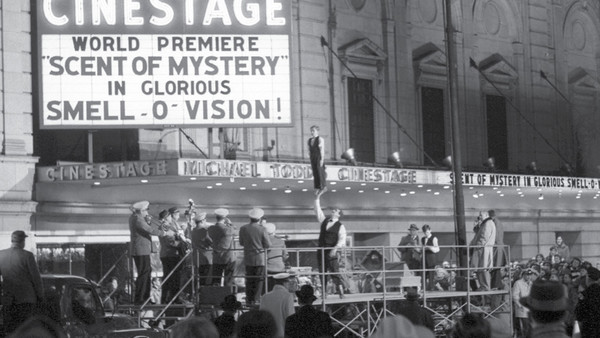
If cinema is primarily accepted to be a visual and aural medium, filmmakers have very occasionally flirted with the idea of exploiting the olfactory system - that is, our sense of smell.
If you've ever walked into a room you haven't visited in quite some time, the smell alone may recall vivid memories you associate with it, yet despite the power of a good sniff, Hollywood has (unsurprisingly) made little headway with it.
The most famous example is the 1960 Jack Cardiff-directed mystery film Scent of Mystery, which pioneered "Smell-O-Vision" technology to pump smells relevant to what's occurring on-screen through vents installed beneath the cinema seats.
This was an attempt to upgrade the "AromaRama" tech created the year prior, which instead pumped smells through the cinema's pre-existing air conditioning system.
Ultimately both attempts to add a third sensory output to their movies fell upon deaf, uh, noses, with audiences and critics alike.
Since then, films have occasionally offered scratch-and-sniff odour cards as a cheaper alternative - for John Waters' 1981 film Polyester, and also 2011's Spy Kids: All the Time in the World - but it's almost always as a tongue-in-cheek gimmick rather than an earnest attempt to expand the audience's perception of a film.
5. Unfriended Created The "Shared Screen" Genre

Unfriended was the first-ever wide release movie to take place almost entirely on a computer screen, and its incredible box office success - grossing $64 million on a mere $1 million budget - seemed to suggest the horror genre had finally found a successor to the "found footage" subgenre.
And yet, despite Unfriended releasing almost 5 years ago, there have been curiously few "shared screen" movies in its wake, the only notable offerings being its own sequel, Unfriended: Dark Web, and the hit John Cho-starring thriller Searching.
Given how easily these movies gravitate towards tech-loving teens and how cheap they are to produce, it's shocking that we haven't seen dozens hastily thrown into production.
Granted, the technical execution requires greater ingenuity than the point-and-shoot nature of an actual found footage film, but even so, it's baffling that Hollywood hasn't cynically capitalised on what seemed like the next big horror movie trend.
4. Wicked, Wicked Was Presented Entirely In Split-Screen
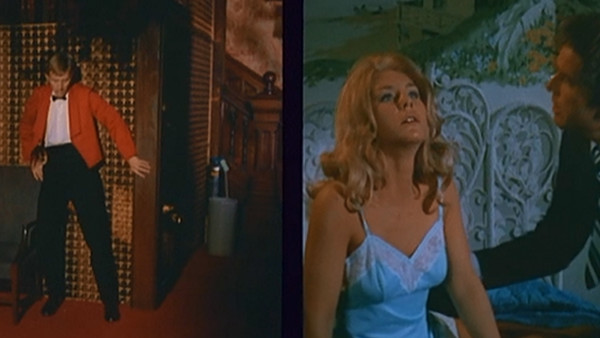
1973 horror-thriller Wicked, Wicked was marketed as being presented in "Duo-Vision," whereby audiences are presented with two side-by-side images of scenes, providing alternate, duelling perspectives for almost the entire movie - a fancy term for split-screen, basically.
Initially MGM wanted to project the two images separately onto a single cinema screen, but appreciating the high costs and labour involved, ultimately decided to squeeze the images onto a single piece of film.
Nevertheless, it was presented at a unique 2.65:1 ratio with surround sound corresponding to each side of the frame.
As neat an idea as it was, neither the film nor the gimmick resonated much with audiences or critics, and director Richard L. Bare consequently abandoned plans to shoot another film in the format.
Since then, split-screen has typically been reserved for only isolated scenes in movies, most notably in the works of Brian De Palma.
One can't help but wonder whether or not the format could one day be resurrected on streaming services, where viewers could potentially swap between two or more video feeds, but for theatrical presentation, its prospects are long dead.
3. Gemini Man Was Shot At 120 FPS

Ang Lee's Gemini Man is the third major attempt by a Hollywood filmmaker to popularise high framerate (HFR) cinema, following Peter Jackson's The Hobbit trilogy (which were shot at 48 FPS) and Lee's own Billy Lynn's Long Halftime Walk (120 FPS).
Though shot at 120 FPS, Gemini Man was projected at 60 FPS in most locations due to technical limitations, and the results immediately proved massively divisive among audiences and critics.
While the HFR effect is decidedly crisper than in either The Hobbit or Billy Lynn, the ultra-fluid aesthetic is still more of a distraction than it is an actual upgrade from a conventional 24 FPS presentation.
Seeing A-list actors perform in such a smooth image is jarring and oddly makes it feel as though we're not so much watching a film as looking through a window at a stage play.
While proponents of the format argue that audiences simply need to see more HFR content to let their brains adjust, for others it has the same effect as the grotesque motion-smoothing techniques applied to many modern TVs.
Either way, Gemini Man tanked at the box office, offering a third decisive downvote for technology that filmmakers are clearly far more interested in than audiences.
James Cameron intends to release his Avatar sequels in HFR, and if he can't make it catch on with a mass audience, then who the hell can?
2. Francis Ford Coppola's Twixt Was Created As A "Live Cinema" Event

Francis Ford Coppola's 2011 horror film Twixt came and went without any fuss at all, playing the festival circuit for a spell before disappearing amid a slew of negative reviews, despite this being the latest effort from the genius behind The Godfather trilogy and Apocalypse Now.
Though there's a solid chance you've never even heard of the film, Coppola initially had bold plans for it, hoping to tour Twixt around the world as a "live cinema" event.
Coppola's plan was to be present for screenings of the movie, sat at the back of the theater in an editing booth, where he'd re-edit the film on-the-fly to match the audience's response to certain scenes, to make the film feel "alive" and ensure that every screening was different.
It was an insane idea, of course, if only because editing is an extremely painstaking process, and the best Coppola could've really pulled off was having pre-edited alternate scenes which he could switch to with the press of a button.
But ultimately, there wouldn't have been much for Coppola to react to beyond snoring if those scathing reviews are anything to go by.
The legendary filmmaker ended up quietly ditching the idea despite a semi-successful test run at Comic-Con, and nobody cared enough about the movie to call him out on it.
1. Black Mirror: Bandersnatch Offered "Choose-Your-Own-Adventure" Storytelling For The Netflix Generation

"Choose-your-own-adventure" storytelling has existed in books almost as long as cinema has been around, but due to the obvious added complexities and costs of translating the structure to film, it's incredibly rare in cinema.
And so, enter Black Mirror: Bandersnatch, a bold attempt to bridge the gap between movies and the typically goofy FMV video games that became popular in the early 1990s.
Bandersnatch was an attempt by Charlie Brooker and Netflix to deliver a branching narrative experience with an unprecedented level of viewer/player freedom.
And while it's an admirably ambitious effort to redefine what narrativity means in the streaming era, the various permutations of the central story were ultimately not varied enough to feel truly ground-breaking.
The film's success, including two Emmy wins, will likely prompt Netflix to pursue more projects like this in the future.
Yet while it's probably too early to fully appreciate the impact Bandersnatch will have, one suspects the complexity of even the project's fairly shallow "interactivity" will mean it remains a niche attraction at best.
Nice try, basically, but it wasn't quite the tectonic blurring of narrative media that many hoped it would be given the talent involved.