10 Movies That Tried To Exploit Nostalgia (And Won)
Remember the thing?

There's arguably no more powerful force in Hollywood than nostalgia. The film industry has proven time and time again that audiences can be easily manipulated by memories of the past, especially in the case of movies they fell in love with during their formative years.
Nevertheless, Terminator: Dark Fate proved that audiences do have a tolerance for cynical nostalgia-baiting, and despite scoring well with critics, Doctor Sleep's intertextuality with The Shining sadly failed to compel mainstream crowds.
And while the history of cinema is littered with countless examples of films that failed to tap the nostalgia vein convincingly, recent years have proven that smart filmmakers and shrewd studios can exploit fanfare for a few additional rounds of milking the cash cow.
Though not every movie on this list is great, they all nevertheless did a fantastic job of leaning back on their franchise's prior successes and exploiting them to incredible commercial success - and in most cases, critical acclaim also.
Nostalgia may be the enemy of creativity in many ways, but all these films tell us is that audiences love the comfort of familiarity, and as long as they keep spending billions on characters, images, and ideas they already know and love, nothing will slow the train down...
10. Jurassic World

2015 was most certainly the year of the nostalgia-baiting sequel, and few films have resurrected an ailing franchise as successfully as Jurassic World.
Though on the surface the fourth Jurassic Park movie appears to be a slick retooling of the series' formula, it is for all intents and purposes another case of a "soft reboot."
Jurassic World introduces audiences to a new host of characters...while relentlessly dining out on and exploiting the series' most iconic imagery, almost all of which is ripped wholesale from Steven Spielberg's original - the only good one, if we're being honest.
Though the film invokes musical cues and set-pieces right out of the first Jurassic Park - including the arrival of a certain T-rex to help save the day - it rather cheekily tries to lampshade its own laziness by passing meta-commentary on the insatiable hunger of audiences, all while one of the park's employees (Jake Johnson) is effectively a Jurassic Park fanboy.
This is a film that feels algorithm-tuned to stimulate the nostalgia receptors in your brain: when the iconic Jurassic Park jeep is literally dusted off later in the movie, it's meticulously engineered to evoke those warm feelings we all have towards the 1993 original.
And while the film itself is relatively mediocre, it would be naive to deem its release anything but a win, given that it went on to gross a staggering $1.672 billion worldwide.
And proving that audiences simply love paying to see dinosaurs, last year's rancid sequel, Jurassic World: Fallen Kingdom, grossed a ridiculous $1.309 billion.
With the upcoming third film reportedly bringing back original cast members Laura Dern, Jeff Goldblum, and Sam Neill, Jurassic World 3 - aka Jurassic Park 6 - is going to drop even the faintest pretense of subtlety as it milks the nostalgia for every drop.
9. Ready Player One
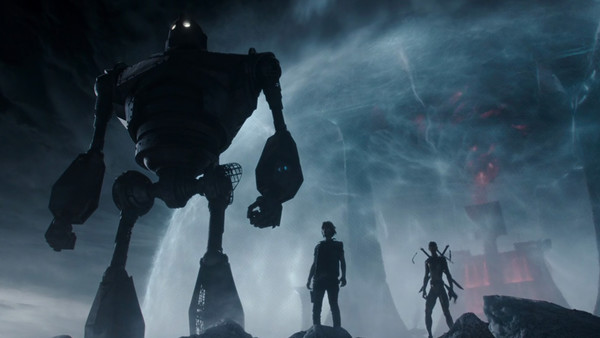
Steven Spielberg's Ready Player One is surely the most blatantly nostalgia-baiting movie ever made.
The glossy adaptation of Ernest Cline's sci-fi adventure novel takes place primarily in a virtual reality environment called OASIS, where players are able to select their own avatars ripped from pop-culture.
As a result, large portions of the film are awash with literally hundreds of iconic characters from movies, video games, and comic books.
While many of these references are fairly contemporary, there are a ton of undeniably pandering callbacks to classic nerd culture staples from the 80s in particular.
The most aggressively nostalgic of these cameos include Back to the Future's DeLorean, Jurassic Park's T-rex, and The Iron Giant, while there's also an entire sequence devoted to homaging Stanley Kubrick's The Shining (quite brilliantly, admittedly).
Ready Player One's treatment of nostalgia is more tolerable than most if only because it's such an inherent facet of both the movie and Cline's source material.
Moreover, Spielberg ultimately passes sly comment on the tendency for overzealous fans to lose themselves in these worlds while neglecting the real one, ensuring the film is more than just a hollow - if visually stunning - exercise in exploitation.
In addition to scoring positive reviews, Ready Player One grossed an impressive $582.9 million worldwide, ensuring a sequel will be on the way soon enough, though probably without Spielberg.
8. Creed II

The last three Rocky movies have all leaned heavily into the general audience nostalgia for the series, admittedly, though Creed II took this to a risky, potentially self-parodying extent, yet one that impressively paid off.
While Rocky Balboa proved that Sly Stallone's most iconic creation could still be a charming underdog and Creed served as a poignant passing of the torch to Michael B. Jordan's titular character, Creed II bore all the hallmarks of a film allowing nostalgia and fan service to run amok.
Alarm bells started ringing when it was confirmed that the sequel would see Adonis (Jordan) facing off against Viktor Drago (Florian Munteanu), the son of Rocky's arch nemesis Ivan Drago (Dolph Lundgren) from Rocky IV.
On paper, it's a premise that sounded more like an SNL skit than an actual, serious movie, and yet, director Steven Caple Jr. and a fantastic cast proved all the haters wrong.
Creed II ultimately worked the past into its plot in a genuinely sentimental and affecting way, by re-evaluating Ivan Drago through a contemporary lens and telling an unexpectedly affecting father-son story in the process.
More to the point, the film's masterstroke of an ending, where Ivan throws in the towel to save his son, was a fantastic feat of mature storytelling and smart character development.
The film certainly played a lot of familiar beats, but it did so with enough heart and intelligence that audiences didn't much seem to mind.
Ultimately it went on to gross $212.7 million, becoming the series' highest-grossing entry since Rocky IV. Despite how neatly the film tied everything off, a third film is currently in development.
7. Jumanji: Welcome To The Jungle

The world collectively groaned when a sequel to 1995's classic adventure film Jumanji was announced, because knowing Hollywood's tendency to cynically shock movie franchises back to life without any clever or inspired reason to do so, why would Jumanji of all things be any different?
And even the movie's trailers didn't really suggest anything other than a bland tentpole flick appealing to the lowest common denominator. A pleasant surprise it was, then, when it turned out to be a genuinely affectionate and charming reinvention of the original film's formula.
By passing comment on how the very nature of games have changed over two decades - it's all about video games now, of course - Jumanji managed to serve up wacky set-pieces consistent with the tone of the original, but in a way that felt incredibly current.
More to the point, the nostalgia was actually sensibly restrained, with the film dishing up a touching tribute to Robin Williams' original protagonist Alan Parrish, by revealing a jungle house he built during his time in the game.
Unlike even many of the acclaimed and hugely successful films on this list, the new Jumanji knew exactly where to tow the line, such that even the most skeptical fans of the original ultimately had their defenses broken down by the film's persuasive charm offensive.
And better yet, the upcoming sequel, Jumanji: The Next Level, looks pretty damn great too.
6. T2 Trainspotting

Danny Boyle's 21-years-in-the-making sequel to his monolithic black comedy Trainspotting is a devilishly clever rebuke to hollow nostalgia-bait follow-ups.
Though T2 Trainspotting is packed with tongue-in-cheek callbacks to the 1996 original, the film is more a critique of rose-tinted nostalgia than a box-ticking laundry list of references.
This is primarily realised through the film's character development, where the central quartet are generally shown to have done little to move on with their lives, and are more or less the same a**holes they were two decades prior.
At one point, Simon (Jonny Lee Miller) even tellingly comments, "Nostalgia. That's why you're here. You're a tourist in your own youth."
And that's the film's real genius: it's still ludicrously entertaining to be reunited with these rascals once again, and some may even find their unchanging lives weirdly comforting, yet like the original it is absolutely framed as a cautionary tale.
5. The Lion King

Though Jon Favreau's "live-action" remake of The Lion King received mixed reviews from critics, its popularity among general audiences absolutely cannot be discounted.
The film received an "A" CinemaScore and grossed an astonishing $1.656 billion, making it by far the most successful of Disney's live-action remakes of its classic animated movies.
The original 1994 animated film is, of course, a near-universally beloved masterpiece of the medium, and the marketing for the remake did a superb job of exploiting our collective nostalgia for it.
One of the film's prominent trailers even focused in on Mufasa (James Earl Jones) telling Simba (Donald Glover), "Remember," as if to subconsciously urge the audience to do the very same.
And while many nevertheless found the film's ultra-realistic VFX ultimately quite offputting, casual audiencess less concerned with the particulars of CGI clearly weren't bothered at all.
As a more-or-less shot-for-shot remake of the original film, it exploited nostalgia with an almost surgical precision, even if for many the end result was simply a mechanical, soulless exercise.
4. Halloween

Last year's sequel to the original 1978 Halloween took advantage of a very specific type of fan nostalgia, for a time when the slasher film franchise wasn't completely terrible.
Until the release of last year's sequel, which erased every other post-1978 movie from the active continuity, Halloween fans had long resigned themselves to the series stewing in mediocrity (at best) forever more.
But by clearing the table of all the tawdry sequels and the Rob Zombie reboots, and duly resurrecting protagonist Laurie Strode (Jamie Lee Curtis) in the process, Halloween 2018 totally revingorated the franchise.
A middle-aged Laurie was reinvented as a Sarah Connor-like survivalist, while the film did a fantastic job of working visual and aural references to the '78 film into a timely commentary about the psychological scars which come with surviving massive trauma.
Quite ingeniously, the new movie walked a fine line of reminding long-suffering Halloween fans why they loved the series in the first place, while still functioning perfectly well as a standalone film for younger viewers.
It's far from a perfect movie, but it strikes an excellent balance of fan service and fresh ideas, and went on to gross a mind-boggling $255.5 million against a $10 million budget.
3. Toy Story 4

In its more recent sequels, the Toy Story franchise has done an uncommonly fantastic job of folding audience nostalgia into the narrative itself.
Toy Story 3, for instance, was about growing up and heading off on exciting (and terrifying) new adventures, and by the time of the film's 2010 release, many kids who grew up with the series were themselves heading off to university or leaving home for the first time.
Toy Story 4, meanwhile, engages with nostalgia in a similar albeit darker way.
With the series' core fans now in full adulthood, much of the film is centered around the anxieties of growing up, such as being unsure of your place in the world, wrestling with conformity, and perhaps even struggling with mental health issues.
This is most overtly realised through Toy Story 4's wonderfully neurotic new creation, Forky (Tony Hale), a tremendously relatable character to those who have grown alongside the series, and who now find themselves trying to make sense of an oft-uncaring world.
And yet, the film is also a tender and frequently hilarious entertainment that pays off fans' love for these characters in emotionally satisfying, uplifting ways.
Given how justifiably frustrated many fans were by Toy Story 4's sheer existence, it's a rarest example of a third sequel that's not only great, but doesn't remotely feel like it's milking the fanbase dry. But please, end it here.
2. Star Wars: The Force Awakens

To return to 2015's peak of movie nostalgia exploitation, no movie repurposed fan goodwill more aggressively or more successfully than Star Wars: The Force Awakens.
Arriving a decade after George Lucas' divisive prequel trilogy wrapped up, fans were whipped into a frenzy by a terrific marketing campaign that said and showed all the right things.
And though The Force Awakens was an undeniably riveting spectacle that returned the Star Wars franchise to firm ground, it was also safe to the point of frustration, with so much of the narrative simply rehashing plot elements, tropes, and visuals from A New Hope.
For most fans, however, an unambitious retelling of A New Hope was an acceptable palate cleanser following the prequels, and it ultimately grossed a stonking $2.068 billion worldwide off the back of a nostalgia-heavy marketing campaign.
That the film ultimately had little new to offer and baited the hell out of audiences with that Luke Skywalker (Mark Hamill) tease might partially explain why The Last Jedi subsequently grossed markedly less, raking in "only" $1.333 billion.
Still, director J.J. Abrams and producer Kathleen Kennedy perfectly positioned The Force Awakens as a familiar, warm blanket of a movie, selling your childhood back to you with a glossy new coat of paint on it.
And going by the marketing for The Rise of Skywalker, the "finale" to the Skywalker saga will most likely be the most blatantly fan-serving film in the entire franchise.
1. The Irishman
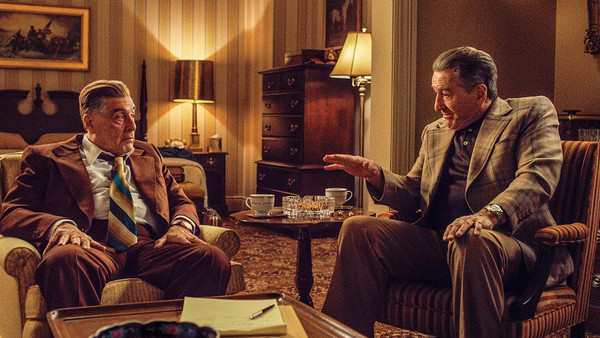
Martin Scorsese's masterful new film The Irishman has just landed on Netflix, and it near-impossibly manages to live up to the years of hype laid before it.
While it's easy to assume from the movie's marketing that Scorsese has effectively conceived it as a contemporary Goodfellas victory lap, co-starring Robert De Niro and Joe Pesci as it does, The Irishman is so, so much more than that.
The enticingly glossy veneer of Goodfellas' slick camerawork and nifty music is swapped out for a far more restrained, solemn style and tone, allowing the film to serve as a riposte of sorts to Scorsese's genre-defining crime classic.
But even so, The Irishman undeniably takes full advantage of our fondness for the careers of Scorsese, De Niro, Pesci and Al Pacino, especially during the film's soul-shattering third act, which serves as one of cinema's all-time great meditations on ageing and mortality.
Though its resonance with audiences won't be registered by box office receipts, between its near-universal critical acclaim and strong Oscar buzz, it's clear that the film has successfully leveraged nostalgia for a bygone era to ludicrously entertaining and unexpectedly devastating ends.