10 Movies That Weren’t Brave Enough To Kill The Main Character

We got our happy ending, sure... but talk about a cop-out.
Movies end in one of two ways; the good guy wins or the good guy loses. And the latter are harder to find than you think. Happy endings are necessary within our culture and society ostensibly for the reason that real life is depressing enough without having to witness our favourite characters kick the bucket. We desire to see villains get their comeuppance and underdogs win the day, as it happens far too infrequently in real life. Put simply, happy endings are an antidote to life's crushing realities. With happy endings in cinema, however, comes lack of tension and unoriginal endings. It's now reached a point where, when a hero's life hangs in the balance at the end of a modern movie I sit there and almost hope for the main character to die. Just to witness something different for a change. Movies tread a fine line between the wonderful, dreamy finales of fantasy and the fact that they are essentially depicting a real world (for the most part); a world that an audience can invest in, with believable science and real consequences. If a hero puts their life on the line, sometimes that hero should die. This is a real-world consequence that should have its place in cinema as much as any fairytale sunset-headed ending. In this list I'll show you a bunch that came close, but bottled it at the last minute; or some where the main character could feasibly have died to improve the story of the film, even if it wasn't on the cards originally.

10. Kirk - Star Trek Into Darkness

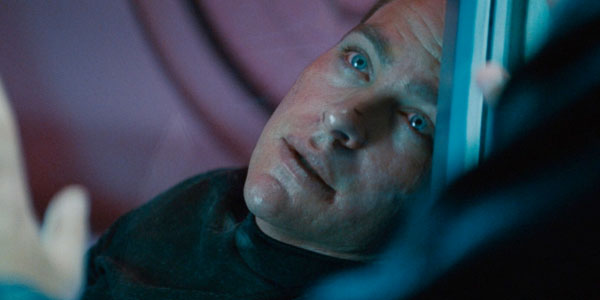
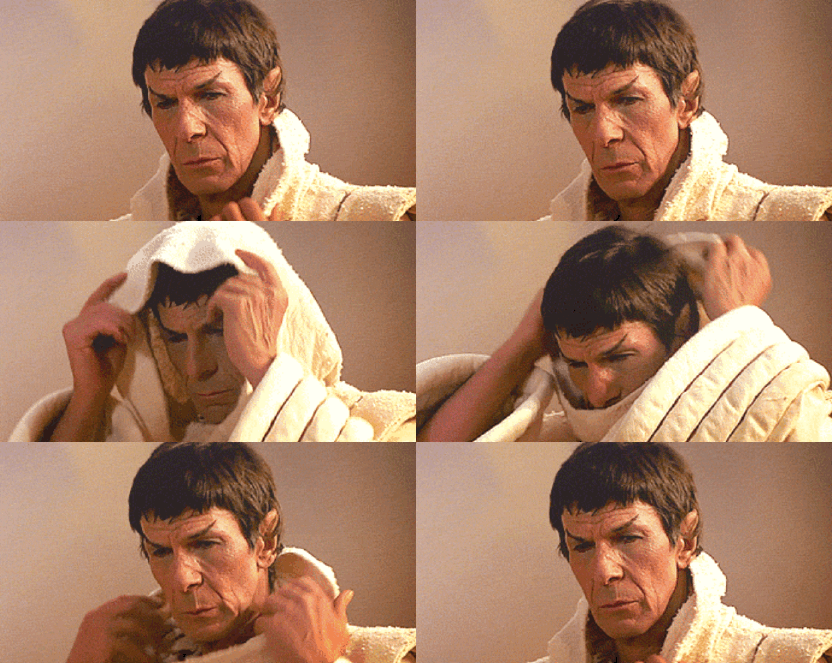
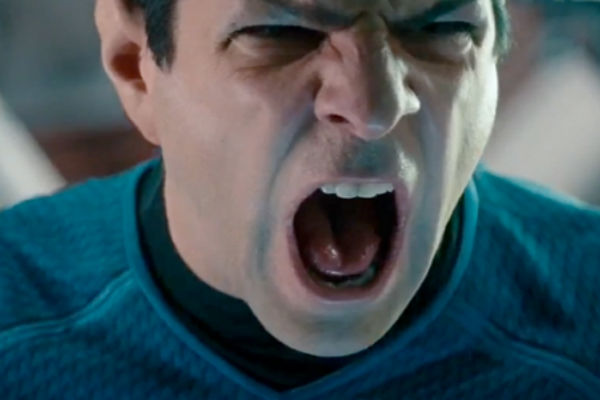
As much as Captain Kirk's death in the reboo-quel was an homage to Spock's similar fate in Star Trek II: The Wrath Of Khan, it positively reeks of a missed opportunity. Not least because it turned out the last thing fans wanted was an inferior rehash of a franchise high. When Kirk dies saving the Enterprise, enduring a fatal dose of radiation whilst reigniting its warp core, he is literally brought back to life within the span of about fifteen minutes thanks to a dose of John Harrison's special blood (that's not Khan; don't make me call him Khan). For comparison, Spock's resurrection in the The Search For Spock took an entire film's plot.
It could have instead been a bold move on the part of Abrams and Paramount to leave the cocky Captain dead; the stakes in the film's story would have become a lot more immediate and real, and a precedent for the rest of the series would have been set - the implication that none of your favourite characters are ever truly safe. It's not exactly as if the franchise hinged on Chris Pine's involvement either, as he's never had the kind of star power to draw in millions more viewers from his face and name alone, so they were probably safe in giving him the axe. The third entry would have marched on regardless. Instead, we got a last-minute resurrection that everyone expected anyway because we've seen these revivals before and if audiences are used to the idea of death not being the end, what's the point in showing Kirk dying here? Why go through the rigmarole of it all in the first place? Had they left Kirk dead, we could've entered a new, uncertain phase in Hollywood blockbusters not seen since Terminator 2: Judgement Day, where we can never be sure that our heroes aren't going to bite the bullet.

9. Professor X - X-Men: The Last Stand

I could almost give The Last Stand as a whole a pass just for the Professor's death scene. Almost. As much of a fumble the handling of the Phoenix was, her final interaction with Charles Xavier was fairly heart-wrenching. As Jean overcomes her surrogate father's mental defences, she telekinetically lifts him out his chair, whilst Wolverine desperately stabs his way across the ceiling to try and stop her. We even get Magneto calling out for his old friend's safety, a nice nod to the respect and former friendship toward the two. Time comes to a standstill, and Xavier gives his last piece of advice to Jean; "Don't let it control you." This sequence was as well done as it could have been; amid all the chaos it played out slowly, carefully and emotionally.
And then in the post-credits scene Xavier abandons all his own morals and steals the body of a comatose lookalike. For the audience, it removes any emotion we may have had built up in the death scene. There was also no reason to bring him back, really. X-Men comics have functioned without Charles Xavier on-and-off for decades. His pupils also tend to grow more as characters without their erstwhile teacher around. At least this footnote-resurrection legitimately meant we could have Patrick Stewart back for Days Of Future Past. Not that Singer would have been stopped anyway; I'm sure he would've brought back the Professor simply because he damn well pleased.

8. Optimus Prime - Transformers: Revenge Of The Fallen
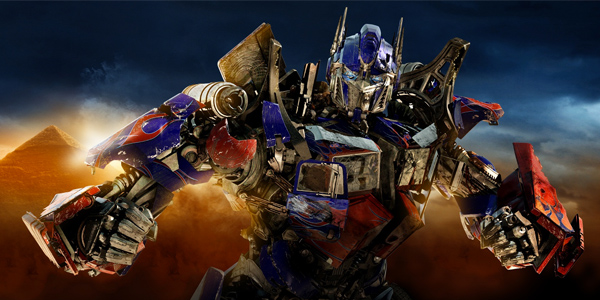
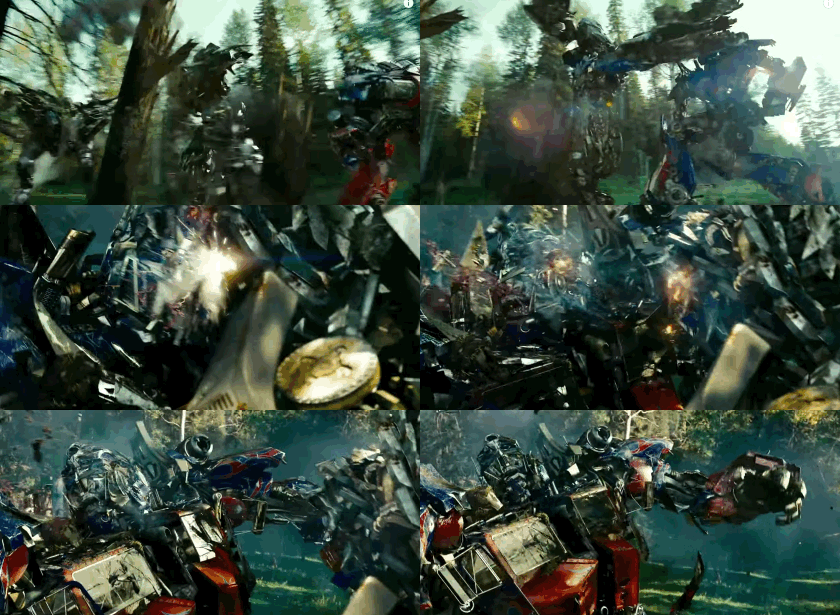
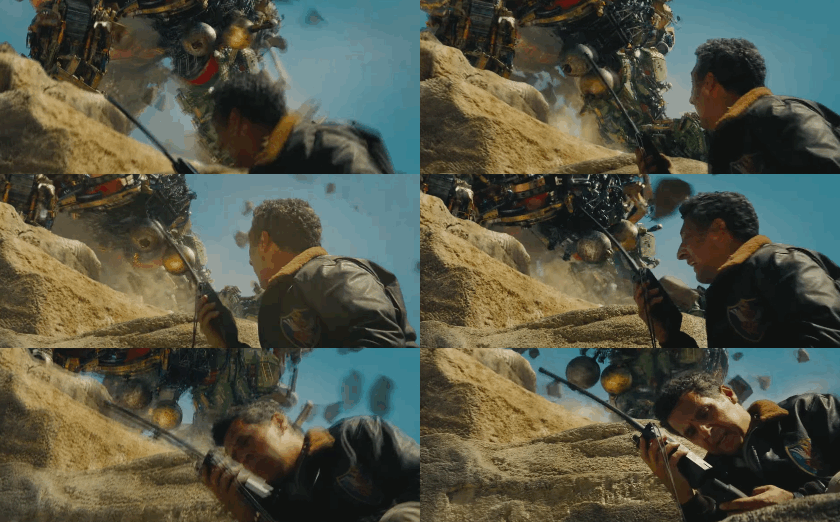
One of the most maligned films of the last fifteen years (perhaps ever), Transformers: Revenge Of The Fallen severely dropped the ball in several key areas; one of the biggest being their decision to kill off Optimus Prime, only to bring him back two hours later. I'm not going to use this post as yet another sounding board for Michael Bay complaints, because enough of those exist already. What I will say, however, is that I doubt the man could have won one way or the other when it came to this scenario.
Yes, Optimus' death was cheapened by his ridiculous MacGuffin-led resurrection, but Bay would most likely have earned the same amount of flack for leaving Optimus dead. The problems pertaining to the film are so much larger than one character's untimely passing; and instead of killing off Prime (as exciting as that action sequence is) for a planned third-act resurrection, they should have saved his death for the end of the movie. What we were left with thanks to Prime going to that great junkyard in the sky was a huge blockbuster that lost its best character and biggest draw for the majority of the movie, leaving us with two racist robotic caricatures and a big pair of swinging robot balls.
By bringing him back to life so readily, it just feels like they shouldn't have killed him off at all, so that audiences could spend more time with the character they're actually there to see. If Bay and his writing staff wanted to kill off Prime they should've a) done it right at the end of the third act and b) stuck to their guns on it. Fans would have been angry, but at least some of them would've respected the conviction in the move and the emotion that naturally would've carried across in its execution (please pardon that pun). And we would've still had a sequel with Optimus Prime in it for the entire runtime.

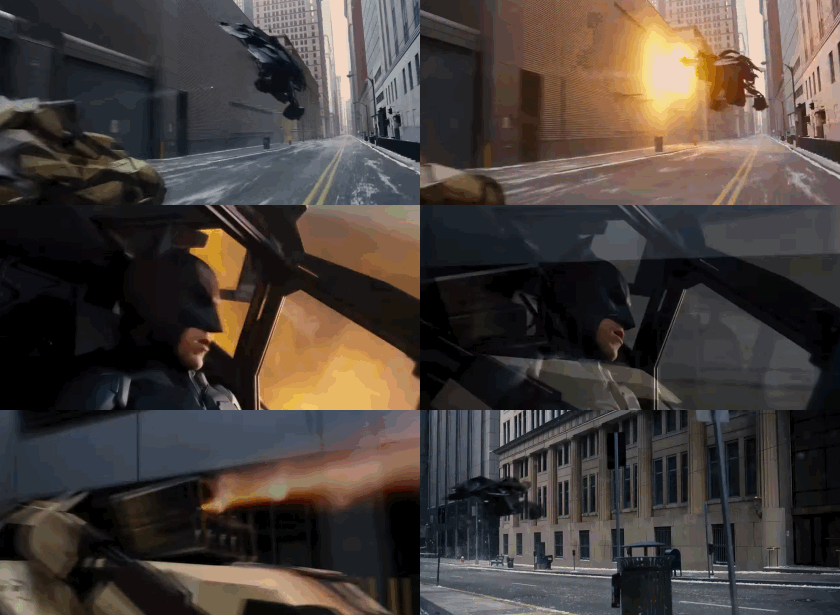
7. Bruce Wayne - The Dark Knight Rises
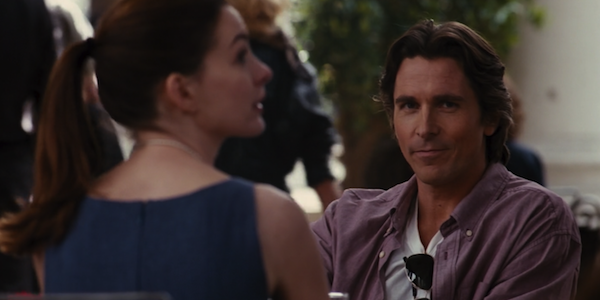
I know that 'he's Batman' is an accepted response to any question pertaining to Bruce Wayne's survival in the most ridiculous of situations, but he really can't 'Batman' his way out of a nuclear explosion. That is ridiculous. Of course, we now have a couple of fan theories surrounding the movie; that the Bat was on autopilot and he had hopped out before it left the city, or that he actually did die and Alfred's glimpse of Bruce and Selina at that restaurant in the film's closing moments are a daydream borne out of guilt.
In the first instance, if he really did bail out and then go and retire on the French Riviera, well, that just defies who Batman is as a character. Bruce Wayne never fully psychologically recovered from the murder of his parents; he is driven till the day he dies to pursue vengeance and justice, to lock criminals away for their crimes. Harry Knowles at AICN put it best with his review of The Dark Knight Rises. Knowles states that Batman really isn't the kind of guy to mope around his mansion for seven years and give up his life's mission because of another loss of a loved one - and he sure as hell wouldn't give up on his life's mission to go a sip sangrias in the sun with Catwoman.
As far as Alfred seeing Bruce at the end of the film, I enjoy subscribing to the idea that it's simply a vision he's fooled himself into seeing, to give himself some sense of peace. But having Christian Bale in that shot lends itself to absolutely zero ambiguity. It would've been so much more devastating if Alfred saw Bruce, smiled and nodded, looked again and Bruce was gone. As his smile fades, so does the music, then fade to black. 'Directed by Christopher Nolan'. What an ending.

6. Iron Man - The Avengers

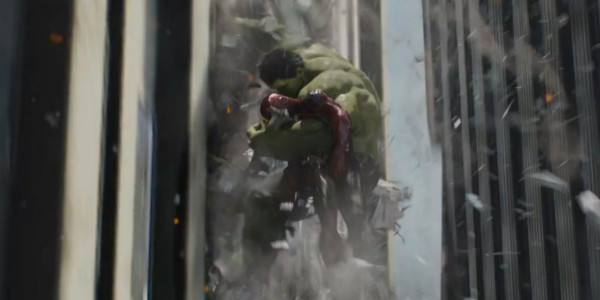
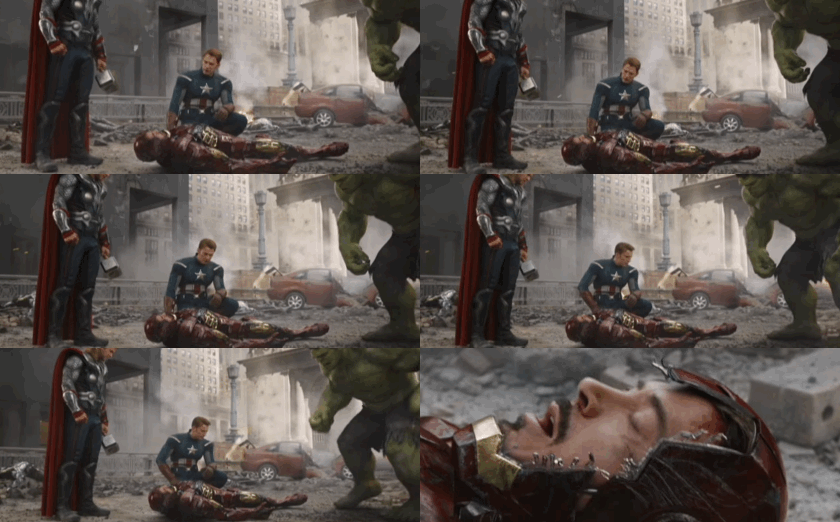
While it's true that Marvel would have been absolutely insane to kill off their marquee character at the end of their highest-earning blockbuster to date (not that they necessarily knew that at the time), it would have been an extremely brave move to have left Iron Man dead on the ground after The Avengers' battle with the Chitauri. As hilarious as it was too see the Hulk literally roar Tony back to life, imagine how the board would have been set for all future MCU films had he not? You'd never have the safety blanket of knowing that a company wouldn't kill off the characters responsible for their profits. It would have injected some real stakes into the future of all their movies, bringing some much-needed tension back to big budget blockbusters.
Of course, we would've then been deprived of Trevor Slattery, although I'm sure many of you would have been happy with that alteration. But we'd definitely all lament the loss of never seeing the Civil War storyline up on the big screen. Luckily for us, Marvel chickened out and now Captain America: Civil War will feature Tony Stark where he should always be; in Captain America's ear, winding him up.

5. Jason Bourne - The Bourne Ultimatum
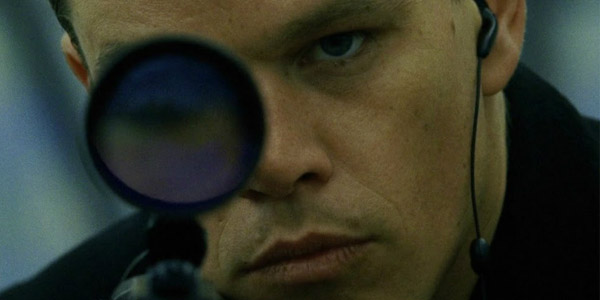
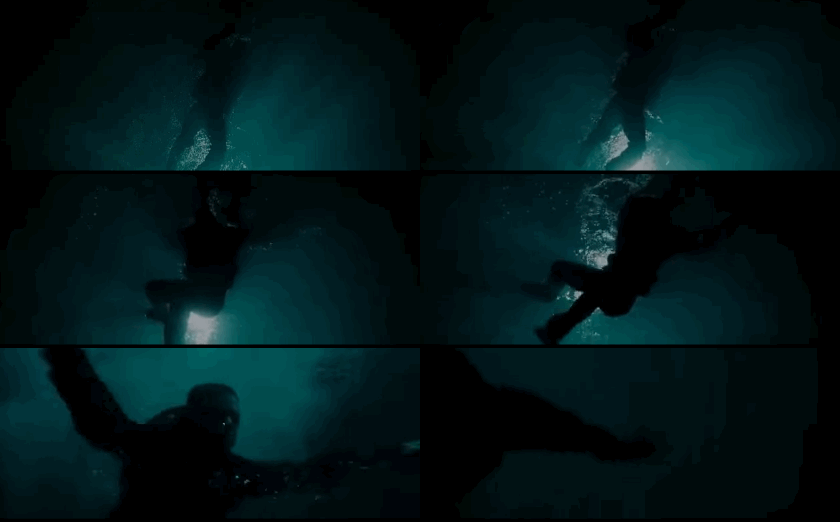
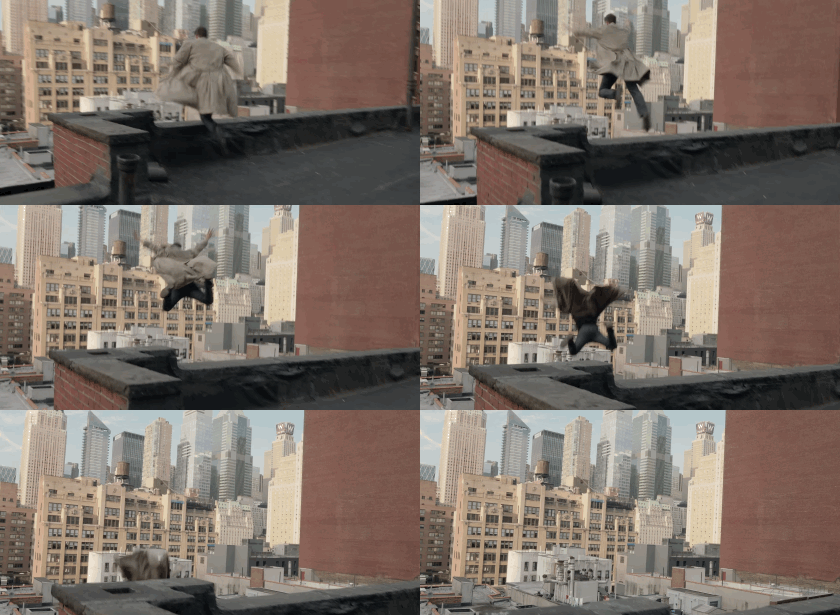
I was hesitant to include The Bourne Ultimatum on this list, simply because its ending is so damn well executed. After Bourne talks down Edgar Ramirez' fellow Treadstone/Blackbriar assassin Paz ("Look at us. Look at what they make you give"), Deputy CIA Director Noah Vosen (David Strathairn) pops up and sends a bullet into our hero's back as Bourne leaps off the roof. Then it's a series of cuts between Bourne's seemingly-lifeless body floating in the Hudson and Julia Stiles' former CIA agent Nicky Parsons, watching coverage of the CIA f*ck-up on television. As the reporter mentions that Bourne's body was never found, Nicky smiles, and that's when Moby's very-welcome Extreme Ways starts up and we see Bourne's body kick back to life and swim away.
The editing for this sequence was great, and it was a great way to end the trilogy. That still doesn't cancel out the fact that Universal majorly wimped out with said ending. Clearly, their minds were on giving viewers the happy ending they think we crave so much; not to mention that they most likely had one eye on a fourth outing for Bourne, even though Damon and director Paul Greengrass weren't up for it. Universal are laughing all the way to the bank now, though, as Bourne IV is currently shooting with those two and aiming for a 2016 release.

4. Sidney Prescott - Scream 4

Scream 4 was a fairly good follow-up in a franchise that had by that time been dormant for eleven years. For a series so focused on a meta-textual approach to all the rules of the horror genre, it was a treat to see Wes Craven and his cohorts tackle the tenets of horror in the twenty-tens. Craven could've upped the stakes massively on top of that, by actually killing off one his remaining three franchise mainstays, be it Neve Campbell, Courtney Cox or David Arquette. The trailer even had the internet buzzing that Gale Weathers (Cox) was actually going to buy the farm this time out. Unfortunately, this wasn't the case. While Scream 4 was an underrated, enjoyable entry into the canon, audiences were once again cheated out of any real stakes, with a series of bland new characters being murdered rather than any fan favourites (heaven forbid).
Like Jamie Kennedy's much-loved character Randy had said in Scream 3, the rules of horror film franchises change as of the third entry. Once you reach a trilogy... anyone can die ("this means you Sid!"). Yet the director, the writer and/or the studio copped-out, both there and the reboot. Finally seeing Sidney Prescott die at the hands of Ghostface after all this time would've been a huge shock, and I'd even wager there'd be some sort of twisted audience satisfaction gained from the moment. To see the killer(s) achieve what all iterations of Ghostface had wanted for nineteen years would surely have made for a great finale, and a solid sendoff for Wes Craven, the master of horror.

3. Loki - Thor: The Dark World

This entry will never cease to annoy me. As we all know, Loki very quickly amassed cult status as one of the most enjoyable characters in the MCU, evil or no, with most of the credit due to Tom Hiddleston's magnetic performance. Thor: The Dark World's coup d'grace came when Loki, forced to accompany Thor and show him the way to Svartalfheim, seemingly redeemed himself by saving his brother's life at the cost of his own. Being an absolute sucker for villainous redemption and self-sacrifice, I ate that scene up hook, line and sinker. The final words exchanged between the brothers are heartbreaking. Of course, there are hints telegraphing the film's twist - that Loki survived, impersonated an Asgardian soldier all the way home, and usurped his father on the throne - upon secondary viewings, but first time round I bought it.
The problem I have with this is that yes, although this allows us to all enjoy more Tom Hiddleston in our lives (he is certain to be one of the villains in 2017's Thor: Ragnarok), we as an audience were robbed. As Loki faked his death, it makes it likely that he faked everything he said to Thor; his apology, his "I didn't do it for ". Which is a shame, as it stood out as a thoroughly earned moment for the two brothers, after fighting as enemies for three films. Marvel should have been brave enough to leave Loki's story there, with a fantastic death scene and a poignant moment for Thor. However I think after Frigga's (Rene Russo) death, killing Thor's brother might have felt like overkill to Feige and the studio, so they wimped out. But to bring Loki back from the dead so soon - with very little in the way of logical explanation, considering he had a spear rammed through his chest - reeks of non-committal BS and a missed opportunity for Thor's little side of the MCU to gain some real growth.

2. Bud White - LA Confidential

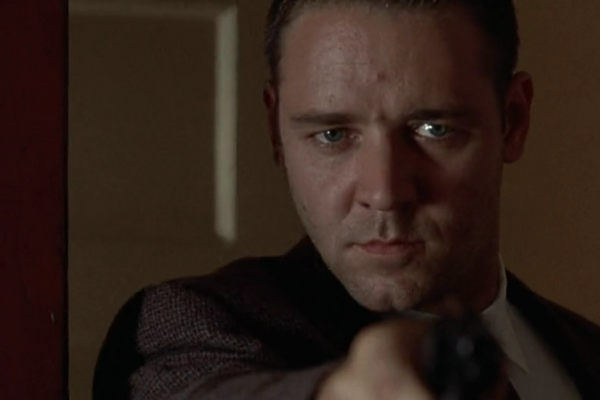
One of the best crime films of the last twenty years (perhaps ever), LA Confidential won a ton of awards when it was released back in 1997. Not only that, but it also served to launch the Hollywood career of one Russell Ira Crowe. And Crowe himself should've won some sort of award for 'Most Ridiculous Survival Of Multiple Gunshot Wounds Ever'. In the climax to the film's twisty plotline, loose cannon Bud White (Crow) and goodie-goodie Ed Exley (Guy Pearce) find themselves fighting for their lives in a shootout with a squad of hitmen led by corrupt cop James "That'll do, pig" Cromwell.
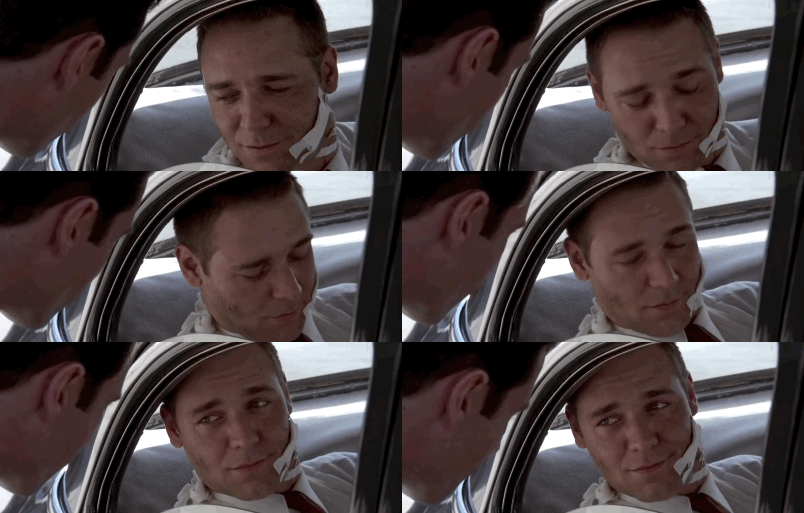
Crowe catches several bullets, one of which hits him in the face. Convinced that this must be the end of their violent-yet-endearing anti-hero, audiences are then surprised to see a bandaged-up Bud sitting in the back of Kim Basinger's car with his jaw wired shut during the film's epilogue. It's not so much that Bud White survives that is the problem - after all, he survives a similar shootout in the film's source novel by James Ellroy - it's more that his survival is so illogical. He gets shot up so many times that it's a hard pill to swallow.
It would have been a more believable scenario to have Crowe shot that many times and die rather than miraculously survive by the skin of his teeth (which he can no longer use, ironically). Had Warner Bros been a little braver, they could've logically had him die and audiences would have been okay with it. As far as loyalist book readers were concerned, the film changed so much of the original novel as to be unrecognisable anyway - so going one step further and killing Bud wouldn't have added any more fuel to their fire.

1. Riggan Thomson - Birdman Or (The Unexpected Virtue Of Ignorance)
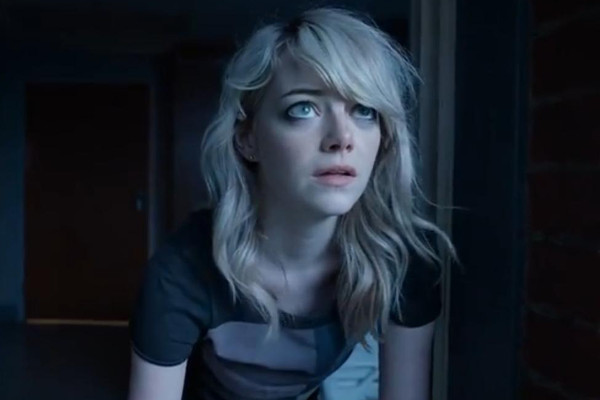
As you may have deduced, I am not the biggest fan of ambiguous endings, or is-he/isn't-he dead third act twists. When Riggan Thomson (Michael Keaton) puts a loaded gun to his head at the climax of his Raymond Carver broadway adaptation, I fully thought that was it for the character - and it should've been. Everything that happens to Riggan over the course of the film leads to that moment; his slowly-unravelling mental state, his having to deal with a superior actor in the guise of Mike Shiner, the dressing-down he receives from harsh Broadway critic Tabitha Dickinson.
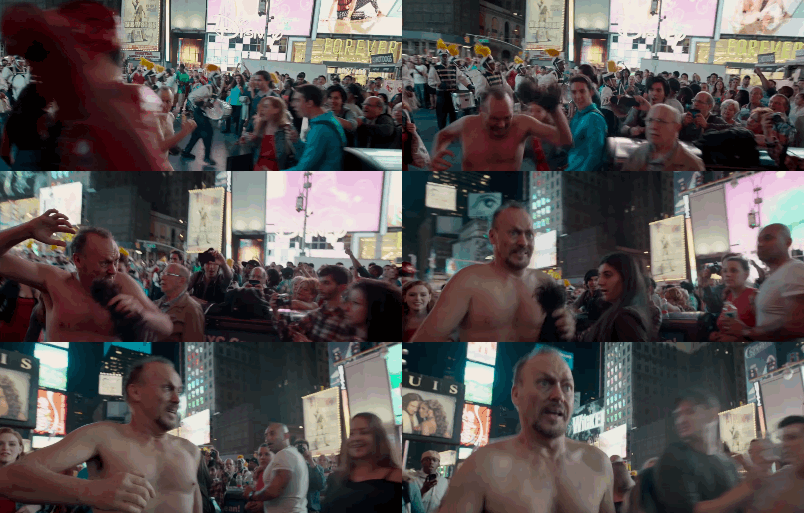
Once he sees how much attention his pants-only public meltdown in Times Square gets him from the public, and the respect from his daughter Sam that this grants him, only then does he realise that his increasing madness is going to be what defines him as an actor. Killing himself on stage is the final step in that sequence; it is the beautifully tragic end Riggan deserves as a character. To have him survive by flubbing the suicide means that he gets to witness Tabitha's rave review of his play (validation he doesn't need by this point) and further burying-the-hatchet scenes with his daughter (also unwarranted at this point). While his dismissal of the Birdman persona is important, it didn't have to exist in this scene. What's worse, to cap it all off, he promptly steps up onto a ledge and seemingly flies off into the sky.
Birdman would have retained a wider range of emotional payoff had they unambiguously left the ending at Riggan shooting himself live on stage - without the need for some fantastical ending where he literally flies off into the sunset, which is far too ham-fisted and unnecessary an ending. Which other movies should have had the balls to kill off the main character? Share any more down in the comments.

Contributor

Cinephile since 1993, aged 4, when he saw his very first film in the cinema - Jurassic Park - which is also evidence of damn fine parenting. World champion at Six Degrees of Separation. Lender of DVDs to cheap mates. Connoisseur of Marvel Comics and its Cinematic Universe.