10 Movies To Blame For The Current State Of Movies
The cynical nostalgia awakens.
Depending on who you believe, we're either in the end-times for movies as Disney continues its crusade to monopolise Hollywood, or there's never been more choice available at your fingertips.
What's undeniable is that the film industry has always been driven by trends: The Matrix made every movie studio obsessed with CGI-slathered slow-motion for a solid five years before "grit" came back into fashion, for example.
And to be fair, many recent "trends" have actually been healthy for the industry: a major uptick in representation, if we can even call it a trend, is a net positive for everyone, while video game movies are finally showing the source material the respect they deserve.
But film fans will always find something to complain about, because of course, Hollywood is an endlessly complex behemoth driven by one thing above all else: money.
These 10 trends are very much indicative of movie studios relentlessly chasing dollars over fresh ideas, to the extent that it actively harms filmmaking as an art.
There is, naturally, plenty of well-earned criticism for Disney here, but at the same time, we enjoyed Avengers: Endgame as much as the next person, so most of these issues rest gingerly on a sharp, double-edged sword...
10. Everything Needs A Cinematic Universe - Iron Man

It's not an exaggeration to say that the cinematic landscape would be very different were if not for the success of 2008's Iron Man, which of course went on to establish the now-gargantuan Marvel Cinematic Universe.
At the time, an Iron Man movie was no guaranteed hit, yet its extraordinary popularity led to an industrious effort on the part of Marvel Studios to establish an interconnected cinematic empire capable of churning out multiple movies per year.
And to the MCU's credit, there's been an impressive critical and commercial consistency to the two-dozen movies released to date. But like anything successful, it soon enough emboldened others to try and imitate it.
And so, the last few years have seen movie studios en masse trying to cobble together their own cinematic universes, with typically mixed-to-disastrous results.
Most prominently, the DC Extended Universe suffered through some brutal growing pains and has now largely deferred to focusing on a series of standalone yet loosely connected superhero movies.
Elsewhere, J.K. Rowling is pressing ahead with a five-movie (!) Fantastic Beasts series in spite of an increasingly exasperated fanbase, there's a loosely-connected Conjuring Universe, a "MonsterVerse" featuring Godzilla and King Kong, and Transformers is currently trying to diversify itself into a wider universe.
Then there are the flat-out humiliating flops: Universal's infamously failed Dark Universe is an embarrassing testament to executive hubris, and Guy Ritchie initially planned to make his King Arthur: Legend of the Sword a launchpad for a six-movie universe before it bombed horribly.
Like anything movie studios do, it's a simple numbers game: original IP are risky and prone to failure, so of course every producer in Hollywood wants their own dependable franchise to effectively print money.
But earning the goodwill that makes the MCU near-bulletproof with audiences cannot be rushed, as most of the above examples have proven.
More or less, the MCU is the outlier, the one majorly successful cinematic universe to which all others have aspired, and typically failed.
9. Soulless "Live-Action" Disney Remakes - Alice In Wonderland

Disney is releasing live-action remakes of their most iconic animated classics with a mechanical efficiency at present, with the past year alone delivering Dumbo, Aladdin, and The Lion King remakes to mixed reviews yet (mostly) monstrous commercial success.
Many have criticised Disney for their "soulless" approach to taking these cherished IP and regurgitating them with contemporary visual effects, while lacking most of the heart or style that made them popular in the first place.
The trend started in earnest with 2010's Tim Burton-directed Alice in Wonderland, which plonked poor Mia Wasikowska in the middle of a sterile, blurry digital wasteland that boasted none of the artistry of its animated predecessor.
It went on to gross $1.025 billion regardless, and though Disney's subsequent "live-action" remakes have occasionally stirred up worthwhile results - especially The Jungle Book - for the most part these films feel cranked-out by an algorithm along a predefined conveyor belt.
But of course, they keep blowing up the box office. The Lion King's $1.655 billion haul makes it the highest-grossing Disney remake to date, and the company already has more than a dozen other remakes, prequels, and tangential projects in the works.
Nothing stops this train, basically, but we as audiences pretty much only have ourselves to blame.
8. Digital De-Aging - X-Men: The Last Stand

Digital de-aging is all the rage right now in Hollywood, with filmmakers harnessing cutting-edge CGI to create impressive - if not quite impressive enough - youthful versions of some of the industry's most iconic faces.
The real test case for this was 2006's X-Men: The Last Stand, which infamously de-aged Patrick Stewart and Ian McKellen for an opening flashback sequence, smoothing out their faces in a manner which better resembled creepy waxwork models.
Yet casual viewers didn't seem to much mind, and so that was enough for Hollywood to ramp up their de-aging efforts in the years that followed.
Memorably, Jeff Bridges was extensively de-aged to play Clu in 2010's Tron: Legacy, and since then the tech has been used pervasively in Rogue One: A Star Wars Story, Blade Runner 2049, It Chapter Two, Gemini Man, Terminator: Dark Fate, The Irishman, and countless times in the Marvel Cinematic Universe.
Results vary between projects, of course: Blade Runner 2049's de-aging was subtle and brilliant, and despite its flaws, it served a major storytelling function in The Irishman.
But too often the tech feels like Hollywood's next big gimmick, and it frequently turns out more offputting than immersive.
The techniques are only going to get better, for sure, but it's obviously a slippery slope going from this to digital recreations of late actors.
It's already happened with Peter Cushing in Rogue One, and James Dean is reportedly next up for the digital resurrection treatment. Yikes.
7. The Pointlessly R-Rated Movie - Deadpool
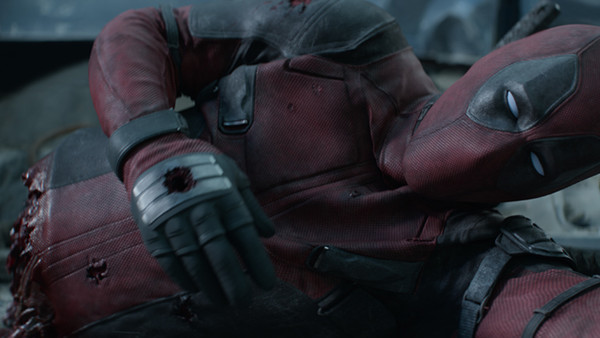
To be clear, Deadpool is most certainly not a pointlessly R-rated movie: the foul language, cartoonishly brutal violence, and irreverent humour are entirely inherent to the character, and a PG-13 rating would've been a travesty.
But as expected, Hollywood took the wrong lesson away from Deadpool's surprise box office success, opting to hand out R ratings to tentpole movies regardless of whether it was really appropriate or not.
The recent Hellboy reboot, for example, was R-rated in all the wrong ways: witlessly crude, monotonously violent, and trying way too hard to be edgy.
Even Terminator: Dark Fate, which many praised as a return to the more adult tone of the earlier films, hurled out profanity like a teenager trying to impress its older friends. Ironically, it was also helmed by Deadpool's Tim Miller.
The salient point here is that a script needs to be good before a studio simply banks on the goodwill of a "mature" movie: an R rating didn't stop A Good Day to Die Hard from being deeply, deeply terrible, did it?
6. Nothing Has Stakes, Everything Needs A Quip - The Avengers

The Avengers was as successful as it was primarily due to Joss Whedon's brilliantly witty script - and the top-drawer cast munching through it, of course.
Except, it also set a precedent in both the MCU and subsequent blockbuster filmmaking as a whole, that you can't keep the audience starved of a comedic one-liner for more than a few minutes.
One of the biggest knocks against the MCU since this movie - and as was especially prevalent in Avengers: Age of Ultron - is that potentially serious, dramatic moments are too often interrupted by forced comedy.
And when everything's a joke, nothing really has weight or gravity to it, compounding the stakes problem associated with a lot of fantastical, PG-13-rated blockbuster fare - the MCU in particular.
Combined with the backlash to the overly grim Zack Snyder DCEU movies, Hollywood has learned the wrong lesson, with the vast majority of tentpole movies now totally afraid of actually getting "real" without having a jokey gag ready to diffuse the tension.
Christopher Nolan's Dark Knight trilogy proved that broader audiences are game for serious movies, just not dour or self-consciously miserable ones like Batman v Superman: Dawn of Justice.
Curiously, Avengers: Endgame felt like both a confirmation of this problem and a sure attempt to remedy it.
For while the film largely restores the MCU's status quo by resurrecting the "dusted" Avengers in crowd-pleasingly breezy fashion, at least Tony Stark (Robert Downey Jr.) got a comedy-free demise.
But if you're disappointed in the lack of $200 million blockbusters which actually dare to take themselves seriously, you can blame the MCU for striking it rich on safe - if entertaining - thrills where the next joke is always around the corner.
5. Excessively Budgeted Blockbusters - Pirates Of The Caribbean: At World's End

Though inflation ensures that movie budgets will continue to steadily rise, the speed at which we're racing towards the first ever $500 million is far outpacing the simple rising costs of doing business.
The most expensive film of all time to date is 2011's Pirates of the Caribbean: On Stranger Tides, which cost a stonking $379 million, while the last three Avengers movies have all cost in excess of $300 million - $365 million in the case of Age of Ultron.
Clearly, it's no longer shocking for a movie to have a $200-300 million price tag, which is how we end up with complacently over-budgeted disasters like Justice League, which due to extensive reshoots was bloated out to $300 million.
But it all goes back to the third Pirates of the Caribbean movie, At World's End, the first film in history to cost $300 million.
Its subsequent commercial success - grossing just shy of $1 billion - emboldened Disney and other studios to not even flinch at these price tags.
Yet while The Avengers movies are basically impervious to franchise fatigue - or so it seems - for other studios and franchises, these colossal budgets don't remotely guarantee a good return-on-investment.
It's gotten silly enough in recent years that when a movie like Joker comes along and grosses $1 billion worldwide, we're shocked at the "modesty" of its "mere" $70 million budget.
While in fairness Hollywood has always enjoyed pushing the boat out with ambitious - and bloated - price tags, the rate at which budgets have soared over the last decade-or-so is just insane.
4. Ignoring Bad Sequels - Halloween (2018)

Remember when a poor entry into a movie franchise required the series to pivot and actually make a concerted effort to course-correct things?
In recent years Hollywood has instead decided to simply go for a do-over if a previous film doesn't work, negating its existence in the continuity and making the next movie a sequel to the prior film(s) in the series.
The most prominent recent indicator of this trend is last year's Halloween sequel, which wipes seven other Halloween movies off the map while positioning itself as a "true" sequel to the 1978 movie.
Halloween 2018 went on to gross a ridiculous $255.5 million worldwide against a $10 million budget, confirming that this relatively glib approach to sequelising can actually pay off.
And so, the recent Terminator: Dark Fate tried the same thing, ditching every post-T2 sequel, while cynically undermining the very role franchise hero John Connor (Edward Furlong) played in the original movies. Despite decent reviews, it bombed at the box office.
Even with Dark Fate's failure, Halloween's success is likely to ensure that other franchises will follow suit, dusting themselves off after their failures and simply trying again until they get it right.
The Alien franchise has been toying with the idea in recent years, for example, with Neill Blomkamp prepping a direct sequel to Aliens, though it hasn't materialised as of yet.
Hell, despite Terminator trying this trick twice already, they might go for the hattrick before we know it - if Dark Fate didn't terminate the series' box office prospects permanently, that is.
But Halloween 2018 wasn't the first movie to "de-canonise" other entries in the franchise: Halloween H20 did it 20 years earlier, for example, while Superman Returns ignored the third and fourth Christopher Reeve-starring Superman films, and Rocky Balboa near enough jettisoned Rocky V by mostly ignoring it existence.
While some might praise studios for having the gall to re-jig stories that aren't working, the problem is that this flippant approach to continuity gives filmmakers less "responsibility" over the movies they make.
The safety net of "if it doesn't work, we'll just try again in five years" isn't conducive to creative storytelling, but you should definitely expect to see it happen far more often in the years to come.
3. Hollywood Pandering To The Chinese Market - Avatar

James Cameron's Avatar is a crucial entry into the annals of Hollywood for many reasons, not least that it was the highest grossing film of all time for almost a decade, before finally being dethroned (barely) by Avengers: Endgame.
But Avatar also played a huge role in helping China become the second largest movie market in the world by 2013.
Though Cameron's blockbuster itself didn't really pander to Chinese markets at all, it nevertheless grossed a record-breaking $203 million in the region, opening the floodgates for more Hollywood productions to do business there, just as China started building more cinemas at an industrious rate.
Fast-forward a few years and it was extremely common to see blockbuster movies desperately trying to appeal to China, either by randomly jetting off to China for a small chunk of the movie, including Chinese product placement, or giving disposable cameo roles to famous Chinese actors.
Or if you're Transformers: Age of Extinction, doing all three.
In 2015, Terminator Genisys became the first U.S. film to gross $100 million in China while failing to pass the same milestone stateside, further exemplifying the market's viability.
And though representation is absolutely a wonderful thing, these forced cameos are really anything but: they're cynical exercises in cross-promotion by bean-counters trying to maximise a film's economic potential. It's not artistry: it's soulless pandering to international audiences.
Take the Matt Damon-starring Chinese action flick The Great Wall, an hilariously clumsy and on-the-nose attempt to appeal equally to both western and Chinese audiences, which ultimately produced only passable box office results.
Some might simply see the China-baiting as "following the money," but would it kill Hollywood to at least try and do it without talking down to viewers so transparently?
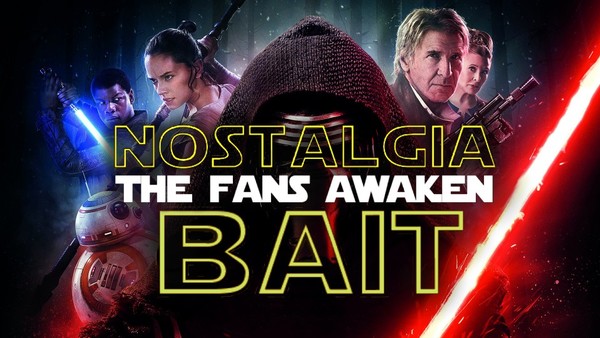
2. Nostalgia-Baiting Sequels - Star Wars: The Force Awakens

Hollywood has been on a real nostalgia kick for the last five-or-so years, selling your childhood back to you one movie at a time, because that's easier than, you know, actually coming up with original ideas.
Our test case is of course 2015's Star Wars: The Force Awakens, a sure return to form for the ailing franchise, albeit one which cribbed far too eagerly from A New Hope, leaning back lazily on our collective dew-eyed nostalgia for the original trilogy.
Similarly, Jurassic World, Terminator Genisys and Dark Fate, the Creed movies, Halloween 2018, and many more, all milked iconic themes and imagery from prior films, recycling them to various degrees of success.
These movies were all technically new, yet lacked enough fresh ideas to truly feel like original sequels.
And you can blame The Force Awakens in particular: its $2.068 billion final gross was a defining statement that audiences embrace the safety of familiarity.
Look no further than the divisive response to Star Wars: The Last Jedi, which actually tried to ditch the nostalgia crutches and do something new with the series, to observe how much general audiences truly fear originality.
And so, the upcoming Star Wars: The Rise of Skywalker will most certainly be a return to the rose-tinted, nostalgia-heavy storytelling of The Force Awakens, which is a real shame.
When people's sentimentality can be exploited so easily, though, it's easy to see why Hollywood isn't that keen on coming up with anything new.
1. The "Good Enough" Netflix Original - Bird Box

There's no denying that Netflix has changed the game as far as movies are concerned.
Though blockbusters are always going to have their place in multiplex cinemas, the streaming giant has spearheaded efforts to get glossy movies starring A-list actors on their platform day-and-date, allowing subscribers to watch huge new films from the comfort of their home.
But it's also fair to say that Netflix Originals are a quality-over-quantity affair for the most part, and for every great movie that hits the platform, there are about 10 mediocre-to-terrible ones.
It speaks to a wider, complex issue, that without box office returns to worry about, a precedent emerges that a movie only needs to be "good enough" for subscribers to keep watching.
This is best exemplified by Netflix's most successful Original movie to date, Bird Box, which racked up an insane 80 million views in its first four weeks on release.
Though undeniably aided by a viral marketing campaign and the absurd "Bird Box Challenge," its mediocrity basically confirmed that Netflix only needs to make a movie passable to become one of the streamer's biggest hits to date.
Everyone with a sub will watch it because it's got a neat premise and a great cast - and most of all, it's "free."
Though Netflix of course has released incredible recent movies like The Irishman and Marriage Story, the overwhelming majority of the Originals don't actually need to be good or even great.
The convenience with which the films can be accessed basically critic-proofs them, because there's so little investment on the part of the viewer, and as long as they're acceptable-ish viewing for tired people who just want to relax with something brainless after a long day at work, those viewing metrics will be just fine.
And that is why all those terrible Adam Sandler-starring Netflix Original "comedies" top the charts in every country around the world.
To reiterate, Netflix has done many great things for movies over the years, but the low-effort quality of so many of their star-studded Originals almost suggests that they're deliberately aiming for disposable, forgettable content which people can watch in bed while playing with their phones.
With the upcoming release of Michael Bay's new movie 6 Underground, we're likely to see that theory reinforced once again.
Because when a movie is gunning for actual viewer dollars rather than merely clicks, there's a more tangible sense of risk and potential loss - and therefore a greater incentive to make it actually good.