10 Movies That Could Have Been Truly Awesome (With A Single Change)
A movie is like an orchestra – one rogue instrument can damage something beautiful, and prevent it being truly perfect. Note: this article doesn't contain orchestras.

The domino effect. The greenhouse effect. The Graham Norton Effect. We live in a world of action and reaction, where simple operations lead to complex outcomes. No human endeavor is exclusive to the laws of nature, not even cinema. As with compounds, movies are defined by a combination of elements. Change one thing, and you have a completely different movie. A choice of direction, a casting decision, or a simple joke can all affect a film's legacy. Just ask the internet.
The internet is credited with all manner of social phenomena, from uprisings to addictions. What it's best at, though, is pointing out the flaws in movies. Like monkeys combing for insects, the wired generation can find something wrong with any movie, even a good one. It's a natural extension of our desire to understand how things work. The danger lies in losing our ability to enjoy anything without picking it apart.
The movies on this list were all successful. Some were beloved upon release, but have since lost their lustre. Others made tons of money despite the massive amounts of nerd rage they engendered. One way or another, a modest tweak could have made them all significantly better.
10. Dawn Of The Dead (2004)
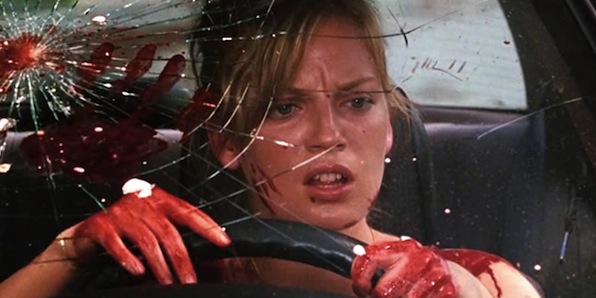
George Romero has always been more than a horror director. Like Roger Corman and James Whale, Romero makes smart, principled, scary movies. His films are ingrained with a social conscience that few genre filmmakers attempt to convey. If his best film, 1979's Dawn of the Dead, had been nothing more than a silly gorefest, it wouldn't have been as relevant as it is today. Romero saw a deep-seated psychological flaw in Americans' worship of money and stuff, and wasn't afraid to point it out. That he did so with gallons of gaudy, bright-red stage blood makes his film that much more of a classic.
Zack Snyder's remake is a stylish, fast-paced, counterpoint to Romero's original. It's also incredibly tedious, with too many characters and an episodic, attention-challenged storyline. Overenthusiastic horror fans had always wondered what a big budget, Hollywood zombie movie would be like. Snyder answered that question with all the flair of a music video director, and none of the intelligence of Romero.
The film has a few redeeming qualities, such as good casting, but it doesn't date as well as Romero's for one reason: it lacks a point of view. Romero allows the malaise of living in a mall to set in before his characters are besieged by zombies and bikers. Snyder seems to think that living in a mall would be super-cool. Maybe he never had to work in one.
9. The Dark Knight Rises

It's not easy to complete a trilogy. Even accomplished filmmakers like George Lucas and Francis Coppola had trouble keeping our interest after two long chapters. Outstanding third films are as rare as free trips to New Zealand. Trilogies, even the most promising ones, almost always disappoint in the end.
Fans had high expectations for The Dark Knight Rises, perhaps the highest for a Batman movie since 1989. After the surprisingly good Batman Begins and the masterful Dark Knight, director Christopher Nolan had gained the trust of cynical Bat-fans. Even a movie theatre shooting in Aurora, Colorado, couldn't hinder the film's potential as a superhero classic.
What keeps the film from reaching that potential can be boiled down to one word: autopilot. The obvious trick of killing but not really killing Batman is explained away with a plot device more befitting the 1966 TV series than a serious cinematic treatment, let alone the final chapter of an epic series. It's the sort of thing you can get away with in a prologue You Only Live Twice, for example but not a climax.
8. Halloween II (1981)

While it's now expected, even respectable, for a successful filmmaker to direct a sequel, such was not the case thirty years ago. John Carpenter declined the offer to direct Halloween II, suggesting that his friend Tommy Lee Wallace take the helm. When Wallace showed no interest (a situation that would change come Halloween III), the job went to Rick Rosenthal, an unknown quantity whose short film work had impressed Carpenter.
In the three years since the original film, horror movies especially the slasher films spawned by Halloween's success had become considerably gorier. Carpenter himself had tried to tell an old-fashioned ghost story with The Fog, but when the rough cut turned out to be less than expected, he went back and gored it up. He wasn't about to let Rosenthal make the same mistake with Halloween II.
Carpenter filmed additional scenes, all more violent, bloody, and downright terrifying than the rest of the movie, let alone its predecessor. The death of Alice, for example, is right up there with Carpenter's scariest work. It's a short scene, but it serves as a stripped-down remake of the first film, Halloween in microcosm, with an added splash of blood at the end. On its own, the added violence would simply be trashy, but Carpenter's eye for suspense proves that he should have directed Halloween II all along.
7. Freddy Vs. Jason
Slasher movies, by definition, are rarely great. Even the best examples of the genre are allowed concessions that movie fans wouldn't dare give to a mainstream drama or comedy. Horror fans recognize that some movies aren't supposed to be taken seriously. They know going in that they're not getting The Godfather, or even The Last Don. While Spielberg made the monster movie respectable with Jaws, a glut of teenage stalkathons dragged it right back into the gutter.
Unfortunately, these low expectations too often allow for serious lapses in a studio's judgment. Such was the case with Freddy Vs. Jason, the long-anticipated match-up between the twin titans of teen terror...ten years too late. The project's various permutations are well-documented. The script went through more writers than a middle school slam book. Potential guest stars included Pinhead and the Devil himself. Friday the 13th director Sean Cunningham was on board to produce, but Nightmare On Elm Street director Wes Craven famously stayed away. In many fans' eyes, the production's most egregious error was replacing longtime Jason Kane Hodder with new guy Ken Kirzinger. The performances, especially the casual use of a homophobic slur, make the movie a tougher sit than previous Jason and Freddy films.
There are many people to blame for Freddy Vs. Jason's reliance on fart gags and lame scares. A lot of fans blame director Ronny Yu. Yu had already enjoyed a long and successful career in his native Hong Kong, wowing audiences with movies like The Bride With White Hair. However, his American output, such as this film and Bride of Chucky, are endurance tests.
It's hard to say whether a different director would have helped the film. Maybe Freddy Vs. Jason just wasn't meant to be good. It's more like the old Elm Street and Friday films than many fans are willing to admit. We all know what happens when slasher flicks think outside the box. Sometimes we get Wes Craven's New Nightmare. Sometimes we get Jason X. New Line Cinema wasn't going down that road with Freddy Vs. Jason. They gave the fans exactly what was expected.
6. Transformers

Michael Bay has been the brunt of internet fanboy jabs since AOL was a hot commodity. When news of a live-action Transformers movie surfaced though, many had high hopes. How could anyone, even Bay, ruin a movie about robots punching each other? It couldn't possibly be any dumber than the eighties cartoon series. Plus, Peter Cullen was in it. And yowza, who was that girl? Transformers simply could not fail.
In terms of box office, it didn't. Transformers was successful enough to spawn two sequels and revive the brand beyond Hot Topic shirts and comic book reprints. That very success is the sole reason older fans can get a special edition of the 1986 animated movie. If you enjoy your non-bootleg, subtitled, Japanese Transformers DVDs, keep in mind that you'd have waited a lot longer to get them if this movie hadn't succeeded.
Of course the movie's terrible. Anyone expecting otherwise was deluding themselves. The best you can say about any Michael Bay movie is that it's visually interesting. Special effects are expensive, though. They have to pad the movie out somehow.
Hence, acting. Sort of. Bay is notorious for getting the worst performances out of even the best actors, Sean Connery and John Turturro among them. This is to be expected from movies about people in fast cars and planes. But when the cars and planes are the people, why bother with human actors at all? If Transformers had dispensed with its human-oriented subplot, and reduced Shia LeBouf and Megan Fox's performances to pointing and screaming at special effects, it would have been a better film. Shorter, too.
5. Star Trek Into Darkness
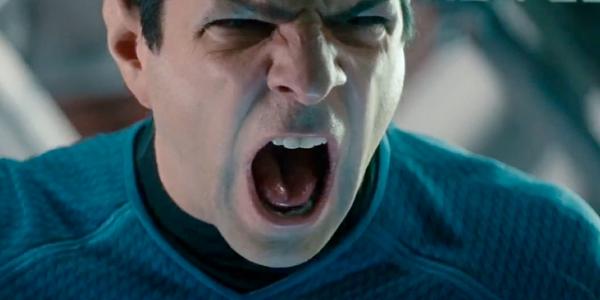
In recent years, the reboot formula has become clear. The new origin story, while gratuitous, serves as a fun reintroduction to characters we've grown to adore. The real fun is supposed to begin in the second film. With a built-in audience ready to salivate, the studios at least have our attention and cash for two films. Comparisons to Godfather II, The Empire Strikes Back, and especially Wrath of Khan are gleefully tossed about like so much ticker tape. When they finally get around to rebooting Dollman, some dope on the internet, eagerly clutching his Full Moon toys (still in the box, of course), will inevitably write, "This was a solid first film, but the next one's going to be the Wrath of Khan of Dollman movies."
Somehow, J. J. Abrams made the Wrath of Khan of Star Trek movies, a feat only Stephen Hawking could explain. If alternate universes are indeed real, then Abrams has not only rebooted the Star Trek franchise, but reality itself. Or, he just threw a bunch of Star Trek stuff together and called it Star Trek. While good sequels surpass their predecessors in popularity and acclaim, J. J. Abrams's Star Trek sequel took viewers back to the old days, when sequels were rarely better than "the original."
It's a shame, too, considering how much good will the first film had fostered. Star Trek Into Darkness should have been a blast. It has Peter Weller, after all. It also has Klingons, Khan, a Tribble, some dude who might be Data, and other things that were done better the first time around. But still, Peter Weller. Hell yeah.
Star Trek Into Darkness is a busy movie, but too much plot will cripple a good story (ask Zack Snyder). The best thing the next Trek filmmakers can do is take a closer look at the series' past, and not just for the sake of polishing the same old gems. Take a cue from Gene Roddenberry, D. C, Fontana, and Harve Bennett, and try to tell one story instead of twenty.
4. Rocky Balboa
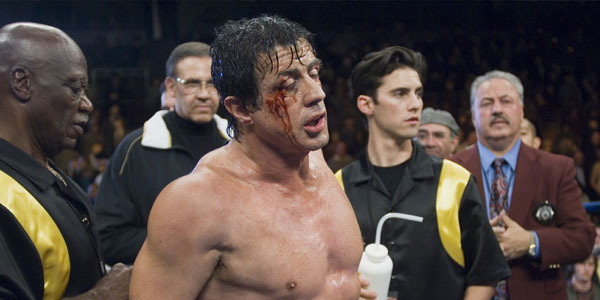
The best thing about this movie is a speech Rocky gives to his son. It's become a motivational meme in recent years, heard everywhere from YouTube to hip hop mix tapes. Something about getting hit in the head really hard, then finding out that brain damage isn't as serious as it was in 1989.
The rest is standard Stallone fare, and actually a bit better than that. The plot is what audiences expect of a Rocky comeback: Rocky comes back. Then he hits a dude. Strangely enough, he's working in a restaurant at the beginning of the film, echoing "Weird Al" Yankovic's "Theme From Rocky XIII." The old Rocky magic is back for a while, and better than it was in the previous sequel.
Rocky movies have always been products of their time, and Rocky Balboa is no exception. During the inevitable confrontation between Rocky and opponent Mason Dixon, the color occasionally fades. Save for Rocky's red wounds and, oddly, the yellow patterns in his trunks, the movie is in black and white. It could be a reference to Raging Bull, Natural Born Killers, or even Schindler's List, but it looks more like sports drink commercials that were airing at the time. It's a cool effect, but unnecessary, and will look even more dated as time goes on.
3. Man Of Steel
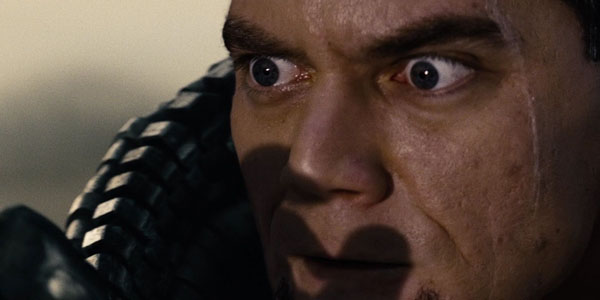
It's easy to label the divide over Man of Steel as generational. Younger moviegoers (fair weather flyers?) found a hip take on a timeless origin story. Older fans (Kryptonian cranks?) found the antithesis of the icon they grew up loving. Still, plenty of Reeve-loving die-hards found something to love about this movie. It's nice to know that Hollywood is still interested in Superman, considering the botched treatments we've been put through for our love of the character.
Superman films have always been divisive, usually in retrospect. The beloved Richard Donner films have their critics, many from the generation that grew up loving them. Bryan Singer's Superman Returns, currently reviled as a bad cover version of the Donner originals, was initially supported by critics. Hell, even iFanboy liked it.
The split decision over Man of Steel was more immediate, much of it centering on a key missing element: humour. It was a decent tribute in many respects, but far too bleak to be a proper Superman film. A common defence is that this was a Superman for a new generation, presumably one raised on moody, lifeless images of men in tights setting their logos on fire. To eschew the Fleischer Brothers' knowing wink or Christopher Reeves's Cary Grant charm is to forget what made us love Superman in the first place. He's a flying guy in pyjamas, a concept that is, by nature, as silly as it is fascinating. Previous filmmakers knew this, and gave us much-needed moments of levity in between the action and danger. Zack Snyder and company gave us action and danger, then more action and danger, then Russell Crowe hitting dudes with his holographic hands. It's a silly movie, but for all the wrong reasons.
2. Indiana Jones And The Temple Of Doom
It was the summer of 1984. The blockbuster ruled Hollywood and, by proxy, the popular consciousness. The studios had long forgotten how to take risks, now answering to their corporate parents' bottom line. Movies were no longer artistic statements, or even mere entertainments, but product. In the thick of a season dominated by said product, was the long-awaited sequel to Raiders of the Lost Ark.
Three years before, director Steven Spielberg, producer George Lucas and screenwriter Lawrence Kasdan had reintroduced moviegoers to the spirit of high adventure that had characterised the matinee movie serials and pulp novels of the thirties. Raiders was old Hollywood reborn, a post-Graduate renaissance of action-adventure films like The African Queen, with everyman Harrison Ford in the Bogart role. The picture was a resounding success on nearly every level. Ford's raw charisma, Spielberg's fast-paced style, John Williams's score and even Ben Burtt's sound effects set the film apart to this day.
The main players all came back for Temple of Doom, save for Kasdan, who was focusing on directing at the time and had reservations about the sequel's darker direction. American Graffiti screenwriters Willard Huyck and Gloria Katz returned to the Lucas fold, and wrote a screenplay with all the adventure of Raiders, but with none of the backstory or character development. Inexplicably set a year before Raiders, the film gave us an Indiana Jones with no history, and therefore no real character trajectory.
Sure, Indy gets over his fortune and glory fixation by the end of the film, but that character pales in comparison to the man who fooled around with his mentor's daughter, left her, and came back to get her almost killed by Nazis. It's also missing Kasdan's sense of dread. Raiders has several scenes of characters reflecting about what they're getting themselves into, a post-seventies, New Hollywood version of Curt Siodmak's Wolf Man speech. Temple of Doom has nothing of the sort and nothing with which to replace it, save for more action.
Temple of Doom gets a lot of things right, and has become a cult favorite of the series. It pushes its PG rating to the limit, showing things that probably wouldn't make it into a PG-13 movie today. Like Raiders, it has great moments, but ultimately, it's all sound effects and fury.
1. Saving Private Ryan

Fourteen years later, Steven Spielberg was in a position to make far more ambitious films. He still made genre movies, but was now seen as a serious filmmaker thanks to The Color Purple and Schindler's List. The boy who never grew up turned out to be an adult after all, as much John Ford as George Pal.
Saving Private Ryan, for the most part, is a prime example of why the Spielberg name is synonymous with the word "blockbuster." It was a long film that feels much shorter, thanks to the usual qualities that make Spielberg a respected commodity. It's an exciting adventure, a dramatic clinic, and poignant love letter to soldiers everywhere. Even Vin Diesel's good in it.
Then ILM gets involved, and what could have been a successor to Samuel Fuller's The Big Red One winds up looking like a SyFy Pictures Original. Young Private Ryan (Matt Damon), slowly ages and turns into his present-day self (Harrison Young). At the time, the morphing technique was an overused staple of Hollywood sci-fi films, and had even made its way into television and low-budget productions. It's a tech nerd's version of a dissolve or match-cut, two far more tasteful techniques. The scenes before and after are stirring, but the morph in between only draws attention to itself. Spielberg the dramatist is interrupted by Spielberg the futurist, leaving a flaw in what could have been a cinematic diamond.