10 Movies Utterly Ruined By Their Final Revelations

Movie endings that broke their reputation.
A movie's ending can make or break its reputation. After all, those final moments are what everything before it has built up to - from the character arcs to the narrative development, by the time a film reaches its denouement all these factors pull together in a final revelation which informs the audience about everything which has gone before. Sometimes a film gets this just right. Following the cinematic maxim of set-up and pay off, they tease the audience with new information relating to plot and character, slowly building up both tension and intrigue until the final reel where everything transforms. Alfred Hitchcock was something of a master in this regard, but there are many other notable examples of this dynamic played out as it should be - the "Rosebud" revelation in Orson Welles's Citizen Kane and the origami unicorn scene which closes Ridley Scott's Blade Runner with wonderfully thought-provoking ambiguity are just two great examples from legendary movies. But sometimes the filmmaker gets it so, so wrong, delivering a final revelation which, far from being the icing on the cake, transforms it into a cinematic mud pie. Here are 10 such movies which were utterly ruined by their atrocious final revelations. Needless to say, we're about to venture deep into SPOILER territory...

10. The Village

There was a point in cinema history when M Night Shyamalan looked like he might emerge as "King of the Twists", addling the brains of countless movie-goers with one twist after another before hitting them with a final game-changing revelation. As we all know by now, the early promise demonstrated in his debut The Sixth Sense was an empty one, and instead we've been treated to a law of diminishing returns culminating in such movie atrocities as The Last Airbender and After Earth. Shyamalan's 2004 film The Village certainly doesn't fall into the ignominious category of his more recent films - indeed, its initial premise, in which the inhabitants of a small 19th century-style village find themselves unable to escape on account of deadly creatures which inhabit the surrounding woodland, seemed like a solid set-up. Unfortunately, the revelation that they are actually living in the present day and the creatures don't exist but rather are part of a conspiracy to keep the residents in fear of the outside world turned out to be one of the most misjudged twists in recent history. Roger Ebert succinctly described it as "one step up the ladder of narrative originality from It was all a dream." If only the same could be said for the ending of the film.

9. High Tension

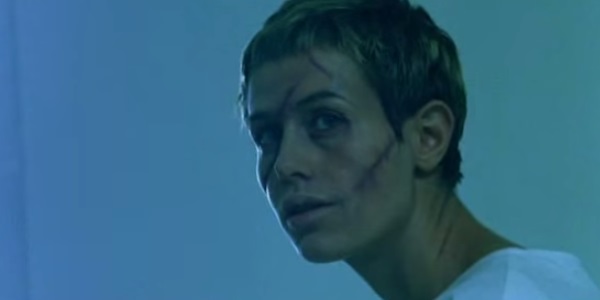
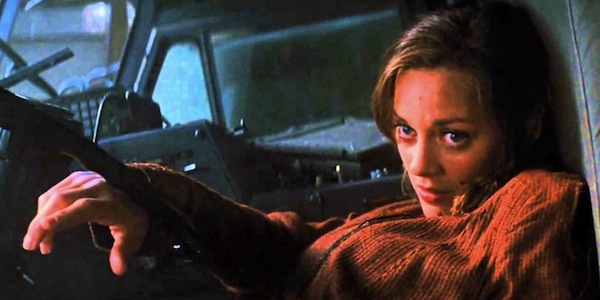
When novelist Dean Koontz found himself being drawn into a potential plagiarism lawsuit with the creator of French extreme horror movie High Tension he described the film as "so puerile, so disgusting, and so intellectually bankrupt," refusing to get drawn into legal action to avoid having his own material in any way associated with it. It's certainly not the most sophisticated horror film ever made, providing a string of gory and violent sequences and precious else. The threadbare plot and distinct lack of tension (especially given its title) could be forgiven, particularly if you're a fan of brainless B-movie horror, but the same can't be said for the completely nonsensical and illogical twist the movie finishes up on. High Tension's contribution to the history of terrible endings comes in the revelation that the serial killer is actually an alternate personality of the protagonist. Like an axe chopping off a head, in one fell swoop the filmmakers managed to completely undermine everything which came before, leaving the audience scratching their heads as it dawns on them that none of it makes any sense any more.

8. Indiana Jones And The Kingdom Of The Crystal Skull

It's fair to say that the ending to Indiana Jones and the Kingdom of the Crystal Skull isn't the only aspect which ruined the experience for many fans of the previous movies - the writing started appearing on the wall pretty much from the opening sequence that this wasn't going to be the return to the franchise everyone was hoping for. While Indiana Jones movies aren't exactly the most plausible, surviving a nuclear blast by hiding in a fridge pushed things too far by anyone's standards. Still, a decent ending could have salvaged the rather messy build up from being a complete disaster - but instead, it transformed Crystal Skull into one of the stupidest blockbusters in recent memory. We should have all seen it coming from the title alone, but the sight of a huge UFO rising out of the South American landscape nevertheless elicited plenty of groans in cinemas across the world, leading many to believe that Spielberg and Lucas had finally lost their touch. Ah well - we still have the original trilogy to fall back on to remind us how good it could have been.

7. The Forgotten

For a good hour or so, Joseph Ruben's The Forgotten, starring Julianne Moore as a mother grieving the death of her son only to be told by everyone she encounters that she never actually had a son, looks like it's shaping up into an intriguing psychological thriller of some depth. Moore's compelling and grounded performance more than carries the film along - that is, until the final revelation. if the "it was all a dream" ending is one of the most notable cop-outs in cinematic history, the alien reveal - referred to as "them" in The Forgotten - comes a close second place. Mysterious government agents, memory wiping and alien experimentation all converge to drain The Forgotten of any lasting tension and intrigue, leaving the viewer more than a little miffed at having spent all that time investing in her character only for all credibility to disappear in a flash. Still, at least it wasn't all a dream...

6. Savages

Oliver Stone's Mexican drug cartel thriller Savages was never going to win him the kind of praise he's received for some of his more outstanding works - compared to the heavyweight anti-war horrors of Platoon or the probing analysis of the Presidential assassination in JFK, Savages is a considerably closer to mainstream fare, more throwaway entertainment than challenger of Hollywood conventions. It's in pandering to Hollywood conventions that Savages really falls apart, and in spectacular fashion. Pot dealers Ben and Chon and their mutual love interest O find themselves embroiled in a Mexican drug cartel and call in DEA Agent Dennis to help them out after the cartel kidnaps O, culminating in a meeting point in the wilderness in which Ben is shot and the other two kill themselves with a fatal overdose on the spot, rather than break up their threesome. The next reveal - that this was nothing more than O's fantasy, and that everything actually worked out alright for all of them - is so misjudged and absurd that you can only assume that the studio forced Stone to tack it on That said, a director of his clout surely could have insisted on the downbeat ending we'd just seen - after all, this is how the story ends in the novel on which Savages is based.

5. Source Code

Source Code is another fine example of a solidly crafted thriller with plenty of nuance and intrigue to keep you guessing throughout which inexplicably drops the ball in its final moments. Jake Gyllenhaal turns in a fine performance as Captain Colter Stevens, the man who finds himself waking up in the body of an unknown man and learns that he is part of a mission to discover the location of a bomb on a commuter train. The basic premise - that the US Army have developed secretive technology which allows them to cross into the body of another man in the final moments of their life - is certainly one which presents a great deal of potential intrigue, and for the most part Source Code tackles it with intelligence and maturity. It's unfortunate, then, that the ending tacks on an "everything is going to be okay" line as Stevens remains in the alternate timeline, presumably free to lead a new life in the body of another man. As for the soul of the man whose body he's inhabiting - well, his fate isn't even mentioned.

4. The Cabin In The Woods

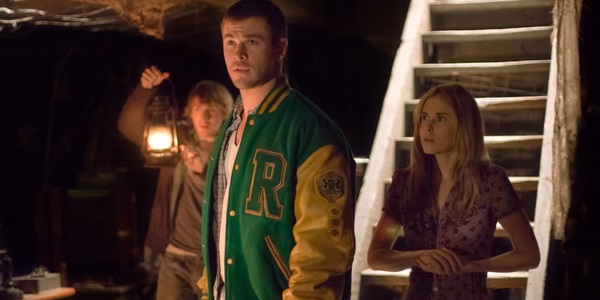
Drew Goddard's directorial debut The Cabin in the Woods, co-written by uber-geek Joss Whedon, is in many respects one of the smartest and most entertaining horror satires of all time. From start to finish it playfully subverts genre conventions, from characters act logically (for instance, sticking together rather than pointlessly splitting up and going separate ways) through to its smorgasbord of monster types. It takes the notion of self-referential cinema way beyond the level seen in movies like the Scream series. There are a number of interesting twists scattered throughout The Cabin in the Woods which are handled brilliantly, not least the revelation that the horrors the group of teens are enduring is all part of a sinister organization which orchestrates a worldwide event in which supernatural beings of all description are unleashed on unsuspecting teens. But the final revelation, in which the purpose of these killings - to propitiate ancient gods and prevent them from taking over the world - was one twist too far for many in the audience, pushing things into over the top territory even for a film which revels in its own excesses. Maybe the end of the world was the only place left to go, but it wasn't half as smart as what had gone before.

3. Planet Of The Apes

We'll never know how the Phillip Noyce-directed movie Return of the Apes starring Arnold Schwarzenegger might have turned out - for better or worse, the project fell by the wayside and after several permutations reemerged in what we all assumed at the time were the capable hands of Tim Burton. Little did we know that his remake would turn out to be one of the most lamentable - and forgettable - remakes of the last decade. Starring Mark Wahlberg, Tim Roth and Burton's wife Helena Bonham Carter, the Planet of the Apes remake somehow managed to remove everything which made the premise of the original intriguing and replace it with an unnecessarily complex and often baffling plot and an overbearing sense of seriousness, which culminated in a truly awful twist on the original's twist ending. Whereas Charlton Heston's discovery in the original that he was on earth all along worked perfectly, the remake replaces the sight of the Statue of Liberty with the Lincoln Memorial, this time featuring ape General Thade's head where old Abe's used to be. Ridiculous and unintentionally hilarious barely begin to express how bad this ending is.

2. The Matrix Revolutions

It was at around the twenty minute mark in The Matrix Reloaded that many people realised that everything that made the original truly exceptional was probably going to be lacking from the sequels. By the time they sat down to watch the third installment, pretty much all hope of the franchise salvaging the goodwill earned with The Matrix had all but slipped out of the door, waving goodbye as it disappeared over the horizon. We can accuse the Wachowskis of taking a huge dump on a much-loved premise as much as we like, and they certainly had enough creative control to deserve the lion's share of the blame. There's certainly a distinct lack of focus and drive to the plot, which is by turns increasingly banal and incomprehensible as Revolutions progresses. The cod-philosophical musings delve into the depths of pure cliche by the final reel, as Neo enters into the Source after a ridiculous protracted battle with countless Agent Smiths (bigger isn't always better), reducing the big questions posed in the original to cheesy nonsense. An irredeemable mess is all that remains - if only the Wachowskis had adapted the Second Renaissance shorts from The Animatrix into a feature film instead

1. The Dark Knight Rises

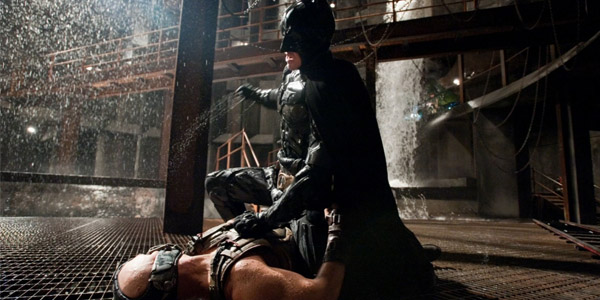
Living up to the great heights established in The Dark Knight was never going to be an easy task for Christopher Nolan. Having delivered such a tightly focused study of Batman's psychology compared and contrasted to his greatest nemesis The Joker, it was clear from the beginning that it was going to be a difficult act to follow. Still, when we all saw the incredible intro sequence to The Dark Knight Rises for the first time, as villain Bane is freed from a CIA airplane in spectacular fashion, our hopes for something bigger and better were reinvigorated. That The Dark Knight Rises never quite manages to achieve that edge-of-your-seat excitement after the opening scene is just one of the problems the movie faces, irrespective of any comparisons with The Dark Knight Bane is established well as a super villain worthy of taking on Batman, and for the first two acts his menacing presence certainly gives the film its momentum. That Nolan and his collaborators then decide to pull a fast one on the audience in the final reel, revealing Bruce Wayne's love interest Miranda Tate to be Talia al Ghul, daughter of his mentor/enemy from the original movie, completely undermined the threatening nature of Bane by reducing him to a mere footsoldier, even going so far as to kill him off in such a perfunctory manner as to almost define "anti-climactic". Having Batman escape from a huge explosion and turn up unscathed supping on drinks in a picture postcard cafe was for many the final straw in a disappointing conclusion to an otherwise solid trilogy. Which movies have you seen which were totally ruined by their final revelations? Agree or disagree with the selection on this list? Why not let us know in the comments below?

Contributor
Contributor

Andrew Dilks hasn't written a bio just yet, but if they had... it would appear here.