10 Movies Where The Director Hated The Source Material
Sam Raimi was no fan of Venom.

It goes without saying that any movie adapted from existing material should come from a place of respect, even love, for the source, because nine times out of ten, that's where the best cinematic results are produced.
But every so often, a movie will hit cinemas adapted from a novel, comic, prior movie or existing property, and the filmmaker actually has precious little reverence for the source whatsoever.
Whether arrogantly wishing to place their own "stamp" on the IP or hoping to cleverly subvert problematic material, these films all deviated significantly from their inspiration, either for better or worse.
While in some cases the end result is still a good or even great piece of work, the riskiness of departing from the instigating piece of media speaks for itself, and unsurprisingly, in many instances it left either fans or the original creator (or both) fuming.
It takes a uniquely skilled filmmaker to get away with "betraying" what came before, and so, unsurprisingly, that thinly-veiled contempt for the source material often transpires through to the final movie itself. Awkward...
10. Godzilla (1998)

It won't surprise anyone to learn that Roland Emmerich wasn't much of a Godzilla fan when he signed on to helm the much-anticipated - and eventually widely-reviled - 1998 Hollywood adaptation.
In fact, Emmerich only agreed to direct the movie when he was given a wide remit to reinvent the character to his own fancies.
He wasn't fond of the franchise at all, saying, "I was never a big Godzilla fan, they were just the weekend matinees you saw as a kid, like Hercules films and the really bad Italian westerns. You’d go with all your friends and just laugh."
The Independence Day filmmaker also wasn't keen on the monster's iconic - and let's be honest, bloody charming - guy-in-suit look, and wanted to transform Godzilla into something faster and sleeker for his new vision.
So, not really Godzilla, then?
Emmerich co-wrote the screenplay alongside his regular writer-producer partner Dean Devlin, and rather than hew close to the original 1954 Japanese Godzilla, opted to give audiences a cutting-edge reboot.
This extended to making Godzilla a more "plausible" monster, and when the controversial re-design was first unveiled to producers at Toho - the studio behind the original movie - they simply sat silent for several minutes. Yikes.
Despite a successfully enigmatic marketing campaign, the movie released to near-universal critical disdain and under-performed at the box office. Shocker.
9. Starship Troopers

Conversely, Paul Verhoeven's Starship Troopers is a shining example of a filmmaker taking only the scarcest outline of a dubious book and mutating it into something far more interesting and entertaining.
The sci-fi action satire is very loosely based on Robert A. Heinlein's right-wing 1959 novel of the same name, which is a blatant work of pro-military, seemingly pro-fascist propaganda.
The movie was initially written as Edward Neumeier's spec script Bug Hunt at Outpost Nine, and after similarities to Starship Troopers were discovered, it was decided to option the book in order to use the title.
Verhoeven attempted to read the book, but claimed it made him "bored and depressed," and given that Verhoeven himself grew up in Nazi-occupied Netherlands, he unsurprisingly wasn't much interested in making a pro-war, pro-fascist, right-wing movie.
So, aided by Neumeier's self-aware script, he fashioned his Starship Troopers as a deeply tongue-in-cheek satire of war, the military and the propaganda machine, all of which some critics bafflingly missed upon its original 1997 release.
Today the film endures as a kitschy cult classic, and given what has become of American foreign policy in the decades since, its themes feel only more relevant than they were in 1997.
8. Exorcist II: The Heretic

After the enormous success of 1973's The Exorcist, it was only inevitable that Warner Bros. would want to rush out a sequel, yet both director William Friedkin and writer-author William Peter Blatty opted not to return.
Legendary Brit filmmaker John Boorman (Deliverance) was eventually hired to direct, after turning down an offer to helm the original film due to finding Blatty's novel "rather repulsive."
But Boorman was intrigued by the idea of making a more hopeful, metaphysical sequel, and one counter to the "ugliness and darkness" of Friedkin's film.
He took particular issue with how much of the original Exorcist focused on "torturing a child," and wanted to veer away from that completely.
And while he certainly did depart from the original movie - despite producers originally wanting to make Exorcist II a low-budget rehash of the same base premise - both critics and audiences loathed his sequel, which is often ranked among the worst of all time.
7. Blade Runner

Ridley Scott's Blade Runner is unquestionably one of the greatest and most influential sci-fi movies of all time, and though hardly a faithful adaptation of Philip K. Dick's 1968 novel Do Androids Dream of Electric Sheep?, it certainly does a fantastic job capturing the mood of Dick's dystopian source material.
But Scott himself wasn't much taken with the novel, confessing that he didn't even finish reading it before making his movie.
He said, "I honestly couldn't get into it. It's so dense, by page 32 there's about 17 story lines. So one of the problems is distilling it down into a three-act play that can be filmed."
Thankfully the scripting duties were handled by Hampton Fancher and David Peoples, while Scott, a designer by trade, could focus on nailing the stylistic and world-building aspects.
Despite Scott's disinterest in Dick's novel, the author was reportedly amazed by an effects reel of Blade Runner he saw before passing away just a few months shy of the film's release.
6. Batman (1989)

Tim Burton's 1989 Batman was a major milestone in Hollywood actually taking superhero movies seriously, yet despite its critical and commercial success, many fans took umbrage with Burton and writer Sam Hamm's departures from established aspects of the Dark Knight's lore.
For starters, Batman (Michael Keaton) liberally murders people throughout the film, worst of all The Joker (Jack Nicholson) himself in the film's climax.
Furthermore, The Joker is retconned to be the killer of Bruce Wayne's parents - rather than thug Joe Chill as in the comics - and Burton included goofy eccentricities such as having Bruce sleep upside down. Like a bat, get it?
This all boiled down to the fact that Burton, by his own admission, isn't a comic book fan, and though he enjoyed the elemental images and ideas of Batman and The Joker, didn't really care for the style or storytelling of comics as a medium.
In Burton's own words, "The reason I've never been a comic book fan - and I think it started when I was a child - is because I could never tell which box I was supposed to read."
Burton did confess to getting some joy out of Alan Moore's revisionist Joker comic The Killing Joke, but as far as classic Batman comics go, he just wasn't interested, and therefore had little desire to faithfully represent it on the big screen.
But ultimately, Burton wasn't even that fond of the final film. He later said, "I liked parts of it, but the whole movie is mainly boring to me. It's OK, but it was more of a cultural phenomenon than a great movie."
5. Star Trek II: The Wrath Of Khan

Though it's well-documented that J.J. Abrams wasn't much of a Star Trek fan before boarding 2009's hit reboot, he actually wasn't the series' first filmmaker to possess little interest in the property.
Nicholas Meyer, who served as writer-director on the much-loved Star Trek II: The Wrath of Khan, had never even seen an episode of Trek before signing on, and only agreed to direct after his attempts to get another sci-fi movie made were shot down.
The director actively disliked the preciousness with which both fans and the studio regarded Star Trek, and hilariously, he went on to say, "Far from being sacrosanct, I was of the opinion that Star Trek could stand some fixing."
Better still, Meyer felt that he brought a "healthy disrespect" to the set, and hoped that his outsider's eye could reduce some of the series', as he called it, "wooden" elements.
And he was absolutely right. Wrath of Khan is by far the franchise's consensus favourite among long-time fans, and it's in large part because Meyer served up such a human antithesis to its predecessor - the rather dry and oddly dull original movie, Star Trek: The Motion Picture.
4. Harry Potter & The Prisoner Of Azkaban

Of the four filmmakers who collectively tackled the eight Harry Potter movies, there's one name which just doesn't vibe with the rest, and that's Alfonso Cuarón.
Fresh off his hit erotic drama Y Tu Mamá También, Warner Bros. approached Cuarón to direct the third Potter movie, Harry Potter and the Prisoner of Azkaban, which baffled the director even more than it bemused audiences.
Cuarón admitted in a recent interview that he initially "made fun" of the idea, and had no interest in adapting a property which he also had no desire to read.
It was only when his filmmaker pal Guillermo del Toro called him an "arrogant f**kin' bastard" that he agreed to read the first three Potter books and realised his initial dismissal of the fantasy franchise was misguided.
Nevertheless, Cuarón worked extensively with author J.K. Rowling and Warner Bros. to ensure that his dark vision for the movie wouldn't be restrained by commercial concerns, and the result was a successful tonal shift for the franchise.
And if directing one of the most-acclaimed Potter movies wasn't enough of a reward, Cuarón went on to call it "the two sweetest years of [his] life." D'aww.
We're still not forgetting about that cringe-worthy final shot, though.
3. A Clockwork Orange
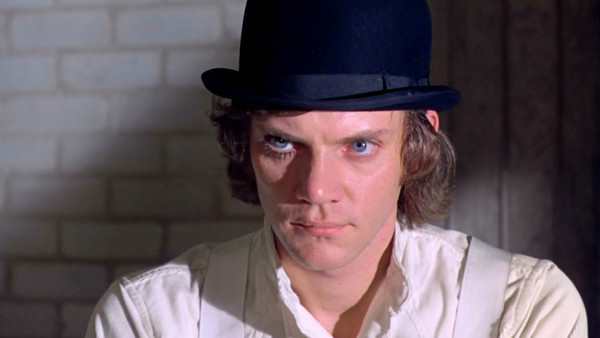
Anyone familiar with the production of The Shining will be well aware of how little Stanley Kubrick cares about sticking to the source material.
And though Kubrick never outwardly trashed Stephen King's novel, when it came to his controversial film A Clockwork Orange, he was decidedly more eager to highlight one major aspect of Anthony Burgess' 1962 novel he wasn't much keen on.
Though Kubrick's film is spiritually faithful to most of the novel, the filmmaker actually didn't read the full, original print of Burgess' book until he was almost done writing the script.
Kubrick reportedly harboured an intense dislike for the original version's "blandly optimistic" ending, in which protagonist Alex DeLarge (Malcolm McDowell) is genuinely redeemed, opting instead for a more cynical and nihilistic ending in which Alex's sociopathy remains.
Kubrick studied an American reprint of the novel while preparing the movie, which similarly omits the sunnier epilogue, and upon reading the original version while putting the finishing touches on his script, commented that he never once considered using Burgess' "true" ending.
And Kubrick was absolutely right: the original ending is unrealistic and nowhere near as thought-provoking.
2. Spider-Man 3

As excited as fans were to finally see Spider-Man's iconic arch-nemesis Venom (Topher Grace) adapted to the big screen, director Sam Raimi wasn't quite so enthused, to be kind.
Despite Raimi feeling that the character suffered from a "lack of humanity," while campaigning in vain to include The Vulture with Ben Kingsley already in talks to play the part, producer Avi Arad insisted that Venom instead be added as a secondary antagonist alongside Sandman (Thomas Hayden Church).
The result was a massively underwhelming treatment of the beloved supervillain, which just didn't work from a casting, conceptual, visual or storytelling perspective.
In more recent years, Raimi said of his ambivalence regarding the character, "I tried to make it work, but I didn’t really believe in all the characters, so that couldn’t be hidden from people who loved Spider-Man. If the director doesn’t love something, it’s wrong of them to make it when so many other people love it."
Given that both Raimi and Tobey Maguire withdrew from plans for a fourth film amid "creative differences," it's been widely speculated that the director's experience being railroaded on Spider-Man 3 prompted him to walk away.
Producer Arad, to his mild credit, ended up accepting the blame for twisting Raimi's arm. He said, "I think we learned that Venom is not a sideshow. In all fairness, I'll take the guilt because of what Sam Raimi used to say in all of these interviews feeling guilty that I forced him into it."
1. My Sister's Keeper
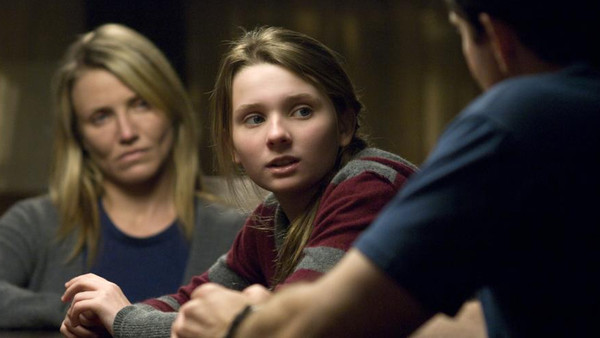
2009's weepie drama My Sister's Keeper is based on Jodi Picoult's hit novel about a young girl, Anna (Abigail Breslin), who was born simply to provide her grimly ill older sister Kate (Sofia Vassilieva) with organ and blood donations.
Upon learning that her parents wish for her to donate a kidney to her sister, Anna sues for medical emancipation, not wishing to have her future life restricted by the use of just a single kidney.
And the film proved massively controversial with fans of the book because of writer-director Nick Cassavetes' decision to change the ending.
In the book, Anna wins her case but dies in a car accident and her organs are donated to her sister regardless, saving her life.
But having visited terminally ill patients while researching the project, Cassavetes surmised that, "In reality, none of these stories ended like the book did."
Instead, the film ends with the reveal that Anna's refusal was actually at the encouragement of Kate herself, who didn't want her sister's life to be impacted by the donation, and she simply ends up dying of her disease at the end of the movie.
Though fans continue to complain about Cassavetes "butchering" the novel to this day, he was absolutely right to make the change. The source material's ending was maudlin and ridiculous, while the film's was more dignified and believable.