10 Movies Which Were Completely Changed After Test Screenings

Studio interference isn't the only thing filmmakers have to worry about.

Only a handful of directors working in the film industry today can boast the right to final cut. With huge sums of money invested in movie production, even the most talented are contractually bound to satisfy the creative demands of studio executives. Steven Spielberg and Ridley Scott might enjoy the privilege of final cut today (which as we'll see wasn't always the case), but other filmmakers have no choice but to put up with the interference of the studio; which often involves preview screenings to members of the public to gauge their reaction to the film. Screenings can be a great medium for helping to streamline a movie or iron out any small problems - for instance changing the name of the James Bond movie License Revoked to License To Kill to avoid Americans confusing it with a film about traffic violations - or improving the clarity of Bane's voice in The Dark Knight Rises. Unfortunately, the results from test screenings can also significantly change a movie for the worse, proving that pandering to a narrowly selected demographic isn't always a good idea. As Roger Ebert put it, "studio executives use preview screenings as a weapon to enforce their views on directors, and countless movies have had stupid happy endings tacked on after such screenings." Here are ten movies which, for better or worse, were completely changed by test screenings.

10. The Magnificent Ambersons

The Magnificent Ambersons
RKO
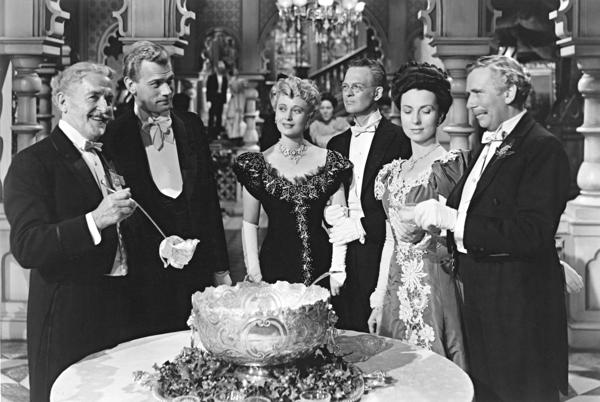
"We do not need trouble pictures, especially now. Make pictures to make us forget...not remember." These words on a test card from a preview screening of Orson Welles's The Magnificent Ambersons in 1941 speak volumes about the pubic mood as World War 2 raged around them. Following on from Citizen Kane, it's difficult to imagine that Welles would have any problems getting final cut on his sophomore feature, yet The Magnificent Ambersons ended up considerably less pessimistic than the great director had intended. Comments such as those above - and the strong actions taken by RKO in light of the public's reaction to the rough cuts - prove that the influence of test screenings isn't a recent phenomenon and can affect filmmakers of unprecedented talent. The cut preferred by Welles, which had caused the studio to intervene with considerable re-shoots and a "happy" ending, was lost in a fire, one of the greatest losses of cinematic history and especially so in light of the polarizing nature of the test cards, one of which read, "I think it was the best picture I have ever seen".

9. The Descent

Descent Cover
If there's any genre of film which can surely get away without having a happy ending tacked on the end, it's horror. Given that the entire point of horror is to try and instill a sense of fear, dread, apprehension and discomfort in the audience, a happy ending runs at odds with the purpose of the film. UK audiences who went to see the claustrophobic horror film The Descent understand the power of a downbeat ending - having watched the protagonist finally claw her way out of the monster-infested network of underground caves, she suddenly reawakens in a cave, back to the nightmare. Apparently US test screening audiences didn't like this "uber-hopeless finale" so the decision was made to switch the ending, allowing her to get away with her life. Director Neil Marshall made a valid point about the ending switcheroo when he compared it to the end of The Texas Chainsaw Massacre, in which the heroine also gets away. But while he's right that this isn't necessarily a "happy" ending, it doesn't change the fact that The Descent's US ending is definitely much happier.

8. Robocop (2014)

Robocop 1987
Orion Pictures
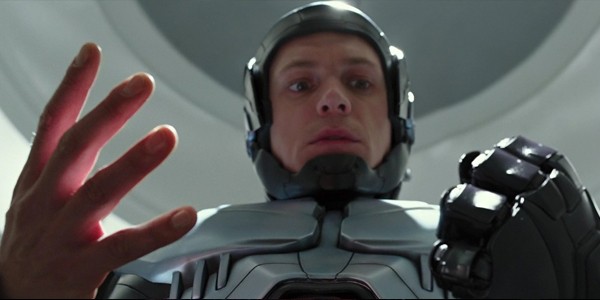
It's fair to say that last year's PG-13 remake of Paul Verhoeven's seminal sci-fi satire Robocop didn't win itself many fans - while it certainly wasn't terrible, the family-friendly rating and overuse of CGI meant that it isn't likely to earn the same kind of cult following as its predecessor any time soon. Much has been said about José Padilha's frustration with the studio during the filming and editing of Robocop - it's a classic example of a director with a clear vision being hampered at every step by a studio more interested in establishing a franchise than honouring the legacy of a true classic. Padhila faced particular objection to the amount of political satire, which was no doubt incredibly frustrating in light of the superbly done satire in the original. Amazingly, the studio to concede that the political elements worked after viewers in test screenings responded with comments like "I liked it because it was political," and "It feels like it deals with current affairs." Thanks to them, the political satire which remained in the film - as weak as it was in comparison to the original - was one of its saving graces.

7. Pretty Woman

Julia Roberts Pretty Woman
Buena Vista Pictures
After her breakthrough in Steel Magnolias, Julia Roberts was catapulted into the ranks of the A-listers and crowned Queen of the Rom-Com thanks to Pretty Woman, in which she played the "hooker with a heart of gold" wooed by Richard Gere's raunchy millionaire. While the rom-com approach worked wonders at the box office, it was a far cry from the original concept - pitched more like a Paul Schrader movie of the era it was intended to be a gritty examination of the life of a sex worker, with the movie ending with Gere's character unceremoniously kicking Roberts's hooker out of the car, after which she returns to her life of prostitution - not to mention her drug addiction. Test screenings soon put an end to the idea of Pretty Woman operating on any level of social awareness and the studio bowed to the whims of the audience and dropped the drug addiction and downbeat ending entirely. Fortunately for them, they'd already got the director to shoot an alternative fairly tale ending, although viewed through today's prism of gender politics and feminism you could argue that this ending is more controversial than intended.

6. E.T. The Extra Terrestrial

E.T. The Extra-Terrestrial
Universal Pictures
It's hard to imagine Steven Spielberg being in a position where he's beholden to the whims of the studio - never mind that he would be faced with drastically changing the ending of one of his movies to satisfy the concerns of a test screen audience. But this is precisely what happened when working on his sci-fi classic, E.T. The Extra Terrestrial. One cut of E.T. featured a different ending which didn't go down at all well with the test audiences - in this cut, rather than being picked up by his alien buddies and flying off home, E.T. dies. It's another notable example of audiences really not going for the downbeat endings, and in this case there's a good chance they may well have been right (think of all the distraught children bawling as they left theatres...). As it happens, Spielberg managed to have his cake and eat it. After being placed in quarantine by gun/Walkie Talkie wielding government agents (depending on which version you're watching), E.T. appears to die, only to return to life, leading more than a few film theorists to view the film as an allegory for Jesus Christ. Spielberg got his "death" scene and the audiences got the happy ending they were looking for. Win-win.

5. The Shawshank Redemption

Shawshank Redemption
Sad endings aren't the only kind of movie endings which test screening audiences are prone to taking issue with - in the case of Frank Darabont's adaptation of Steven King's short story Rita Hayworth And The Shawshank Redemption it was the ending's ambiguity which gave them cause for consternation. Shortening the length of the title to The Shawshank Redemption wasn't the only compromise Darabont had to make when it came to sticking as closely as possible to the essence of King's story. The director certainly appreciates the importance of test screenings, once saying, "The most constructive night of your life is the test screening. Test screenings are awful and miserable, but they will always teach you something about your movie that you really need to know." In the case of The Shawshank Redemption this meant that the original (and faithful) ending, in which Andy and Red's reunion wasn't depicted but merely implied, had to go, resulting in the ending on the beach we're all familiar with. Although you can always stop the film before this scene to see it how it was originally intended.

4. Sunset Boulevard

Sunset Boulevard 600x300
Paramount Pictures
Like Orson Welles, Billy Wilder is another of the great American directors whose body of work suggests a level of complete control usually found in auteur film-making. Like Welles, he too had to make considerable changes to one of his films after the reaction from members of the audience at a test screening. A body lies floating in a swimming pool as the deceased narrator begins to recount the events which led to his death. It's hard to imagine Sunset Boulevard - Wilder's satirical masterpiece about Hollywood and fading stardom - beginning in any other way. But the original version actually kicked off with a whole host of corpses lined up in a morgue talking about their demise, resulting in one brave woman telling Wilder, "I never saw such a pile of s**t in all my life." Given that the scene had prompted laughter from other audience members (not the reaction he was going for) he re-shot the scene and changed the ending. In this case, it's fair to say that an anonymous woman was inadvertently responsible for one of the most iconic scenes in movie history.

3. Heathers

heathers
It's been a while since we saw Winona Ryder and Christian Slater on the big screen (although Slater's performance in the Amazon hit Mr. Robot is worth checking out), but back in the late 80s they starred in one of the most biting social satires to have come out of Hollywood. Slater plays an iconoclastic school rebel J.D. who runs a pirate radio station, who gets involved with Veronica (Ryder), a new girl at the school who is drawn into a clique of popular girls. Pretty soon things take a turn for the worst, and Heathers' preoccupation with suicide, adolescent factionalism and violence makes it a remarkably prescient film in light of the waves of school shootings in the time since its release. The final cut of Heathers saw Veronica put an end to J.D.'s plans to blow up the school by shooting him and stopping the bomb, but in the original script instead of stopping the bomb after shooting him she puts it on herself. This admittedly very dark ending proved to be too much for test audiences and the version hinting at Veronica's salvation was used instead. That said, it's hard to imagine either version getting made in today's gun-control/suicide bombing climate.

2. Army Of Darkness

Army of Darkness
Universal
Ash Vs Evil Dead hit our TV screens recently and revived every cult cinema fanboy's favourite actor, Bruce Campbell. It's been over 20 years since Campbell played one of horror's best-loved heroes so it's apt that Army Of Darkness is up for discussion. Army Of Darkness (once known by the far more amusing title Medieval Dead) sees Ash back in 1300 AD fighting off hordes of undead Deadites in an orgy of ridiculous violence and tongue-in-cheek heroics. After surviving his ordeal, Ash finally wakes up in the present day where he kills the remaining Deadite with his trusty Winchester rifle, bringing the threat of evil to an end. The test screening reaction to Army Of Darkness is another instance where the original, "darker" ending wasn't loved by the audience - apparently sleeping through his showdown and waking up in a post-apocalyptic future was a bit of a let-down. In this case, it's easy to argue that they were right, even if director Sam Raimi and Campbell do prefer the original version. You can watch it for yourself and make up your own mind: https://www.youtube.com/watch?v=j42eaiLdBTY

1. Blade Runner

Blade Runner Happy Ending
Warner Bros.
Perhaps the most infamous example of a movie being drastically altered as a result of test screenings is Blade Runner, which has undergone so many iterations of cuts since is theatrical release in 1982 it's arguably one of the most re-cut movies of all time. Blade Runner was a notoriously difficult shoot, with director Ridley Scott and star Harrison Ford reportedly clashing on set frequently. One huge issue of contention between them arose after test screenings led the studio to impose the voice over which ran over the original release. "It was a f**king nightmare," said Ford of the recording sessions for this narration, clearly not afraid to mince his words. Even worse (although that's a matter of perspective) was the tacked on happy ending in which Ford's replicant hunter drives off into the countryside with replicant Rachael (Sean Young), despite the fact that this made almost no sense in the context of their relationship throughout the movie. In just a few shots, a dystopian vision of the future is completely undercut with a massive dose of cinematic cheese. Well done, movie-going public,

Contributor
Contributor

Andrew Dilks hasn't written a bio just yet, but if they had... it would appear here.