10 Movies Whose Subplots Needed More Focus

10 movies that would've been much better off if we'd spent more time with what was really interesting.
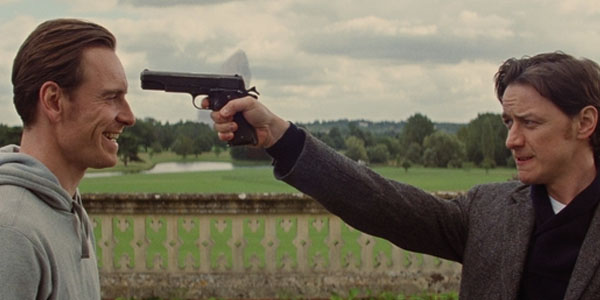
Let's travel back to 2009 - perhaps with the help of Kitty Pryde - and ask one simple question: why does the world need a Wolverine spin-off? Did he not get enough screen-time in the first three movies of the franchise? Hugh Jackman's character was involved in every major plot point of the X-Men films early on, and it seemed at the time like a wasted opportunity, when another one of the mutants could have had their story told. Luckily, the producers learned from this, and gave us X-Men: First Class; a reboot with a plethora of characters and fascinating subplots to be explored. Because man cannot survive on just one story alone, directors gave us subplots; smaller stories to trickle alongside the main action, lending support to the main characters and keeping us interested in two, or more, different sets of characters. And often, these subplots are more exciting than the main story; it's not just X-Men that combines a number of intriguing personal stories into one epic tale. Whilst directors get so caught up with the complications of a big, blockbuster story, they often forget the simpler stories, propping the film up. Some subplots are a welcome relief, and they deserve as much praise as the bigger picture. Here are 10 movies that could've been improved by working on the sub-stories, whether they were already good films, or dire movies in need of all the help they can get...

10. Castor's Story - Tron: Legacy

The Plot: The sequel to 1982 Disney classic Tron, this is the story of Sam Flynn (Garrett Hedlund) a man who enters a virtual world to try and save his father (Jeff Bridges), and his friend Quorra (Olivia Wilde) who are trapped there. Along the way, he comes face to face with the evil Clu (a young, CGI'd Bridges) and the charismatic Castor (Michael Sheen) along the way. The only problem is that Sam is an an utterly one-dimensional character. He's a stereotypical good guy without any defining character traits - he just wants to get his dad back - and Hedlund plays him with an over-seriousness that saps the fun out of the film. Everyone who saw Tron: Legacy noted how visually spectacular it was, but commented on how badly-developed the characters were. Well, all except one character... The Subplot: Castor fought alongside the ISOs - Quorra's people - against Clu, under the name Zuse. He only adopted the persona of Castor later to keep a low profile, running the club in Tron City, and acting as a middleman between those who sought Zuse and his alter-ego. He was an anti-hero with a complex past, who cared only about the highest bidder. The transformation of the warrior Zuse into the hideaway Castor is a fascinating story, and Sheen is a capricious presence on screen. He evokes superstardom-era David Bowie, simply twirling his cane as carnage ensues in his club, and the best thing about him is that he's the most layered character in the whole film. Maybe if Tron: Legacy had used him more prominently, it wouldn't have been criticised so harshly.

9. The Narf's Quest To Get Home - Lady In The Water

The Plot: A utopian almighty will change the world with his wondrous stories. In a slice of blind indulgence, director M Night Shyamalan takes it upon himself to portray this ingenious martyr. Many have claimed that Lady In The Water is an embarrassingly hedonistic venture for Shyamalan. It was the first time he'd had a significant role in one of his movies, and it was obvious to see the parallels between this brilliant writer, and what Shyamalan's own opinion of himself. To top off the similarities, a foolish critic is brutally killed. The Subplot: A water nymph called Story (Bryce Dallas Howard), who is found in a widower's (Paul Giamatti) swimming pool. She's at danger from the wolf-like Scrunt that will kill her if she tries to return home. Not only is the dynamic between Howard and Giamatti more compelling than anything Shyamalan has to offer in front of the lens, it's a simple idea and fairytale-esque plot that sounds more exciting than his rehashed "intriguing person with amazing powers" idea. Lady In The Water could be so much better had it have not indulged in Shyamalan's fantasies; the story of the Narfs, told through illustrated sequences, was just one of the examples of the potential squandered with this movie.

8. The Actually Interesting Relationships - Love Actually

The Plot: In the run-up to Christmas, Richard Curtis focuses on a dozen different relationships. The main ones though are unmistakably the Prime Minister (Hugh Grant) and a member of his staff (Martine McCutcheon), a bad writer (Colin Firth) and his maid (Lucia Moniz), and an office boss (Alan Rickman) potentially cheating on his wife (Emma Thompson). Sadly, with all of these stories, there's a distinct lack of communication; Grant barely enjoys a conversation with McCutcheon as he "redistributes" her to avoid falling deeper in love, Rickman and Thompson never talk through their problems and Firth can't even speak the same language as Moniz. Is it not nonsensical for a maestro of dialogue like Curtis to waste so much script space on the words "the couple give each other sultry looks across the room"? The Subplots: Martin Freeman and Joanna Page are two body doubles for the sex scenes in a film, who find love through their awkward jobs; that's a story that Curtis's brilliantly British charm is perfect for. Similarly, Liam Neeson's relationship with his step-son Thomas Sangster would make a wonderful plot, and Neeson's relationship with Emma Thompson's character is unique. These are all stories that take on real developments, and they're all compromised in favour of the Hollywood romances. We don't even find out why Andrew Lincoln loves Keira Knightley so much when he never speaks to her. It's one of the weirder relationships, granted, but it's just one avenue that would've been preferable to Hugh Grant dancing around Downing Street.

7. The Football Team's Progress - Bend It Like Beckham

The Plot: Jess (Parminder Nagra) is a teenage football prodigy who loves David Beckham. Her traditional Sikh family disapprove of this, and over the course of the film, Jess has to hide playing football from her family. It's an engaging conflict, but it wears thinner every time her parents find out about the football. They tell her she has to give it up, and after a while, we realise that she won't: the ultimatums come to mean nothing. In the end, her dad accepts her choices, and lets her move to America pursue the game professionally. The Subplot: Jess has to help her team, Hounslow Harriers win the league, despite falling for her coach Joe (Jonathan Rhys Meyers), and upsetting her best friend Jules (Keira Knightley). The argument between the two players is swept under the carpet without so much as a make-up conversion though, all to give more screentime to Jess's family. Bend It Like Beckham a delightful story that overcooks itself because it focuses far too heavily on the family, and not nearly enough on Jess. It would've been more powerful to only offer up one or two main ultimatums, rather than littering the movie with the family constantly finding out about the football. It's probably too much to ask for a bigger Beckham cameo, too.

6. Graham's Search For Redemption - The Best Exotic Marigold Hotel

The Plot: A group of middle-aged Brits all move to a dilapidated hotel in India; Dame Judi Dench plays the newly-widowed Evelyn, who finds a friend in Douglas (Bill Nighy). Douglas is coming to realise that he doesn't love his pessimistic wife (Penelope Wilton) anymore. Dench gives a moving and subtle performance, and Nighy is excellent as usual. It's not a particularly original or exciting story though, and the pair, along with Wilton have all-star support from the likes of Dev Patel, Celia Imrie, Tom Wilkinson and the marvellous Maggie Smith, each with their own motivations to being in India. The Subplots: Any character could lead the film; Dev Patel plays a young entrepreneur trying to win a girl's heart by running a successful hotel, Celia Imrie plays an Eat Pray Love-like character in search of adventure, and the marvellous Maggie Smith is there for comic relief, playing a ignorant old woman who learns to appreciate Indian culture. The fascinating story is of Tom Wilkinson's character Graham though, a high court judge with a terminal illness, who used to live in India. As the film unravels, we learn that he fell in love with a man from the area; Graham believes that he ruined the man's life, as he'd had to have turned his back on his culture, and so he's back in India on a quest to find out what happened to him. It's a deeply emotional tale, and one that Wilkinson plays with brilliant deftness.

5. Jacob's Transformation Into A Werewolf - Twilight

The Plot: A vacuous vampire, ancient and all-powerful decides that he's in love with a young girl simply because he can't read her mind. She's torn between him and a werewolf, before deciding that she loves him: she has his child, her werewolf ex-suitor falls in love with her newborn child, and she becomes a vampire. It's a strange turn of events, if nothing else. That's without mentioning the fact that the films take us for granted: why should we care about Edward and Bella if you don't give us reason to? It's one thing to blatantly aim a franchise at a teenage audience, but to patronise them is another thing. The entire world has a bone to pick with Twilight, but it could've been so much more interesting had it have focussed on Jacob, the werewolf, and not Bella. The Subplot: Jacob is a young Native American boy, part of a tribe, who discovers that he has abnormal abilities. The films suppress this development, in favour of giving him a more brooding tone; if there's one thing cinema should have learned from superhero movies though, it's that coming to terms with your powers can make for the most interesting scenes. Jacob discovering that he's a werewolf is far more compelling a tale than an accidental romance; it requires drawing on actual emotions, developing his character, and his werewolf tribe could provide an interesting supporting cast. Of course, the bit about Jacob falling in love with a child could be scrapped. So could the following four sequels. There was an actual progression hidden somewhere in the Twilight franchise. Honest.

4. Anakin And Obi-Wan's Relationship - Star Wars: Episode I - The Phantom Menace

The Plot: With protege Obi-Wan Kenobi by his side, Qui-Gon Jinn protects Queen Amidala as she travels from Naboo to Coruscant. The film reaches a climax when the two Jedi fight Darth Maul; in his dying words, Jinn tells Kenobi to train Anakin Skywalker, the boy he senses a strong force in. It's a formative film for Obi-Wan Kenobi, but it's all about a new master; George Lucas chooses to ignore his established characters in favour of making Liam Neeson the star of the flick. The Subplot: One of the greatest movie villains ever is introduced as a child, and his future friend, mentor, and eventually enemy meets him for the first time. This is an opportunity for an extraordinary insight into the relationship that Darth Vader had with Obi-Wan Kenobi. Rather than focussing on them though, The Phantom Menace revolves around Qui-Gon Jinn. It's a formative movie for Obi-Wan, but it doesn't involve much interaction with Anakin until Jinn's dying words prompt him to take the boy under his wing; it's Jinn that believes in the boy's potential, so you could argue Kenobi's just following orders by befriending him. Wouldn't it have been so much more affecting for Obi-Wan to be at the forefront at the story, pushing for this future antagonist to become Jedi-trained? It's a travesty that one of the most compelling movie friendships ever was relegated to a sparingly-used subplot. It's just as well that the latter movies made up for this lack of development.

3. Captain Jack Sparrow's Vendetta With Barbosa - Pirates Of The Caribbean

The Plot: Sword-crafting nobody Will Turner (Orlando Bloom) ventures out to sea to try and rescue the love of his life, governor's daughter Elizabeth Swann (Keira Knightley), taking recently-captured, anti-hero pirate Jack Sparrow (Johnny Depp) to help him. The film centres on both Will's and Elizabeth's journeys as they fall in love, leaving Jack as a secondary character, with questionable motives. Some films are lucky enough to cast a lead with mercurial qualities, whilst others rely on the supporting characters for the much-needed charisma. Pirates of the Caribbean is one film that we can surely all agree falls into the latter. The Subplot: Captain Jack Sparrow, who knows about Will's father, sees this as an opportunity to get straight with the captain who marooned him on a desert island. By turning the plot around just slightly, Gore Verbinski could've given Sparrow a clear opportunity to commandeer his own vessel by himself, to search for Barbosa without Bloom or Knightley cramping his style. The next two films of the franchise lived in the couple's shadow, and by the time Jack was the lead, in the fourth film, it was too late; the excitement had been sucked from the films. The Pirates series had its chance, and it blew it, in favour of a terribly wooden Orlando Bloom performance.

2. Camille's Vengeance - Quantum Of Solace

The Plot: James Bond (Daniel Craig) goes a lone mission to seek revenge for the death of his lover, Vesper Lynd. Just as Pierce Brosnan's era had succumbed to becoming a cliche of itself, Quantum of Solace, the first sequel of the series ever, became a cliche of the new ideals. Casino Royale had worked so hard to abandon the ridiculousness of 007, and yet here was Bond, Bourne-like, rogue for the sake of it, and up against a hapless European villain, not nearly as engrossing as Le Chiffre. Bond became a man against the world because he wanted to be: if he'd just have denied murdering the Special Branch operative for example, he wouldn't have lost M's trust. The Subplot: Bond girl Camille was also out for revenge, for the death of her family. It put James's Bourne-like quest into perspective; she didn't have the luxury of refusing the British government's help, as she was genuinely alone in her quest to kill General Medrano. It felt like Camille was dragging Bond into her movie, rather than the other way around. There was virtually no chemistry between the pair, and it really didn't feel like a Bond film; if writers Neal Purvis and Robert Wade had that much interest in Camille, it would've made more sense to give her her own film.

1. Lehnsherr Hunting Nazis - X-Men: First Class

The Plot: After the unanimous flop that was Last Stand, First Class takes a step back from X-Men 1-3, looking at how our favourite mutants became the characters they are today. The film was originally intended to chart Erik Lehnsherr's humble beginnings but widened its beam to look at how Professor Charles Xavier became a wheelchair-bound leader of a mutant school. James McAvoy and Michael Fassbender playing the opposite forces of the X-Men universe was too tantalising a prospect to ignore, and the film ended up downplaying Lehnsherr's vengeance in favour of developing the characters around him. The Subplot: Lehnsherr is seeking revenge for the death of his mother, trying to find the evil Sebastian Shaw. What could've been a character study on an evil force turned into a reboot for the series; suddenly Jennifer Lawrence, Nicholas Hoult and McAvoy were leading the action, with Lehnsherr's plot taking more of a backseat. It's not that it wasn't a great film, it's that showing more of Fassbender's Lensherr against a real-world villain would have been fascinating. Are we ever going to get a Fassbender spin-off dedicated to more of what Lensherr got up to when he went looking for Shaw? Here starts the campaign for Magneto: Nazi Hunter... Which movie subplots do you love more than the main plot? Let us know in the comments section below.

Contributor
Contributor

Mark White hasn't written a bio just yet, but if they had... it would appear here.